
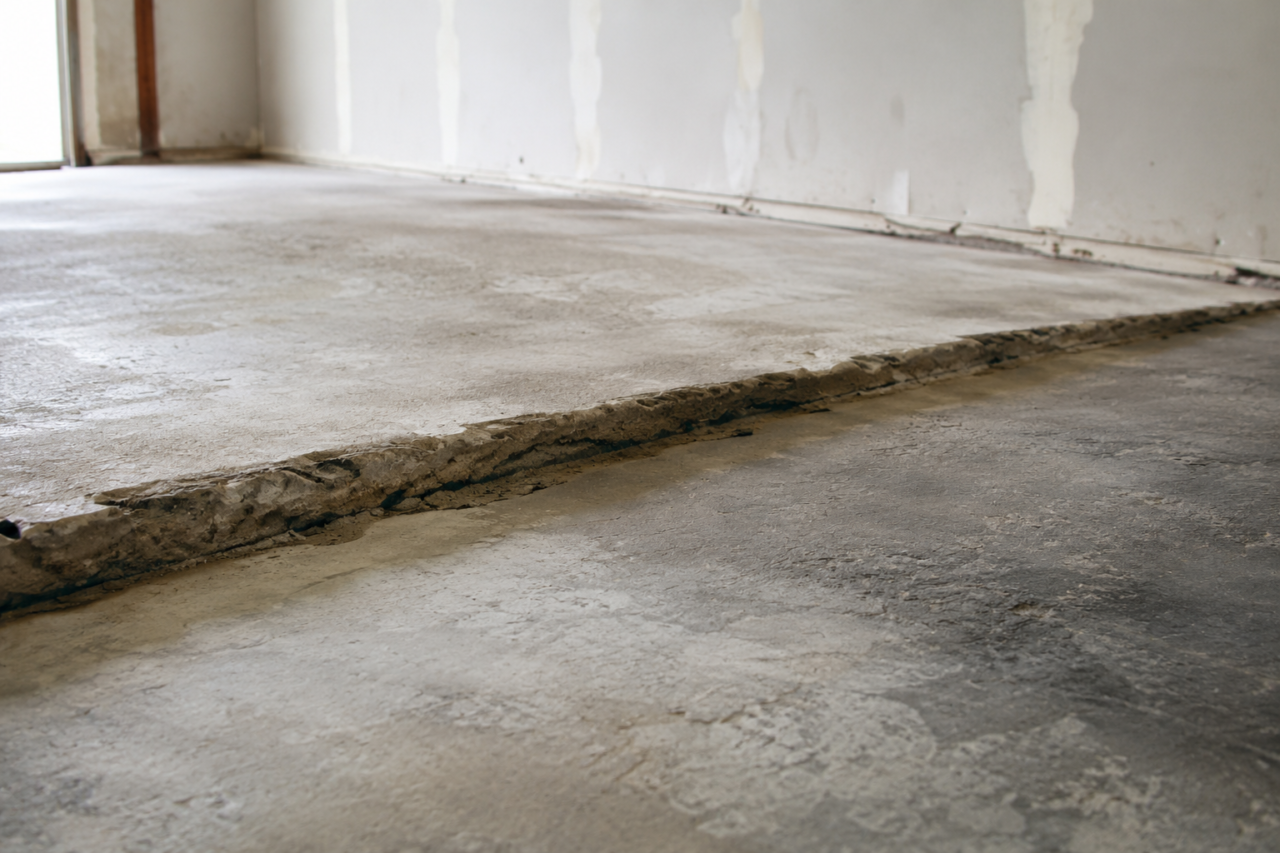
Uneven concrete floors are more than a cosmetic issue. Whether the problem is inside a garage, basement, warehouse, shop, patio, driveway, or commercial building, sloped and sunken concrete can create tripping hazards, drainage problems, structural concerns, and long-term damage if left untreated. Knowing how to level uneven concrete floor surfaces starts with understanding what caused the problem and choosing the right repair method for the condition of the slab.
Concrete can become uneven for several reasons, including soil settlement, erosion, poor compaction, freeze-thaw cycles, moisture intrusion, heavy loads, tree roots, or voids forming beneath the slab. In some cases, the surface only needs minor grinding or resurfacing. In others, the slab needs to be lifted, stabilized, or supported from below.
This professional guide explains how to level an uneven concrete floor using five of the best concrete repair methods available today. Each option has its place, and the right solution depends on the severity of the damage, the condition of the concrete, and whether the slab has settled, cracked, heaved, or worn down over time.
Why Concrete Floors Become Uneven
Before choosing a repair method, it is important to identify why the concrete is no longer level. Uneven concrete is often a symptom of a deeper issue beneath or around the slab.
Common causes include:
- Soil settlement: Poorly compacted soil can compress over time, causing sections of the slab to sink.
- Water erosion: Runoff, poor drainage, plumbing leaks, or groundwater movement can wash away supporting soil.
- Freeze-thaw movement: In colder climates, expanding and contracting moisture can shift concrete surfaces.
- Voids beneath the slab: Empty pockets under concrete reduce support and allow the slab to settle.
- Heavy traffic or loads: Industrial equipment, vehicles, or repeated loading can contribute to slab movement.
- Tree roots: Root growth can push concrete upward, creating raised or uneven sections.
- Surface wear: Older concrete may become uneven due to scaling, spalling, or repeated abrasion.
The best approach to leveling uneven concrete floor surfaces depends on whether the issue is primarily below the slab, on the surface, or both.
How To Level Uneven Concrete Floor Surfaces: Start With a Professional Assessment
A proper repair begins with a detailed inspection. Not every uneven floor needs the same fix, and choosing the wrong method can lead to wasted time, money, and repeat repairs.
Before choosing a leveling method, the contractor should measure the floor’s condition and the state of the concrete slab so the repair matches the cause of the unevenness and helps prevent future problems. A concrete repair professional will typically evaluate:
- The amount of elevation change across the slab
- Whether the concrete has settled, heaved, cracked, or deteriorated
- The presence of voids under the slab
- Drainage and moisture conditions
- Soil stability beneath the concrete
- Whether the slab is structurally sound enough to repair
- The intended use of the space after repair
In larger areas, contractors may use a laser level because it provides precise measurements of unevenness and helps map high and low points across the surface. A straightedge also helps detect subtle dips and identify high and low spots accurately, especially at low points that are easy to miss.
For example, a concrete floor with minor high spots may only need grinding. A sunken garage floor, shop floor, sidewalk, warehouse slab, or driveway may need geo-polymer injection or slabjacking. A slab with unstable soil underneath may require grouting or void filling before the surface can be safely restored.
1. Geo-Polymer Injection Concrete Lifting
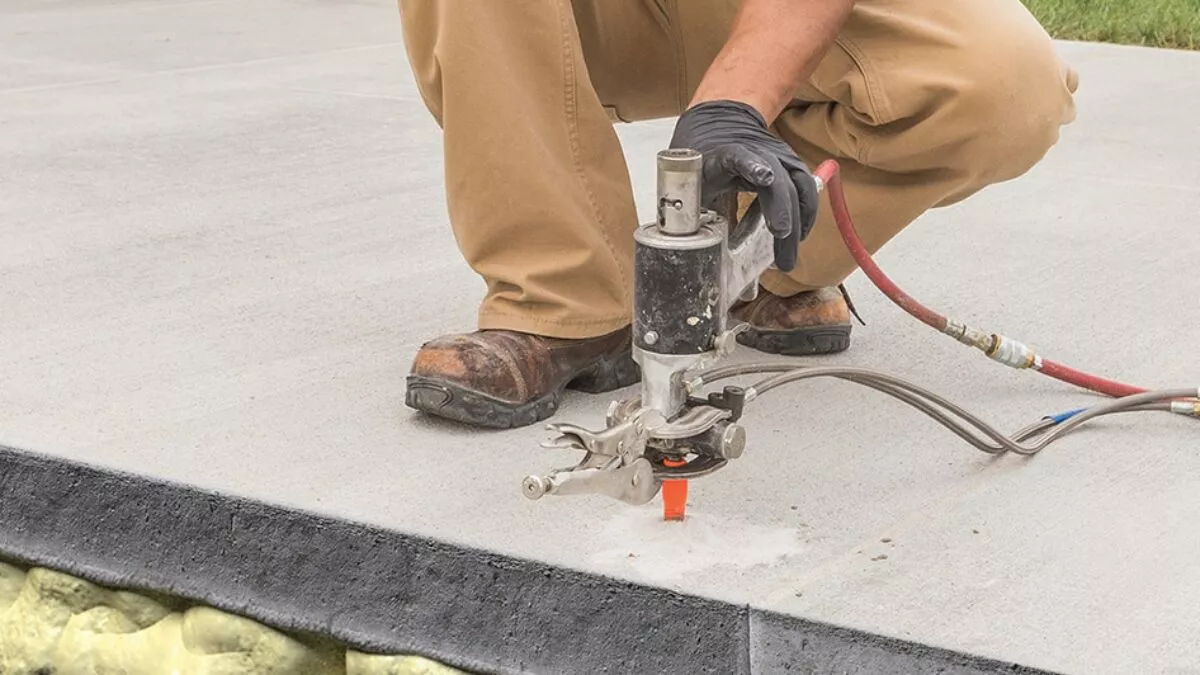
Geo-polymer injection is one of the most effective modern methods for leveling sunken or uneven concrete. This repair technique involves injecting a lightweight, expanding geo-polymer material beneath the slab. As the material expands, it fills voids, stabilizes the underlying soil, and lifts the concrete back toward its proper elevation.
For many property owners wondering how to level an uneven concrete floor without tearing out and replacing the slab, geo-polymer injection is often one of the best solutions.
How Geo-Polymer Injection Works
Small holes are drilled through the concrete surface. A specialized geo-polymer material is then injected beneath the slab. The material expands quickly, filling gaps and applying controlled lifting pressure. Technicians monitor the slab carefully during the process to raise it as evenly and accurately as possible.
Once complete, the injection holes are patched, and the surface can often be used much sooner than with many traditional repair options.
Best For
Geo-polymer injection is commonly used for:
- Garage floors
- Basement floors
- Warehouse slabs
- Sidewalks
- Driveways
- Patios
- Interior concrete floors
- Commercial and industrial slabs
- Concrete with voids underneath
- Settled slabs that are still structurally sound
Benefits of Geo-Polymer Injection
Geo-polymer injection offers several advantages:
- Minimal demolition
- Fast installation
- Lightweight material that does not add significant load to weak soils
- Excellent void-filling capabilities
- Controlled concrete lifting
- Reduced downtime compared to replacement
- Long-lasting stabilization when performed correctly
- Suitable for many residential, commercial, municipal, and industrial applications
This method is especially valuable when the goal is not just to make the surface look better, but to address the hidden support issues that caused the slab to settle in the first place.
2. Traditional Slabjacking or Mudjacking
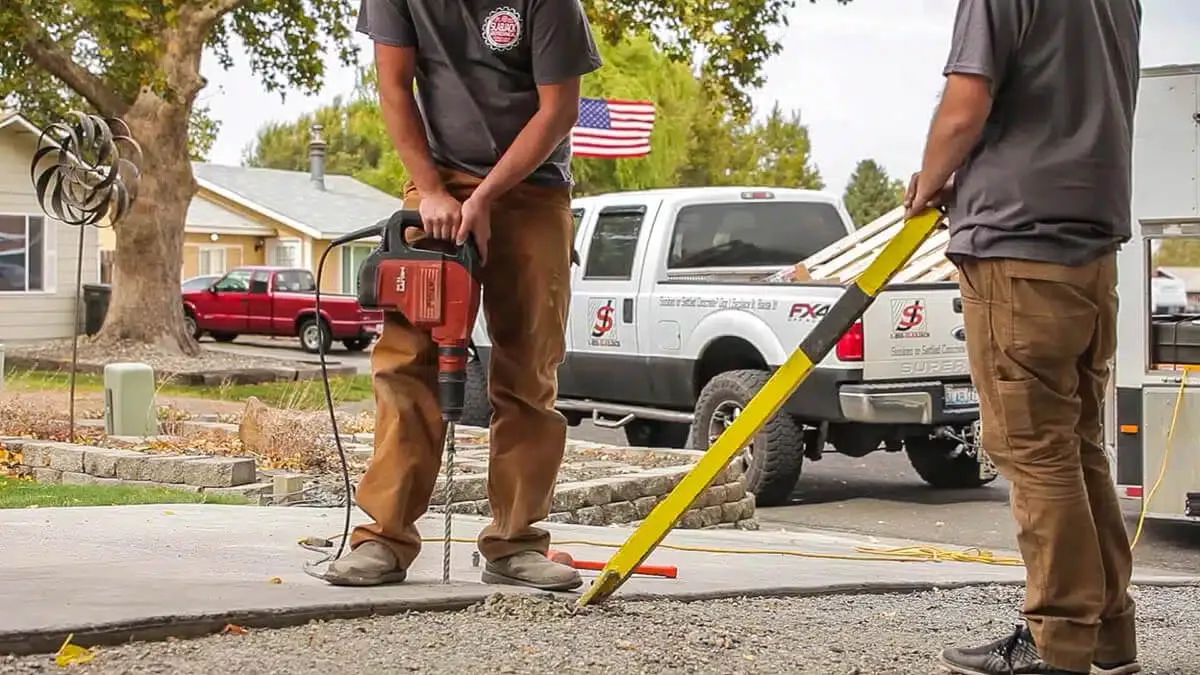
Slabjacking, also known as mudjacking in many areas, is a long-standing method used to lift settled concrete. The process involves pumping a grout-like material beneath the slab to raise it back into position.
Traditional slabjacking can be a practical option for some uneven concrete surfaces, especially when the slab is thick, accessible, and still in good structural condition. It is often used for exterior slabs, sidewalks, driveways, patios, and some floor systems.
How Slabjacking Works
A crew drills holes through the slab and pumps a cement-based or grout-based material underneath. The injected material fills empty spaces below the concrete and creates pressure that raises the slab. Once the slab reaches the desired elevation, the holes are patched.
Best For
Traditional slabjacking may be useful for:
- Sunken sidewalks
- Patios
- Driveways
- Garage slabs
- Concrete steps
- Exterior flatwork
- Larger slabs with stable surrounding conditions
Advantages and Considerations
Slabjacking can be cost-effective and less disruptive than full slab replacement. However, traditional cement-based materials are typically heavier than geo-polymer materials. If the original settlement was caused by weak or poorly compacted soil, adding more weight may not always be ideal.
That is one reason many professionals now prefer geo-polymer injection for certain concrete lifting projects. It provides lift and stabilization while adding less weight beneath the slab.
3. Self-Leveling Concrete Overlay
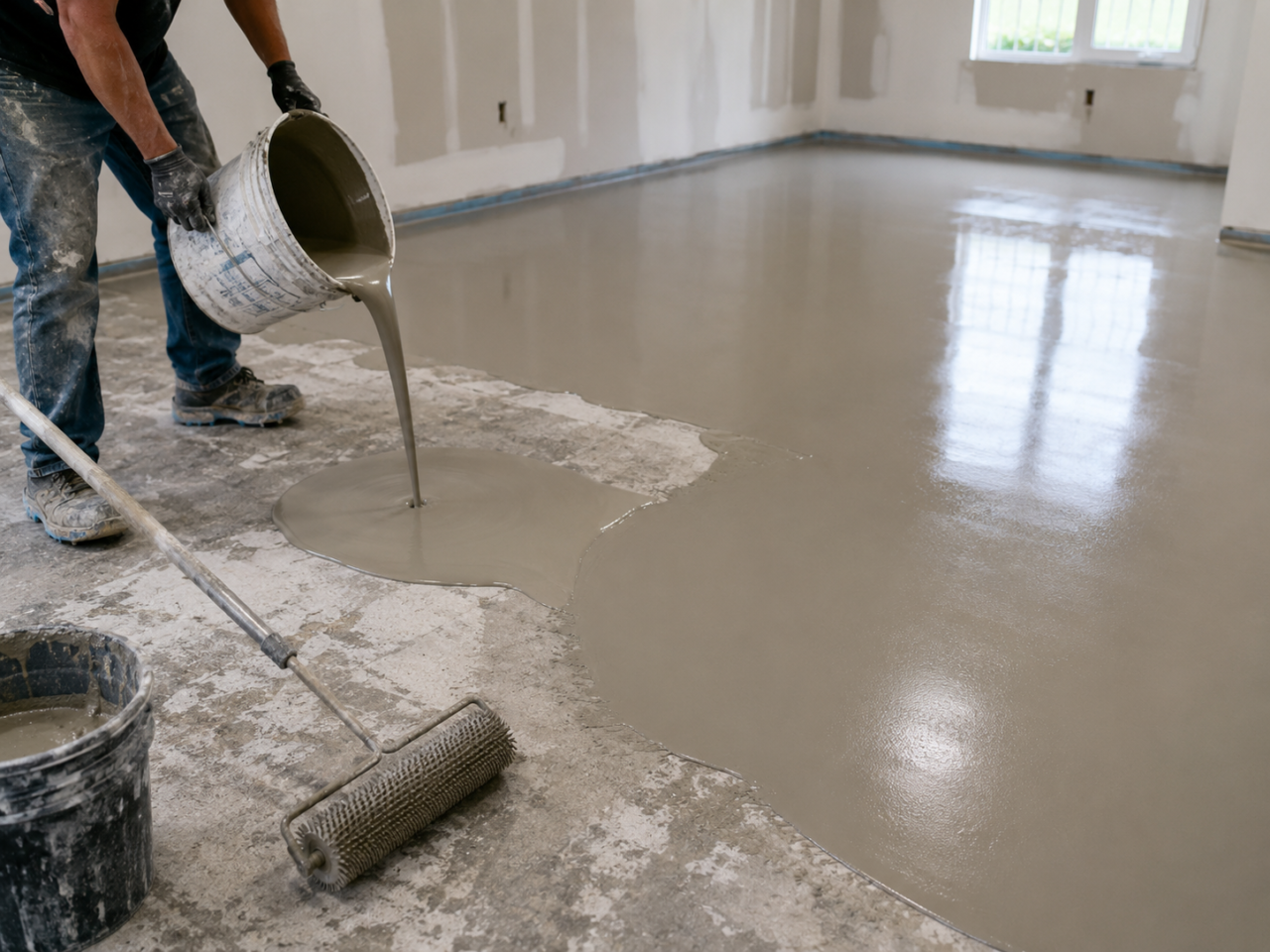
Self-leveling concrete is a surface-applied repair method used to create a smoother, flatter finish over an existing slab, and it is one of the more effective solutions when a structurally sound slab has surface irregularities and needs a flatter finish before flooring installation. Unlike slabjacking or geo-polymer injection, this method does not lift the slab from below. Instead, it adds a new leveling layer over the top. For interior floors, self-leveling underlayment is commonly used, and a concrete primer improves the bond of leveling compounds to concrete surfaces.
This can be a good solution when the slab is structurally stable but has low spots, surface imperfections, or uneven areas. Proper preparation matters: mix self-leveling compounds according to manufacturer’s instructions, use a spiked roller to release trapped air bubbles, and allow proper drying time to avoid weak spots in the floor. They are also unsuitable for outdoor applications. This approach can level a concrete floor for new flooring when the issue is surface-related rather than structural.
How Self-Leveling Concrete Works
The existing concrete surface is cleaned, prepared, and usually primed, which includes cleaning the slab and gathering the right tools before pouring. A concrete primer is usually applied first to improve the bond of the leveling compound to the concrete surface. A self-leveling compound is then poured over the floor. It should be mixed according to the manufacturer’s instructions and spread with a gauge rake for uniform coverage. The material flows across the surface, filling low areas and creating a flatter plane as it cures. A spiked roller helps release trapped air bubbles, and many self-leveling underlayment products for interior floors begin setting in about 15 to 20 minutes.
Best For
Self-leveling overlays are often used for interior floors, where self-leveling underlayment is commonly used, as well as for:
- Basements
- Garages
- Commercial spaces
- Floors being prepared for tile, vinyl, carpet, epoxy, or other finishes
- Minor dips, surface unevenness, and minor imperfections
- Slabs that are not actively settling
Important Limitations
Self-leveling concrete is not the best solution when the slab is sinking due to soil settlement or voids underneath. If the support problem is not corrected first, the new overlay may crack, separate, or become uneven again.
In other words, self-leveling material can improve the top surface, but it does not solve deeper structural or soil-related problems. For major settlement, geo-polymer injection, slabjacking, pressure grouting, or void filling may be needed before a surface overlay is considered.
4. Concrete Grinding
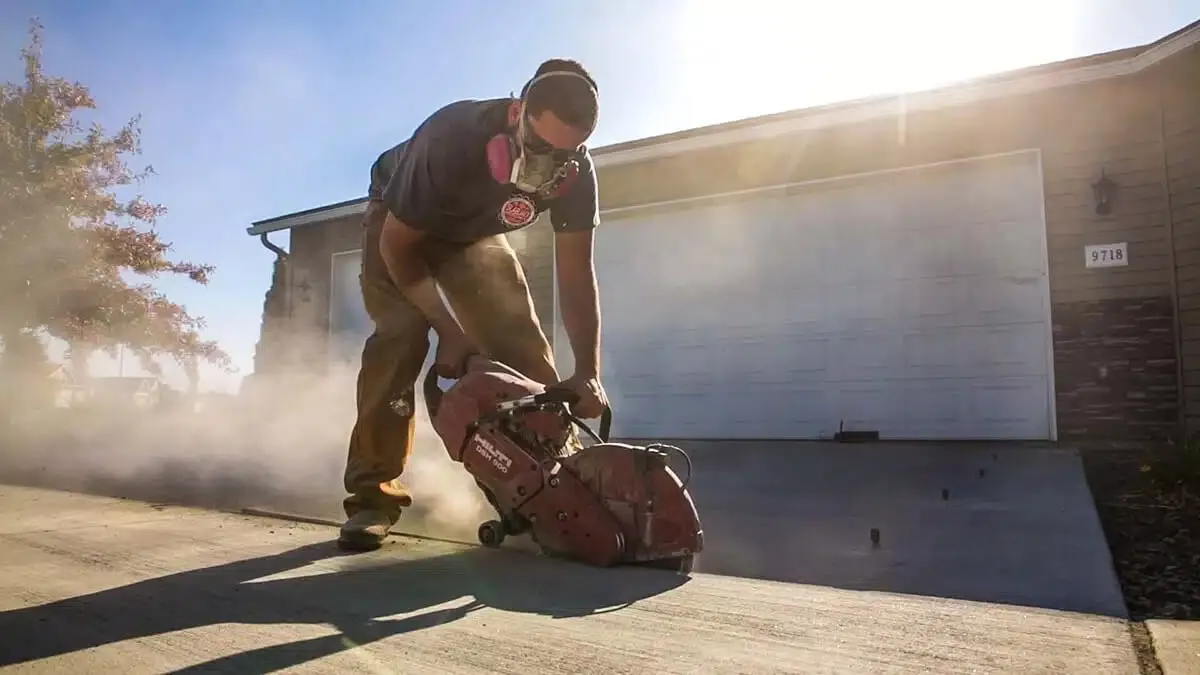
Concrete grinding is a practical method for leveling raised areas, high spots, trip hazards, and uneven transitions. Rather than lifting low sections, grinding removes material from high sections to create a smoother and safer surface.
This method is commonly used when one section of concrete has lifted slightly or when two slab panels no longer meet evenly.
How Concrete Grinding Works
Professionals often use a concrete grinder with diamond-tipped tooling to remove thin layers from high points on the surface. The goal is to reduce height differences, smooth rough transitions, and create a more uniform walking or working surface.
Best For
Concrete grinding is often a good choice for:
- Minor trip hazards
- Raised slab edges
- Uneven sidewalks
- Garage floors
- Warehouse floors
- Commercial floors
- Surface preparation before coatings
- Areas where only a small amount of material needs to be removed
Advantages and Considerations
Grinding is usually fast and cost-effective for small elevation differences. It can improve safety and appearance without major demolition. However, it does not raise sunken concrete, fill voids, or correct unstable soil conditions.
If the slab has dropped significantly, grinding alone may create an awkward slope or remove too much concrete. In those cases, lifting or stabilizing the slab may be a better long-term solution.
5. Pressure Grouting, Compaction Grouting, Permeation Grouting, and Void Filling
When uneven concrete is caused by weak soil, erosion, underground voids, or unstable base material, grouting and void filling may be necessary. These methods focus on improving the ground or filling spaces beneath and around concrete structures.
For property owners researching how to level uneven concrete floor surfaces, this category is especially important because many uneven slabs are caused by hidden subsurface problems.
Pressure Grouting
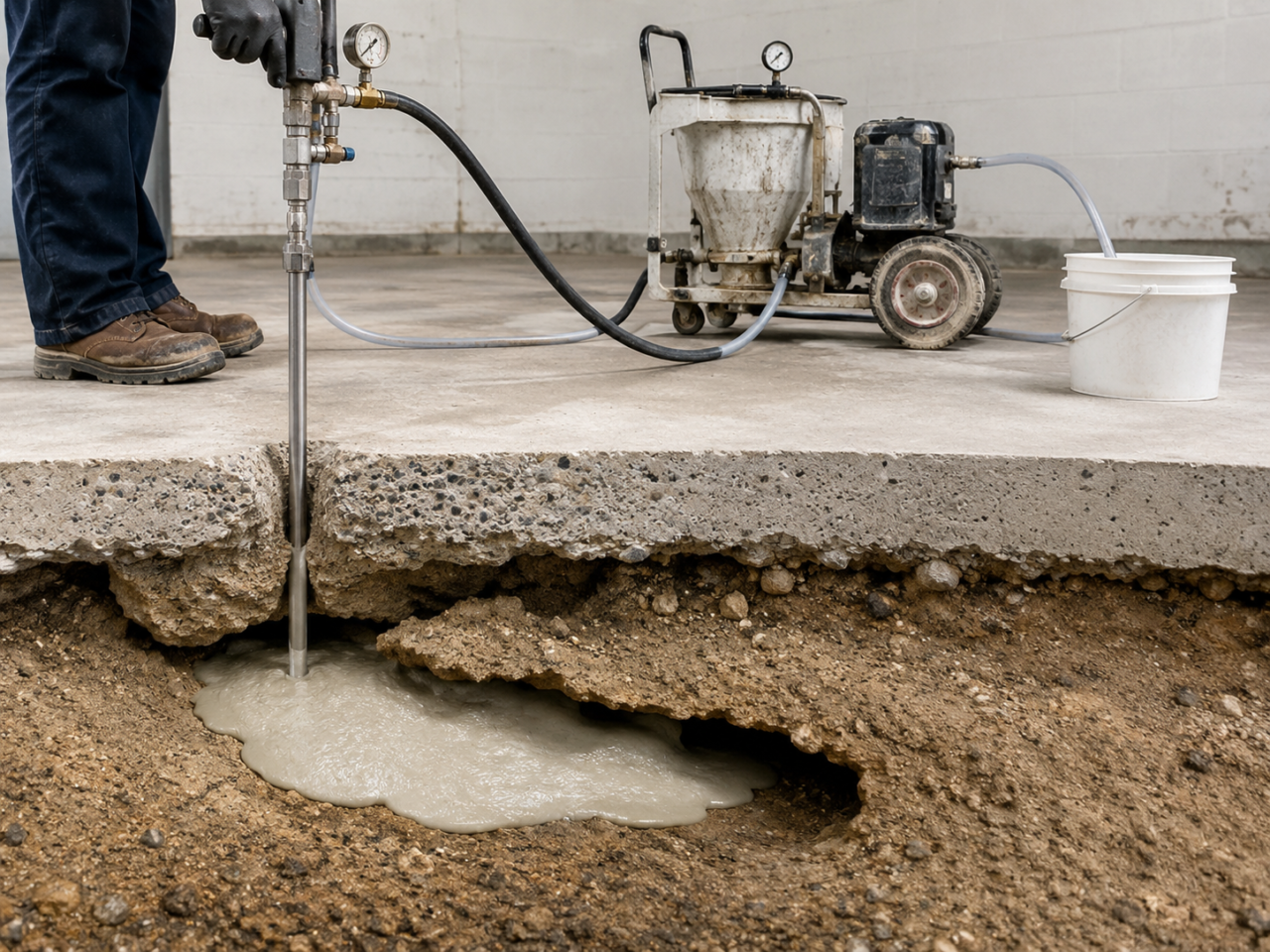
Pressure grouting involves injecting grout into the ground or beneath concrete to fill voids, stabilize soil, or improve support. It can be used in a variety of structural and geotechnical repair applications.
Compaction Grouting
Compaction grouting uses a stiff grout mixture to densify loose soils. As the grout is injected, it displaces and compacts surrounding soil, improving support for slabs, foundations, or other structures.
Permeation Grouting
Permeation grouting is used to strengthen or seal soil by injecting low-viscosity grout that penetrates soil voids without significantly disturbing the soil structure. This method can be useful for controlling water movement or improving soil stability in certain conditions.
Void Filling
Void filling targets empty spaces beneath concrete slabs, roadways, culverts, ditches, or other structures. Filling these voids helps restore support and reduce the risk of future settlement or collapse.
Best For
These methods are useful for:
- Slabs with large voids underneath
- Soil stabilization
- Infrastructure repair
- Industrial and commercial concrete floors
- Culverts and large-diameter pipes
- Concrete ditches
- Areas affected by erosion or washout
- Projects where lifting alone is not enough
Grouting and void filling can be used independently or alongside concrete lifting methods. When performed by experienced professionals, they help create a stronger foundation for long-term concrete performance.
Comparing the Top 5 Methods for Leveling Uneven Concrete Floor Surfaces
Choosing the best repair method depends on the condition of the concrete and what is happening beneath it.
| Repair Method | Best Use Case | Main Benefit | Key Limitation |
| Geo-polymer injection | Settled slabs with voids or weak support | Fast, lightweight lifting and stabilization | Requires professional equipment and experience |
| Traditional slabjacking | Sunken exterior or structural slabs | Cost-effective lifting | Heavier material than geo-polymer |
| Self-leveling overlay | Stable slabs with surface low spots | Creates a smooth finished surface | Does not fix soil settlement |
| Concrete grinding | High spots and trip hazards | Fast surface correction | Does not raise sunken concrete |
| Grouting and void filling | Soil instability, erosion, voids, infrastructure support | Stabilizes the base beneath concrete | May need to be combined with lifting or surface repair |
When Should Uneven Concrete Be Repaired?
Uneven concrete should be inspected and repaired when it creates safety risks, drainage issues, operational problems, or signs of ongoing movement. Waiting too long can allow the problem to worsen, especially if water is moving beneath the slab.
It may be time to schedule concrete repair if you notice:
- Slabs sinking or separating
- Uneven floor transitions
- Cracks widening over time
- Water pooling on concrete surfaces
- Hollow sounds beneath the slab
- Doors, equipment, or vehicles affected by floor slope
- Trip hazards on walkways or work areas
- Visible voids, washout, or erosion around the concrete
The sooner the cause is identified, the easier it is to select the right repair method and help prevent more costly damage.
Why Professional Concrete Leveling Matters
Some minor surface repairs can look simple, but uneven concrete often involves conditions that are not visible from above. Severely uneven floors or large-scale issues in the leveling process often call for professional help rather than a DIY fix. A floor may appear to need a basic overlay when the real issue is a void beneath the slab. A raised edge may seem like a grinding job, but nearby settlement may require lifting and stabilization.
Professional concrete repair contractors bring the tools, materials, and experience needed to determine whether the slab should be lifted, ground, stabilized, sealed, resurfaced, or replaced. They can also help identify drainage or soil conditions that may continue to affect the concrete if left unresolved.
For the best long-term results, the repair should address both the visible uneven surface and the underlying cause of the movement.
About Slabjack Geotechnical
At Slabjack Geotechnical, we are a family-owned and operated full-service concrete repair company serving Washington and Northern Idaho. Our team provides a wide range of concrete repair and geotechnical services designed to lift, stabilize, seal, and protect concrete surfaces and structures. Whether you are dealing with a sunken slab, an uneven floor, soil instability, or voids beneath concrete, we bring professional repair solutions tailored to the needs of your property.
Our services include slabjacking (concrete raising), pressure grouting, compaction and permeation grouting, concrete grinding, joint sealing repair, and void filling. We also seal leaking culverts and large-diameter pipes, and concrete ditches. For many concrete lifting projects, we focus on the geo-polymer injection method because it offers a precise, lightweight, and effective way to lift settled concrete while helping stabilize the areas beneath the slab.

Need Help Leveling Uneven Concrete Floor Surfaces? Contact Slabjack Geotechnical Today
Learning how to level uneven concrete floor surfaces starts with understanding the cause of the problem. Some floors need grinding. Others need a self-leveling overlay. Many settled slabs require geo-polymer injection, slabjacking, grouting, or void filling to restore support below the concrete and reduce the risk of future movement.
If you are trying to decide how to level an uneven concrete floor at your home, business, facility, or municipal property, Slabjack Geotechnical is here to help. Our experienced team can inspect the problem, explain your repair options, and recommend a solution designed for lasting performance.
Contact Slabjack Geotechnical today to learn more about our concrete repair services or request a service quote for leveling uneven concrete floor surfaces in Washington or Northern Idaho.
FAQs
What is the best way to level an uneven concrete floor?
The best way to level an uneven concrete floor depends on what caused the problem. If the slab has settled because of voids or weak soil, geo-polymer injection or slabjacking may be the best option, while surface-level unevenness may be corrected with grinding or a self-leveling overlay.
Can you level an uneven concrete floor without replacing it?
Yes, many uneven concrete floors can be leveled without full replacement. Methods such as geo-polymer injection, slabjacking, concrete grinding, self-leveling overlays, and void filling can often restore safety and usability while avoiding the cost and disruption of removing the slab.
Is geo-polymer injection good for leveling uneven concrete floors?
Geo-polymer injection is a strong option for leveling uneven concrete floor surfaces when the slab has settled or lost support underneath. The expanding material fills voids, stabilizes the base, and can lift the concrete with minimal disruption.
What is the most cost-effective way to level an uneven concrete floor?
The most cost-effective method depends on the size of the uneven area and the cause of the issue. Grinding may be affordable for minor high spots, while geo-polymer injection or slabjacking may be more cost-effective than replacement for settled slabs.