
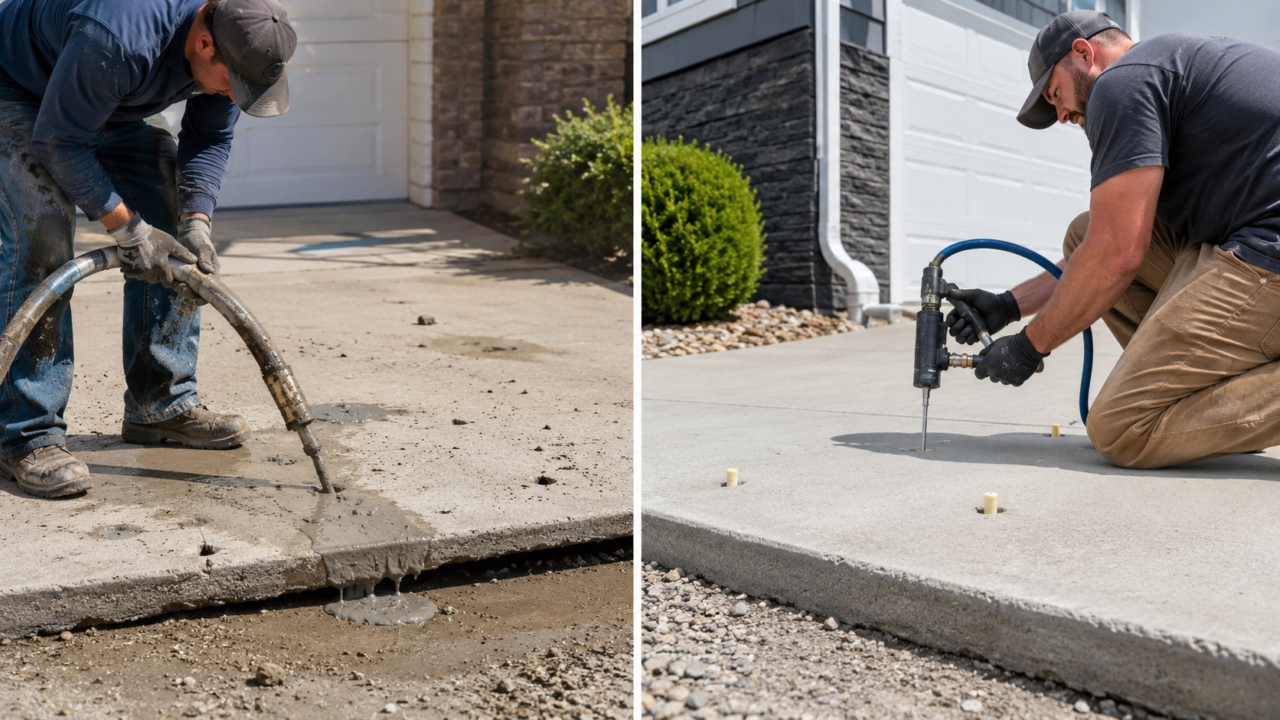
Sunken, uneven, or cracked concrete can create more than an eyesore. It can lead to trip hazards, drainage issues, foundation concerns, and continued damage if the problem is left untreated. When concrete slabs settle, two of the most common repair options are mudjacking and foam jacking.
Both methods are designed to lift and stabilize concrete without completely tearing it out and replacing it. However, they use different materials, involve different installation processes, and often deliver different long-term results. Understanding the differences between mudjacking vs foam jacking can help homeowners, business owners, property managers, and municipalities choose the right concrete repair method for their needs.
What Is Mudjacking?
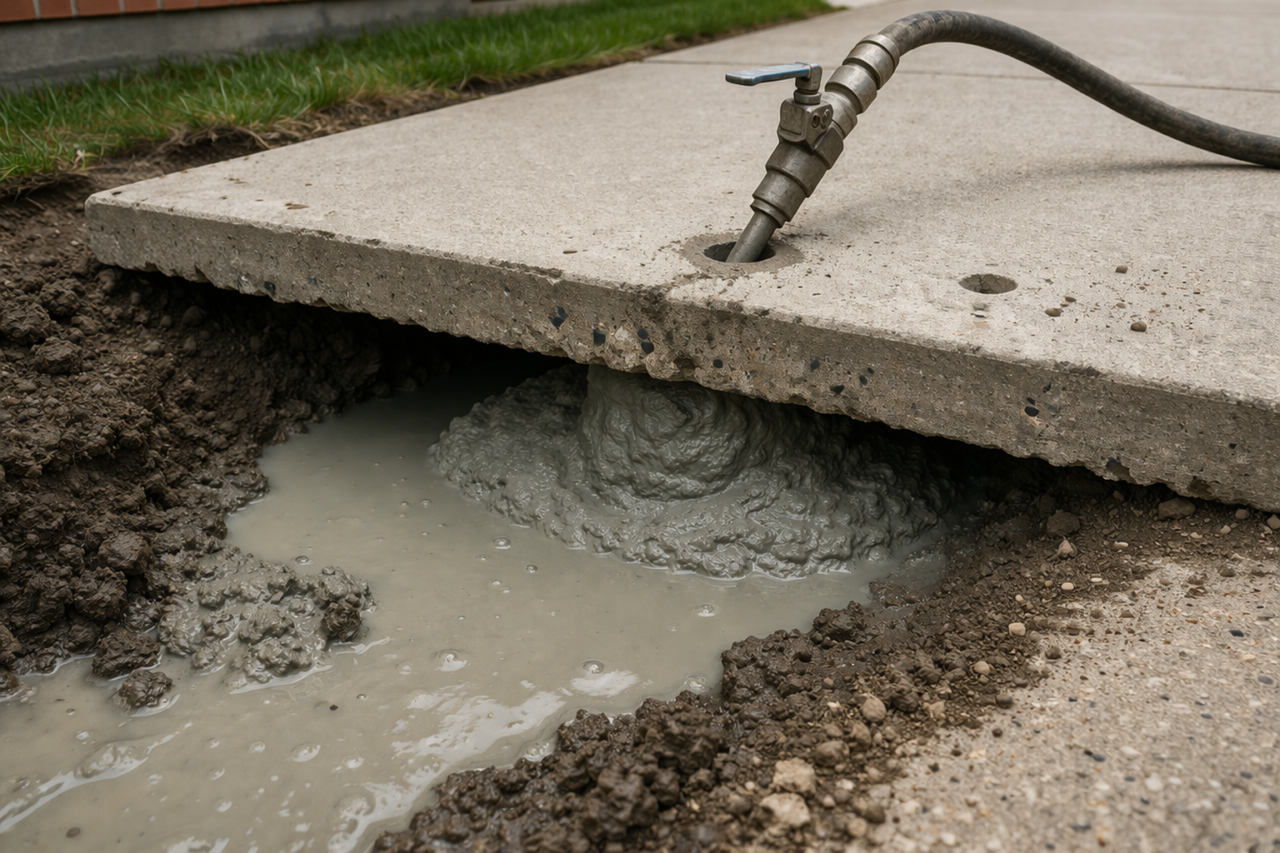
Mudjacking is a traditional concrete lifting method that has been used for decades. It involves drilling holes through the sunken concrete slab and pumping a heavy slurry mixture beneath it. This mixture is typically made from materials such as cement, sand, soil, limestone, and water.
As the slurry fills voids beneath the slab, it creates pressure that raises the concrete back toward its original position. Once the slab is lifted, the drilled holes are patched.
Mudjacking is commonly used for:
- Driveways
- Sidewalks
- Patios
- Garage floors
- Pool decks
- Concrete steps
- Some commercial slabs
The main appeal of mudjacking is that it is often less expensive than full concrete replacement. However, because the material used is heavy, it may not always be the best choice for areas where the underlying soil is weak, unstable, or prone to continued settlement.
What Is Foam Jacking?
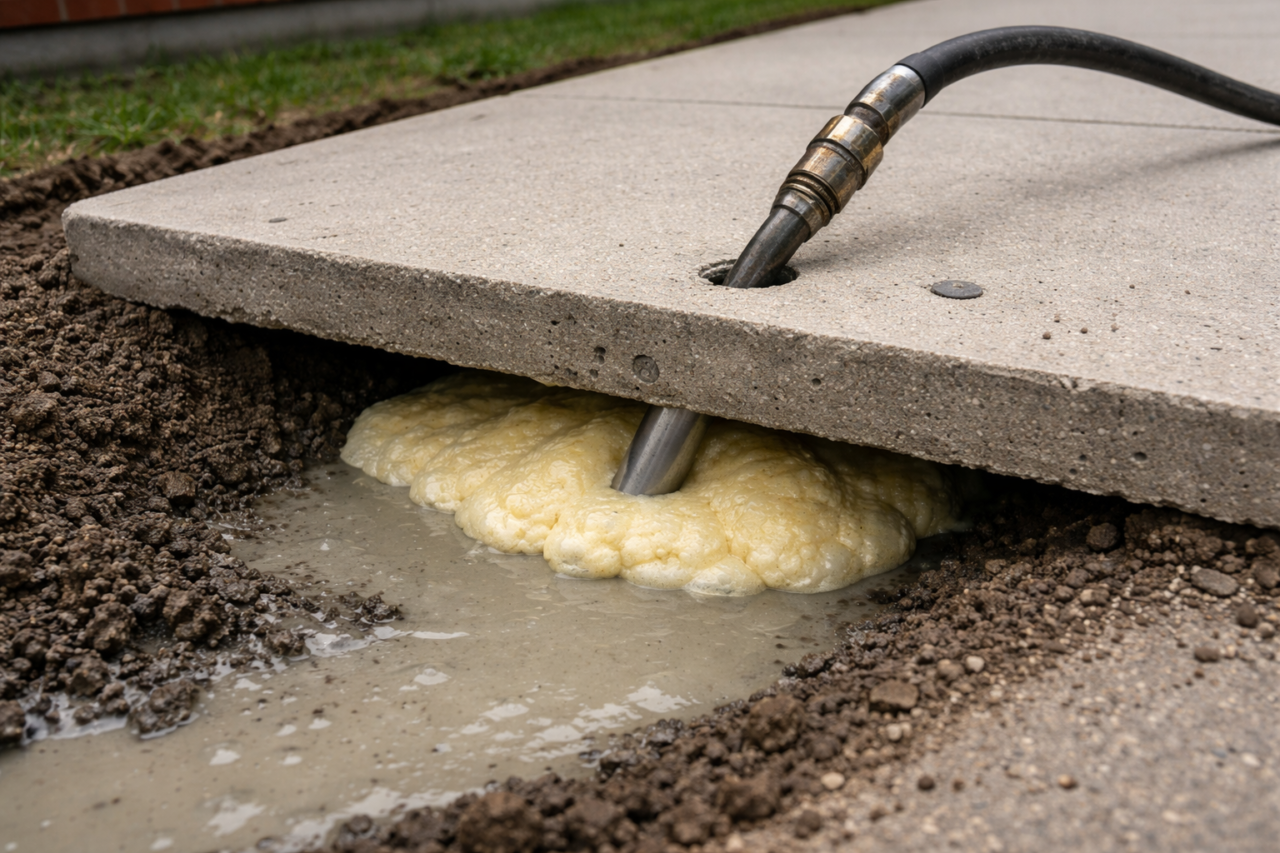
Foam jacking, also known as polyurethane concrete lifting or geo-polymer injection, is a modern concrete repair method that uses high-density expanding foam to lift and stabilize sunken slabs.
Small holes are drilled into the concrete, and a specialized geo-polymer foam is injected beneath the slab. The foam expands, fills voids, compacts loose soil, and raises the concrete with controlled precision. Once the slab reaches the desired elevation, the injection holes are patched.
Foam jacking is commonly used for:
- Residential driveways
- Sidewalks and walkways
- Patios and porches
- Garage floors
- Warehouse floors
- Roadways and approaches
- Commercial and municipal concrete
- Slabs affected by voids or washout
When comparing foam jacking vs mudjacking, one of the biggest differences is the weight of the lifting material. Polyurethane foam is much lighter than mudjacking slurry, which can make it a better option for soils that have already struggled to support heavy concrete.
Mudjacking vs Foam Jacking: Key Differences
Although both methods can lift settled concrete, they are not the same. The right choice depends on the condition of the slab, the soil beneath it, the project budget, and the desired long-term performance.
| Comparison Factor | Mudjacking | Foam Jacking |
| Material Used | Cement-based slurry made from sand, soil, water, and other dense materials | High-density polyurethane or geo-polymer foam |
| Weight of Material | Heavy, which can add stress to weak soil | Lightweight, reducing additional soil burden |
| Hole Size | Typically larger drill holes | Smaller drill holes |
| Curing Time | May require more time before regular use | Often ready for use shortly after installation |
| Precision | Effective but generally less precise | Allows controlled, targeted lifting |
| Void Filling | Fills large voids with dense material | Expands to fill voids, gaps, and hard-to-reach spaces |
| Moisture Resistance | Slurry can be affected by soil moisture over time | Foam is water-resistant once cured |
| Longevity | Can perform well, but heavy material may contribute to future settling in weak soils | Designed for durable stabilization with less added weight |
| Cost | Often lower upfront | Usually higher upfront but may offer stronger long-term value |
| Best For | Budget-sensitive repairs on stable soil | Precision lifting, void filling, unstable soils, and long-term stabilization |
How Mudjacking Works
The mudjacking process usually follows a straightforward repair sequence:
- The sunken concrete is inspected to identify low spots and voids.
- Holes are drilled through the affected slab.
- A cementitious slurry is pumped beneath the concrete.
- Pressure from the slurry lifts the slab.
- The surface is checked and adjusted as needed.
- The drilled holes are patched.
Mudjacking can be effective when the soil beneath the concrete is stable enough to support the extra weight of the slurry. It is often chosen for basic concrete lifting projects where cost is the primary concern.
However, the material itself is heavy. If the original settlement was caused by poor compaction, erosion, or weak supporting soil, adding more weight beneath the slab can sometimes contribute to future movement.
How Foam Jacking Works
Foam jacking uses a more advanced injection process:
- The concrete is inspected to determine the cause and extent of settlement.
- Small holes are drilled through the slab.
- Geo-polymer foam is injected beneath the concrete.
- The foam expands, fills voids, and lifts the slab.
- Technicians monitor the lift carefully for accuracy.
- The injection holes are patched for a cleaner finish.
Because the foam expands after injection, it can reach spaces that traditional slurry may not fill as effectively. The expansion also allows technicians to lift the slab in a controlled way, helping reduce the risk of over-lifting or uneven results.
This is one of the major reasons many property owners choose foam jacking when comparing mudjacking vs foam jacking for long-term concrete repair.
Pros and Cons of Mudjacking
Mudjacking remains a practical solution in certain situations, especially when the slab is in relatively good condition and the soil beneath it is stable.
Advantages of Mudjacking
- Usually costs less upfront than foam jacking
- Can lift many types of residential and commercial slabs
- Uses widely available materials
- Can be a practical alternative to full replacement
- Works well for some large, simple concrete lifting projects
Disadvantages of Mudjacking
- Requires larger drill holes
- Uses a heavy slurry that can add weight to unstable soil
- May take longer to cure
- Can be less precise than foam injection
- May not be ideal for areas affected by erosion or poor compaction
- Slurry can shrink, wash out, or break down over time in some conditions
Mudjacking may be a good fit when the soil is strong, the budget is limited, and the repair does not require a high level of precision.
Pros and Cons of Foam Jacking
Foam jacking is often preferred when long-term stability, precision, and minimal disruption are priorities.
Advantages of Foam Jacking
- Uses lightweight geo-polymer foam
- Requires smaller injection holes
- Offers highly controlled lifting
- Fills voids and stabilizes weak areas beneath the slab
- Cures quickly
- Resists moisture once cured
- Minimizes added weight on the soil
- Often allows the concrete to be used the same day
- Provides a clean, efficient repair process
Disadvantages of Foam Jacking
- Usually costs more upfront than mudjacking
- Requires specialized equipment and trained technicians
- May not be necessary for every minor concrete repair
- The quality of results depends heavily on proper installation
When comparing foam jacking vs mudjacking, foam jacking often stands out for projects where precision, durability, and soil stabilization matter most.
Which Concrete Repair Method Lasts Longer?
The lifespan of any concrete lifting repair depends on several factors, including soil conditions, drainage, slab condition, installation quality, and the original cause of settlement.
Mudjacking can last for years when used in the right conditions. However, because it relies on a heavy slurry, it may not be the best long-term solution when the soil has already settled due to poor support or erosion.
Foam jacking is often considered the more durable option because the material is lightweight, strong, and water-resistant after curing. Since it does not place a heavy load on the underlying soil, it can reduce the risk of repeating the same settlement problem.
For properties with drainage concerns, voids beneath the slab, loose soil, or recurring settlement, foam jacking is often the better long-term choice.
Which Method Is More Cost-Effective?
Mudjacking is typically less expensive at the start. For property owners focused only on the lowest initial price, it may seem like the better option.
However, cost-effectiveness should also account for longevity, disruption, appearance, and the risk of future repairs. Foam jacking may cost more upfront, but it can offer better value when:
- The slab needs precise lifting
- The soil is weak or unstable
- The concrete must be used again quickly
- The property owner wants smaller drill holes
- Voids beneath the slab need to be filled thoroughly
- Long-term performance is a priority
In many cases, the better investment is not simply the cheapest repair. It is the repair method that solves the underlying problem most effectively.
Mudjacking vs Foam Jacking for Different Concrete Problems
The best method depends on the type of concrete issue being repaired.
For Driveways
Both methods can lift settled driveways. Foam jacking is often preferred when the driveway has voids, drainage problems, or uneven slabs near the garage entrance.
For Sidewalks
Foam jacking is a strong option for sidewalks because it can correct trip hazards with minimal disruption and smaller drill holes.
For Patios and Porches
Foam jacking can be especially helpful when patios or porches have settled due to erosion, poor compaction, or water movement beneath the slab.
For Garage Floors
Foam jacking is often a better fit for garage floors because it allows precise lifting and void filling without adding unnecessary weight beneath the slab.
For Commercial Concrete
Commercial properties often benefit from foam jacking because fast curing and minimal downtime are important. Warehouses, storefronts, parking areas, and pedestrian walkways can often be repaired efficiently without full replacement.
Is Foam Jacking Better Than Mudjacking?
In many situations, yes. Foam jacking is often the better concrete repair method because it is lightweight, precise, fast-curing, and effective at filling voids beneath the slab.
That said, mudjacking still has its place. It can be a cost-effective choice for certain projects where the soil is stable, the concrete damage is straightforward, and the property owner is comfortable with larger drill holes and a heavier lifting material.
When evaluating mudjacking vs foam jacking, the better method usually comes down to the project’s conditions. If the goal is a cleaner, more precise, and longer-lasting solution, foam jacking is often the stronger choice.
Why Choose Slabjack Geotechnical?
At Slabjack Geotechnical, we are a family-owned and operated full-service concrete repair company proudly serving Washington and Northern Idaho. Our team helps homeowners, businesses, municipalities, and property managers restore uneven, sunken, and unstable concrete without the mess, cost, and disruption of full concrete replacement.
We focus on the geo-polymer injection method, a form of foam jacking that delivers the lifting and leveling results people often associate with mudjacking, while using a lightweight, modern material designed for long-term support. This approach allows us to raise settled concrete, fill voids, improve stability, and help extend the life of existing slabs with an efficient and minimally invasive repair process.
Foam Jacking vs Mudjacking: Final Verdict
Both mudjacking and foam jacking are designed to solve the same basic problem: sunken concrete. However, they solve that problem in different ways.
Mudjacking uses a heavy slurry to lift the slab, making it a traditional and often lower-cost option. Foam jacking uses lightweight geo-polymer foam to lift, fill, and stabilize concrete with greater precision and less added stress on the soil.
For many modern concrete repair projects, foam jacking offers the better balance of performance, durability, speed, and long-term value.
Contact Slabjack Geotechnical for a Concrete Repair Quote
Uneven concrete does not have to become a bigger problem. Whether you are dealing with a sunken driveway, uneven sidewalk, settled patio, garage floor issue, or commercial concrete concern, Slabjack Geotechnical can help you understand your options and choose the right repair method.
Contact Slabjack Geotechnical today to learn more about our geo-polymer foam jacking services or request a service quote for your property in Washington or Northern Idaho.
FAQs
What is the main difference between mudjacking and foam jacking?
The main difference between mudjacking and foam jacking is the material used to lift the concrete. Mudjacking uses a heavy cement-based slurry, while foam jacking uses lightweight expanding polyurethane or geo-polymer foam.
Is foam jacking better than mudjacking?
Foam jacking is often better than mudjacking for long-term concrete repair because it is lightweight, precise, fast-curing, and moisture-resistant. Mudjacking can still be useful for some budget-focused repairs on stable soil, but foam jacking is usually preferred when durability and minimal disruption matter.
Which lasts longer, mudjacking or foam jacking?
Foam jacking typically lasts longer because the injected foam is lightweight, durable, and resistant to water once cured. Mudjacking can last for years in the right conditions, but its heavier slurry may contribute to future settling if the soil is weak or unstable.
Is foam jacking more expensive than mudjacking?
Foam jacking usually costs more upfront than mudjacking because it uses specialized materials and equipment. However, it may provide better long-term value because it can reduce the chance of repeat settlement and often requires less downtime.