
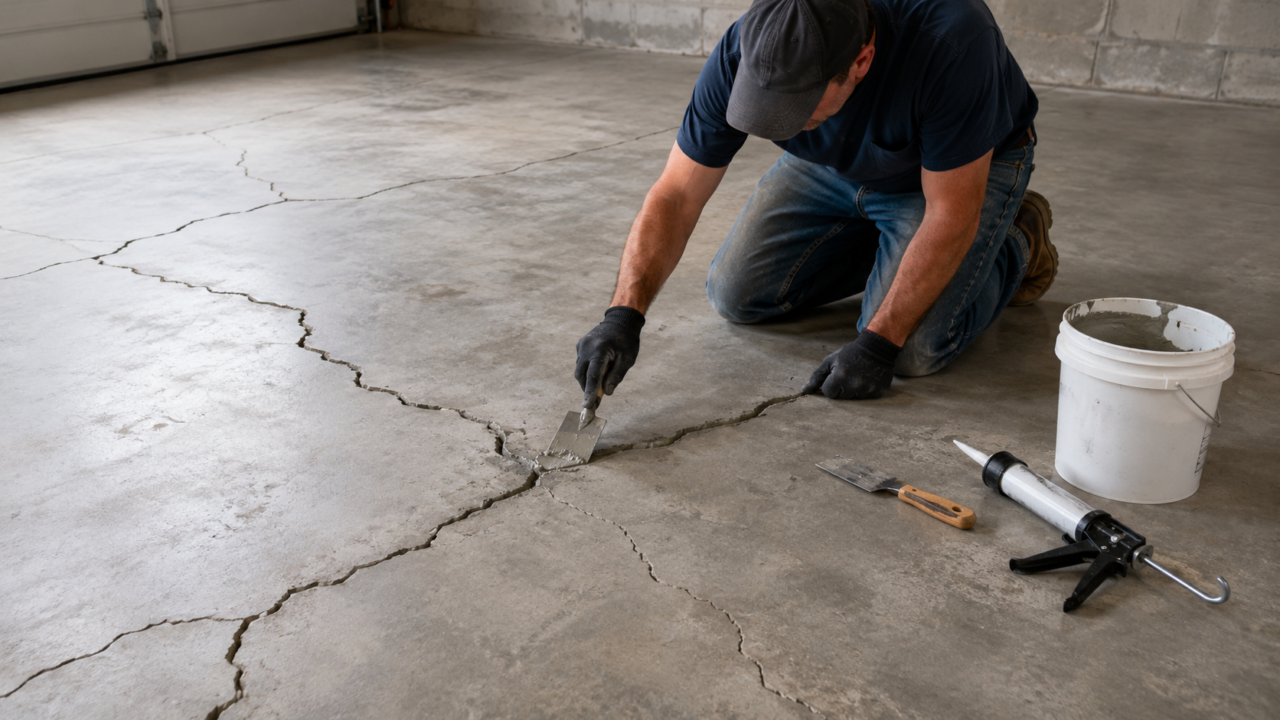
Concrete floor cracks are common, but not all cracks are the same. Some hairline cracks are mostly cosmetic and happen as concrete cures and shrinks. Other cracks, especially those that are wide, uneven, spreading, or connected to moisture problems, may point to installation issues, soil movement, settlement beneath the slab, or structural stress.
Understanding the causes of cracks in concrete is the first step in knowing whether a crack is normal, whether it needs a basic repair, or whether it should be evaluated by a concrete repair professional. This guide explains why concrete floors crack, what different crack patterns may mean, and how repair methods are typically selected based on the size, severity, and underlying cause of the problem.
Are Cracks in Concrete Floors Normal?
Some cracking is expected in concrete. Concrete is strong, but it is not flexible. As it cures, it loses moisture, shrinks, and reacts to temperature changes. Small cracks can appear even when the concrete was placed correctly.
In many cases, narrow hairline cracks are not a major concern, especially if they:
- Are very thin
- Do not continue spreading
- Do not allow water to seep through
- Do not create uneven slab edges
- Do not appear with signs of sinking, heaving, or instability
However, some cracks require closer attention. Wider cracks, cracks that change over time, cracks with moisture, and cracks that create height differences in the floor may indicate a deeper problem. These issues are often related to soil movement, voids beneath the slab, poor drainage, settlement, or structural stress.
What Is the Most Common Cause of Cracking in Concrete?
One of the most common causes of cracking in concrete is shrinkage during the curing process. As fresh concrete hardens, moisture evaporates from the slab. This causes the concrete to shrink slightly. Since concrete has limited ability to stretch, that shrinkage can create tension within the slab and lead to cracks.
That said, shrinkage is only one cause. When homeowners ask, “what is the most common cause of cracking in concrete?”, the answer often depends on the location, installation quality, soil conditions, drainage, slab thickness, load exposure, and whether control joints were installed correctly.
In concrete floors, the most common causes usually include:
- Normal curing shrinkage
- Excess water in the mix
- Improper installation or finishing
- Lack of control joints
- Poor subgrade preparation
- Soil movement or settlement beneath the slab
- Moisture and drainage problems
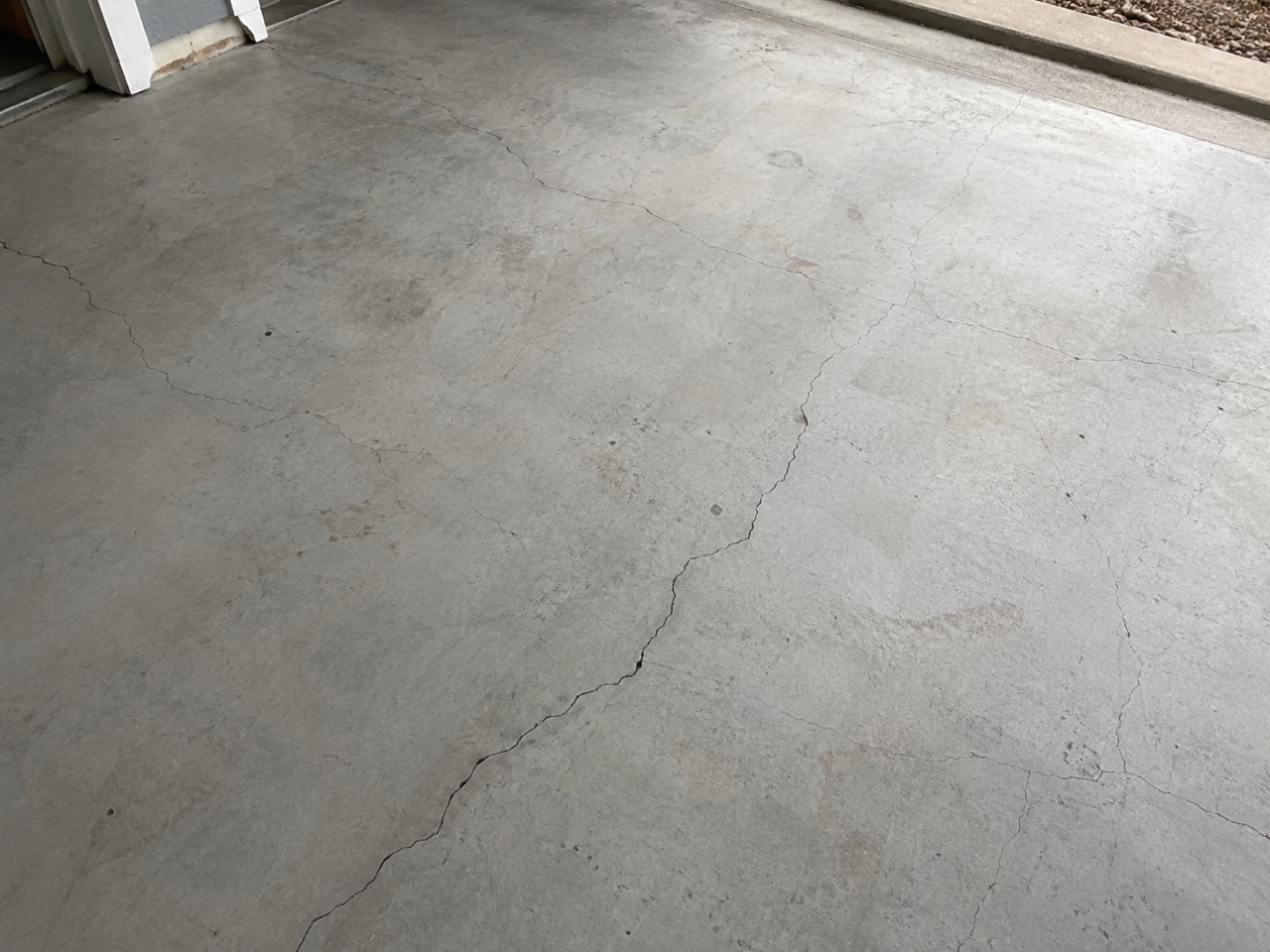
Common Causes of Cracks in Concrete Floors
Concrete cracks can develop for many reasons. Some are related to the way the concrete was mixed and installed. Others happen because of what is occurring beneath or around the slab.
1. Concrete Shrinkage During Curing
Shrinkage cracks form as concrete dries, hardens, and loses moisture. These cracks are often thin and may appear shortly after placement. They are common in many concrete floors and are usually cosmetic unless they widen, spread, or connect to other signs of slab movement.
Shrinkage cracks are more likely when the concrete cures too quickly, the slab is exposed to dry or windy conditions, or proper curing practices are not followed.
2. Too Much Water in the Concrete Mix
Adding too much water makes concrete easier to pour and finish, but it can weaken the final slab. A high water content increases shrinkage as the concrete cures. More shrinkage means a greater chance of cracking.
Excess water can also reduce surface durability, increase dusting, and make the slab more vulnerable to wear, moisture intrusion, and surface defects.
3. Improper Installation or Finishing
Installation quality plays a major role in how a concrete floor performs over time. Common installation issues include improper slab thickness, poor curing, overworking the surface, finishing too early or too late, and failing to reinforce the slab where needed.
Improper finishing can trap excess moisture at the surface or weaken the top layer of the concrete. Over time, this can contribute to cracking, scaling, crazing, or surface deterioration.
4. Lack of Control Joints
Control joints are planned joints cut or formed into the concrete to help manage where cracks occur. Since concrete naturally shrinks and moves, control joints create intentional weak points that guide cracking in a controlled pattern.
Without enough control joints, or when joints are placed incorrectly, the concrete may crack randomly across the floor. These cracks can be more noticeable and more difficult to manage than cracks that occur within properly placed joints.
5. Poor Subgrade Preparation
The subgrade is the soil or base material beneath the concrete slab. If it is not properly compacted, leveled, or drained, the slab may not have uniform support.
Poor subgrade preparation can lead to hollow areas, sinking sections, uneven settlement, and cracking. Even a well-poured slab can crack if the base underneath it is unstable.
6. Soil Movement Beneath the Slab
Soil naturally expands, contracts, shifts, and settles depending on moisture levels, soil type, drainage conditions, and seasonal changes. Expansive soils can swell when wet and shrink when dry, putting pressure on the concrete above.
Soil movement is one of the more serious causes of cracks in concrete because the damage often comes from below the slab. Surface repair alone may not be enough if the ground is still moving.
7. Settling Beneath the Concrete Floor
Settlement occurs when the soil or base below the slab compresses, washes out, or loses support. As the slab settles unevenly, it can crack under stress.
Settlement cracks are often accompanied by uneven slab edges, dips in the floor, hollow-sounding areas, or cracks that continue to widen. This type of cracking usually needs more than basic crack filling.
8. Heavy Loads
Concrete floors can crack when they are exposed to loads beyond what they were designed to support. This may happen in garages, shops, warehouses, barns, driveways, or industrial spaces where vehicles, equipment, storage racks, or machinery place heavy pressure on the slab.
If the slab is too thin, poorly reinforced, or unsupported underneath, heavy loads can cause cracking, deflection, or settlement.
9. Impact Damage
Dropped tools, heavy equipment, vehicle impact, or repeated force can damage concrete floors. Impact cracks may appear as localized cracks, chips, spalls, or fractured areas around the point of contact.
Minor impact damage may be repairable with patching products, but deeper cracks or broken sections may require more extensive repair.
10. Freeze-Thaw Cycles
In colder climates, water can enter small cracks or pores in the concrete. When that water freezes, it expands. Repeated freezing and thawing can widen cracks, damage the surface, and contribute to scaling or spalling.
Freeze-thaw damage is more common in exterior slabs, garages, shops, and other areas exposed to cold temperatures and moisture.
11. Moisture Problems
Moisture can contribute to cracking in several ways. Poor drainage, plumbing leaks, high groundwater, condensation, or water intrusion beneath the slab can weaken the base, increase soil movement, and cause pressure below the concrete.
Cracks with dampness, water seepage, white powdery residue, or recurring stains should be taken seriously. These signs may indicate moisture movement through the slab or problems below it.
12. Tree Roots
Tree roots can grow beneath or near concrete floors and slabs. As roots expand, they can lift sections of concrete, create pressure, and cause cracking or heaving.
Root-related cracks are often seen near exterior slabs, patios, garages, walkways, and structures close to large trees. In some cases, root management and slab repair may both be needed.
13. Thermal Expansion and Contraction
Concrete expands when temperatures rise and contracts when temperatures fall. Over time, this movement can create stress, especially if the slab lacks proper joints or space to move.
Thermal movement can cause cracks in floors exposed to temperature swings, radiant heating, direct sunlight, exterior conditions, or unconditioned spaces.
Types of Cracks Homeowners May See in Concrete Floors
Different cracks can point to different problems. While appearance alone does not always confirm the cause, crack patterns can help determine whether a floor needs routine repair or professional evaluation.
Hairline Cracks
Hairline cracks are very thin and often appear during curing. They are usually cosmetic if they remain narrow, stable, and dry.
Shrinkage Cracks
Shrinkage cracks form as the slab dries and contracts. They may appear randomly or near areas where control joints were missing or ineffective.
Settlement Cracks
Settlement cracks occur when the soil or base beneath the slab moves or compresses. These cracks may be wider, uneven, or associated with sinking sections of concrete.
Structural Cracks
Structural cracks may indicate that the slab is under significant stress or that it is connected to a larger foundation or load-bearing issue. These cracks are often wider, deeper, or more active than cosmetic cracks.
Crazing or Spiderweb Cracks
Crazing appears as a network of fine, shallow cracks on the concrete surface. These cracks are often related to finishing, curing, or surface drying issues. Crazing is usually cosmetic, but it can affect the appearance of the floor.
Heaving Cracks
Heaving cracks happen when pressure from below pushes the slab upward. This may be caused by expansive soil, frost, tree roots, or moisture-related soil movement. Heaving can create uneven surfaces and trip hazards.
Cracks With Moisture or Efflorescence
Cracks that show dampness, water seepage, or white powdery residue may indicate moisture movement through the concrete. Efflorescence forms when water carries salts to the surface and then evaporates.
Cracks With Uneven Slab Edges
When one side of a crack sits higher than the other, the slab may be settling, heaving, or losing support. Uneven slab edges are more concerning than flat, narrow cracks because they can point to movement below the floor.
How to Tell Whether a Concrete Floor Crack Is Serious
Not every crack needs major repair, but some warning signs should not be ignored. A concrete floor crack may require closer attention if it:
- Is wider than 1/4 inch
- Continues to spread or lengthen
- Allows water seepage
- Appears suddenly in multiple areas
- Crosses load-bearing sections
- Creates uneven slab edges
- Makes the floor feel hollow, soft, or unstable
- Is associated with sinking, heaving, or recurring moisture
- Reappears after previous repairs
A crack’s width matters, but it is not the only factor. A narrow crack with water seepage or slab movement can be more concerning than a wider crack that is dry, stable, and isolated.
Best Repair Methods for Cracks in Concrete Floors
The best repair method depends on the crack’s size, depth, cause, and severity. A cosmetic surface crack is handled differently than a crack caused by settlement, voids, or soil movement.
Repairing Hairline and Minor Concrete Cracks
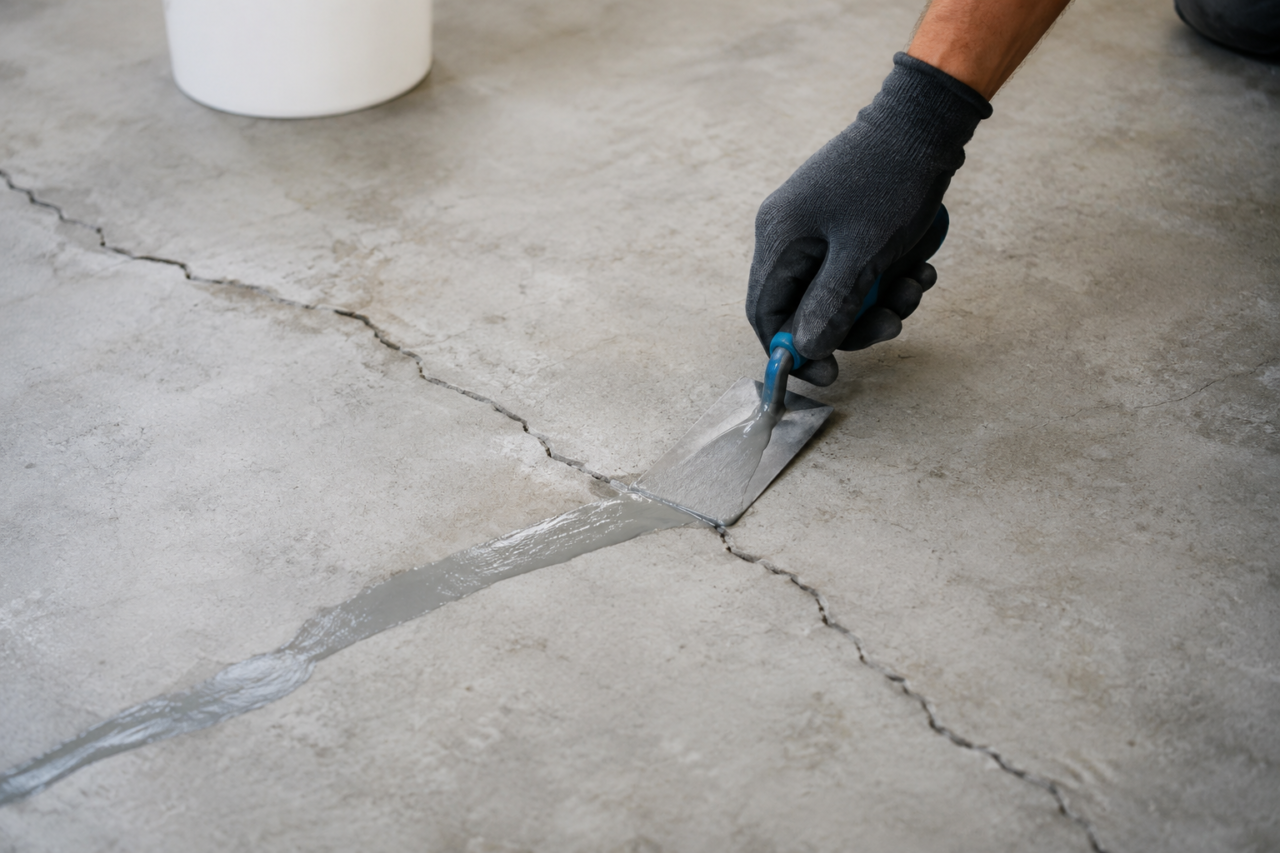
Hairline and minor cracks are often repaired to improve appearance and help prevent moisture or debris from entering the opening. The general repair process may include:
- Cleaning the crack to remove dust, dirt, and loose material
- Applying a concrete crack filler, epoxy, or suitable repair product
- Smoothing the surface so the repair blends with the surrounding floor
- Sealing the area to help protect it from moisture and wear
These repairs are most appropriate for stable cracks that are not caused by active movement beneath the slab.
Repairing Larger or Deeper Cracks
Larger cracks usually require a more durable repair approach. Depending on the situation, repair methods may include:
- Routing and sealing: The crack is widened slightly to create a clean channel, then filled with a flexible or semi-rigid sealant.
- Epoxy injection: Epoxy can bond cracks and restore strength in certain structural or semi-structural repair situations.
- Polyurethane filler: Flexible polyurethane materials can help seal cracks where some movement or moisture exposure is expected.
- Concrete patching compound: Damaged or missing concrete can be restored with patching materials designed for the depth and use of the floor.
- Grinding or leveling uneven edges: Raised or offset crack edges can be ground down or leveled to reduce trip hazards.
- Slab stabilization: If voids exist beneath the concrete, the slab may need support before the crack itself is repaired.
The key is identifying why the crack formed. Filling a crack without addressing the cause may only provide a temporary improvement.
Cracks Caused by Settling or Soil Movement
Cracks caused by settling or soil movement need special attention because the visible crack is often only a symptom. If the slab has lost support beneath it, surface patching alone may not solve the underlying problem.
For example, a crack may be caused by washed-out soil, poor compaction, erosion, expansive soil, drainage problems, or voids under the slab. In these cases, a patch may hide the crack temporarily, but the concrete can continue to move if the base is not stabilized.
Common repair options for settlement-related concrete cracks include:
- Slabjacking: A repair method that raises sunken concrete by filling voids beneath the slab.
- Polyurethane foam injection: Lightweight expanding foam is injected below the slab to fill voids, lift concrete, and improve support.
- Mudjacking: A cement-based slurry is pumped beneath the slab to raise and stabilize settled concrete.
- Drainage correction: Gutters, downspouts, grading, or drainage systems may be improved to reduce water-related soil movement.
- Subgrade repair: In severe cases, the unstable base may need to be corrected before the slab can perform properly.
When settlement is involved, the goal is not just to fill the crack. The goal is to restore support beneath the concrete and reduce the conditions that caused the movement.
When Concrete Floor Replacement May Be Better Than Repair
Concrete repair can solve many cracking problems, but replacement may be the better option when the slab is too damaged or the base has failed extensively.
Replacement may be worth considering when there is:
- Widespread cracking across the floor
- Severe settlement in multiple areas
- Major heaving from soil, frost, or roots
- Deep structural damage
- Recurring moisture problems
- A failing or poorly prepared base
- Repeated cracking after previous repairs
- Extensive surface deterioration, spalling, or crumbling
A professional evaluation can help determine whether repair, stabilization, resurfacing, or full replacement is the most cost-effective long-term solution.
How to Help Prevent Concrete Floor Cracks
While not every crack can be prevented, good planning and maintenance can reduce the risk of serious cracking.
Helpful prevention steps include:
- Using the right concrete mix for the application
- Avoiding excess water in the mix
- Preparing and compacting the subgrade properly
- Installing control joints at the right spacing and depth
- Allowing the concrete to cure correctly
- Managing drainage around the slab
- Sealing cracks before moisture intrusion worsens
- Avoiding loads beyond the slab’s design capacity
- Addressing soil movement or voids early
Prevention is especially important in areas with freeze-thaw cycles, expansive soils, heavy equipment, or recurring drainage issues.
Concrete Crack Repair Services From Slabjack Geotechnical
Slabjack Geotechnical is a family-owned and operated, full-service concrete repair company serving Washington and Northern Idaho. Our team helps property owners address foundation settlement issues and concrete damage with practical, long-lasting repair solutions.
We offer a wide range of concrete repair services, including slabjacking, concrete raising, pressure grouting, concrete grinding, void filling, concrete crack repair, and joint sealing repair. We also seal leaking culverts, large-diameter pipes, and concrete ditches.
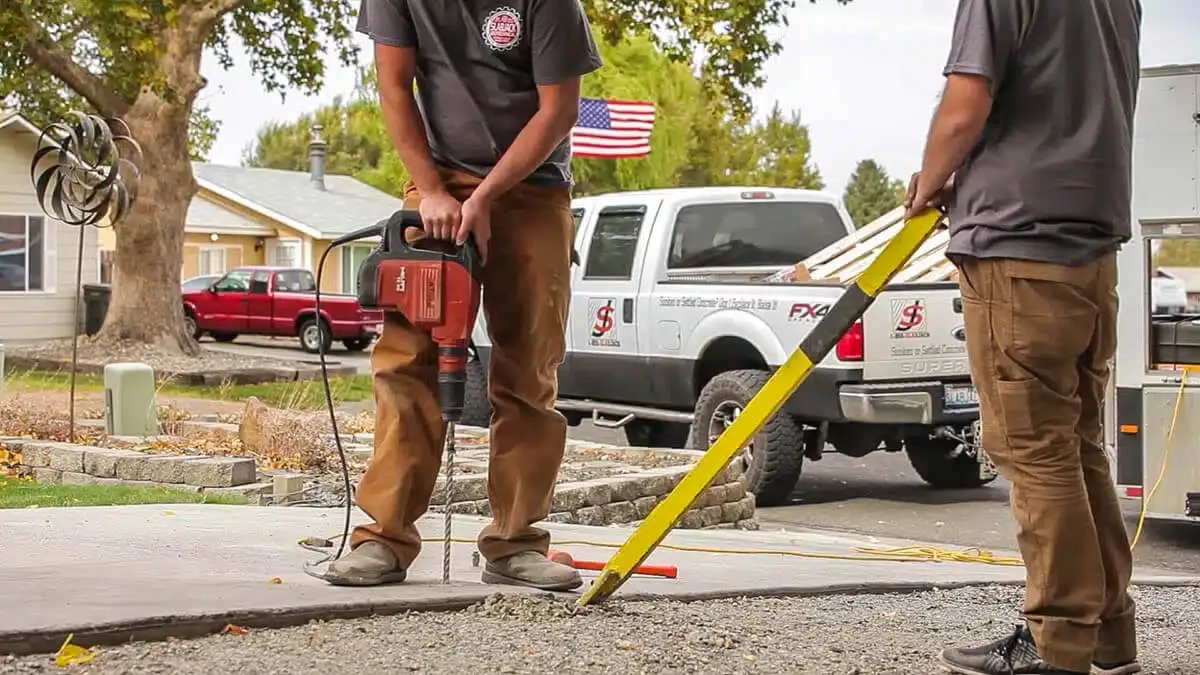
One of our key repair solutions is geo-polymer injection. This method uses expanding polyurethane material to fill voids, stabilize soil, and raise settled concrete with minimal disruption. Geo-polymer injection is lightweight, precise, fast-curing, and often an effective option for concrete floors, slabs, driveways, sidewalks, and other settled concrete surfaces.
Contact Slabjack Geotechnical Today for a Free Repair Quote
Concrete floor cracks can be cosmetic, but they can also be signs of settlement, soil movement, moisture problems, or structural stress. The right solution depends on the cause of the crack, not just the size of the opening at the surface.
If you are dealing with cracked, uneven, sunken, or unstable concrete, contact Slabjack Geotechnical to learn more about your repair options or request a service quote. Our team can help determine whether crack repair, joint sealing, slabjacking, geo-polymer injection, void filling, grinding, or another concrete repair service is the right fit for your property.
FAQs
Are cracks in concrete floors normal?
Yes, some cracks in concrete floors are normal, especially thin hairline cracks that form as the concrete cures. However, cracks that are wide, uneven, spreading, leaking water, or appearing in multiple areas may point to settlement, poor installation, moisture issues, or structural stress.
Can moisture cause cracks in concrete floors?
Yes, moisture can contribute to cracking by weakening the subgrade, washing out soil, increasing soil expansion, or creating pressure beneath the slab. Cracks with dampness, water seepage, stains, or efflorescence should be evaluated because the moisture source may need to be corrected.
How are small concrete floor cracks repaired?
Small concrete floor cracks are often repaired by cleaning the crack, applying a concrete crack filler or epoxy, smoothing the surface, and sealing the area. This approach works best for stable cracks that are not caused by active settlement or soil movement.
How are large cracks in concrete floors repaired?
Large cracks may require routing and sealing, epoxy injection, polyurethane filler, concrete patching compound, grinding, leveling, or slab stabilization. The best repair method depends on whether the crack is cosmetic, structural, moisture-related, or caused by movement beneath the slab.