
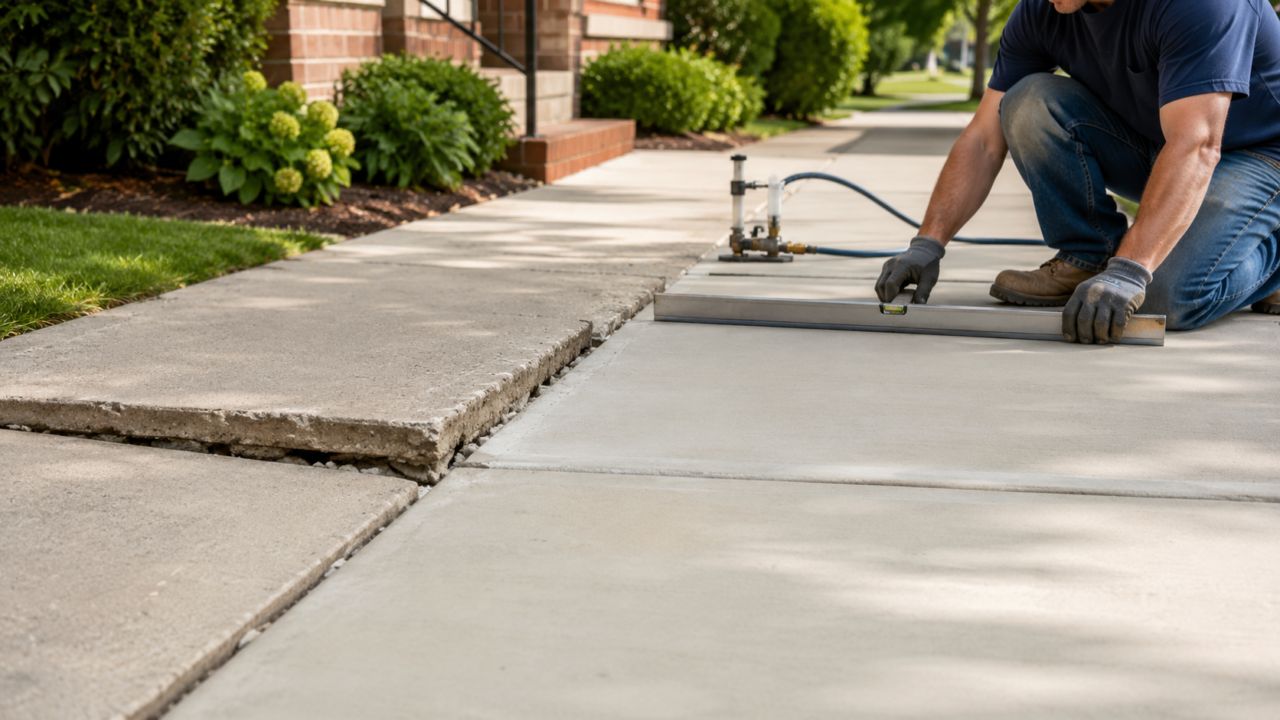
When a driveway, sidewalk, patio, garage floor, warehouse slab, or pool deck begins to settle, it can create trip hazards, drainage problems, structural stress, and long-term damage to nearby surfaces. The sooner you identify the cause and choose the right repair method, the easier it is to fix sinking concrete before the problem gets worse.
The best concrete repair method depends on why the slab is sinking, how much settlement has occurred, the condition of the concrete, and what is happening beneath the surface. In many cases, professional concrete lifting can restore the slab without full replacement. In other cases, additional stabilization, void filling, grinding, sealing, or replacement may be needed to create a durable repair.
Below, our concrete repair professionals explain what causes sinking concrete and compare the best methods used to fix sinking concrete effectively.
What Causes Sinking Concrete? Understanding Soil Movement
Concrete usually sinks because the soil, base material, or support system underneath the slab can no longer hold it in place. Concrete is heavy, and once the ground beneath it shifts, washes out, compresses, or erodes, the slab may crack, drop, tilt, or separate from nearby surfaces.
Common causes of sinking concrete include:
- Poor soil compaction: If the soil was not properly compacted before the concrete was poured, it may settle over time.
- Water erosion: Rainwater, drainage issues, downspouts, irrigation, or leaking pipes can wash away soil beneath the slab.
- Freeze-thaw movement: In cold climates, freezing and thawing cycles can expand, contract, and weaken the soil below concrete.
- Organic material breakdown: Buried roots, wood, or other organic material can decompose and leave voids beneath the slab.
- Heavy loads: Driveways, commercial slabs, loading areas, and warehouse floors can settle when the base cannot support repeated weight.
- Poor drainage: Water pooling near concrete can soften the soil and accelerate settlement.
- Expansive or unstable soils: Some soils shrink, swell, or shift more easily depending on moisture conditions.
Before choosing how to fix sinking concrete, a professional should evaluate both the visible slab damage and the underlying cause. Lifting the slab without addressing the soil or void issue may only provide a temporary improvement.
Signs You Need to Fix Sinking Concrete
Not every crack or uneven slab means the concrete needs major repair, but sinking concrete should not be ignored. A sinking slab can also reverse drainage and create structural issues, not just visible cracking, and settlement often continues once the slab loses support.
You may need professional concrete repair if you notice:
- Uneven sidewalks, driveways, patios, or walkways
- Concrete slabs sloping toward a building
- Cracks that continue to widen or spread
- Gaps beneath concrete edges
- Water pooling near settled concrete, since sinking slabs often reverse proper drainage and cause water to collect
- Doors, gates, or garage doors no longer closing properly because slab misalignment can make them stick
- Trip hazards between adjoining slabs, with uneven surfaces posing added risk for children, seniors, and anyone with mobility issues
- Hollow sounds beneath concrete when tapped
- Sunken concrete around porches, steps, or foundations
The best repair method will depend on the slab’s condition and the amount of support that needs to be restored below it.
1. Geo-Polymer and Polyurethane Foam Injection: One of the Best Methods to Fix Sinking Concrete
Geo-polymer injection, also known as polyurethane foam concrete lifting, is one of the most efficient and precise methods used to fix sinking concrete. This process involves drilling small holes through the slab and injecting an expanding geo-polymer material beneath the concrete. As the material expands, it fills voids, stabilizes loose areas, and lifts the slab back toward its proper position.
This method is commonly used for sidewalks, driveways, garage floors, patios, pool decks, warehouse floors, roadways, and other settled concrete surfaces.

How Geo-Polymer Injection Works
A concrete repair crew identifies the settled areas, drills small injection holes, and places the geo-polymer, an expanding polyurethane foam, beneath the slab in controlled amounts. The material expands below the surface, and with polyurethane foam injection lifting and stabilizing the slab as it spreads beneath it, it fills empty spaces and applies upward pressure to raise the concrete. Once the slab reaches the desired elevation, the holes are patched.
Best Uses for Geo-Polymer Injection
Geo-polymer injection is a strong option when you need to fix sinking concrete caused by:
- Soil erosion
- Voids beneath the slab
- Poor compaction
- Water-related settlement
- Uneven slabs with limited surface damage
- Concrete that needs fast return-to-service time
Advantages of Geo-Polymer Injection
Geo-polymer injection is often preferred because it is:
- Minimally invasive: The injection holes are small compared to traditional mudjacking holes.
- Fast-curing: Many slabs can be used again shortly after repair.
- Lightweight: The material adds less weight to unstable soils than cement-based slurry.
- Precise: Technicians can control lift points with accuracy.
- Water-resistant: The material helps reduce future water intrusion beneath the slab.
- Versatile: It works for residential, commercial, municipal, and industrial concrete repair.
- A higher upfront investment: Polyurethane foam injection is often more expensive than mudjacking, but many owners choose it for precision, reduced disruption, and to help avoid repeated repairs.
When Geo-Polymer Injection May Not Be Enough
Geo-polymer injection is highly effective, but it may not be the right choice if the concrete is severely cracked, crumbling, too thin, or structurally unsound. In those cases, replacement or a combination of repair methods may be necessary.
2. Slabjacking: A Proven Concrete Raising Method for Sinking Concrete
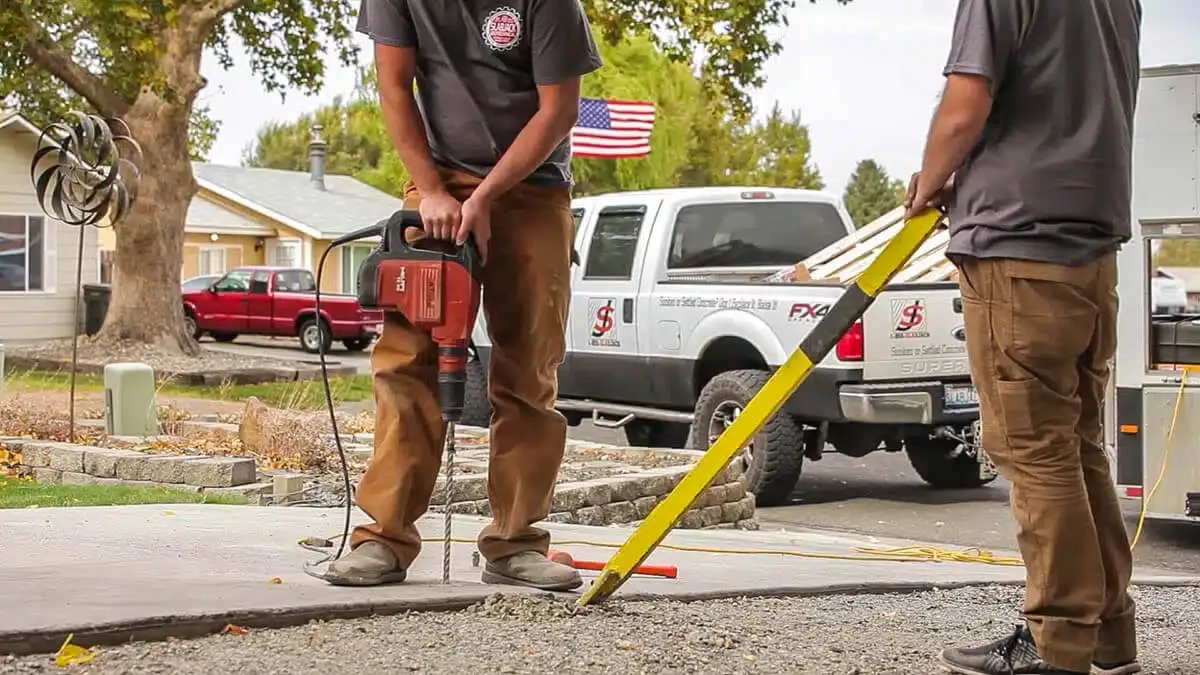
Slabjacking is another common method used to fix sinking concrete. Traditional slabjacking, sometimes called mudjacking, uses a cement-based slurry that is pumped beneath a settled slab to raise it. The material fills voids and creates pressure under the concrete until the slab lifts.
While newer geo-polymer injection methods are often preferred for precision and speed, slabjacking remains a useful repair option in certain situations.
How Slabjacking Works
Technicians drill access holes through the sunken concrete, and traditional mud jacking, also called slab jacking, pumps a cement-based slurry beneath the slab to raise and level it. As the material fills the voids below, it pushes the slab upward. Once the slab is raised, the holes are patched and the surface is cleaned.
Best Uses for Slabjacking
Slabjacking may be used for:
- Driveways
- Sidewalks
- Patios
- Garage floors
- Porches
- Larger slabs with moderate settlement
- Concrete that still has good structural integrity
Advantages of Slabjacking
Slabjacking can be a cost-effective way to fix sinking concrete because it:
- Reuses the existing slab
- Avoids full demolition and replacement
- Fills larger voids beneath concrete
- Can correct many uneven slab issues
- Is suitable for many residential and commercial applications
When Slabjacking May Not Be the Best Choice
Traditional slabjacking material is heavier than geo-polymer material. That heavier slurry can be a drawback in areas with unstable soil or other weak soils beneath the slab. If the soil beneath the slab is weak or unstable, adding more weight may not be ideal. Slabjacking also typically requires larger drill holes and may take longer to cure than geo-polymer injection.
3. Pressure Grouting: Stabilizing Soil and Filling Voids Beneath Sinking Concrete
Pressure grouting is a professional concrete repair and soil stabilization method used when sinking concrete is caused by deeper voids, loose soil, or subsurface instability. Instead of only lifting the slab, pressure grouting can improve the support system below the concrete.
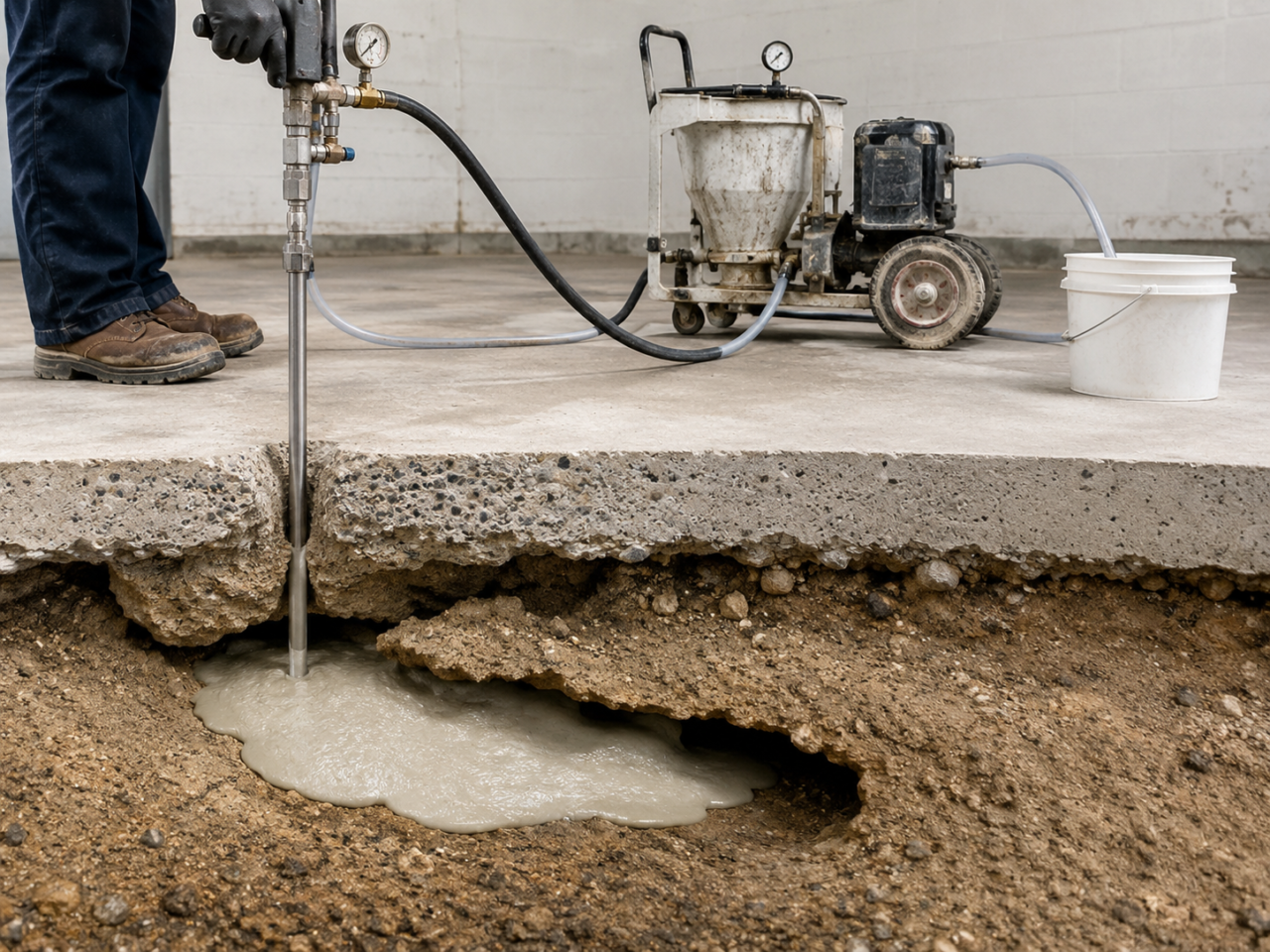
This method involves injecting grout under pressure into the ground, voids, or weak zones beneath a slab or structure.
How Pressure Grouting Works
A grout mixture is pumped through injection points into targeted areas below the concrete. The grout fills voids, strengthens weak zones, and can help stabilize soil that has lost bearing capacity. Depending on the project, pressure grouting may be used on its own or alongside slab lifting.
Best Uses for Pressure Grouting
Pressure grouting is often used to fix sinking concrete or stabilize areas affected by:
- Deep voids beneath slabs
- Loose or poorly compacted soils
- Subsurface erosion
- Utility trench settlement
- Commercial and industrial floor settlement
- Infrastructure-related concrete settlement
- Areas where soil strength needs improvement
Advantages of Pressure Grouting
Pressure grouting is useful because it:
- Fills larger or deeper voids
- Improves subsurface stability
- Can support heavy-duty concrete slabs
- Helps address soil-related causes of settlement
- Can be customized for complex site conditions
When Pressure Grouting May Not Be Enough
Pressure grouting is not always the best standalone solution for cosmetic slab leveling. If the concrete needs to be raised precisely, pressure grouting may be combined with geo-polymer injection, slabjacking, or other concrete repair services.
4. Compaction and Permeation Grouting: Strengthening Weak Soil Below Concrete
When the soil beneath sinking concrete is loose, sandy, unstable, or prone to shifting, compaction grouting or permeation grouting may be recommended. These methods focus on improving the ground beneath the slab rather than simply lifting the surface.
How Compaction and Permeation Grouting Work
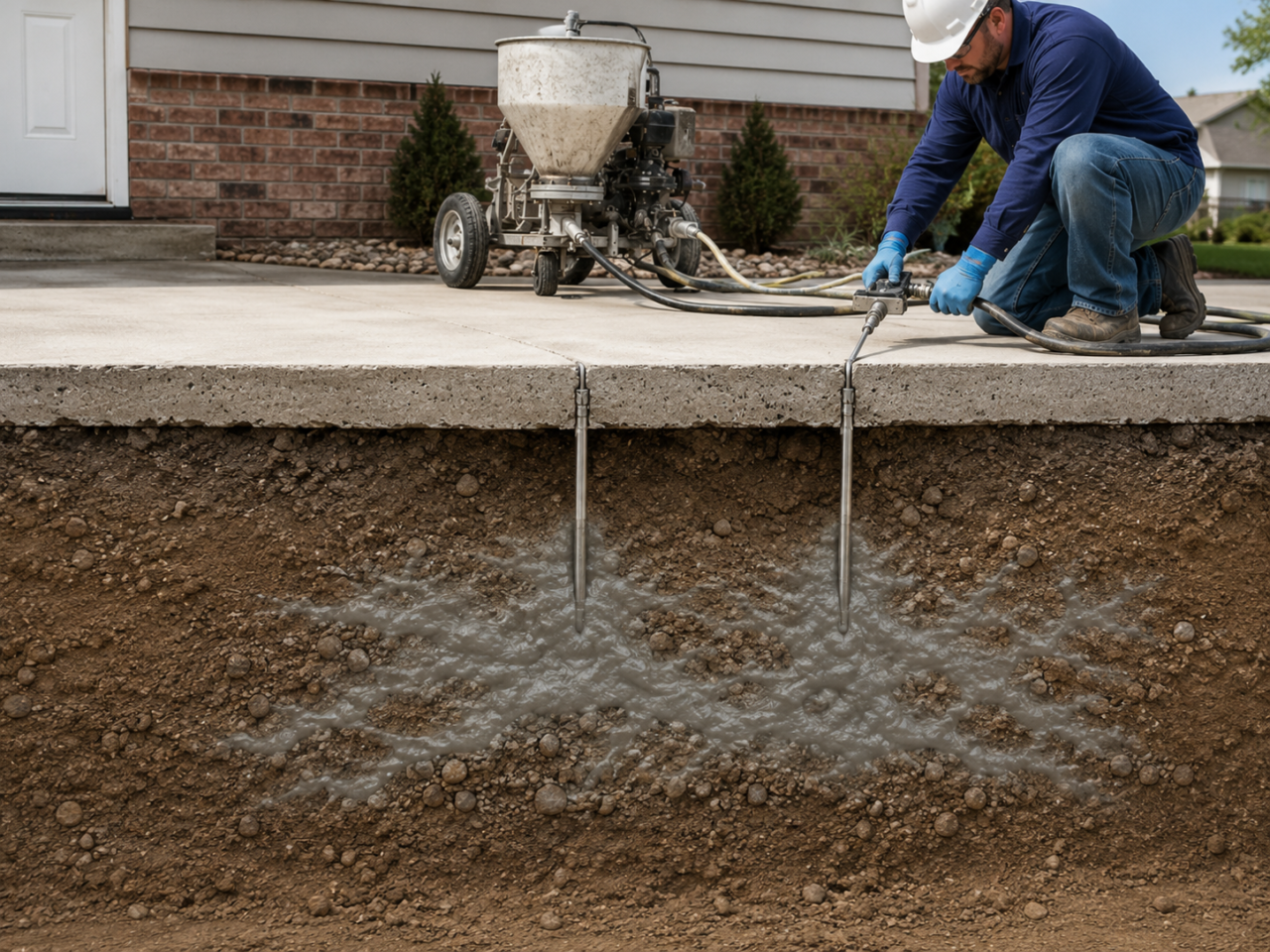
Compaction grouting involves injecting a stiff grout mixture into the soil to densify and strengthen the ground. As the grout is pumped in, it displaces and compacts surrounding soil.
Permeation grouting involves injecting a low-viscosity grout into porous soil so it can flow through the soil structure, bind particles together, and reduce permeability.
Best Uses for Compaction and Permeation Grouting
These methods may be used when sinking concrete is related to:
- Loose granular soils
- Poorly compacted fill
- Soil voids
- Subsurface washout
- Water movement through soil
- Settlement near structures or infrastructure
- Areas needing deeper soil improvement
Advantages of Compaction and Permeation Grouting
These grouting methods can help:
- Strengthen the soil beneath concrete
- Reduce future settlement risk
- Improve load-bearing capacity
- Stabilize difficult site conditions
- Support long-term concrete repair performance
When Soil Grouting May Need to Be Combined With Other Repairs
Compaction and permeation grouting may stabilize the ground, but they do not always restore the finished concrete surface by themselves. If a slab has already dropped, the project may also require lifting, grinding, joint repair, or replacement to create a safe, even surface. If it has continued to settle unevenly, soil improvement alone may not restore the finished surface.
5. Void Filling: Restoring Support Beneath Sinking Concrete
Void filling is an important repair method when concrete has not fully collapsed but has lost support underneath. A slab may sound hollow, flex under load, or show signs of cracking because empty space has developed below it.
Filling those voids helps restore support and can prevent the concrete from sinking further.

How Void Filling Works
A repair material is injected or pumped into the empty space beneath the concrete. Depending on the project, this may involve geo-polymer material, grout, or another engineered fill material. The goal is to eliminate the unsupported space below the slab.
Best Uses for Void Filling
Void filling is commonly used for:
- Slabs with hollow areas beneath them
- Concrete above washed-out soil
- Driveways and sidewalks with edge voids
- Industrial slabs exposed to heavy traffic
- Concrete near drainage structures
- Slabs that need stabilization before lifting or sealing
Advantages of Void Filling
Void filling can:
- Restore slab support
- Reduce cracking and movement
- Help prevent additional settlement
- Improve load transfer below concrete
- Support other concrete repair methods
When Void Filling Is Not a Complete Repair
Void filling is primarily a stabilization method. If the slab has already sunk significantly, void filling alone may not fully level the surface. In those cases, concrete lifting or surface correction may also be needed.
6. Concrete Grinding: A Surface-Level Option for Minor Uneven Concrete
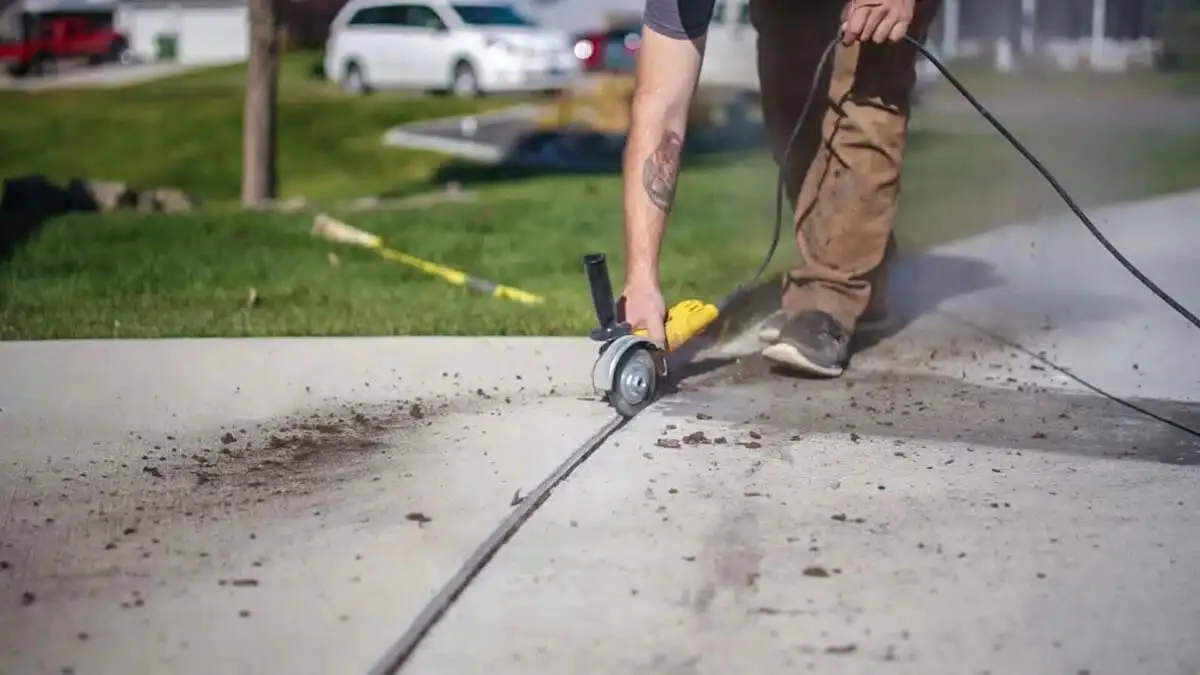
Concrete grinding does not lift or stabilize sinking concrete, but it can be useful when the settlement is minor and the main concern is a trip hazard between adjoining slabs. This method removes a portion of the higher slab edge to create a smoother transition.
How Concrete Grinding Works
A grinder is used to shave down the raised edge of a concrete slab. This creates a gradual slope between uneven sections and reduces the risk of tripping.
Best Uses for Concrete Grinding
Concrete grinding may be appropriate for:
- Minor sidewalk trip hazards
- Small height differences between slabs
- Areas where lifting is not practical
- Temporary or budget-conscious repairs
- Concrete with limited settlement
Advantages of Concrete Grinding
Concrete grinding can be helpful because it is:
- Quick
- Cost-effective
- Useful for small height differences
- Less invasive than replacement
- Effective for reducing certain trip hazards
When Concrete Grinding Is Not Enough
Grinding does not fix sinking concrete at its source. If the slab continues to settle, the uneven surface may return or worsen. Grinding also changes the slab’s appearance and can expose aggregate. For larger settlement issues, lifting and stabilization are usually better long-term solutions.
7. Joint Sealing and Crack Repair: Protecting Repaired Concrete From Water Damage
Joint sealing and crack repair are important parts of a complete sinking concrete repair plan. Water is one of the most common causes of concrete settlement. Proper drainage and managing water runoff help prevent sinking concrete and protect the home’s foundation. If open joints and cracks allow water to flow under the slab, soil erosion can continue even after the concrete is lifted.

How Joint Sealing and Crack Repair Work
After the concrete is raised, stabilized, or leveled, joints and cracks are cleaned and sealed with appropriate repair materials. This helps block water, debris, and soil movement through the slab surface.
Best Uses for Joint Sealing and Crack Repair
Joint sealing and crack repair are useful for:
- Driveways
- Sidewalks
- Patios
- Pool decks
- Garage slabs
- Commercial floors
- Concrete surfaces exposed to drainage or freeze-thaw cycles
If you still notice standing water or pooling water near repaired concrete, drainage corrections may still be needed.
Advantages of Joint Sealing and Crack Repair
These services help:
- Reduce water intrusion below the slab
- Protect lifting and grouting repairs
- Improve appearance
- Limit future erosion
- Extend the life of the concrete
- Reduce weed growth in joints and cracks
They also help protect curb appeal by reducing visible joint damage and water-related staining. A sunken slab is just an eyesore to some homeowners, but sealing is also part of preventing further deterioration after lifting or stabilization.
When Joint Sealing Is Not Enough
Joint sealing and crack repair do not raise settled concrete or restore lost soil support. They are best used as part of a broader repair strategy after the underlying settlement issue has been corrected.
8. Concrete Replacement: When Sinking Concrete Cannot Be Repaired
In many cases, it is possible to fix sinking concrete without tearing it out. However, replacement may be the best option when the concrete is too damaged to lift or stabilize.

How Concrete Replacement Works
The damaged old slab is removed, a new slab is installed, and the area is left undisturbed before the new concrete cures. Proper drainage, soil preparation, reinforcement, and curing are important to reduce the risk of future settlement, and sound construction practices before pouring concrete are critical as well.
Best Uses for Concrete Replacement
Replacement may be necessary when:
- The slab is severely cracked or broken
- The concrete is crumbling or deteriorated
- The slab is too thin or weak to lift
- Tree roots have caused major distortion
- Settlement is extreme
- Drainage or base issues require full reconstruction
- The surface has reached the end of its service life
Advantages of Concrete Replacement
Concrete replacement can:
- Provide a completely new surface
- Allow full base correction
- Improve layout, slope, and drainage
- Address severely damaged concrete
- Create a long-term solution when lifting is not practical
Full slab replacement is usually the most expensive solution, but it can be the closest thing to a permanent fix when the slab is beyond repair.
When Replacement May Not Be Necessary
Replacement is often more expensive, disruptive, and time-consuming than concrete lifting. In many cases, concrete leveling or lifting is preferable when soil issues beneath the slab can be corrected without tearing everything out. If the slab is still structurally sound, geo-polymer injection, slabjacking, grouting, or void filling may be able to fix sinking concrete faster and with less disruption.
How to Choose the Best Concrete Leveling Method to Fix Sinking Concrete
The best way to fix sinking concrete is to start with a professional evaluation. A repair expert can determine whether the problem is surface-level, slab-related, soil-related, or caused by ongoing water movement.
Important factors include:
- The amount of settlement
- The cause of the sinking concrete
- The condition of the slab
- The presence of voids beneath the concrete
- Drainage and water flow around the area
- Soil type and compaction
- Load requirements
- Whether the area is residential, commercial, municipal, or industrial
- The desired timeline for using the slab again
- Severe settlement may require foundation repair such as piering, which involves driving steel piers into stable soil for support.
For many property owners, geo-polymer injection is one of the best repair methods because it lifts concrete quickly, fills voids, adds minimal weight, and reduces disruption. However, some projects require a combination of lifting, grouting, grinding, sealing, and drainage correction as effective methods depending on slab condition and soil conditions to create the best long-term result.
About Slabjack Geotechnical
At Slabjack Geotechnical, we are a family-owned and operated full-service concrete repair company serving Washington and Northern Idaho. Our team provides a wide range of professional concrete repair and geotechnical services, including slabjacking (concrete raising), pressure grouting, compaction and permeation grouting, concrete grinding, joint sealing repair, and void filling.
We also seal leaking culverts, large-diameter pipes, and concrete ditches. While every project is different, we place a strong focus on using the geo-polymer injection method for concrete lifting because it is precise, efficient, minimally invasive, and highly effective for many sinking concrete problems. Whether you need to lift a residential driveway, stabilize a commercial slab, fill voids, or protect concrete from water-related damage, our team can evaluate the issue and recommend the right repair approach.

Get Expert Help to Fix Sinking Concrete Before It Gets Worse
Sinking concrete can create safety hazards, drainage problems, and costly structural issues if it is left untreated. Fortunately, many settled slabs can be repaired without full replacement. Geo-polymer injection, slabjacking, pressure grouting, compaction grouting, permeation grouting, void filling, grinding, and joint sealing all have a place in professional concrete repair.
The best method depends on what caused the concrete to sink and what is needed to restore lasting support.
If you need to fix sinking concrete in Washington or Northern Idaho, contact us here at Slabjack Geotechnical today. Our experienced concrete repair professionals can inspect your project, explain your repair options, and provide a service quote for the solution that best fits your property.
FAQs
What is the best way to fix sinking concrete?
The best way to fix sinking concrete depends on the cause and condition of the slab, but geo-polymer injection is often one of the most effective methods for a sinking concrete slab because it lifts and stabilizes the slab with minimal disruption. This method fills voids beneath the slab and restores support.
Can sinking concrete be repaired without replacing it?
Yes, many sinking concrete slabs and uneven concrete slabs can be repaired without full replacement if the concrete is still structurally sound. Concrete lifting methods such as geo-polymer injection or slabjacking can often raise and stabilize the slab at a lower cost and with less downtime than replacement.
Will sinking concrete continue to get worse?
Concrete slabs sink when the soil support beneath them is lost, and excess moisture from heavy rains can worsen that movement over time. Water erosion, weak soil, open joints, and unsupported voids can continue to move the slab and create larger cracks, steeper slopes, or more serious safety hazards, and unresolved settling can also lead to future problems beyond cracks, including ongoing drainage and stability issues.
How much does it cost to fix sinking concrete?
The cost to fix sinking concrete depends on the size of the slab, the amount of settlement, the repair method, and the condition of the soil beneath it. The best way to get accurate pricing is to schedule a professional inspection and request a service quote.