
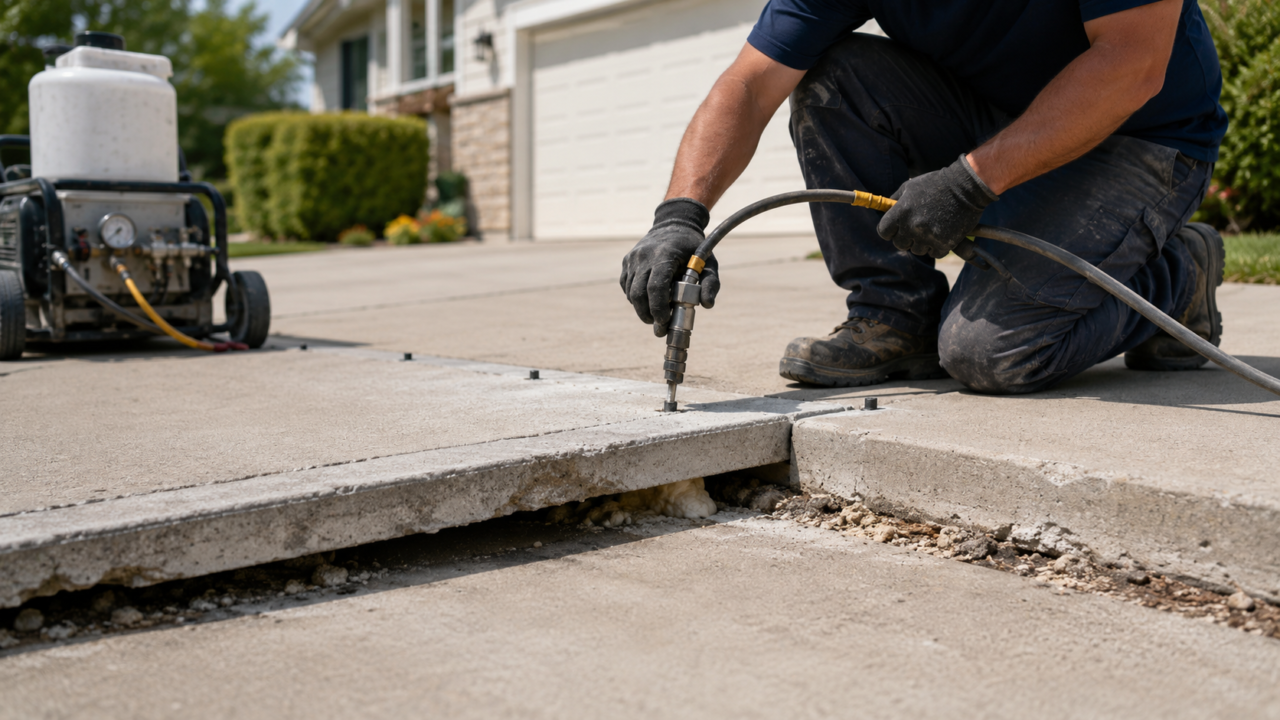
Uneven, cracked, or sinking concrete is more than a cosmetic issue. When concrete slabs begin to settle, shift, or pull away from surrounding surfaces, they can create trip hazards, drainage problems, structural concerns, and long-term property damage. Whether the issue affects a driveway, sidewalk, patio, garage floor, warehouse slab, or foundation-adjacent concrete, choosing the right repair method is essential for restoring safety and preventing the problem from getting worse.
The best concrete repair techniques depend on the cause of the damage, the condition of the slab, and the stability of the soil underneath. In many cases, uneven or sinking concrete is caused by soil erosion, poor compaction, water intrusion, voids beneath the slab, or weak subsurface conditions.
This guide explores common concrete repair techniques, including concrete lifting, grouting, crack repair, joint sealing, grinding, and void filling, while also explaining how concrete crack repair techniques can help protect surfaces from further deterioration.
Why Concrete Becomes Uneven or Starts to Sink
Concrete is strong, but it depends on the soil beneath it for support. When the ground under a slab moves, settles, washes away, or loses density, the concrete above it can crack, sink, tilt, or become uneven. Before choosing a repair method, it is important to understand why the concrete failed in the first place.
Common causes of uneven or sinking concrete include:
- Poorly compacted soil beneath the slab
- Water erosion or drainage problems
- Freeze-thaw cycles that shift the ground
- Expansive soils that shrink and swell
- Tree roots disturbing the slab
- Heavy loads placed on unsupported concrete
- Voids beneath driveways, sidewalks, patios, or foundations
- Cracked joints that allow water to seep underneath the slab
If the underlying soil problem is not addressed, surface-level repairs may only provide a temporary fix. That is why some of the most effective concrete repair techniques focus not only on the slab itself, but also on stabilizing the ground beneath it.
Signs You Need Concrete Repair
Uneven or sinking concrete often starts with small warning signs. Catching these issues early can help prevent larger repairs later and may reduce the need for full slab replacement.
You may need professional concrete repair if you notice:
- Cracks spreading across concrete surfaces
- Sections of concrete that are sinking or tilting
- Uneven walkways, driveways, or patios
- Gaps forming beneath slabs or along edges
- Water pooling near concrete or foundations
- Doors, steps, or garage slabs pulling away from nearby surfaces
- Hollow sounds beneath concrete when walked or driven on
- Widening expansion joints or deteriorated joint sealant
These symptoms may indicate that the slab is no longer fully supported. The right repair approach can help restore the concrete, improve safety, and protect surrounding structures.
Concrete Lifting With Geo-Polymer Injection
One of the most effective concrete repair techniques for uneven or sinking slabs is concrete lifting with geo-polymer injection. This method uses a high-density polyurethane or geo-polymer material that is injected beneath the concrete through small drilled holes. As the material expands, it fills voids, stabilizes the base, and carefully lifts the slab back toward its proper position.
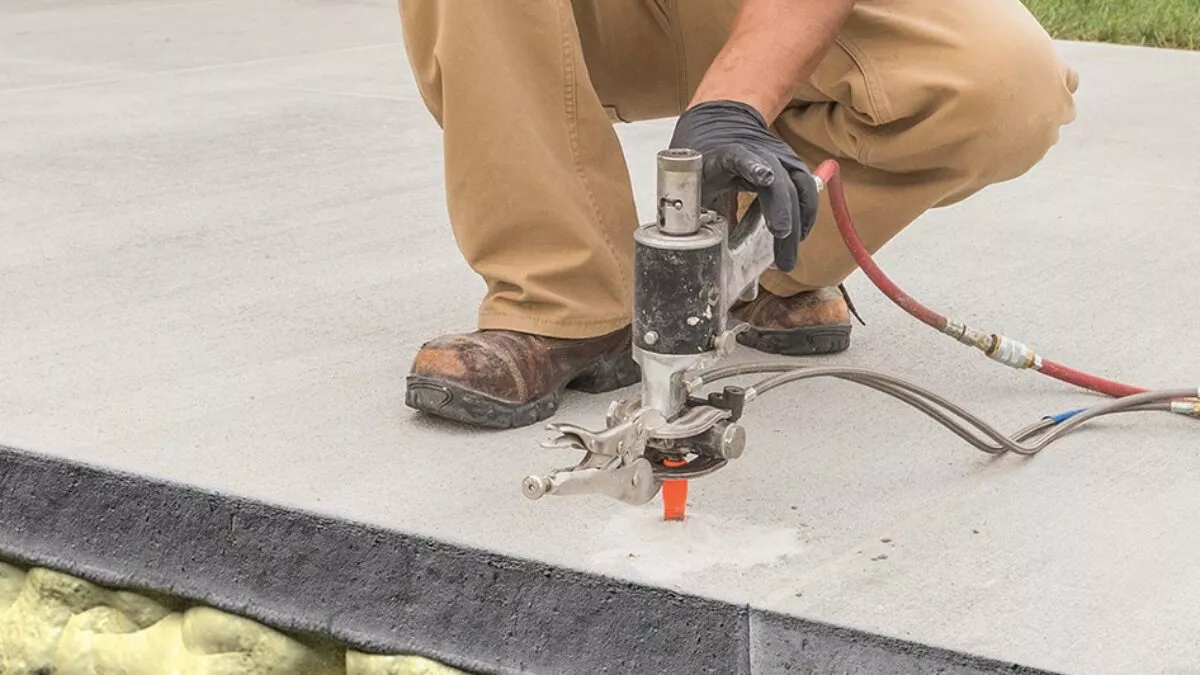
Geo-polymer injection is commonly used for:
- Driveways
- Sidewalks
- Garage floors
- Patios
- Pool decks
- Warehouse floors
- Roadways
- Foundation-adjacent slabs
- Commercial concrete surfaces
This technique is often preferred because it is minimally invasive, fast-curing, and highly effective for restoring sunken concrete without full replacement. The injection material is lightweight, durable, and moisture-resistant, helping support the slab while reducing additional stress on unstable soils.
For many residential, commercial, municipal, and industrial concrete repair projects, geo-polymer injection provides a practical solution that can often be completed faster than removing and replacing the slab.
Slabjacking for Concrete Raising
Slabjacking, also known as concrete raising, is another proven method for lifting sunken concrete. Traditional slabjacking typically involves pumping a grout or slurry mixture beneath the slab to fill voids and raise the concrete. As the material is placed under pressure, it supports the slab and lifts it back toward level.
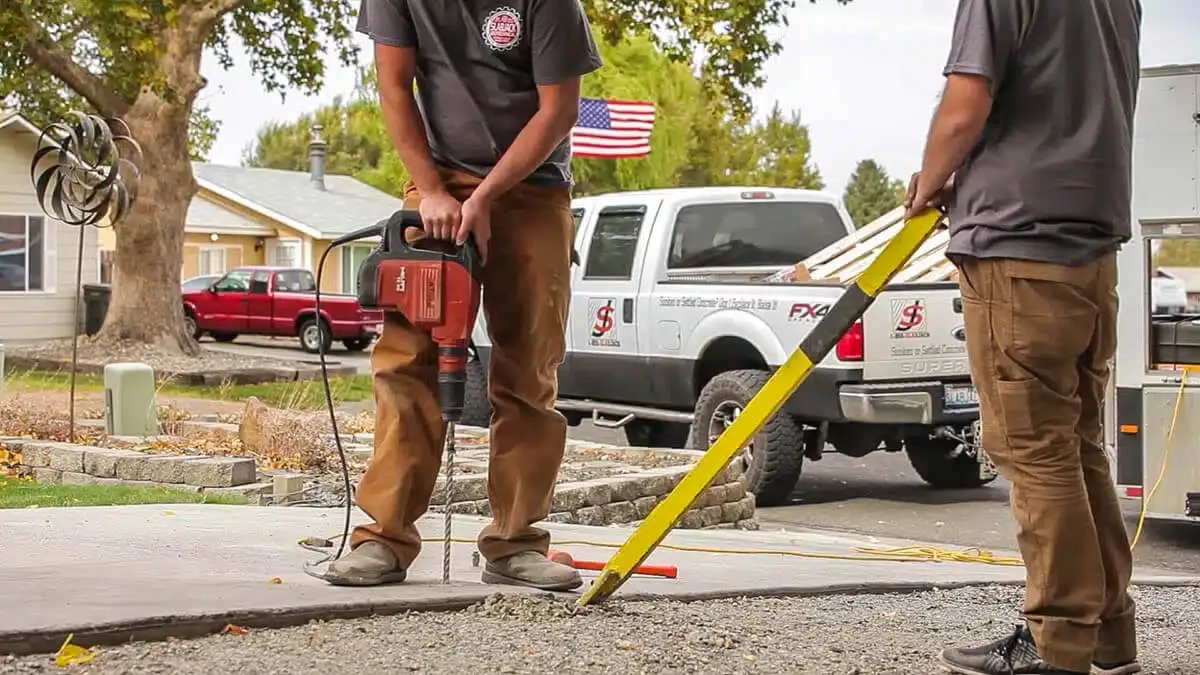
Slabjacking can be useful when:
- A slab has settled due to poor soil support
- Voids have formed beneath the concrete
- The existing slab is still structurally sound
- Replacement is unnecessary or too disruptive
- Large surface areas need to be raised
While traditional slabjacking remains an important repair method, many modern concrete repair projects benefit from geo-polymer injection because of its lighter weight, fast curing time, and precision lifting capabilities. The best method depends on the specific site conditions, slab thickness, soil condition, and intended use of the repaired surface.
Compaction Grouting for Soil Stabilization
Compaction grouting is one of the most important concrete repair techniques when the problem extends beyond the slab and into the soil beneath it. This method involves injecting a low-mobility grout into loose or weak soils. As the grout is placed, it displaces and densifies surrounding soil, helping improve ground stability and reduce the risk of future settlement.
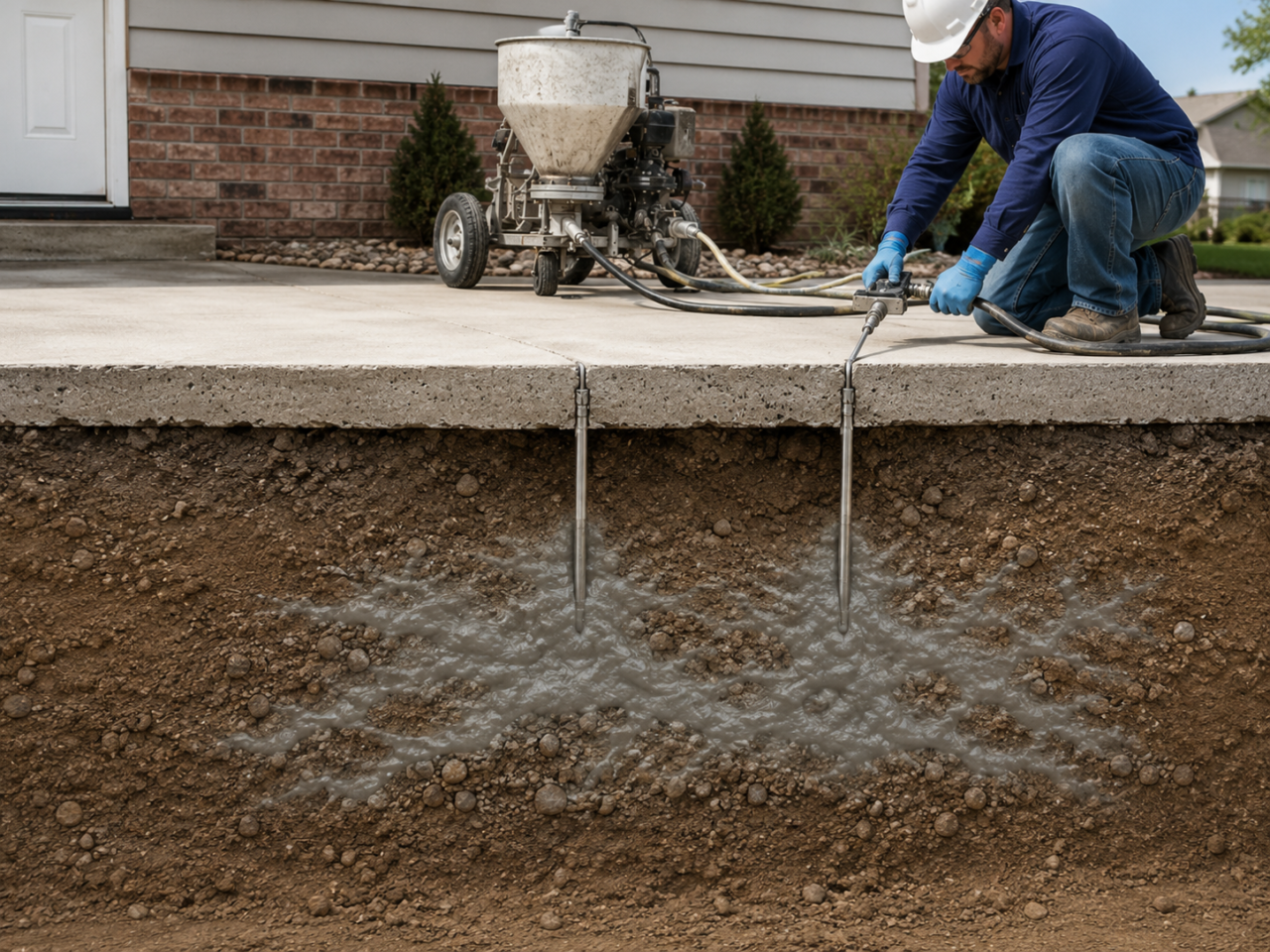
Compaction grouting is often used when concrete settlement is caused by:
- Loose soil
- Poorly compacted fill
- Subsurface voids
- Sinkhole-prone conditions
- Foundation-adjacent soil movement
- Weak soil beneath slabs, footings, or structures
Unlike surface patching or basic crack filling, compaction grouting addresses the conditions that cause concrete to sink in the first place. By strengthening the soil, this method can help support concrete slabs, foundations, driveways, sidewalks, and other structures more effectively.
For uneven or sinking concrete, compaction grouting may be recommended when lifting the slab alone is not enough. It can be especially valuable for areas where settlement is ongoing or where the soil requires deeper stabilization.
Permeation Grouting for Ground Improvement
Permeation grouting is another valuable soil stabilization technique used in concrete repair and geotechnical applications. This method involves injecting a flowable grout into soil pores without significantly disturbing the surrounding ground. Once placed, the grout helps bind soil particles together, reduce permeability, and improve subsurface support.
Permeation grouting may be used to:
- Stabilize granular soils
- Reduce water movement through soil
- Support concrete slabs and foundations
- Fill small voids within the soil matrix
- Improve ground conditions around structures
- Help control water intrusion beneath concrete surfaces
This technique is particularly useful in situations where water movement is contributing to erosion, settlement, or void formation. When combined with other concrete repair techniques, permeation grouting can help create a more stable base for long-term concrete performance.
Pressure Grouting and Void Filling
Pressure grouting and void filling are commonly used when empty spaces have formed beneath concrete slabs, foundations, culverts, pipes, or other structures. These voids may be caused by erosion, leaking utilities, poor compaction, drainage issues, or soil washout.
Void filling helps restore support beneath concrete by placing grout, foam, or other engineered materials into empty spaces. Pressure grouting can also be used to fill larger subsurface gaps and improve the integrity of the surrounding area.
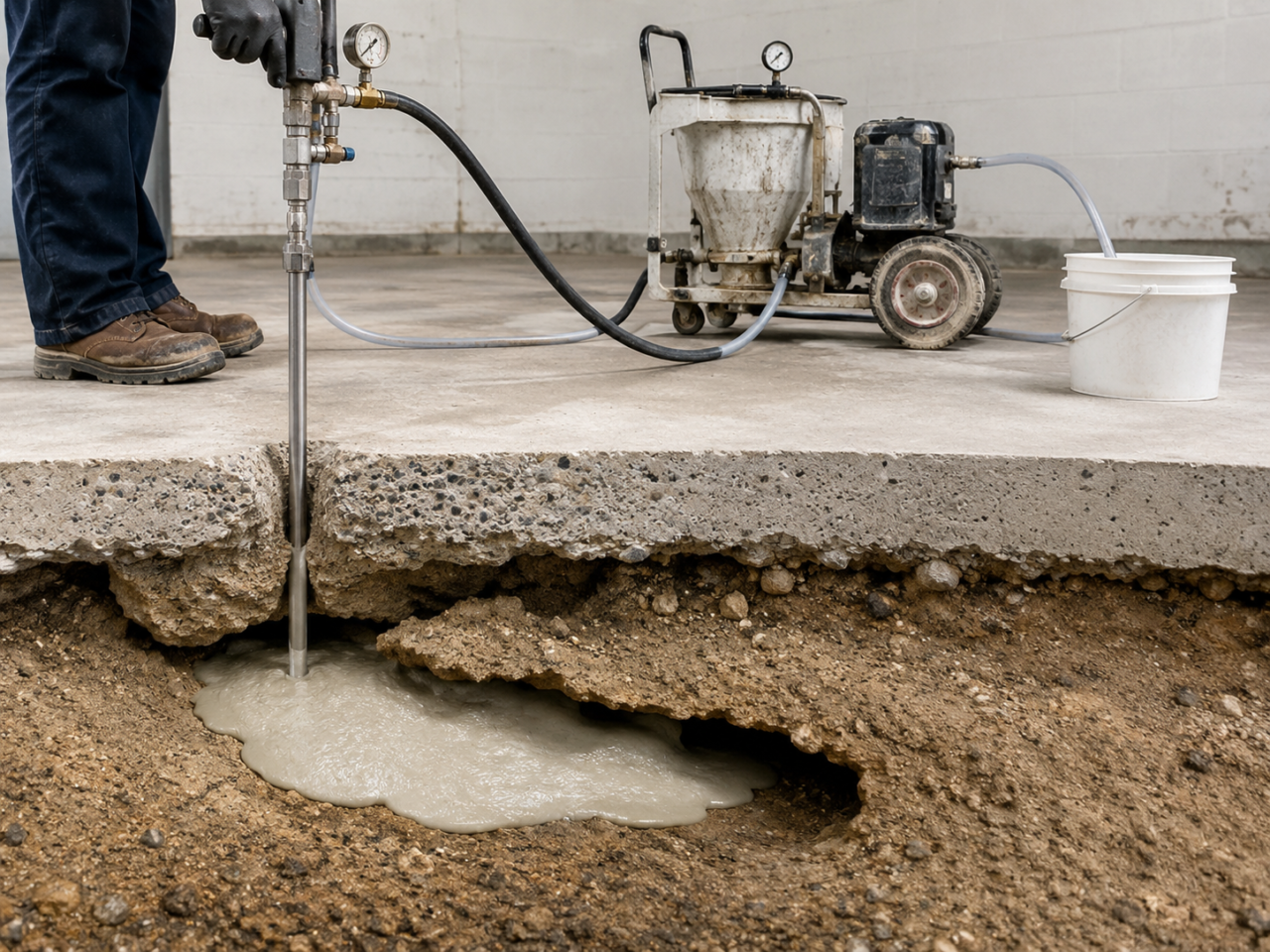
These methods are often used for:
- Concrete slabs with hollow areas underneath
- Driveways or sidewalks with unsupported sections
- Large-diameter pipes
- Concrete ditches
- Leaking culverts
- Industrial and municipal infrastructure
- Foundation-adjacent voids
Filling voids early can help prevent slabs from cracking, sinking further, or collapsing under weight. It is also an important step in protecting infrastructure from continued erosion and structural damage.
Concrete Grinding for Uneven Surface Edges
Concrete grinding is a surface-level repair method used to smooth raised edges, minor height differences, and trip hazards. Instead of lifting a sunken slab, grinding removes a portion of the higher concrete surface to create a smoother transition.
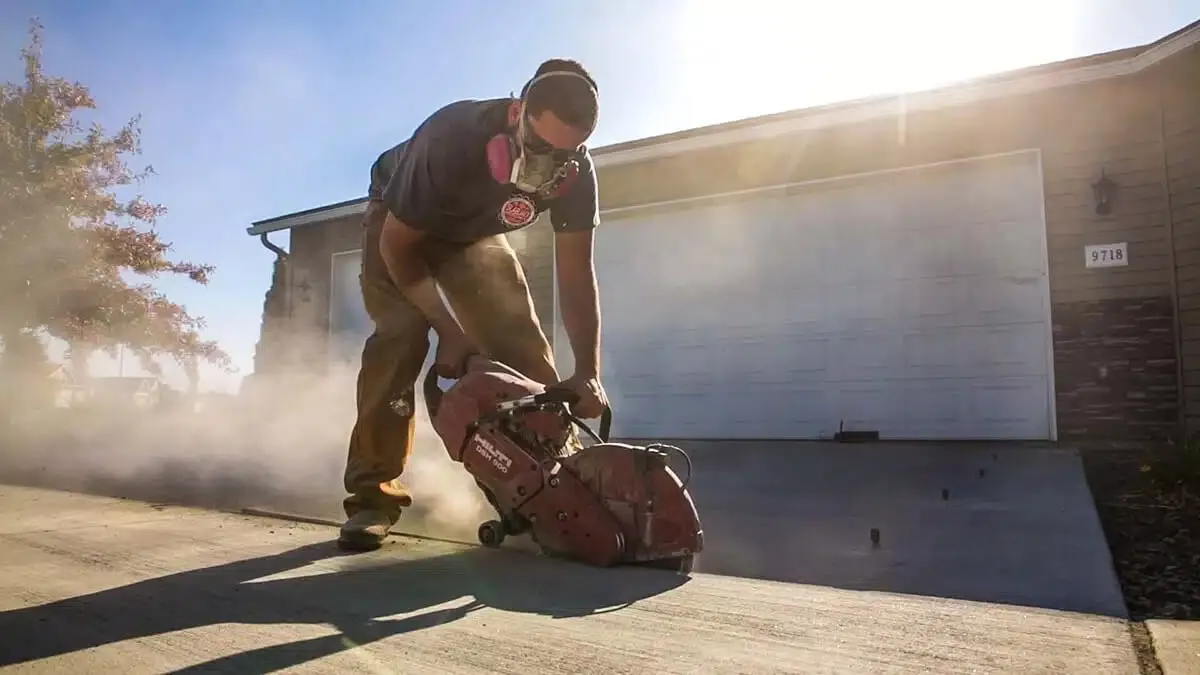
Concrete grinding may be appropriate for:
- Small sidewalk trip hazards
- Slightly uneven slab edges
- Surface irregularities
- Minor height differences between adjoining slabs
- Areas where lifting is not necessary or practical
While grinding can improve safety and appearance, it does not correct the underlying cause of settlement. If a slab is continuing to sink or if there are voids beneath the concrete, grinding alone may not be a long-term solution. In those cases, concrete lifting, grouting, or soil stabilization may be needed.
Concrete Crack Repair Techniques for Damaged Slabs
Cracks are one of the most common signs of concrete distress. Some cracks are caused by normal shrinkage or surface wear, while others indicate soil movement, structural stress, or settlement beneath the slab. Choosing the right concrete crack repair techniques depends on the size, depth, location, and cause of the crack.

Common concrete crack repair techniques include:
- Crack sealing: Helps prevent water, debris, and chemicals from entering cracks.
- Epoxy injection: Often used for structural cracks where bonding strength is needed.
- Polyurethane injection: Useful for sealing active leaks or cracks exposed to moisture.
- Routing and sealing: Involves widening the crack slightly and filling it with flexible sealant.
- Surface patching: Used for shallow cracks, chips, and cosmetic damage.
- Joint repair: Restores deteriorated control joints or expansion joints to reduce water intrusion.
Crack repair is especially important because open cracks allow water to enter the slab and the soil below. Over time, this can lead to erosion, freeze-thaw damage, widening cracks, and additional settlement. Effective concrete crack repair techniques help protect the slab while reducing the risk of further deterioration.
Joint Sealing Repair to Prevent Water Damage
Concrete joints are designed to control movement, but damaged or unsealed joints can become entry points for water. Once water moves through joints and beneath the slab, it can wash away supporting soil and create voids. This often leads to uneven surfaces, sinking concrete, and recurring cracks.
Joint sealing repair helps protect concrete by filling joints with flexible materials that can handle movement while blocking water intrusion. This is commonly used for driveways, sidewalks, parking lots, warehouse floors, and other concrete surfaces exposed to weather or heavy traffic.

Proper joint sealing can help:
- Reduce water infiltration
- Prevent soil washout beneath slabs
- Protect against freeze-thaw damage
- Extend the life of concrete surfaces
- Reduce the risk of future cracking and settlement
When used alongside lifting, grouting, and crack repair, joint sealing can be an important part of a complete concrete repair plan.
When Is Concrete Replacement Necessary?
Although many sunken or uneven slabs can be repaired, replacement may be necessary in some situations. If the concrete is severely broken, crumbling, heavily deteriorated, or structurally compromised, lifting or crack repair may not provide the desired result.
Concrete replacement may be the better option when:
- The slab has widespread deep cracking
- The concrete is severely spalled or deteriorated
- Reinforcement is exposed or corroded
- The slab has broken into many unstable pieces
- The original concrete was poorly installed
- The surface cannot be safely lifted or stabilized
However, replacement does not automatically solve the underlying soil problem. If unstable soil, poor drainage, or voids caused the original slab to fail, those issues should be addressed before new concrete is poured. Otherwise, the new slab may eventually settle as well.
How to Choose the Best Concrete Repair Technique
The best concrete repair techniques are selected based on a combination of surface condition, subsurface support, drainage, soil stability, and long-term performance goals. A professional evaluation can help determine whether the slab should be lifted, stabilized, sealed, filled, repaired, or replaced.
Key factors to consider include:
- How much the slab has settled
- Whether the concrete is cracked or structurally sound
- Whether voids are present beneath the slab
- Whether water is contributing to erosion
- The condition of the surrounding soil
- The size and location of the damaged area
- Whether the slab supports vehicles, equipment, or foot traffic
- Whether the repair is residential, commercial, municipal, or industrial
In many cases, the most effective repair involves more than one method. For example, a sinking slab may need geo-polymer injection for lifting, void filling for support, crack repair for surface protection, and joint sealing to prevent future water intrusion. If weak soil is present, compaction grouting or permeation grouting may also be recommended to stabilize the area.
About Slabjack Geotechnical
Slabjack Geotechnical is a family-owned and operated, full-service concrete repair company serving Washington and Northern Idaho. We provide a wide range of concrete repair and geotechnical services, including slabjacking (concrete raising), pressure grouting, compaction and permeation grouting, concrete grinding, joint sealing repair, and void filling. We also seal leaking culverts, large-diameter pipes, and concrete ditches for residential, commercial, municipal, and industrial clients.
Our team focuses on effective, minimally invasive repair solutions, including the geo-polymer injection method for concrete lifting. This approach allows us to lift and support uneven or sinking concrete with precision while helping fill voids beneath the slab.

Contact Slabjack Geotechnical for a Concrete Repair Quote
Uneven, cracked, or sinking concrete should not be ignored. The longer a slab remains unsupported, the more likely it is to crack further, create safety hazards, or cause drainage and structural concerns. With the right combination of concrete lifting, crack repair, void filling, joint sealing, and grouting, many concrete surfaces can be restored without full replacement.
If you are looking for proven concrete repair techniques for uneven or sinking concrete, reach out to Slabjack Geotechnical today. Our team can evaluate your concrete, identify the cause of the problem, and recommend the right repair solution for your property. Contact Slabjack Geotechnical to learn more about our services or request a quote for concrete repair in Washington or Northern Idaho.
FAQs
What are the most common concrete repair techniques?
Common concrete repair techniques include concrete lifting, crack sealing, joint repair, grinding, resurfacing, patching, pressure grouting, and void filling. The right method depends on whether the issue is caused by surface wear, cracking, settlement, poor drainage, or unstable soil beneath the slab.
Can uneven concrete be repaired without replacing it?
Yes, many uneven concrete slabs can be repaired without full replacement. Techniques such as concrete lifting, slabjacking, geo-polymer injection, and grinding can often restore safer, more level surfaces when the slab is still structurally sound.
When should concrete cracks be repaired?
Concrete cracks should be repaired as soon as possible, especially if they are growing, collecting water, or allowing moisture to reach the soil below. Early crack repair can help prevent erosion, freeze-thaw damage, and more expensive concrete repairs later.
How long do concrete repairs last?
The lifespan of a concrete repair depends on the method used, the condition of the existing slab, drainage conditions, and the stability of the soil underneath. Repairs that address both the surface damage and the underlying cause usually last longer than quick cosmetic fixes.