
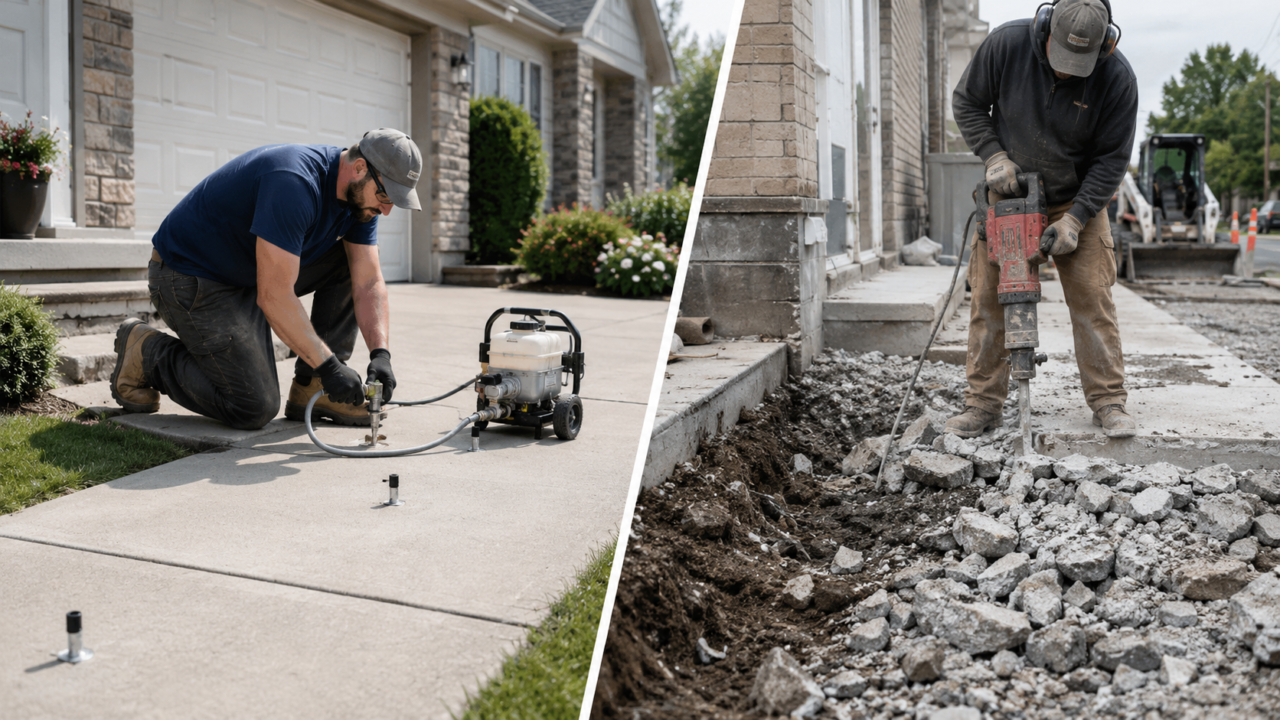
Uneven, sunken, or settled concrete can create more than an eyesore. It can lead to trip hazards, poor drainage, foundation stress, water intrusion, and long-term property damage if the underlying issue is not addressed. When property owners start comparing concrete lifting vs replacement, the question often becomes: should the existing slab be raised and stabilized, or should it be torn out and poured again?
In many cases, concrete lifting is the better solution. When the slab is still structurally sound, lifting can restore the surface more quickly, with less mess, lower disruption, and often a more cost-effective outcome than full replacement.
This guide compares concrete lifting vs concrete replacement in detail so you can better understand when lifting makes sense, when replacement may be necessary, and why lifting wins in most sunken concrete repair situations.
What Causes Concrete to Sink or Become Uneven?
Before comparing repair options, it helps to understand why concrete slabs settle in the first place. Concrete is heavy, but it depends on the soil beneath it for support. When that soil weakens, shifts, washes out, or compacts unevenly, the concrete above can begin to sink, crack, or slope.
Common causes of sunken concrete include:
- Soil erosion from poor drainage or runoff
- Poorly compacted soil during original construction
- Washouts beneath driveways, sidewalks, patios, or garage slabs
- Freeze-thaw cycles that expand and contract the ground
- Voids beneath the slab
- Tree roots or organic material decomposing under the surface
- Heavy vehicle loads or repeated traffic
- Water pooling around concrete edges or joints
In many cases, the concrete itself is not the main problem. The issue is the loss of support beneath the slab. That is why concrete lifting can often be such an effective solution: it addresses the uneven slab by restoring support below it instead of simply removing and replacing the surface.
What Is Concrete Lifting?
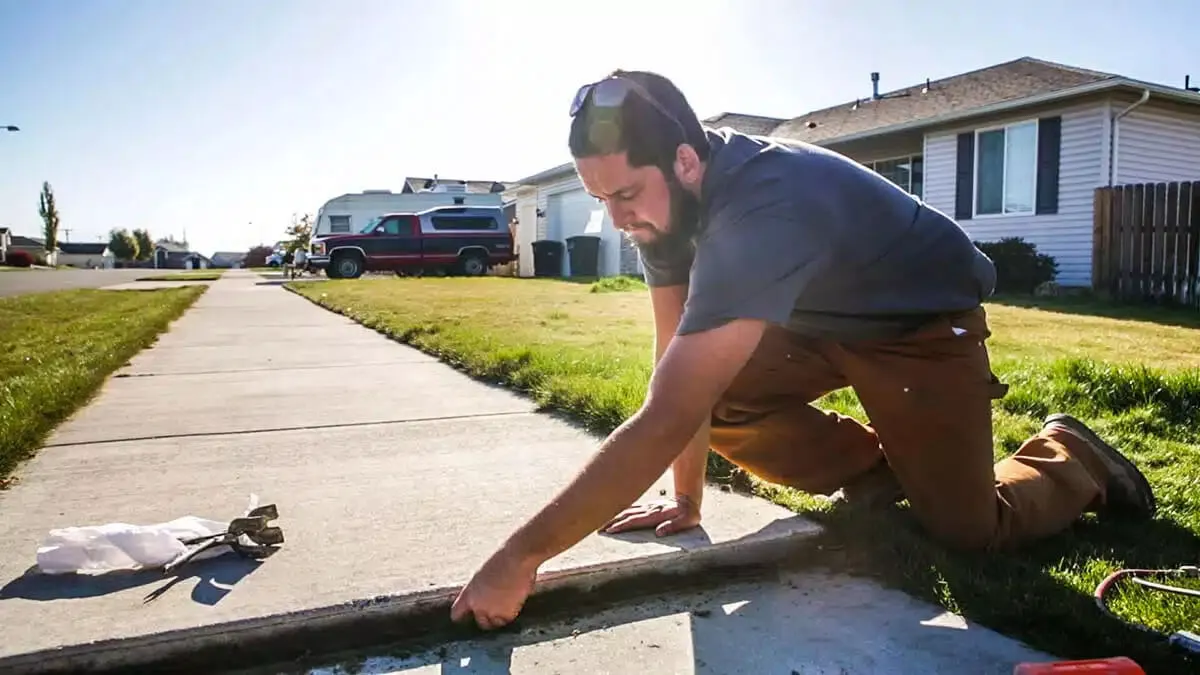
Concrete lifting is a repair method used to raise settled concrete slabs back toward their original position. Instead of demolishing the slab, technicians inject material beneath the concrete to fill voids, stabilize the base, and lift the surface.
One of the most effective modern methods is geo-polymer injection. With this process, small holes are drilled into the slab, and an expanding polyurethane geo-polymer material is injected beneath the concrete. As the material expands, it fills empty spaces, compacts weak areas, and carefully lifts the slab.
Concrete lifting is commonly used for:
- Driveways
- Sidewalks
- Walkways
- Patios
- Garage floors
- Porches
- Pool decks
- Warehouse slabs
- Commercial floors
- Concrete steps
- Industrial slabs
- Slabs affected by voids or poor soil support
The goal is not only to improve appearance, but also to restore function, reduce hazards, improve drainage, and stabilize the concrete for long-term use.
What Is Concrete Replacement?
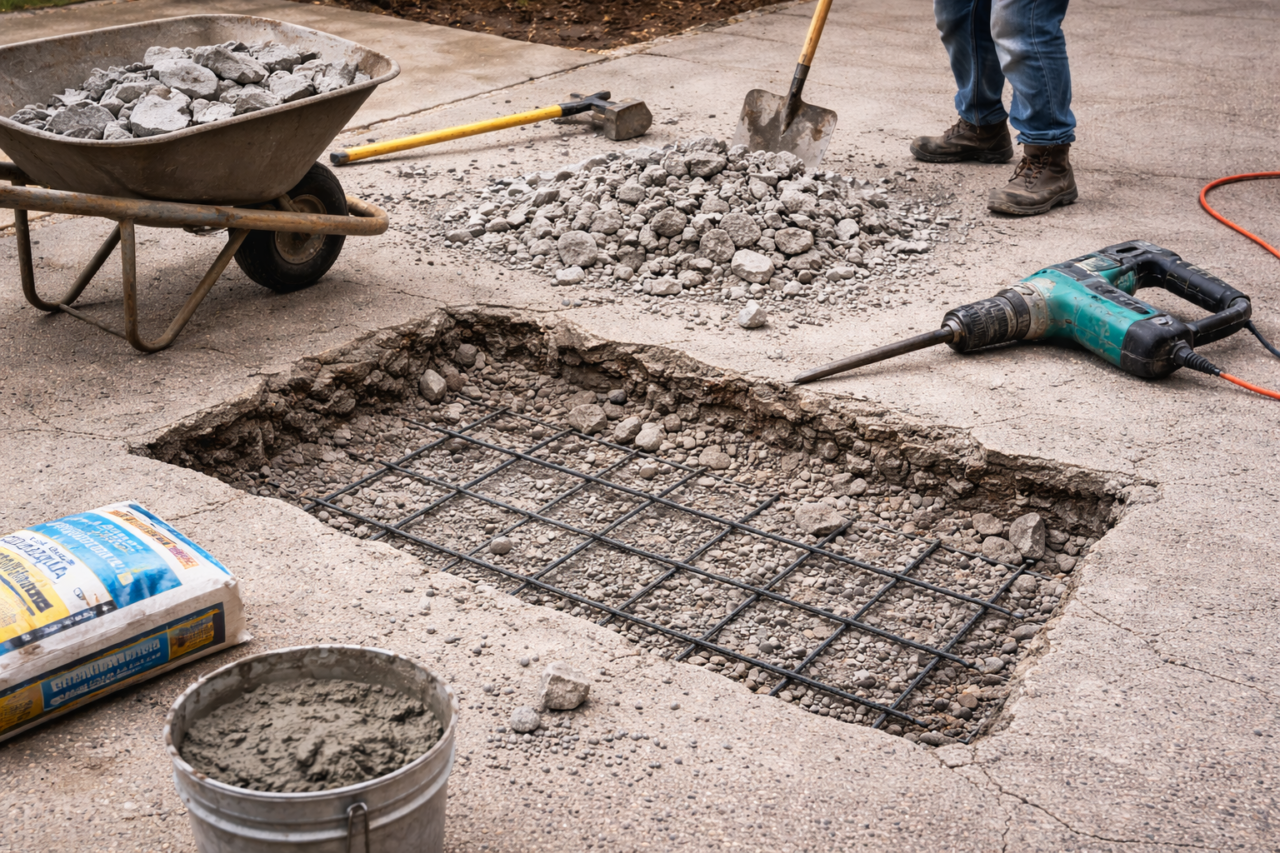
Concrete replacement involves removing the damaged or uneven slab and pouring new concrete in its place. This process usually includes demolition, hauling away old material, preparing the base, setting forms, pouring new concrete, finishing the surface, and allowing the concrete to cure.
Replacement may be necessary when the existing slab is severely deteriorated, broken into many pieces, heavily spalled, or structurally compromised. However, replacement is often more invasive than lifting. It usually requires more time, more labor, more equipment, and a longer waiting period before the surface can be used again.
Concrete replacement can be a good option when:
- The slab is crumbling or severely damaged
- Large sections are missing
- The concrete has widespread structural cracking
- The surface has extensive scaling or deterioration
- The slab was poured incorrectly and cannot be repaired
- A new layout, slope, or design is needed
However, when the concrete is mostly intact and the main issue is settlement, lifting is often the smarter repair.
Concrete Lifting vs Replacement: Side-by-Side Comparison
When comparing concrete lifting vs replacement, the right choice depends on the condition of the slab, the cause of settlement, the timeline, and the property owner’s goals. The table below breaks down the major differences.
| Comparison Point | Concrete Lifting | Concrete Replacement |
| Best For | Sunken or uneven slabs that are still mostly intact | Severely cracked, crumbling, or structurally failed slabs |
| Process | Injects material beneath the slab to raise and stabilize it | Removes old concrete and pours a new slab |
| Disruption | Minimal drilling and targeted repair | Demolition, hauling, forming, pouring, and curing |
| Typical Timeline | Often completed quickly, depending on project size | Usually requires multiple stages and curing time |
| Use After Repair | Often usable much sooner | Must wait for new concrete to cure properly |
| Cost Factors | Usually less labor, less disposal, and less material | More labor, removal, disposal, materials, and finishing |
| Appearance | Preserves existing concrete | New concrete may not match surrounding older slabs |
| Environmental Impact | Less waste because existing concrete remains in place | More demolition debris and new material use |
| Under-Slab Voids | Fills voids and restores support beneath the slab | May not address deeper soil issues unless properly stabilized |
| Overall Convenience | Faster, cleaner, and less invasive | More disruptive and time-intensive |
For many residential, commercial, and municipal concrete repair projects, lifting provides the most practical balance of performance, speed, and value.
Why Concrete Lifting Often Wins 9/10 Times
Concrete lifting wins in many situations because it solves the problem without creating unnecessary demolition. If the slab is still in usable condition, tearing it out may be excessive. Lifting allows property owners to preserve the concrete they already have while correcting the settlement underneath it.
The biggest advantages of concrete lifting include:
- Faster repair with less downtime
- Less disruption to landscaping, driveways, walkways, and daily access
- Reduced demolition and cleanup
- Lower material waste
- No need to wait as long for newly poured concrete to cure
- Better preservation of surrounding surfaces
- Ability to fill voids beneath the slab
- A more targeted solution for settlement-related problems
This is especially important for busy homes, commercial properties, apartments, warehouses, sidewalks, and public access areas where long closures or major demolition can be inconvenient or costly.
Concrete Lifting Can Save Time
One of the main reasons property owners choose concrete lifting is speed. Replacement can take days or longer when you factor in demolition, removal, base preparation, pouring, finishing, curing, and cleanup. During that time, the area may be unusable.
Concrete lifting is generally much faster because the existing slab remains in place. The repair focuses on accessing the area beneath the concrete, injecting lifting material, raising the slab, and sealing the injection holes. For many projects, this means less interruption to the property and a faster return to normal use.
When comparing concrete lifting vs concrete replacement, time is often one of the clearest reasons lifting comes out ahead.
Concrete Lifting Can Reduce Costs
Concrete replacement is often more expensive because it involves more steps. The old concrete must be broken up, removed, hauled away, and disposed of. Then the area must be prepared, formed, poured, finished, and cured. Each step adds labor, materials, equipment, and time.
Concrete lifting typically avoids many of those costs. Since the original slab stays in place, there is less demolition, less debris, and less need for new concrete. The repair is more targeted, which can make it a more cost-effective option for slabs that are still structurally sound.
While every project is different, lifting often provides strong value because it restores the existing slab instead of replacing it unnecessarily.
Concrete Lifting Creates Less Disruption
Concrete replacement can be messy. It may involve saw cutting, jackhammering, hauling debris, setting forms, pouring concrete, and protecting the new slab while it cures. This can disrupt landscaping, parking, building access, pedestrian routes, and daily operations.
Concrete lifting is much less invasive. The process typically requires small injection holes and precise material placement beneath the slab. There is no need to tear out large sections of concrete, and the surrounding property is usually easier to protect.
Less disruption means less stress for property owners and fewer complications during the repair process.
Geo-Polymer Injection: A Modern Approach to Concrete Lifting
Geo-polymer injection is one of the most effective methods for lifting sunken concrete. This process uses a lightweight, expanding polyurethane material that is injected beneath the slab. As it expands, it fills voids, restores support, and raises the concrete in a controlled way.
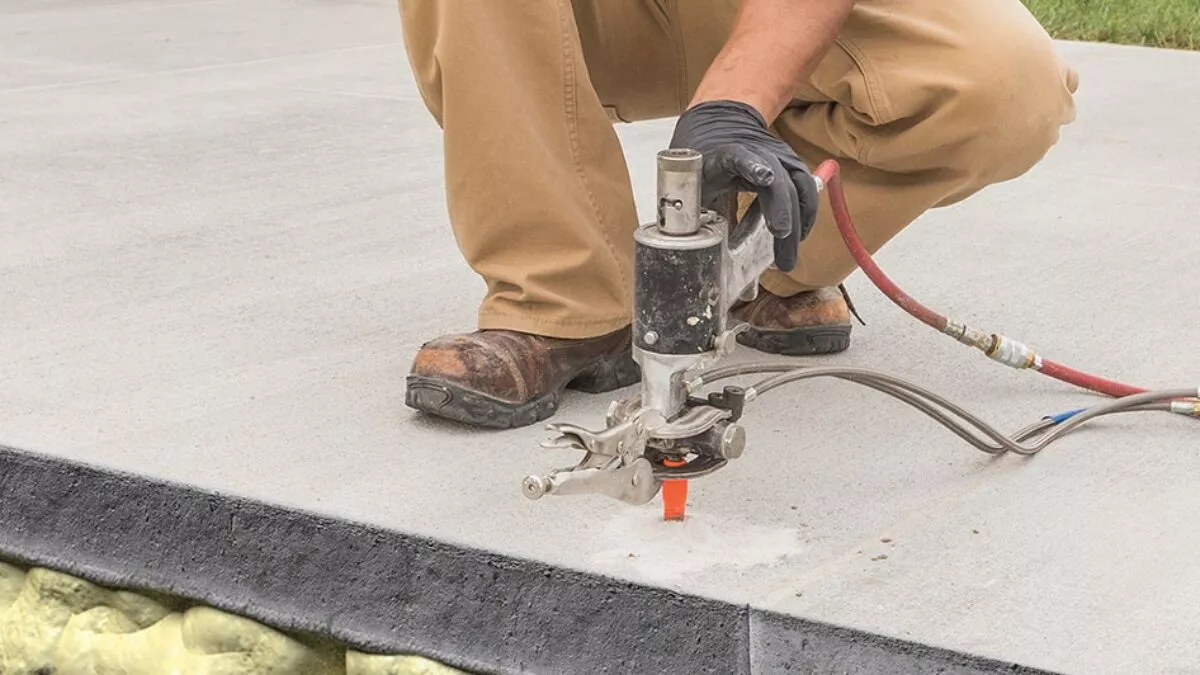
Compared to older concrete raising methods, geo-polymer injection offers several advantages. The material is lightweight, which means it does not add excessive load to already weak soil. It also expands quickly, allowing technicians to make precise adjustments during the lifting process.
For many sunken concrete issues, geo-polymer injection provides the ideal combination of strength, speed, and efficiency.
When Concrete Lifting Is the Best Choice
Concrete lifting is often the best choice when the slab has settled but remains mostly intact. If the concrete is uneven, sloped, or sunken but not severely broken apart, lifting can often restore the surface without full replacement.
Concrete lifting may be the right solution when:
- A driveway has sunken near the garage
- A sidewalk panel has become a trip hazard
- A patio slopes toward the home
- A garage slab has settled
- A walkway has uneven sections
- A porch or step has dropped
- A slab has voids underneath it
- Water drains toward a building because of settlement
- The concrete surface is usable but no longer level
The key factor is the condition of the existing slab. If the concrete is strong enough to lift, replacement may not be necessary.
When Concrete Replacement May Be Necessary
Although lifting wins in many situations, replacement still has its place. If the concrete is too damaged, lifting may not provide the desired result. A slab that is severely cracked, crumbling, or deteriorated may need to be removed and replaced.
Concrete replacement may be better when:
- The slab is broken into many small pieces
- The concrete is heavily spalling or flaking
- The surface is structurally unsound
- Reinforcement is exposed or corroded
- The slab has severe heaving instead of settlement
- The concrete was poorly installed
- The owner wants a completely new design, shape, or finish
- Drainage or grading must be completely redesigned
A professional inspection can help determine whether the concrete can be lifted or whether replacement is the safer long-term option.
Why Professional Concrete Evaluation Matters
Choosing between concrete lifting and replacement is not always obvious from the surface. A slab may look badly uneven but still be a great candidate for lifting. Another slab may look repairable but have too much deterioration to raise successfully.
A professional concrete repair company can evaluate:
- The condition of the slab
- The depth and direction of settlement
- Cracking patterns
- Drainage problems
- Soil conditions
- Void formation
- Safety hazards
- Access needs
- Long-term repair goals
This helps ensure the recommended repair is practical, durable, and appropriate for the property.
About Slabjack Geotechnical
At Slabjack Geotechnical, we are a family-owned and operated full-service concrete repair company serving Washington and Northern Idaho. We provide a wide range of concrete repair services, including Slabjacking (concrete raising), pressure grouting, compaction and permeation grouting, concrete grinding, joint sealing repair, void filling, and more. We also seal leaking culverts, large-diameter pipes, and concrete ditches.
Our team focuses on using the geo-polymer injection method for concrete lifting because it allows us to raise and stabilize sunken concrete with precision, efficiency, and minimal disruption. Whether you are dealing with uneven sidewalks, settled driveways, sunken slabs, voids, or soil-related concrete issues, we can help evaluate the problem and recommend a repair approach designed to restore safety, function, and long-term support.

Contact Slabjack Geotechnical for Concrete Lifting and Repair Services
When comparing concrete lifting vs replacement, the right solution is the one that restores your concrete safely, efficiently, and cost-effectively. In many cases, lifting can save time, reduce costs, fill voids, and restore sunken concrete without the disruption of tearing everything out and starting over.
If you have uneven, sinking, or unsupported concrete, contact Slabjack Geotechnical today to learn more about how we can help. Our team proudly serves Washington and Northern Idaho with professional concrete lifting, geo-polymer injection, grouting, grinding, joint sealing repair, and void filling services. Reach out today to request a service quote and find out whether concrete lifting is the right solution for your property.
FAQs
Is concrete lifting better than concrete replacement?
Concrete lifting is often better when the existing slab is still mostly intact and the main issue is settling or sinking. Replacement may be better when the concrete is severely cracked, crumbling, or structurally damaged beyond repair.
How do I know if concrete should be repaired or replaced?
Concrete can often be repaired if the slab is mostly intact and the main issue is sinking, cracking, unevenness, or minor surface damage. Replacement may be necessary when the concrete is severely crumbling, broken into multiple pieces, or structurally compromised.
When is concrete replacement necessary?
Concrete replacement may be necessary when the slab is severely deteriorated, broken into many pieces, or no longer stable enough to lift. It may also be the better option if you want to change the size, shape, slope, or finish of the concrete surface.
Can cracked concrete still be lifted?
Some cracked concrete can still be lifted if the slab sections are stable and not severely broken apart. If the concrete is heavily fractured, crumbling, or unstable, replacement may be a better long-term solution.