
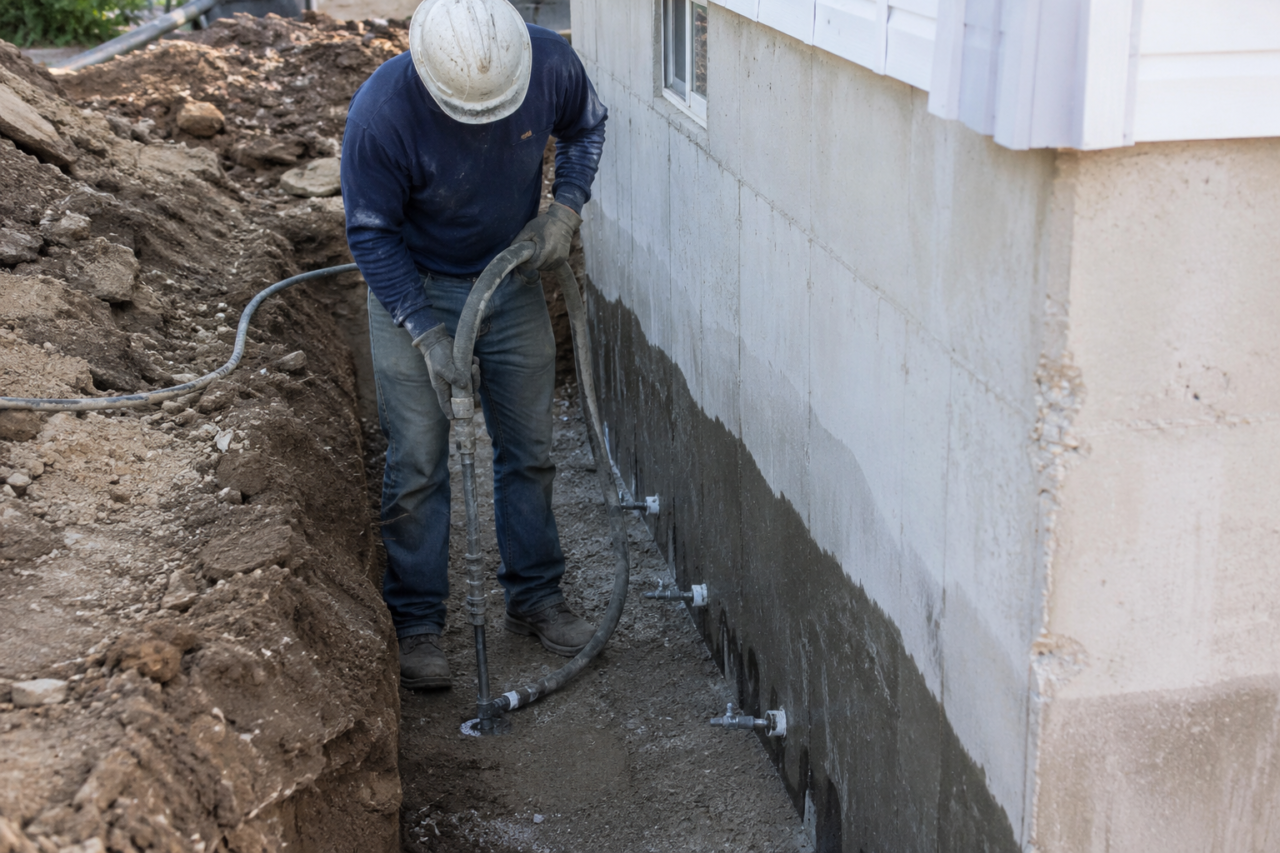
Basement foundation waterproofing is one of the most important steps homeowners and property owners can take to protect a concrete foundation from water intrusion, soil movement, and long-term structural damage. When moisture collects around basement walls, it can increase hydrostatic pressure, weaken surrounding soils, and create conditions that lead to cracking, settlement, bowing walls, and interior leaks. For many properties, learning how to waterproof basement foundation areas is not just about keeping water out of the basement—it is also about stabilizing the ground that supports the entire structure.
Compaction grouting and permeation grouting offer advanced waterproofing and stabilization solutions that address problems below the surface. Instead of relying only on exterior excavation, coatings, or drainage systems, these pressure-injection methods improve the soil around the foundation, fill underground voids, and help reduce the pathways that allow groundwater to collect against concrete walls.
By strengthening the soil and limiting water movement, grouting can be an effective solution for basement foundation waterproofing in areas where weak, loose, or water-bearing soil is contributing to foundation problems.
Why Basement Foundation Waterproofing Matters
A basement foundation is constantly exposed to pressure from the soil and groundwater around it. When the ground becomes saturated, water naturally moves toward areas of least resistance, including cracks, porous concrete, open joints, and voids around the foundation. Over time, this moisture can create interior dampness, mold-friendly conditions, musty odors, wall cracks, and structural stress.
Basement foundation waterproofing helps protect the foundation by controlling water movement and reducing the pressure placed on concrete walls. However, not every water problem starts at the surface. In many cases, basement leaks and foundation movement are connected to unstable soil, erosion, poorly compacted fill, underground voids, or groundwater channels beneath and around the home.
Common warning signs that waterproofing and soil stabilization may be needed include:
- Water seepage through basement walls or floor joints
- Cracks in concrete foundation walls
- Bowing, leaning, or shifting basement walls
- Settled concrete slabs near the foundation
- Voids beneath walkways, patios, driveways, or garage slabs
- Soil erosion around the home’s perimeter
- Recurring water problems after standard drainage improvements
- Doors or windows that stick due to foundation movement
When these issues are connected to weak soil or underground voids, compaction grouting and permeation grouting may provide a more targeted solution than surface-level waterproofing alone.
How Water Affects Soil Around Concrete Foundations
Water is one of the biggest contributors to foundation instability. When groundwater collects around a basement, it can soften soil, wash away fines, create voids, and reduce the soil’s ability to support the foundation. As soil loses density or shifts unevenly, concrete foundations may experience settlement, cracking, or lateral pressure.
Hydrostatic pressure is another major concern. This pressure builds when water accumulates in the soil around basement walls. If the pressure becomes too great, water can force its way through cracks, joints, or porous areas in the concrete. Over time, this constant pressure can make existing cracks worse and may contribute to structural movement.
For this reason, effective basement foundation waterproofing often requires more than sealing visible cracks. In certain soil conditions, the surrounding ground must be stabilized so water cannot continue creating movement, voids, and pressure against the foundation.
What Is Compaction Grouting?
Compaction grouting is a pressure-injection method used to strengthen weak or loose soil around a foundation. During the process, casing or injection ports are installed into targeted areas of the ground. A thick, low-slump grout or specialized expanding material is then injected under controlled pressure.
Rather than simply flowing through the soil, the grout forms dense bulbs underground. These grout bulbs physically displace and compress the surrounding soil, filling voids and increasing soil density. This process can help improve the load-bearing capacity of the ground while reducing areas where water may collect or travel.
For basement foundation waterproofing, compaction grouting is especially useful when loose, poorly compacted, or water-bearing soil is contributing to foundation settlement or water intrusion. By densifying the soil around the concrete foundation, compaction grouting can help reduce movement and create a more stable environment around basement walls.
What Is Permeation Grouting?
Permeation grouting is another pressure-injection technique, but it works differently from compaction grouting. Instead of using a thick grout to compress the soil, permeation grouting uses a low-viscosity grout that can flow into the natural pores between soil particles.
Once injected, the grout permeates granular soils such as sand or gravel and then hardens. This binds the soil particles together, creating a more solid, stabilized soil mass. In many cases, the finished result can resemble a hardened sandstone-like barrier that helps reduce groundwater movement through the treated area.
Permeation grouting is often used as a complementary method after soil has been stabilized through compaction grouting. While compaction grouting densifies and fills larger voids, permeation grouting can seal smaller pore spaces within suitable granular soils. Together, these methods can support a more complete waterproof basement foundation strategy when site conditions allow.
How Compaction and Permeation Grouting Help Waterproof Basement Foundation Areas
To waterproof basement foundation areas effectively, the source of water movement must be addressed. Grouting helps by improving the soil environment around the foundation rather than only treating the surface of the concrete. This can be especially valuable when groundwater is moving through loose soil, eroded pathways, or underground voids.
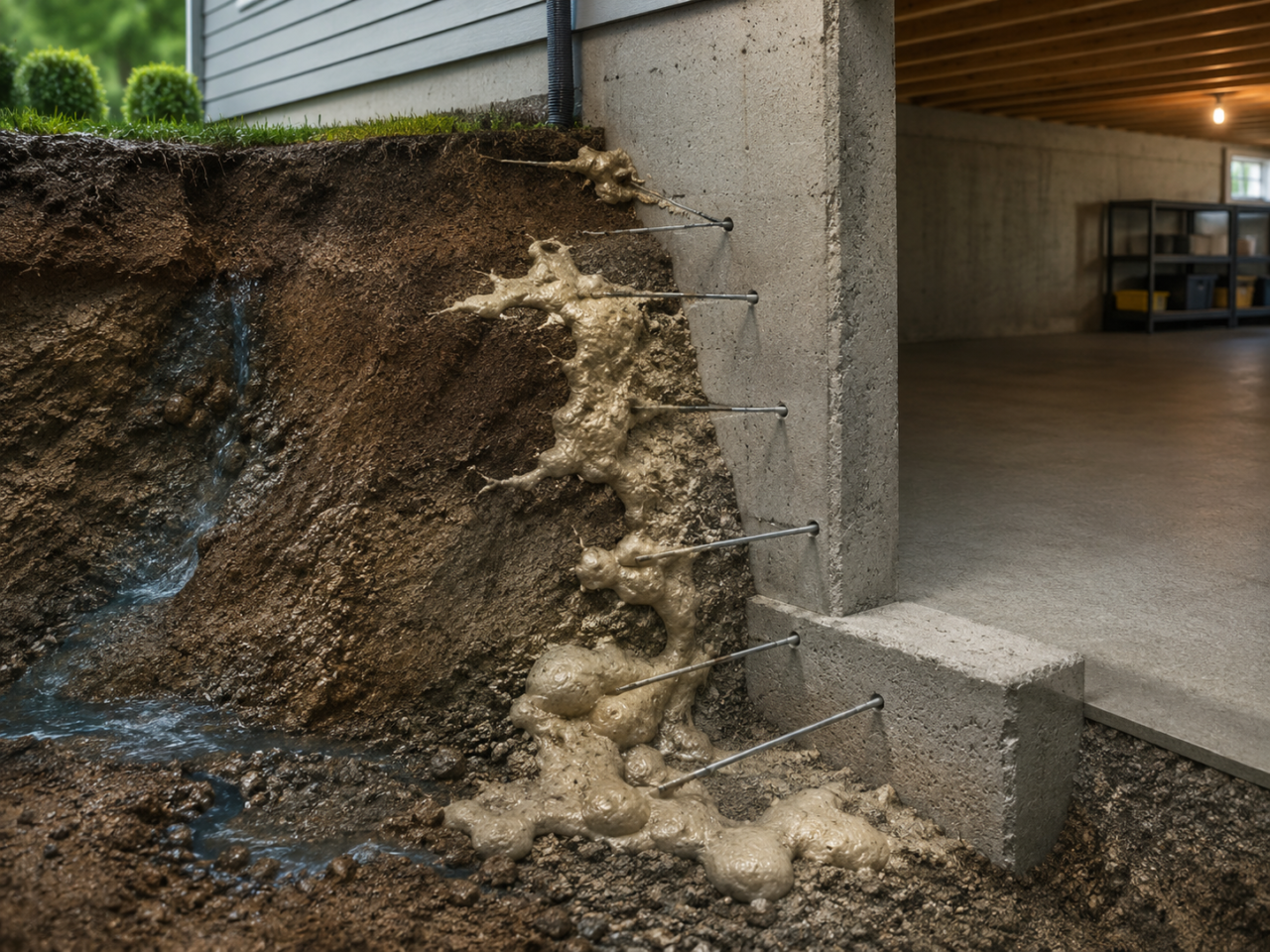
Compaction and permeation grouting can help by:
- Filling voids beneath and around concrete foundations
- Densifying loose or unstable soil
- Reducing underground water pathways
- Improving soil load-bearing capacity
- Helping reduce hydrostatic pressure against basement walls
- Supporting areas affected by settlement or erosion
- Limiting future soil movement near the foundation
- Creating a more stable barrier around concrete structures
This approach does not simply mask moisture problems. It addresses the conditions that may be allowing water and soil movement to continue affecting the foundation.
The Basement Foundation Waterproofing Process with Grouting
Every foundation is different, so the exact grouting process depends on the soil type, site conditions, severity of water intrusion, and structural needs of the property. However, the general process typically includes a careful assessment, targeted injection plan, controlled grout placement, and post-treatment evaluation.
1. Inspecting the Foundation and Surrounding Soil
The first step is identifying where water is entering, where soil instability may be occurring, and whether the foundation shows signs of movement. A professional contractor may look for wall cracks, slab settlement, surface drainage problems, voids, erosion, and signs of hydrostatic pressure.
Because grouting takes place underground, proper evaluation is critical. The goal is to understand not only where water appears inside the basement, but also how the surrounding soil may be contributing to the issue.
2. Determining the Right Grouting Method
Compaction grouting and permeation grouting are not interchangeable in every situation. The correct method depends heavily on soil conditions.
Compaction grouting may be recommended when the soil is loose, weak, poorly compacted, or affected by voids. Permeation grouting may be appropriate when the soil is granular enough for low-viscosity grout to flow between the particles. Clay-heavy soils, for example, may not allow permeation grout to properly infiltrate, making compaction-focused methods more suitable.
3. Installing Injection Points
Once the treatment plan is created, injection points are installed in targeted areas around the basement foundation. These ports or casings allow grout to be delivered underground with precision. Because the process is completed through controlled injection, it can often avoid the major disruption associated with traditional exterior excavation.
4. Injecting Grout Under Controlled Pressure
The grout is injected carefully to avoid applying too much pressure against the foundation walls. With compaction grouting, the material creates dense underground bulbs that compress the surrounding soil. With permeation grouting, the material flows into soil pores and hardens, binding the soil together.
Professional control is essential during this step. Injection pressure, flow rate, grout volume, and placement depth must be monitored to help prevent unwanted heaving, cracking, or movement.
5. Stabilizing the Soil and Reducing Water Pathways
As the grout cures or expands, the treated soil becomes denser and more stable. Voids are filled, loose soils are compacted, and groundwater pathways may be reduced. This helps create a stronger soil environment around the foundation and supports long-term basement foundation waterproofing performance.
Benefits of Basement Foundation Waterproofing with Compaction Grouting
Compaction grouting provides several important benefits for properties dealing with water intrusion and soil instability. Unlike surface treatments that focus only on the visible foundation wall, grouting works underground where many foundation and moisture problems begin.
Key benefits include:
- Reduced hydrostatic pressure: Filling voids and densifying soil can help limit water buildup against basement walls.
- Improved foundation support: Stabilized soil provides better support for concrete foundations and nearby slabs.
- Settlement prevention: By strengthening weak soil, grouting can help reduce the risk of future settlement.
- Void filling: Underground gaps caused by erosion or poor compaction can be filled before they worsen.
- Minimal excavation: Injection methods can often be completed without extensive digging around the property.
- Protection for landscaping and hardscapes: Because the process is less invasive, it can help preserve landscaping, patios, driveways, and walkways.
- Long-term soil improvement: Properly placed grout can create lasting improvements in soil strength and stability.
For homeowners looking to waterproof basement foundation areas while also addressing soil-related causes of water intrusion, compaction grouting can provide a practical and durable solution.
Compaction Grouting vs. Traditional Basement Waterproofing
Traditional basement waterproofing often involves exterior excavation, drainage boards, waterproof membranes, sump pumps, French drains, or interior drainage channels. These methods can be effective in many situations, especially when surface drainage or wall waterproofing is the main issue. However, they may not solve problems caused by unstable soil or underground voids.
Compaction grouting is different because it focuses on the soil itself. Rather than only redirecting water or sealing the foundation wall, it strengthens the ground around the foundation. This makes it a valuable option when water intrusion is connected to settlement, erosion, soil looseness, or void formation.
In some cases, grouting may be used alongside other waterproofing measures for a more complete solution. For example, drainage improvements may control surface water, while compaction and permeation grouting help stabilize the soil and reduce groundwater pathways below grade.
When Is Grouting a Good Option for Basement Foundation Waterproofing?
Grouting may be a good option when basement waterproofing problems are connected to soil instability, voids, groundwater movement, or foundation settlement. It is especially helpful for properties where excavation would be costly, disruptive, or difficult due to landscaping, driveways, patios, or nearby structures.
You may want to consider grouting if:
- Your basement leaks repeatedly despite previous repairs
- Foundation cracks are growing or spreading
- Soil around the foundation appears to be settling or washing away
- Concrete slabs near the home are sinking or pulling away
- There are signs of voids beneath concrete surfaces
- Basement walls are under pressure from wet soil
- You need a minimally invasive waterproofing and stabilization method
- You want to address the soil conditions contributing to the problem
A professional evaluation is important because not every basement moisture issue requires grouting. However, when water intrusion is linked to unstable ground, compaction grouting can be a strong solution.
Important Factors to Keep in Mind
While compaction and permeation grouting can be highly effective, they must be applied correctly. Soil type, injection depth, grout material, pressure, and flow rate all affect the final result. This is not a basic do-it-yourself waterproofing method.
A few important considerations include:
- Soil type matters: Permeation grouting works best in granular soils such as sand and gravel. Dense clay soils may not allow the grout to properly flow through the pore spaces.
- Professional installation is required: Injection pressures must be carefully managed to avoid foundation heaving, cracking, or unintended movement.
- A site-specific plan is essential: The right solution depends on the foundation, soil conditions, groundwater behavior, and severity of damage.
- Grouting may be part of a larger solution: In some cases, surface drainage, downspout extensions, crack repair, or additional waterproofing work may also be needed.
- Early action can prevent larger repairs: Addressing soil movement and water intrusion early can help reduce the risk of more extensive foundation damage.
The best results come from working with experienced foundation and concrete repair professionals who understand both soil behavior and structural repair.
Supporting Concrete Foundations with Soil Stabilization
A concrete foundation is only as reliable as the soil supporting it. When the soil shifts, settles, erodes, or becomes saturated, the foundation can lose uniform support. This may lead to cracking, uneven settlement, water intrusion, and long-term structural concerns.
Compaction grouting helps restore support by strengthening the soil around and beneath the foundation. Permeation grouting can further bind suitable soils together and reduce water movement through the treated area. Together, these methods support both waterproofing and stabilization, making them especially useful for properties with recurring moisture and foundation concerns.
For basement foundation waterproofing, this soil-focused approach can be especially valuable because it addresses the conditions that allow water to collect, move, and apply pressure around the foundation.
Slabjack Geotechnical: Concrete Repair and Grouting Services in Washington and Northern Idaho
At Slabjack Geotechnical, we are a family-owned and operated full-service concrete repair company serving Washington and Northern Idaho. We provide a wide range of concrete repair and stabilization services, including Slabjacking (concrete raising), pressure grouting, compaction and permeation grouting, concrete grinding, joint sealing repair, void filling, and solutions for leaking culverts, large-diameter pipes, and concrete ditches.
Our team focuses on modern, effective repair methods, including the geo-polymer injection method for concrete lifting. For properties dealing with soil instability, settlement, voids, or water-related foundation concerns, our compaction and permeation grouting services are designed to help stabilize the ground, support concrete structures, and reduce the conditions that contribute to ongoing damage.
Whether you need to waterproof basement foundation areas, lift settled concrete, fill voids, or strengthen soil around a structure, Slabjack Geotechnical can help evaluate the problem and recommend the right repair approach.

Protect Your Basement Foundation with Professional Grouting Solutions. Contact Slabjack Geotechnical Today
Basement foundation waterproofing is about more than keeping water out of a basement. It is about protecting the soil, concrete, and structural support system that your property depends on. When weak soil, underground voids, or groundwater pathways are contributing to water intrusion, compaction grouting and permeation grouting can provide a powerful way to stabilize the area around your foundation.
If you are looking for a professional way to waterproof basement foundation areas, reduce soil movement, and protect your concrete foundation from ongoing damage, contact Slabjack Geotechnical today. Our team proudly serves Washington and Northern Idaho with reliable concrete repair, grouting, void filling, and geo-polymer injection solutions. Reach out to learn more about how we can help or request a service quote for your property.
FAQs
What are the most common signs that a basement foundation needs waterproofing?
Common signs include damp basement walls, water stains, musty smells, visible cracks, peeling paint, white powdery residue, mold growth, or pooling water on the floor. Outside the home, signs may include poor drainage, sinking soil, erosion, or water collecting near the foundation.
What causes water to leak into a basement foundation?
Water can enter a basement foundation due to hydrostatic pressure, foundation cracks, poor exterior drainage, clogged gutters, grading issues, porous concrete, failed waterproofing materials, or soil movement around the foundation. In many cases, multiple issues work together to create recurring basement moisture problems.
What is the best way to waterproof a basement foundation?
The best way to waterproof a basement foundation depends on the property’s drainage, soil conditions, foundation type, and severity of the water problem. Some basements need exterior waterproofing and drainage improvements, while others may benefit from crack repair, sump systems, or soil stabilization.
How much does basement foundation waterproofing cost?
The cost of basement foundation waterproofing depends on the size of the basement, severity of the water problem, repair method, soil conditions, and whether interior, exterior, or stabilization work is needed. A professional inspection is the best way to receive an accurate quote.