
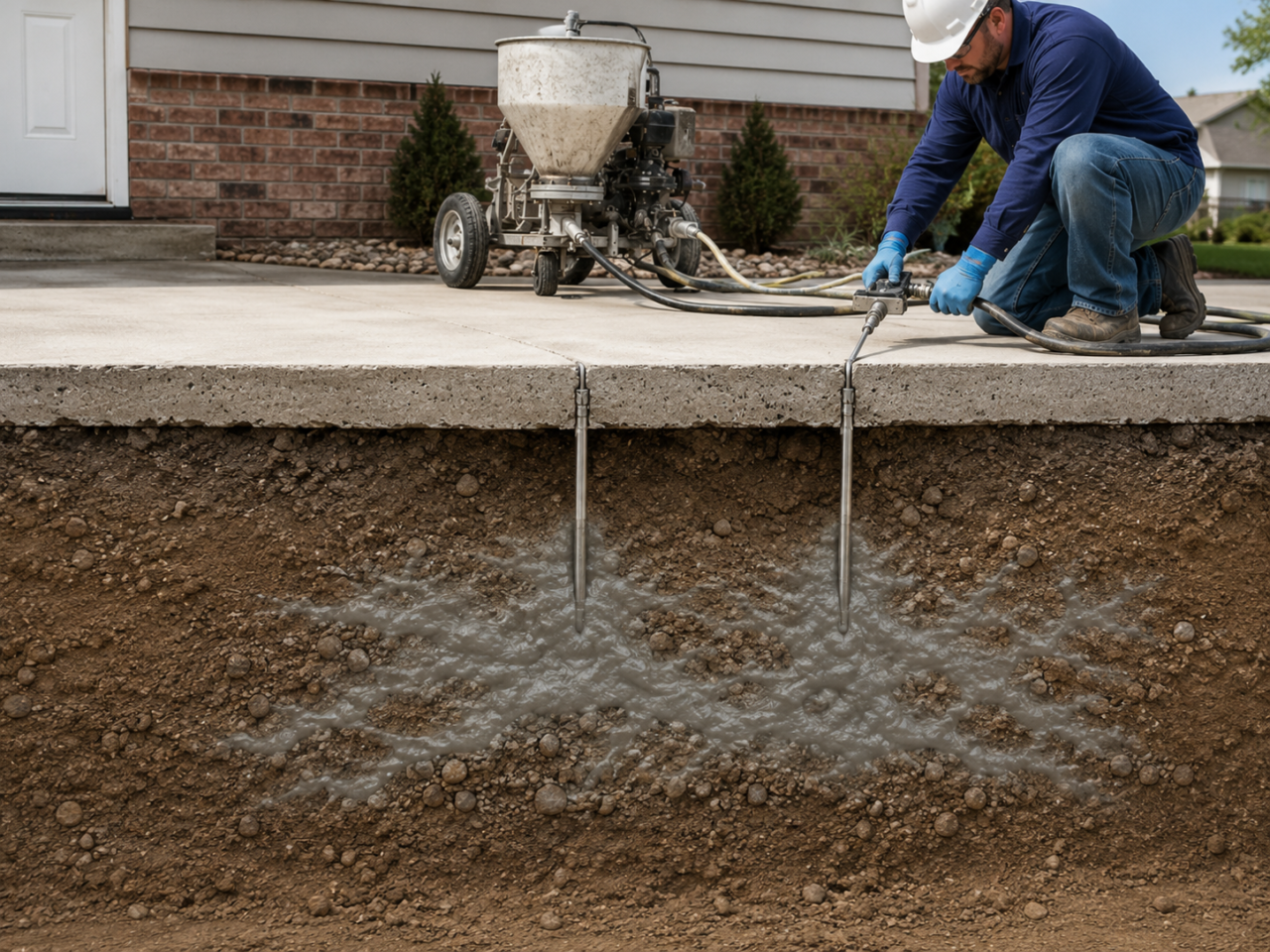
Weak soil beneath a home, commercial building, driveway, sidewalk, or concrete slab can create serious structural problems over time. When the ground below a structure cannot properly support the weight above it, settlement, cracking, sinking concrete, and foundation movement may occur. One highly effective method for improving weak soil and restoring stability is compaction grouting.
But what is compaction grouting, and how does it work? In simple terms, compaction grouting is a ground improvement technique that uses controlled injections of stiff grout to densify loose soil, fill voids, and help stabilize foundations. It is often used when soil has settled, washed out, loosened, or failed to provide adequate support for the structure above.
This guide explains what compaction grouting is, how it works, when it is used, and why it can be an effective solution for stabilizing foundations and helping prevent settlement damage.
What Is Compaction Grouting?
Compaction grouting is a soil stabilization process that involves injecting a thick, low-mobility grout mixture into the ground under pressure. Unlike thinner grout materials that flow freely through soil pores, compaction grout is designed to stay in a concentrated mass. As it is injected, it expands outward and displaces the surrounding soil, compacting and strengthening it.
The goal is not simply to fill a space. The primary purpose of compaction grouting is to improve the density and load-bearing capacity of weak or loose soil. By compressing the surrounding ground, the process helps create a stronger support system beneath foundations, slabs, roadways, and other structures.
Compaction grouting is commonly used to address problems such as:
- Loose or poorly compacted soil
- Soil settlement beneath foundations
- Voids below concrete slabs
- Sinkhole-related soil instability
- Washout caused by water movement
- Foundation settlement and movement
- Sinking driveways, sidewalks, patios, and floors
How Does Compaction Grouting Work?
Compaction grouting works by injecting stiff grout into the ground through strategically placed injection points. The grout is typically installed in controlled stages, allowing technicians to improve the soil at specific depths and locations.
Although every project is different, the process generally follows a structured sequence.
Step 1: Site Evaluation and Soil Assessment
Before compaction grouting begins, the site must be evaluated to determine the cause and extent of the soil instability. This may involve reviewing visible damage, identifying settlement patterns, checking for voids, and determining whether water erosion, poor compaction, or weak soil conditions are contributing to the problem. During this evaluation, engineering expertise is important because site conditions determine whether the method is suitable.
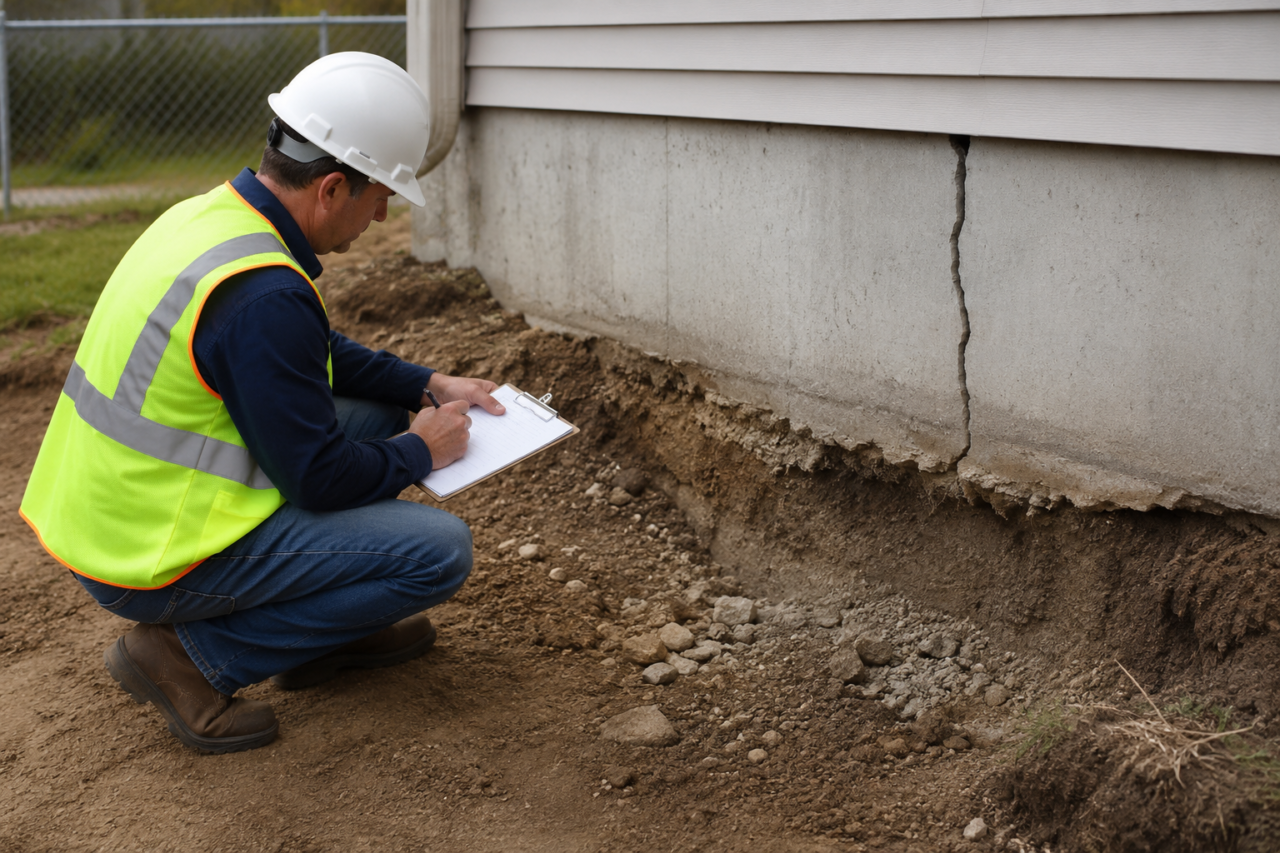
Common warning signs that may indicate unstable soil include:
- Cracks in foundations, walls, or concrete slabs
- Uneven or sloping floors
- Sinking concrete surfaces
- Gaps beneath slabs or steps
- Doors or windows that stick
- Separation between concrete and adjacent structures
- Recurring settlement after previous repairs
A proper assessment helps determine where grout should be injected, how deep the injections should go, and what type of material or repair method is best suited for the job, including the soil type and the grout mix design.
Step 2: Injection Points Are Planned
Once the affected area is identified, injection points are laid out in a pattern designed to target the weak soil zones. These points are typically installed by drilling through the surface and advancing a casing to the required treatment depth around the affected structure. The drilling tool and other equipment must match site access and depth requirements, especially in limited areas.
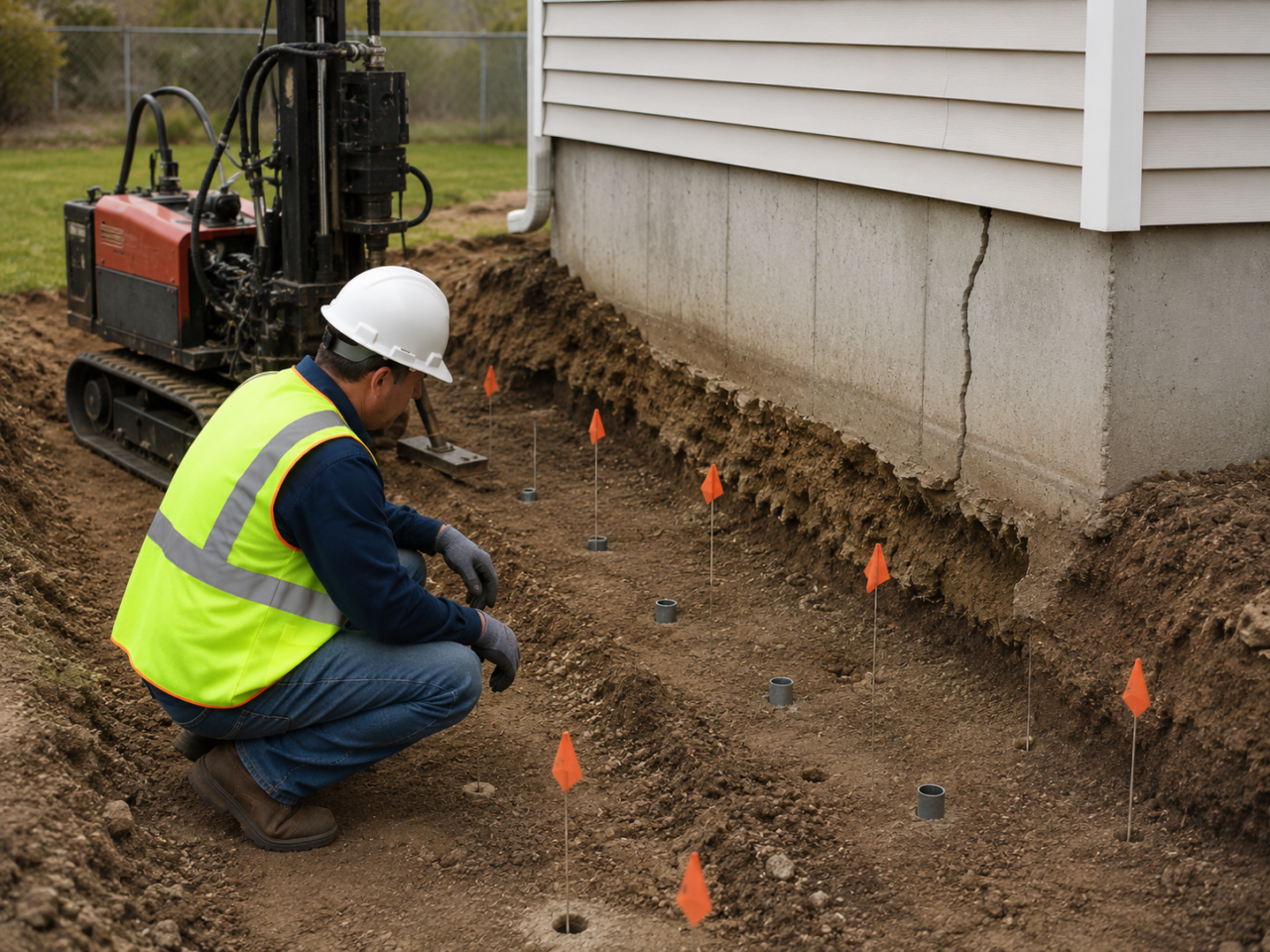
The spacing, depth, and placement of injection points are important because compaction grouting must be carefully controlled. The goal is to strengthen the soil without creating unnecessary pressure on the foundation or surrounding concrete.
Step 3: Grout Bulbs Are Injected Into the Soil
After the injection points are prepared, a stiff, high viscosity mortar is pumped into the ground under controlled pressure. Because the grout is thick and low-mobility, it does not simply run through the soil. Instead, the injection process creates grout bulbs within the treatment zone that push against the surrounding material.
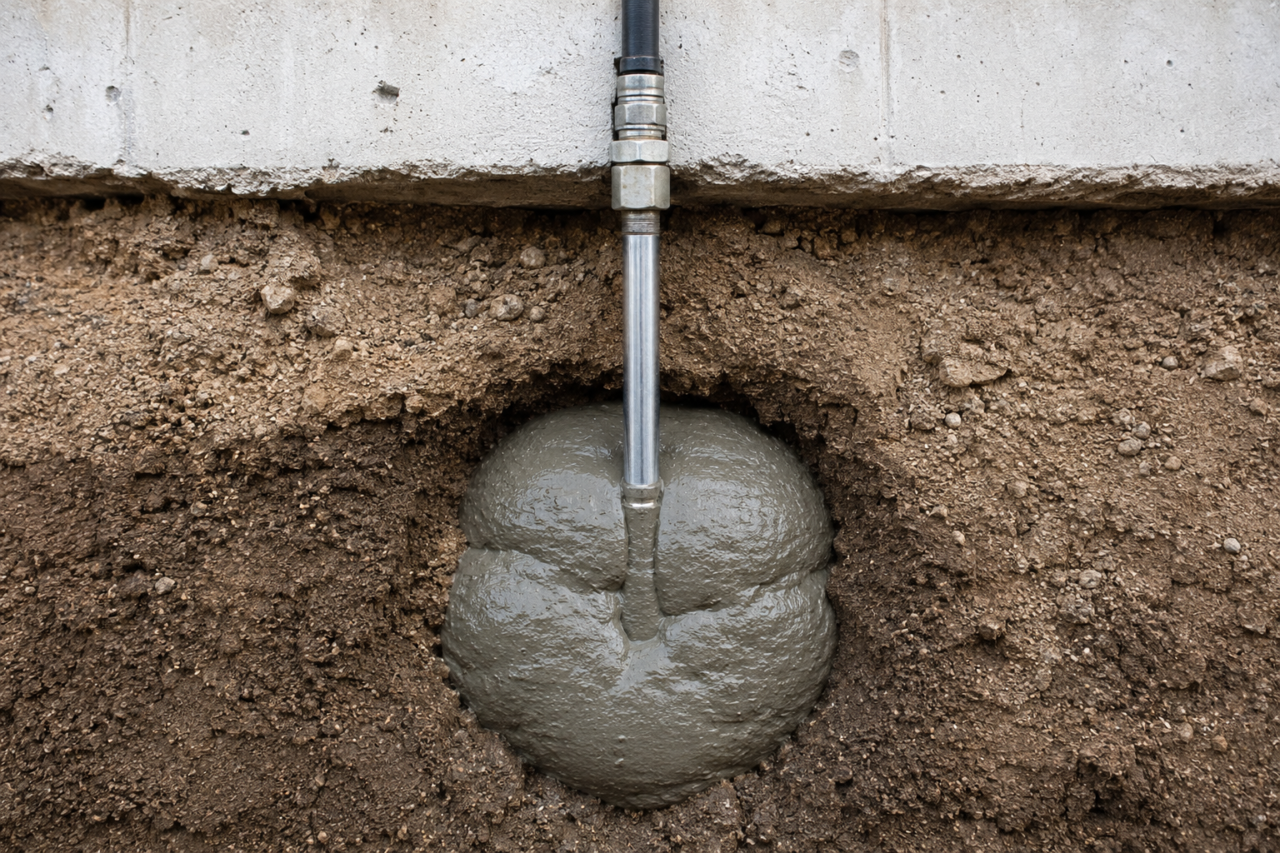
As the grout expands, it compresses loose soil particles together. Overlapping grout bulbs further compact the surrounding material, and injection pressure must be carefully controlled to limit displacement and ground movement near sensitive structures. This densification process increases soil density, reduces void spaces, increases bearing capacity for greater loads, and reduces the risk of future settlement.
Step 4: Soil Is Densified and Voids Are Filled
One of the major benefits of compaction grouting is that it can both compact weak soil and provide targeted void and soil treatment. Voids may form because of erosion, water infiltration, poor drainage, decaying organic material, or soil washout.
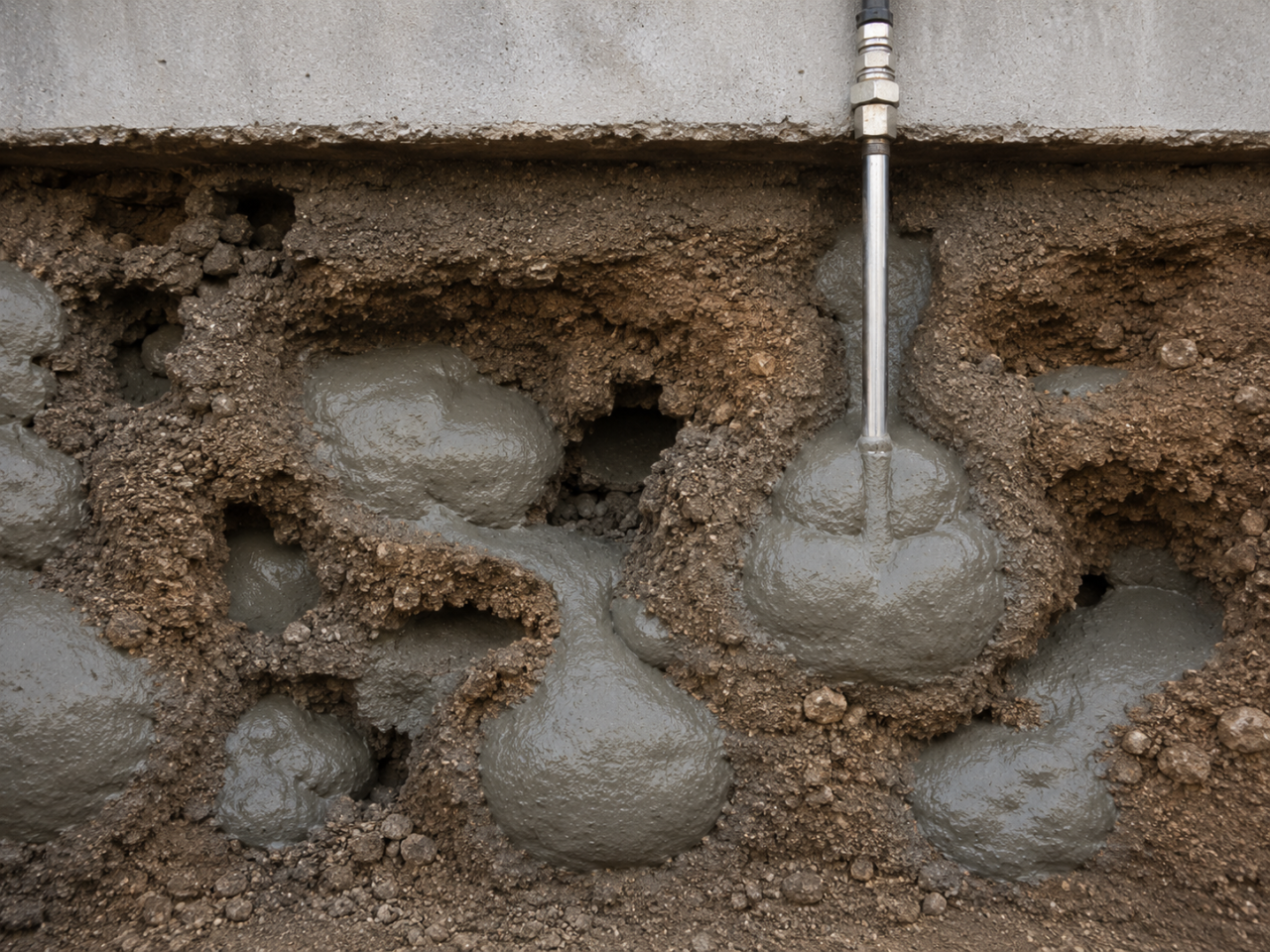
When these empty spaces are left untreated, the soil above them may continue to settle. Concrete slabs and foundations can then lose support and begin to crack, sink, or shift. Compaction grouting helps restore support by filling subterranean voids to help prevent ground collapses and surface depressions, including in areas affected by sinkholes.
Step 5: Foundation Support Is Improved
As the soil becomes denser and more stable, the foundation or concrete surface above it gains improved support. In some cases, controlled grout injection may also help lift or stabilize settled areas, correct differential settlement, stabilize settling foundations, and help re-level existing structures and existing buildings. The specific outcome depends on the soil conditions, the severity of the settlement, and the type of structure being repaired.
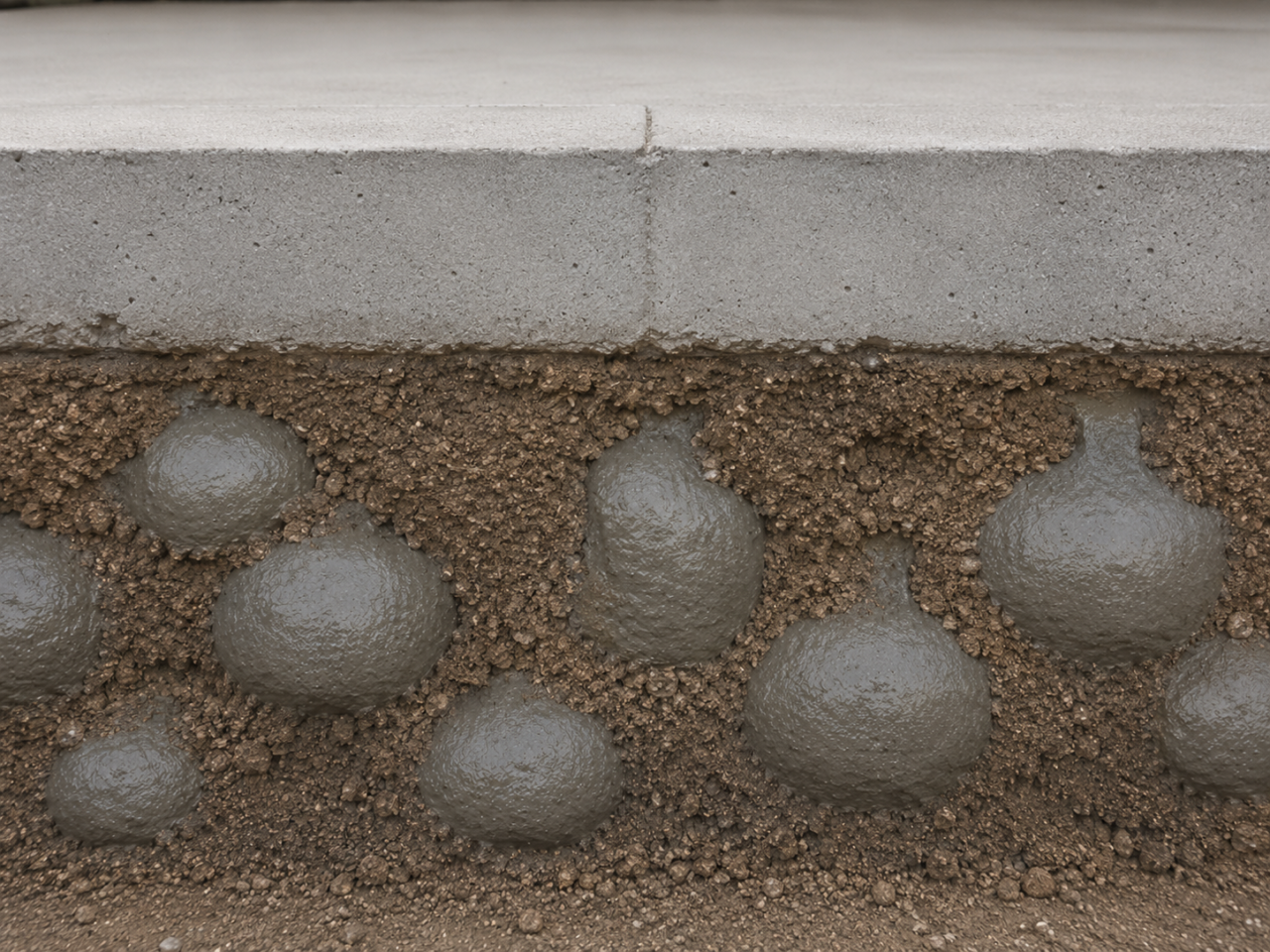
The result is a more stable ground system that helps reduce ongoing movement and protects the structure from additional settlement-related damage.
Why Compaction Grouting Helps Stabilize Foundations
Foundations depend on the soil below them. Even a well-built foundation can experience damage if the soil underneath begins to move, compress, wash away, or lose strength. Compaction grouting addresses this problem at the source and is critical because it improves the ground supporting foundations and infrastructure.
This makes compaction grouting especially useful because it helps:
- Increase soil density
- Improve load-bearing capacity
- Fill underground voids
- Reduce the risk of continued settlement
- Stabilize foundations and slabs, which is also beneficial under heavy-duty structures such as roadways and railways
- Support structures without full excavation
- Address problems below the surface where settlement begins
Instead of only repairing visible cracks or surface damage, compaction grouting targets the unstable soil conditions that caused the damage in the first place.
What Types of Loose or Weak Soils Problems Can Compaction Grouting Address?
Compaction grouting is often used when soil has become too loose, weak, or inconsistent to support a structure properly. It is especially helpful in areas where soil has settled unevenly or where voids have developed below concrete or foundations.
Common soil-related problems include:
Poorly Compacted Fill Soil
Some structures are built over fill soil that was not compacted properly during construction. Over time, this soil may compress under the weight of the structure, leading to settlement. Compaction grouting is often used for loose or weak soils in fill areas when settlement develops over time.
Soil Washout
Water can carry soil particles away from beneath slabs, foundations, driveways, and sidewalks. This creates empty spaces that reduce support and increase the risk of cracking or sinking.
Loose Granular Soil
Sandy or gravelly soils can shift, loosen, or consolidate over time. Compaction grouting can help densify loose soils and improve soil stiffness under load, increasing their ability to support structural loads.
Sinkhole or Void Conditions
In some areas, underground voids may form naturally or as a result of water movement. Compaction grouting can help fill these spaces and strengthen the surrounding ground.
Settlement Beneath Existing Structures
When a structure begins to settle, compaction grouting may be used to stabilize the underlying soil and help reduce further movement.
Compaction Grouting vs. Other Grouting Methods
There are several types of grouting used in soil stabilization and concrete repair. Understanding the difference can help property owners choose the right solution.
Compaction Grouting
Compaction grouting uses a stiff grout mixture to displace and densify soil. It is a preferred solution for soil improvement beneath existing foundations and other structures when minimal excavation or soil removal is desired.
Permeation Grouting
Permeation grouting uses a more fluid material that flows through soil pores without significantly disturbing the soil structure. It is often used to reduce permeability or strengthen granular soils.
Pressure Grouting
Pressure grouting is a broader term that refers to injecting grout under pressure to fill voids, stabilize soil, seal leaks, or strengthen subsurface conditions. Compaction grouting is one specialized form of pressure grouting.
When Is Compaction Grouting Needed?
Compaction grouting may be recommended when there is evidence that weak or unstable soil is contributing to structural or concrete settlement. It can be used for residential, commercial, municipal, and industrial repair applications, and is also suitable for projects in confined or limited-access areas with minimal disruption.
You may need compaction grouting if you notice:
- Foundation cracks that continue to grow
- Concrete slabs that are sinking or uneven
- Repeated settlement in the same area
- Voids under sidewalks, driveways, or floors
- Soil erosion around foundations
- Water-related washout beneath concrete
- Gaps forming below steps, patios, or slabs
- Structural movement caused by poor soil support
Addressing these signs early can help prevent more extensive damage and more expensive repairs later.
Benefits of Compaction Grouting for Ground Improvement and Foundation Stabilization
Compaction grouting offers several important advantages for stabilizing weak soil and supporting foundations.
It Strengthens Soil Below the Surface
Many settlement problems begin underground. Compaction grouting improves the soil where the damage starts by densifying weak soils and increasing the soil’s stiffness below the surface, helping create a stronger base for the structure.
It Can Be Less Disruptive Than Excavation
In many cases, compaction grouting can be performed through small injection points instead of large-scale excavation. This can reduce disruption to landscaping, concrete surfaces, and nearby structures.
It Helps Prevent Ongoing Settlement
By densifying weak soil and filling voids, compaction grouting helps reduce the risk of future movement in the treated area.
It Supports Existing Foundations and Slabs
Compaction grouting can often be used around existing structures, making it a practical option for homes, commercial buildings, sidewalks, driveways, warehouses, and other concrete surfaces.
It Targets the Cause of the Problem
Rather than only patching cracks or leveling surfaces, compaction grouting addresses the unstable soil conditions that often cause settlement damage.
How Compaction Grouting Helps Prevent Settlement Damage
Settlement damage occurs when the soil beneath a structure compresses, shifts, or erodes. As support is lost, the structure above may begin to sink unevenly. This uneven movement can cause cracking, tilting, gaps, and structural stress.
Compaction grouting helps prevent settlement damage by reinforcing the soil below the structure. The injected grout compresses weak soil, fills underground voids, and helps create a more uniform support system. This can reduce movement and help protect foundations, floors, and concrete slabs from additional damage.
For property owners, this can mean fewer recurring cracks, improved structural stability, and greater confidence in the long-term performance of the repaired area.
Is Compaction Grouting Right for Every Foundation Problem?
Compaction grouting is a powerful soil stabilization method, but it is not the right solution for every situation. The best repair method depends on the type of soil, the extent of the damage, the depth of the unstable zone, drainage conditions, and the structure being supported; in areas prone to seismic activity, compaction grouting may also be considered because it reduces the potential for liquefaction during an earthquake.
In some cases, geo-polymer injection, slabjacking, permeation grouting, void filling, drainage improvements, or concrete grinding may be more appropriate. A professional evaluation is the best way to determine which repair method will deliver the safest and most effective result.
About Slabjack Geotechnical
At Slabjack Geotechnical, we are a family-owned and operated full-service concrete repair company proudly serving Washington and Northern Idaho. Our team provides a wide range of concrete repair and soil stabilization services, including slabjacking (concrete raising), pressure grouting, compaction and permeation grouting, concrete grinding, joint sealing repair, and void filling, backed by strong engineering knowledge for grouting and related ground improvement work.
We also seal leaking culverts, large-diameter pipes, and concrete ditches. Our work is focused on delivering practical, long-lasting repair solutions that help property owners restore safety, stability, and function to their concrete and foundation systems while supporting current and future projects requiring reliable soil stabilization.
One of the key methods we use for concrete lifting is geo-polymer injection. This modern concrete raising approach allows us to lift and stabilize sunken slabs with precision and minimal disruption. By injecting expanding geo-polymer material beneath settled concrete, we can fill voids, restore support, and raise concrete surfaces efficiently without the need for full concrete replacement in many cases.

Contact Slabjack Geotechnical for Compaction Grouting and Foundation Stabilization
Understanding what is compaction grouting is the first step toward solving soil instability and settlement problems before they become more severe. When weak soil, underground voids, or poor support threaten your foundation or concrete surfaces, the right repair method can make all the difference.
If you are dealing with sinking concrete, foundation settlement, voids, washout, or unstable soil, contact Slabjack Geotechnical today. Our experienced team can evaluate your site, explain your repair options, and provide a service quote for compaction grouting, geo-polymer injection, or other concrete repair solutions. Discover how we can help stabilize your property and protect it from further settlement damage.
FAQs
Is compaction grouting the same as pressure grouting?
Compaction grouting is a type of pressure grouting, but the terms are not exactly the same. Pressure grouting is a broader category that can include several injection methods, while compaction grouting specifically uses stiff grout to displace and compact loose soil.
When should I consider compaction grouting?
You may need compaction grouting if you notice foundation cracks, sinking concrete, uneven floors, gaps beneath slabs, recurring settlement, or signs of soil washout. A professional evaluation can determine whether compaction grouting is the right solution for your specific site conditions.
How long does compaction grouting last?
When properly designed and installed, compaction grouting can provide long-term soil stabilization by improving the density and strength of the treated ground. The longevity of the repair depends on soil conditions, drainage, structural loads, and whether the original cause of settlement has been addressed.
How do I know if compaction grouting is right for my property?
The best way to know if compaction grouting is right for your property is to schedule a professional inspection. A concrete repair and soil stabilization specialist can evaluate the settlement, identify the cause, and recommend the best repair method for your foundation, slab, or concrete surface.