
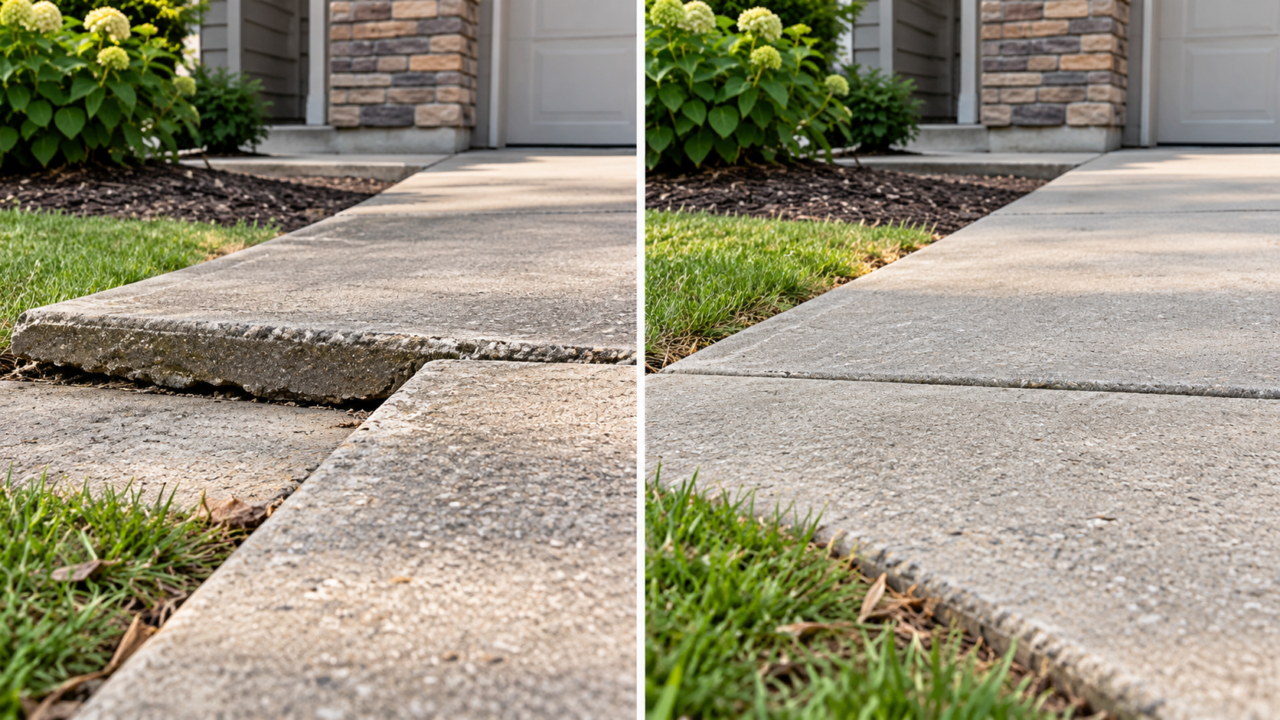
Sunken concrete can make an otherwise functional driveway, sidewalk, patio, or floor look neglected while creating uneven transitions and potential trip hazards. Fortunately, settlement does not always mean that the affected slab needs to be demolished and replaced. Professional concrete leveling can often raise existing concrete closer to its intended position while addressing voids and inadequate support beneath the slab.
Looking at concrete leveling before and after examples is one of the easiest ways to understand how significant these improvements can be. From a driveway slab that has dropped several inches to an uneven sidewalk panel, the right lifting method can dramatically improve the alignment, safety, drainage, and usability of an existing concrete surface.
Below, we explore common concrete lifting before and after scenarios, what changes during the process, and how much sunken concrete may potentially be restored.
Why Does Concrete Sink in the First Place?
Concrete slabs are extremely heavy, but their long-term stability depends heavily on the soil and base material underneath them. If that support changes, portions of the slab can gradually settle.
Common causes include:
- Poorly compacted soil beneath the original installation
- Soil erosion or washout
- Changes in soil moisture
- Voids beneath the slab
- Drainage problems
- Soil movement or shrinking
- Heavy loads placed on inadequately supported concrete
Slabjack Geotechnical notes that changes in soil moisture, inadequate compaction, and erosion can create voids beneath concrete and lead to settlement.
Once settlement occurs, simply filling a visible crack or uneven joint generally does not correct the underlying elevation difference. Concrete lifting addresses the slab position itself.
What Does Concrete Leveling Actually Restore?
Concrete leveling is designed to correct settlement by raising a slab that has moved downward from its original position. Rather than pouring an entirely new slab, lifting techniques work beneath the existing concrete to fill voids, improve support, and carefully move the slab upward.
Depending on the condition and cause of settlement, leveling may help restore:
- Proper slab height
- Smoother transitions between adjoining sections
- More consistent walking and driving surfaces
- Improved drainage and surface slope
- Better support beneath the concrete
- Reduced trip hazards
- Improved overall appearance
The amount of improvement possible varies from one project to another. Slab condition, settlement depth, soil conditions, cracking, surrounding structures, and the original installation can all influence how closely the concrete can be returned to its desired elevation.
Concrete Leveling Before and After: Visual Comparisons
The most noticeable results of concrete leveling can be seen by comparing the condition of a slab before and after it is raised. The following examples illustrate several common situations where lifting may substantially restore an existing concrete surface.
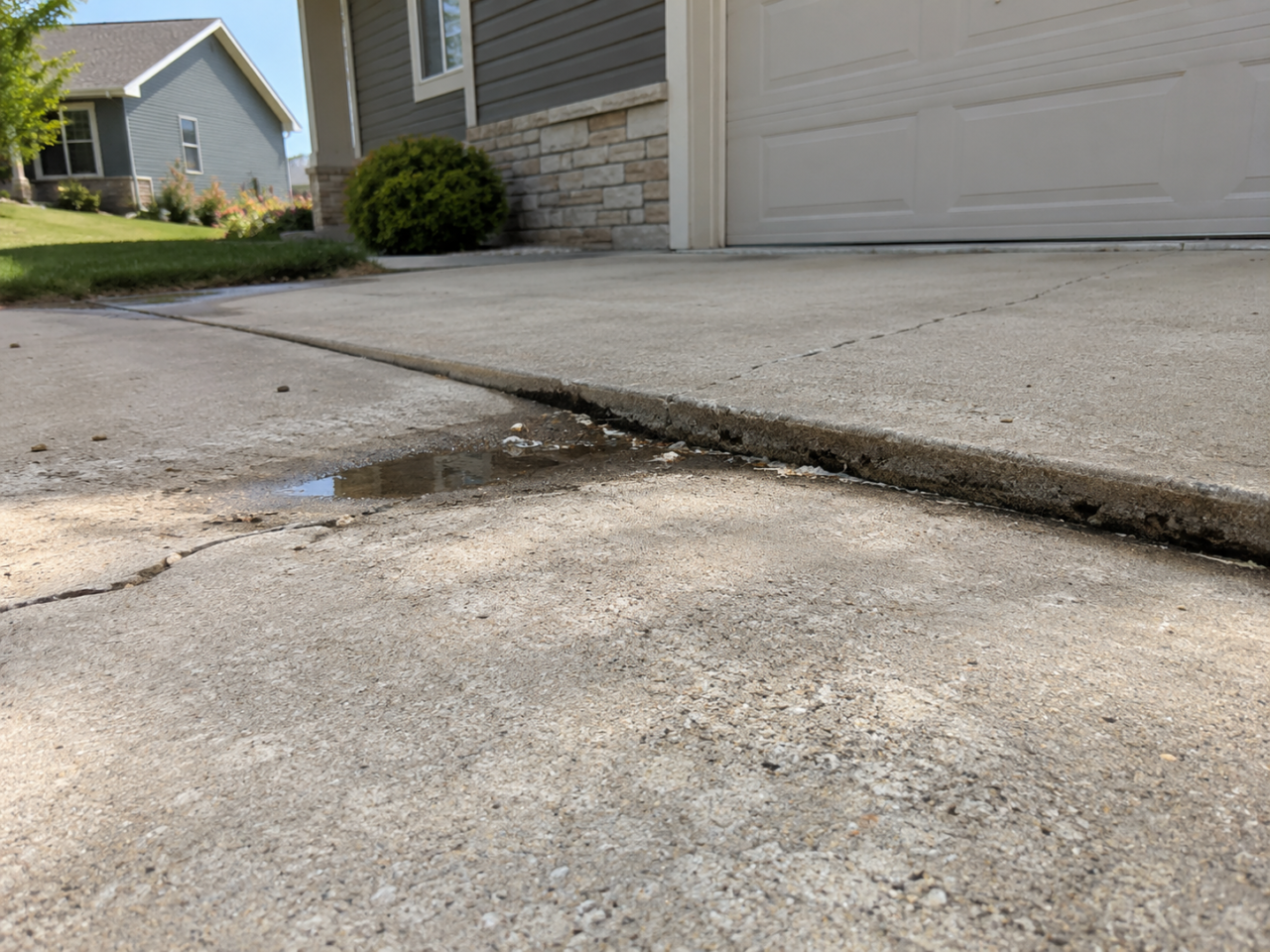
1. Sunken Driveway Concrete Before and After Leveling
Before Concrete Leveling
A settled driveway may develop noticeable low spots where individual slabs meet the garage, sidewalk, curb, or neighboring sections of concrete. One slab may sit considerably lower than another, creating an abrupt transition and allowing water to collect in areas that previously drained properly.
Additional signs may include visible joint separation, uneven tire paths, cracking, or a noticeable dip when entering or exiting the driveway.
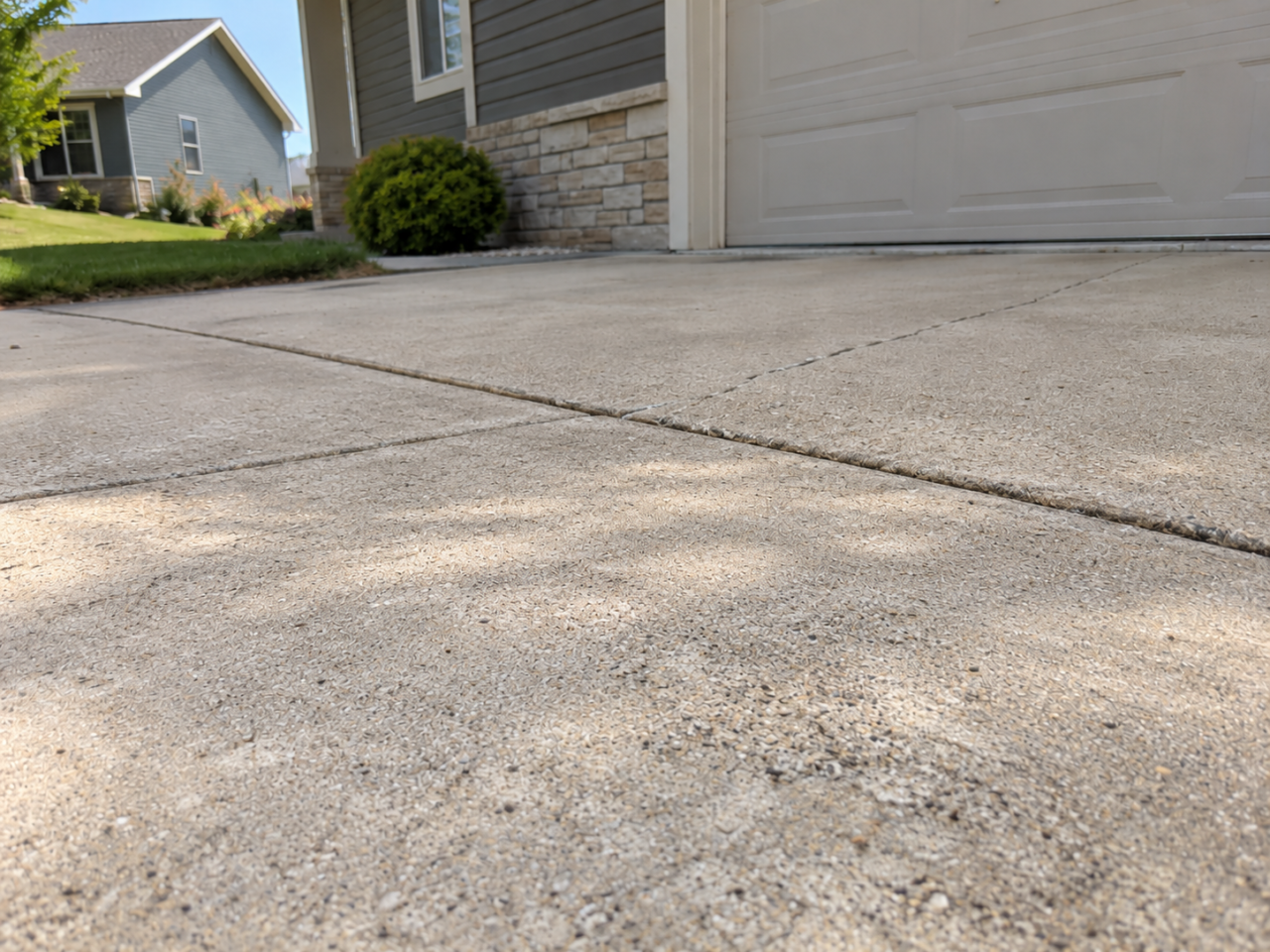
After Concrete Leveling
After lifting, the settled driveway section can be raised closer to the elevation of the neighboring concrete. The transition becomes more even, the pronounced dip is reduced, and the driveway can regain a more consistent surface profile.
The original concrete remains in place, which allows property owners to address settlement without automatically removing and replacing the entire affected slab.
2. Uneven Sidewalk Concrete Before and After Lifting
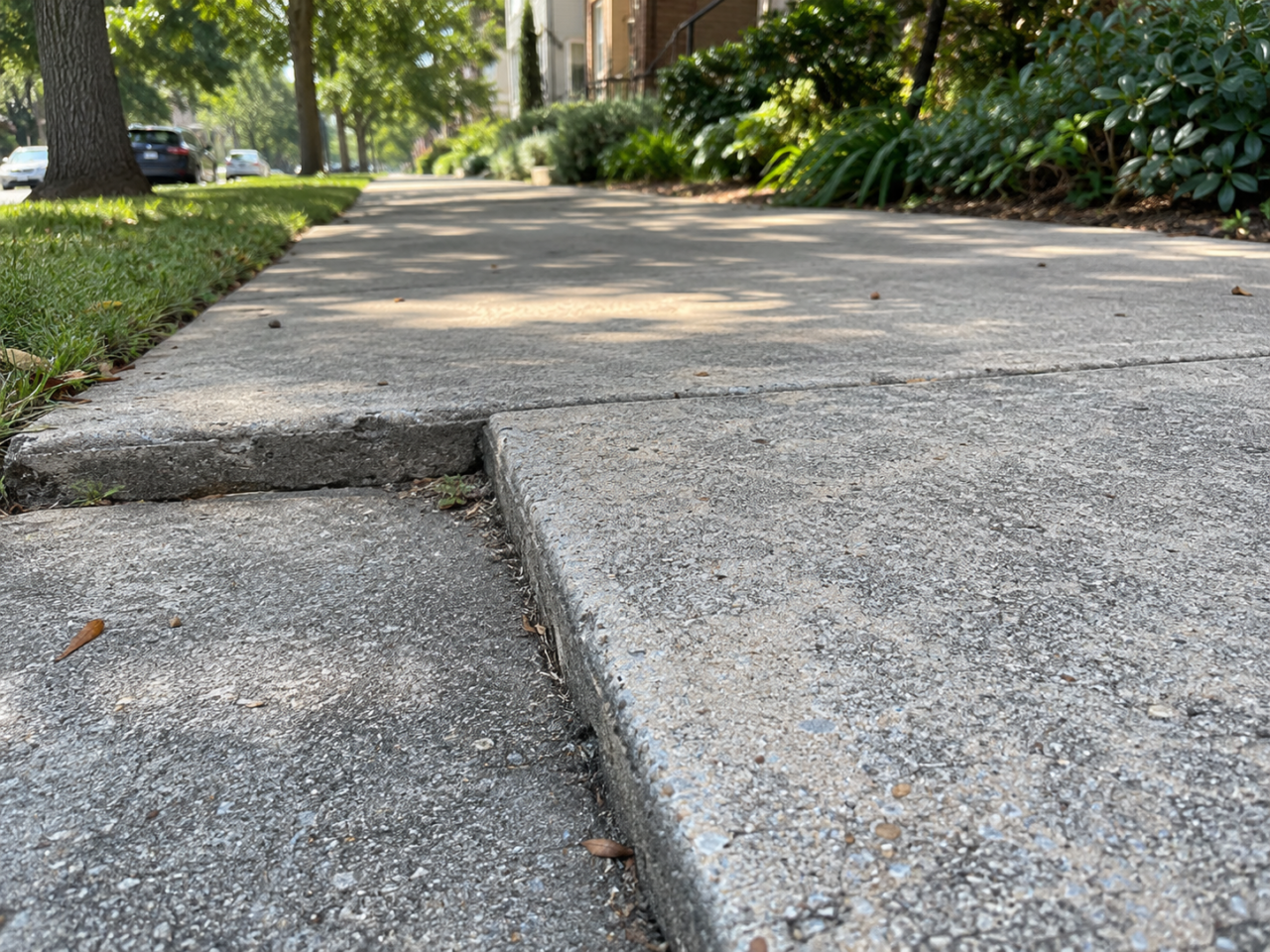
Before Concrete Lifting
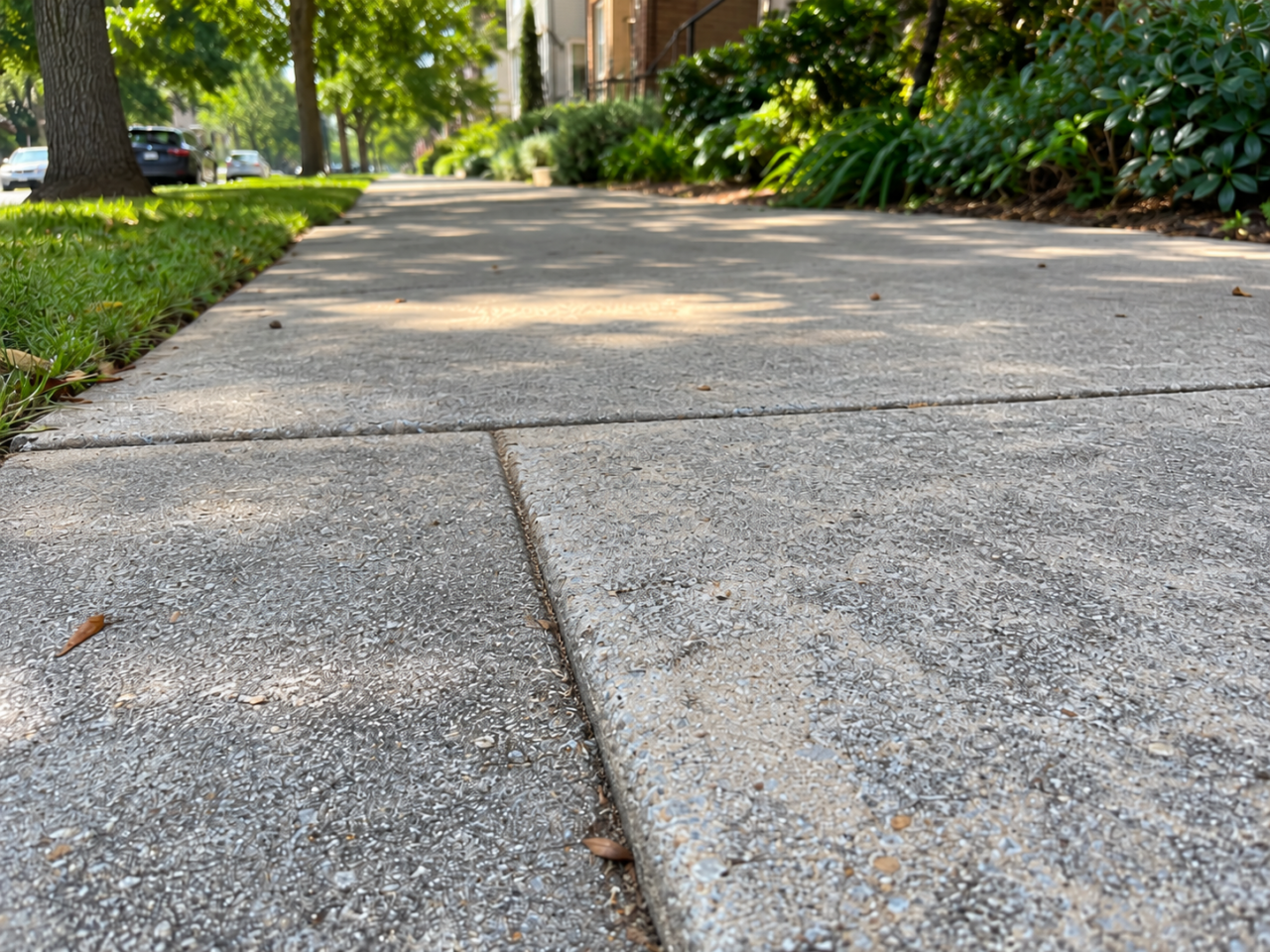
Sidewalk settlement commonly produces a raised edge where one panel sits lower than the next. Even a relatively small elevation difference can create an uncomfortable walking surface and a potential trip hazard, particularly along frequently traveled residential or commercial walkways.
The affected panel may otherwise remain relatively intact, making replacement seem excessive when settlement is the primary problem.
After Concrete Lifting
Once the settled panel is carefully raised, the adjoining sidewalk sections can be brought into much closer alignment. The abrupt edge is reduced, resulting in a smoother walking transition and a more uniform appearance.
When the slab itself remains structurally suitable for lifting, leveling can preserve the existing sidewalk while correcting the elevation problem that made the area difficult to use.
3. Sunken Patio Concrete Before and After Leveling
Before Concrete Leveling
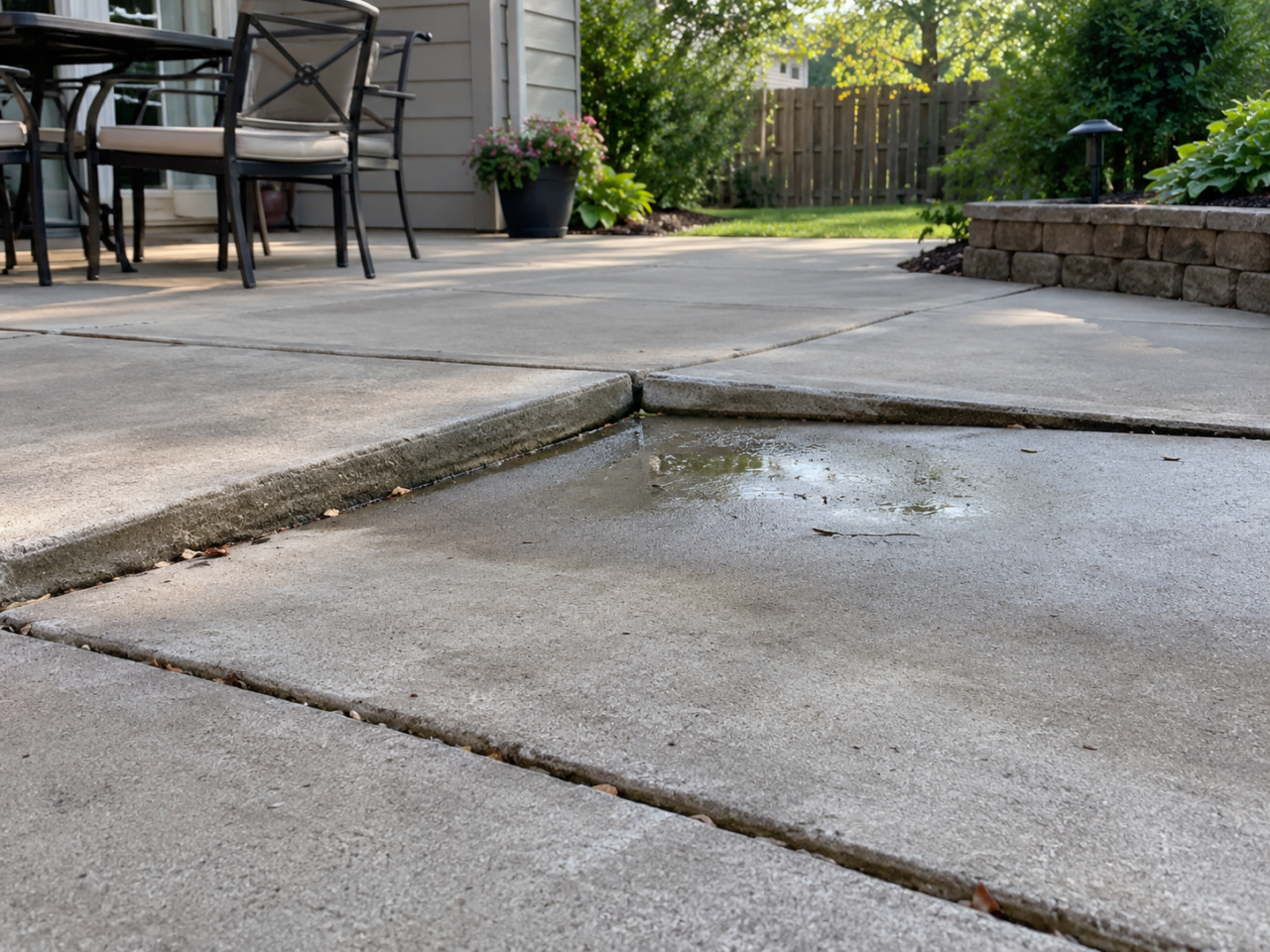
Patio slabs can settle unevenly as soil conditions change beneath the concrete. One section may drop while neighboring slabs remain in place, leaving uneven joints, noticeable slopes, or depressions where rainwater accumulates.
Settlement around a patio can also interfere with furniture placement and create awkward transitions between the patio, steps, walkways, or adjoining landscaping.
After Concrete Leveling
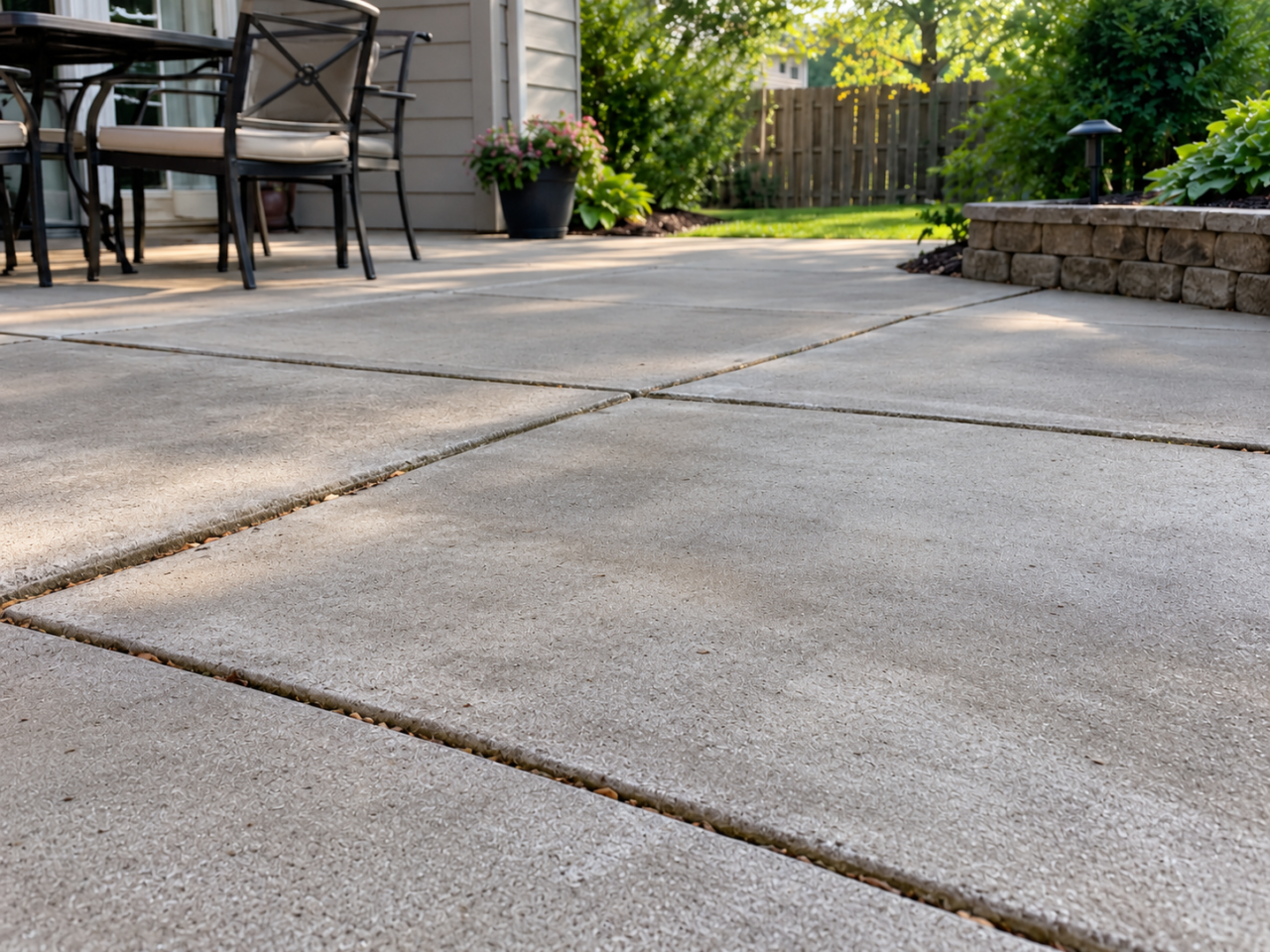
Leveling can raise the affected patio section and reduce the difference between neighboring slabs. The finished surface can provide a more consistent area for walking, seating, and everyday outdoor use while improving the overall appearance of the patio.
Correcting the elevation may also help restore a more appropriate surface slope when settlement has contributed to poor drainage.
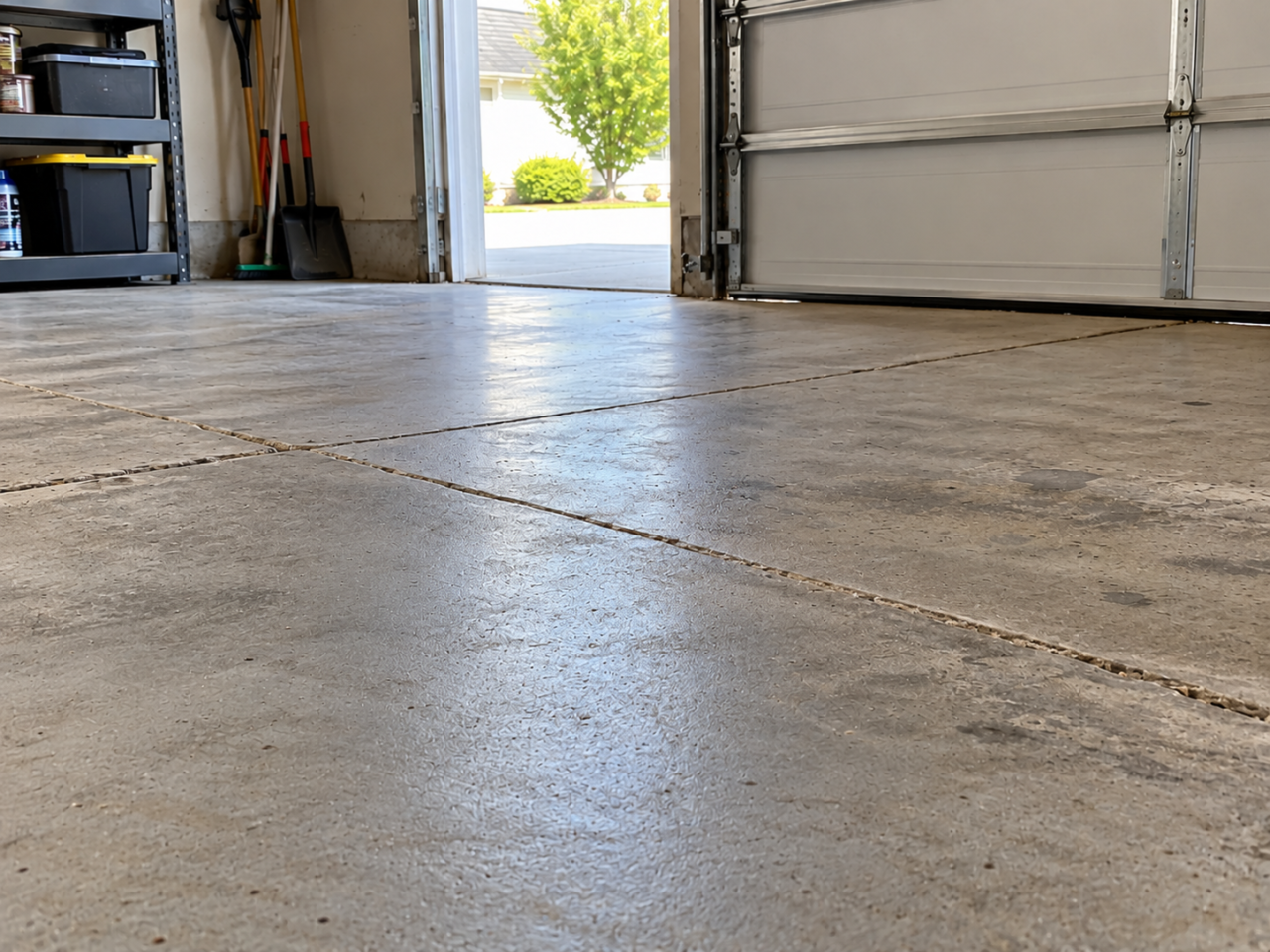
4. Garage Floor Concrete Before and After Lifting
Before Concrete Lifting
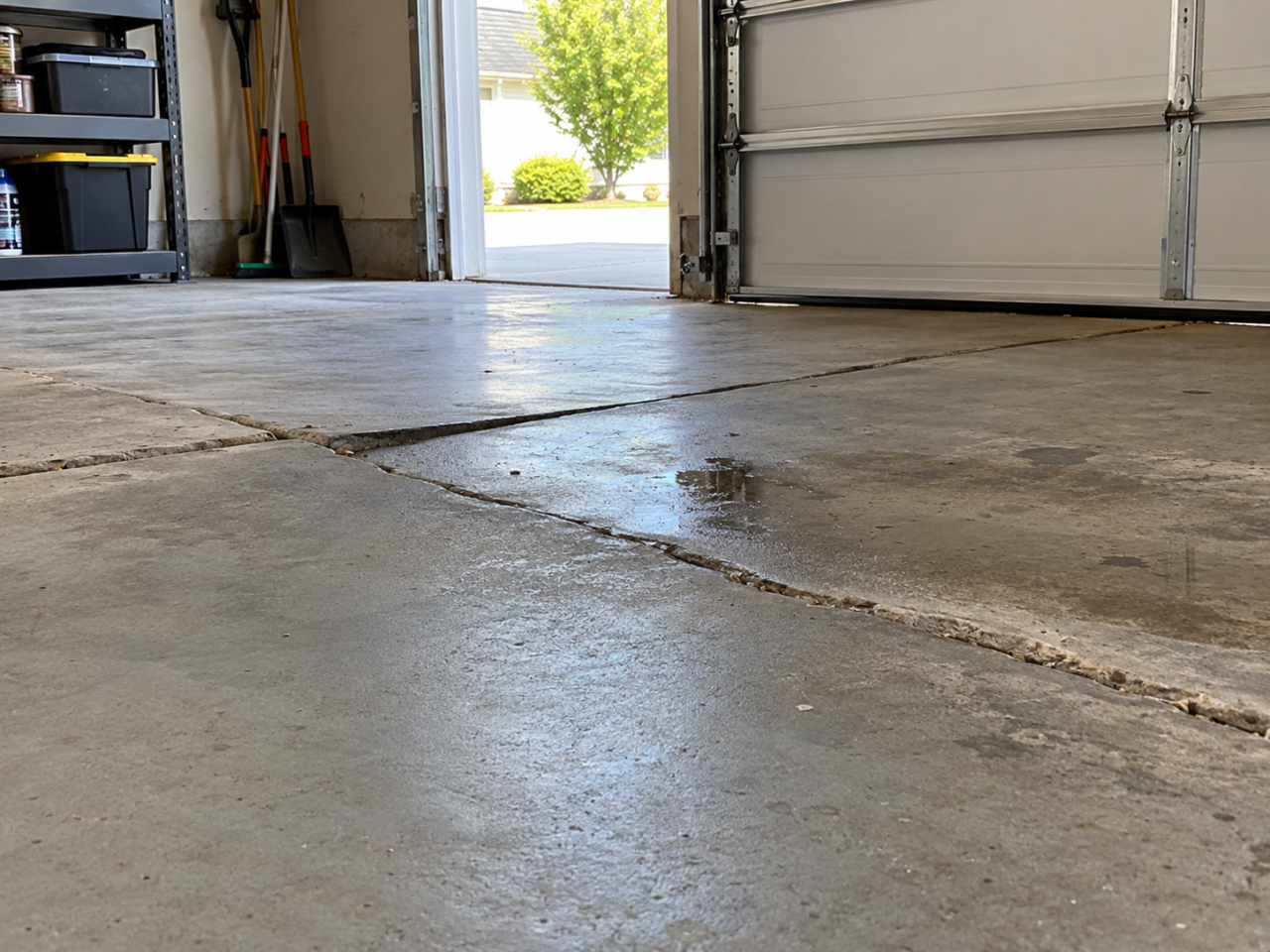
Garage floors may experience settlement when voids develop or the supporting material beneath portions of the slab loses stability. The result can be a low section of floor, separation near adjoining concrete, uneven transitions, or areas where water collects.
Because garage slabs support vehicles and other substantial loads, changes in elevation can become particularly noticeable during everyday use.
After Concrete Lifting
Professional lifting can raise suitable areas of the garage slab toward their intended elevation while filling voids beneath the concrete. The change can make the floor more uniform and improve the transition between affected and unaffected areas.
The ability to preserve the existing slab can also reduce the extent of demolition and reconstruction that would accompany complete concrete replacement.
5. Pool Deck Concrete Before and After Leveling
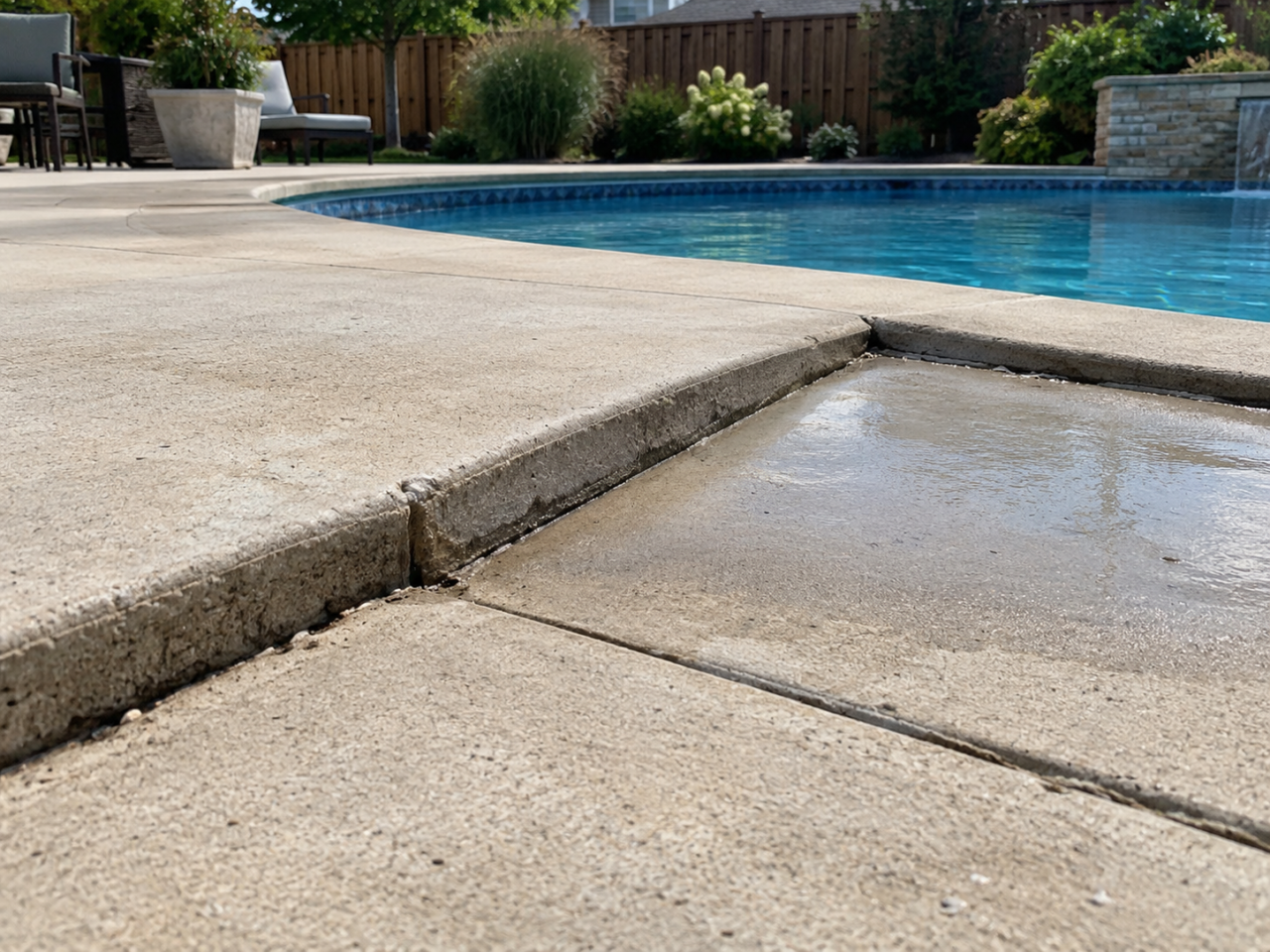
Before Concrete Leveling
Settlement around a pool can cause neighboring deck sections to become misaligned. Uneven joints are especially noticeable in areas where people frequently walk barefoot, and low sections can potentially collect water instead of directing it toward the intended drainage areas.
The visual difference between settled and properly positioned slabs can also detract from an otherwise well-maintained pool area.
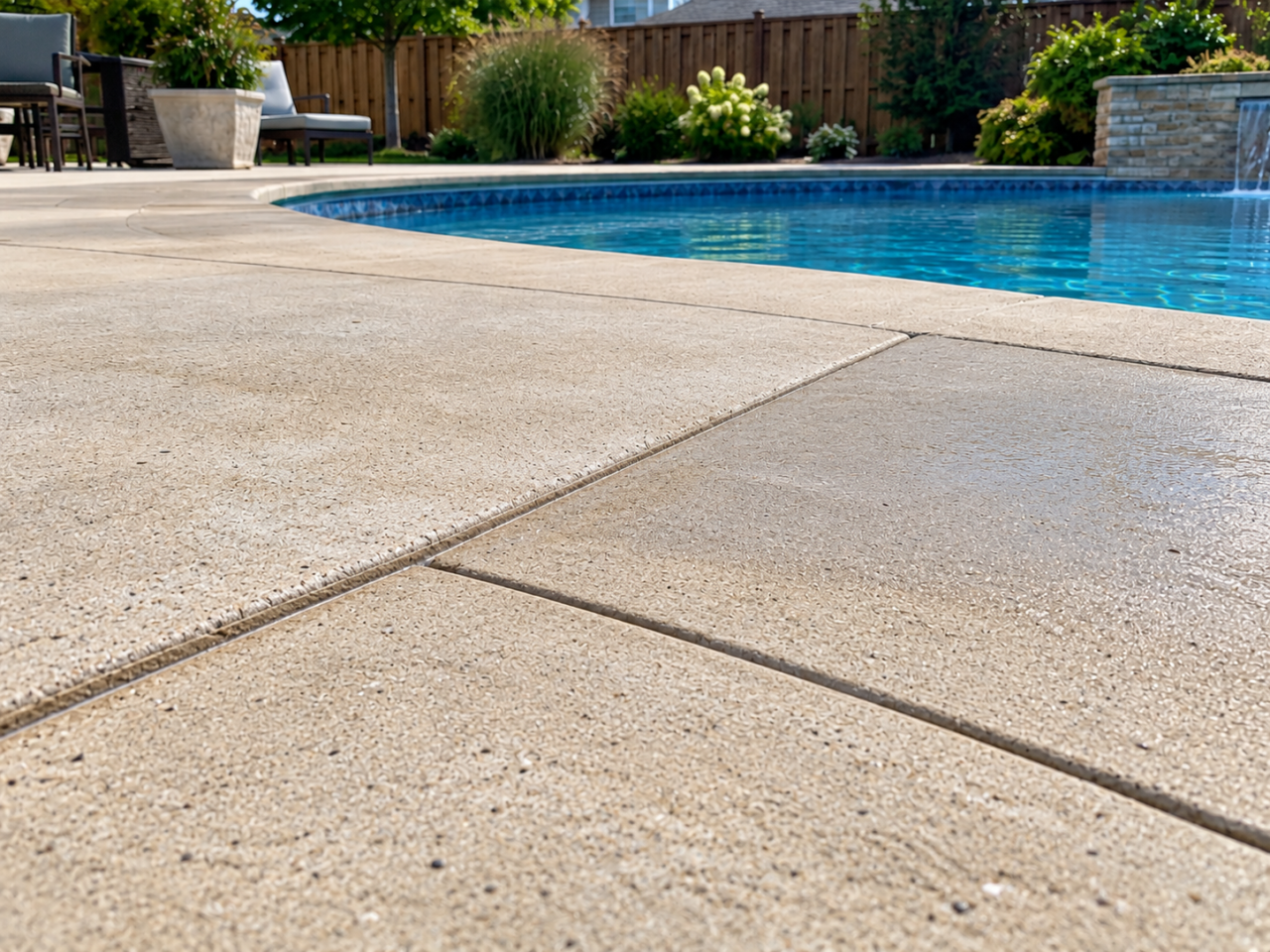
After Concrete Leveling
Lifting the settled deck section can bring the adjoining concrete closer together in elevation, creating a smoother transition around the pool. The completed repair can improve both the functionality and appearance of the surrounding deck.
Because the existing concrete is retained, leveling can be especially useful when the slab is otherwise in suitable condition and matching replacement concrete would be difficult.
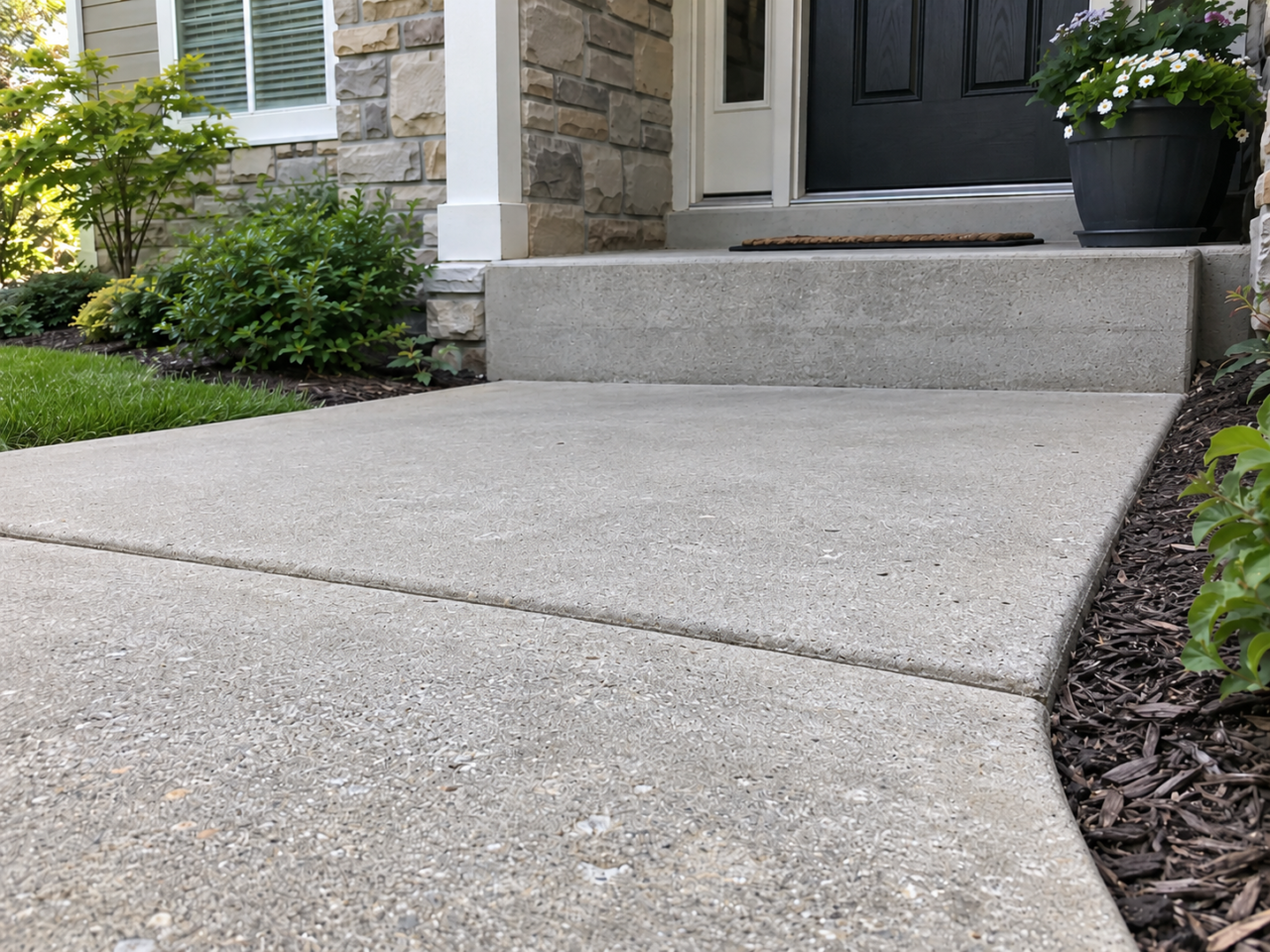
6. Front Walkway or Porch Concrete Before and After Lifting
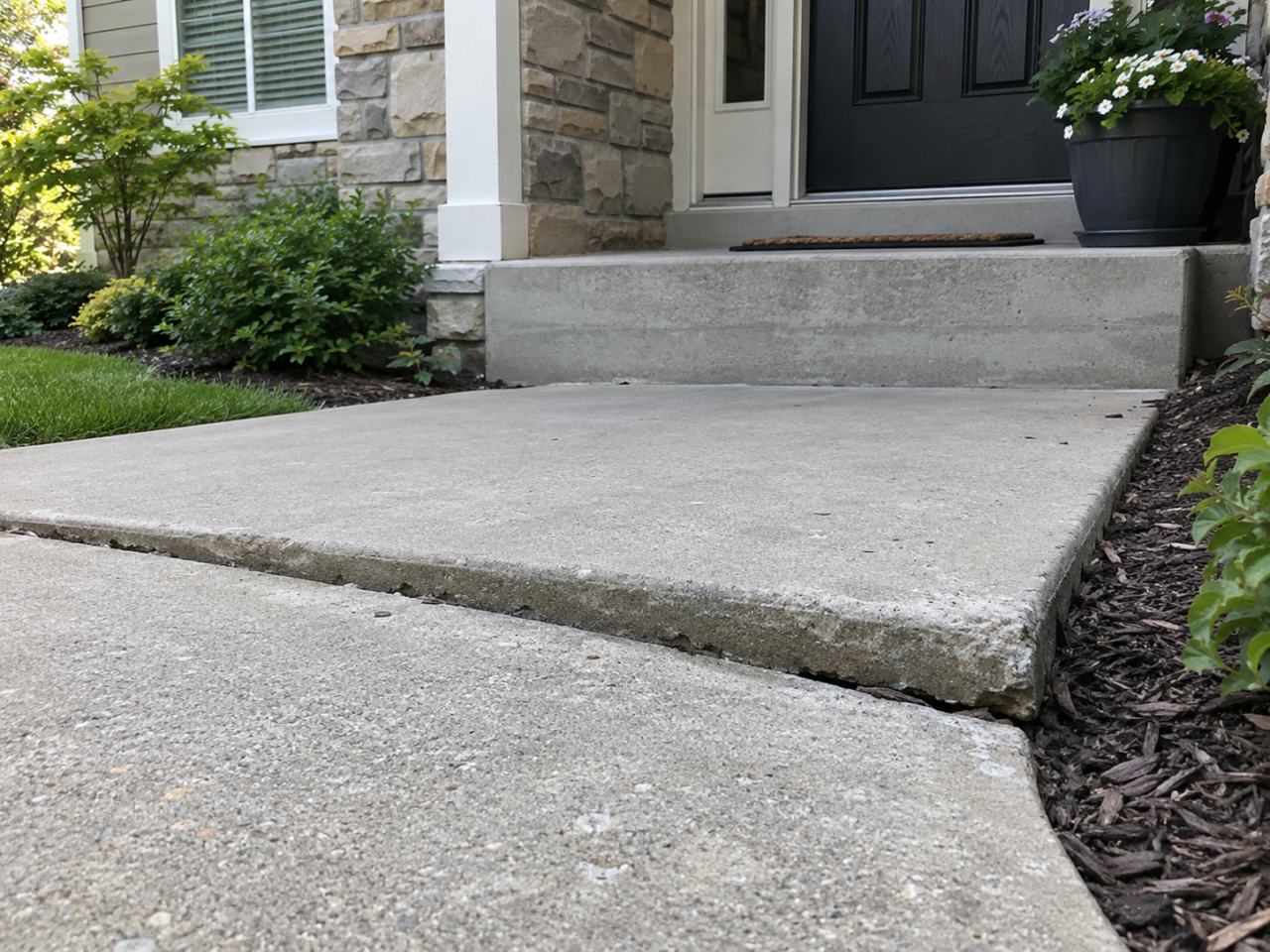
Before Concrete Lifting
Concrete near porches and entryways can settle away from steps, landings, or neighboring walkway sections. The resulting elevation difference may create an awkward step, uneven walking surface, or visible gap that becomes increasingly noticeable over time.
Because these areas often serve as a property’s main entrance, even localized settlement can have a significant impact on both function and curb appeal.
After Concrete Lifting
Once raised, the affected concrete can sit significantly closer to its intended position relative to the entryway and adjoining slabs. This creates a more consistent transition while preserving much of the existing concrete around the home.
The repaired area can look more cohesive and become easier to navigate without the disruption associated with removing and repouring the entire section.
How Much Can Sunken Concrete Actually Be Lifted?
There is no single maximum amount that applies to every concrete leveling project. Some slabs may only need a relatively small adjustment, while others have experienced much more noticeable settlement.
The important question is not simply how many inches the concrete has dropped. A professional assessment should also consider:
- The structural condition of the slab
- The amount and direction of settlement
- Existing cracking or deterioration
- The condition of the soil beneath the concrete
- The presence and size of underlying voids
- Adjacent slabs, walls, foundations, or structures
- Drainage conditions
- Whether the slab can move safely during lifting
Concrete that has settled substantially may still be a candidate for lifting when the slab remains sufficiently intact. Conversely, concrete with severe structural deterioration, extensive fragmentation, or other significant damage may require a different repair strategy.
That is why concrete leveling before and after results should be viewed as project-specific rather than as a guarantee that every slab can be returned to its exact original position.
Professional Concrete Leveling and Lifting From Slabjack Geotechnical
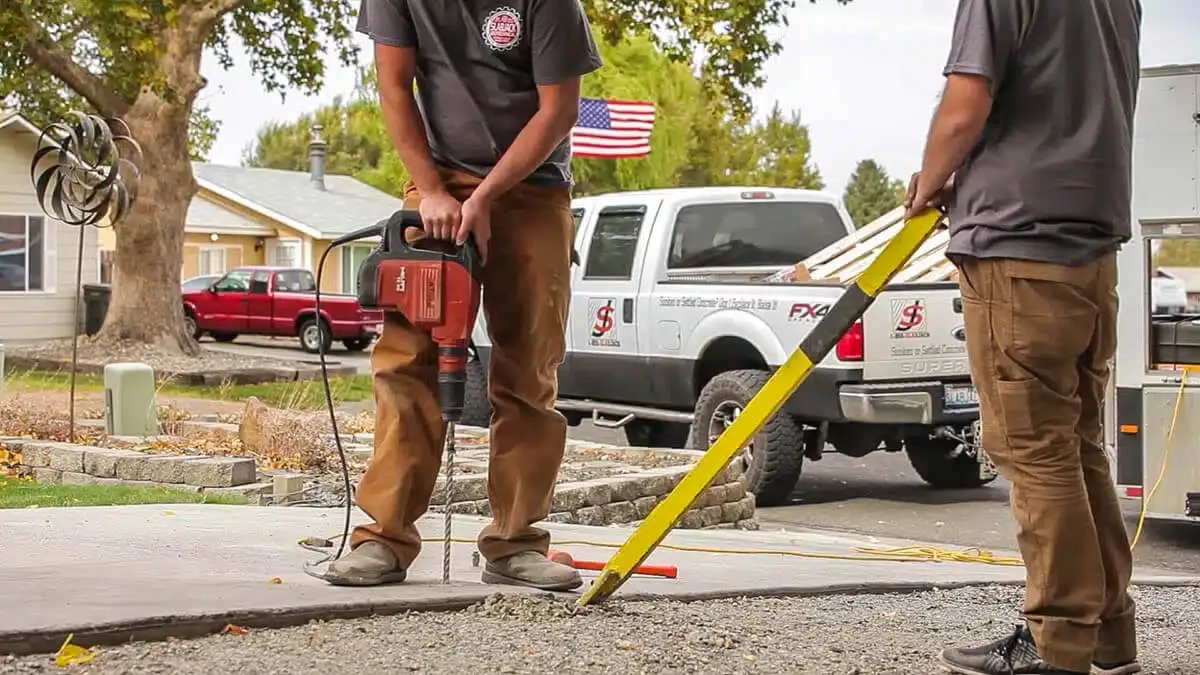
At Slabjack Geotechnical, we are a family-owned and operated, full-service concrete repair company serving Washington and Northern Idaho. Our company works with residential, commercial, municipal, and industrial properties and provides a broad range of concrete repair and stabilization solutions. Our services include concrete raising, pressure grouting, compaction and permeation grouting, concrete grinding, crack and joint repair, void filling, and other specialized concrete services.
Our concrete leveling and lifting services are designed to restore suitable sunken slabs without automatically resorting to full demolition and replacement. Using advanced polymer technology, we can fill voids beneath settled concrete and carefully raise affected slabs toward the appropriate elevation. We have completed thousands of lifts throughout the region, addressing everything from residential driveways, patios, sidewalks, and garage floors to larger commercial and municipal projects.
Restore Your Sunken Concrete With Slabjack Geotechnical
Sunken concrete does not necessarily have to stay uneven, and replacement is not always the only solution. As these concrete leveling before and after and concrete lifting before and after examples demonstrate, professional lifting can create a substantial difference in slab height, transitions, safety, drainage, and overall appearance when the existing concrete is a good candidate for restoration.
If you have a sinking driveway, uneven sidewalk, settled patio, garage floor, pool deck, or another concrete surface, contact Slabjack Geotechnical today. Our team can evaluate the condition of your concrete, explain your repair options, and determine whether professional lifting and leveling can restore it. Reach out to learn more about how we can help or to request a concrete repair estimate.
FAQs
How much can sunken concrete be raised with concrete leveling?
The amount of concrete that can be raised depends on the slab’s condition, the extent of settlement, and the support beneath it. Some slabs may only require a small adjustment, while others can potentially be lifted several inches when conditions allow.
Can cracked concrete still be lifted and leveled?
Cracked concrete can sometimes still be lifted if the slab remains stable enough for the process. Existing cracks may remain visible afterward, so additional crack or joint repair may be recommended depending on the condition of the concrete.
What types of concrete can be lifted and leveled?
Concrete lifting may be used on driveways, sidewalks, patios, garage floors, pool decks, walkways, and other settled slabs. Whether a particular surface can be restored depends on its condition, thickness, surrounding structures, and underlying soil conditions.
How long do concrete leveling results last?
The longevity of concrete leveling depends on factors such as soil stability, drainage, installation conditions, and the cause of the original settlement. Addressing underlying voids and support problems can help provide a more stable repair.