
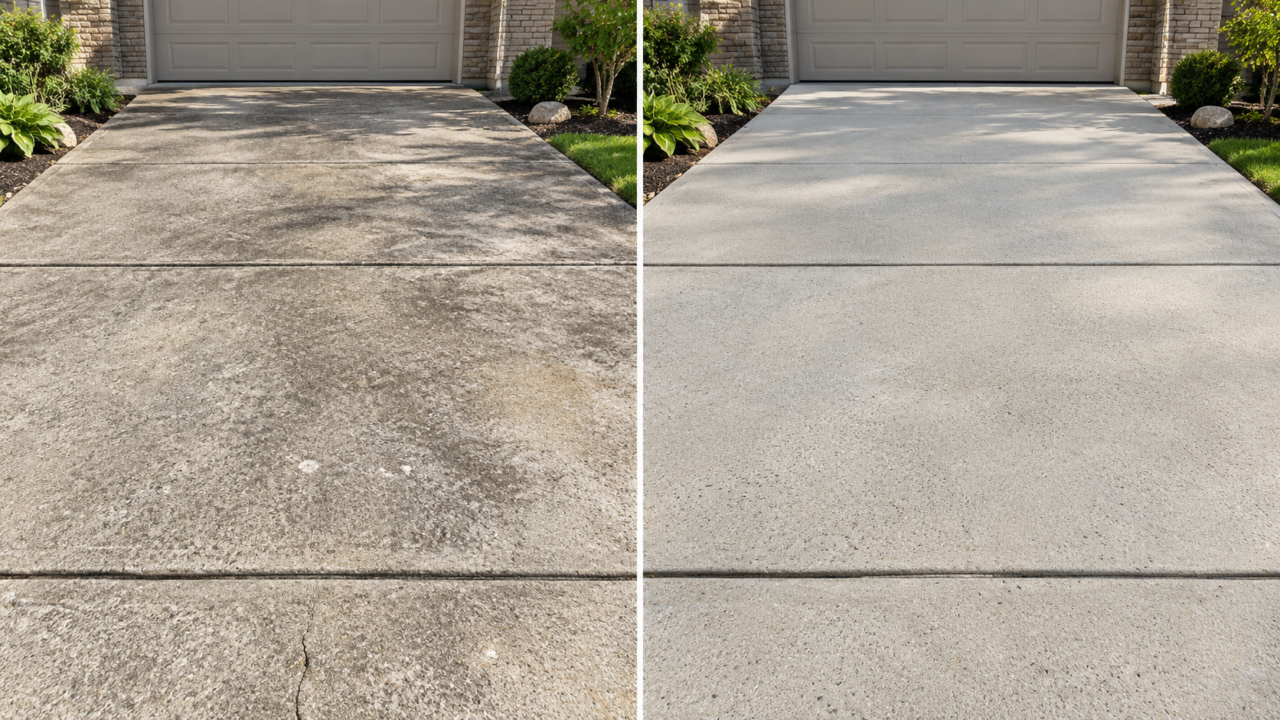
Concrete is durable, but years of foot traffic, weather exposure, settling, and everyday use can leave surfaces uneven, worn, or difficult to navigate safely. Raised edges between adjoining slabs can become noticeable trip hazards, while rough high spots can make an otherwise functional sidewalk, driveway, or concrete floor look poorly maintained. In many situations, professional concrete grinding can improve these problem areas without requiring the entire slab to be removed and replaced.
Looking at concrete grinding before and after photos is one of the easiest ways to understand what the process can accomplish. The changes can range from reducing a raised sidewalk edge to smoothing surface irregularities and creating a more consistent transition between slabs. Below, we explore several common examples of before and after concrete grinding and explain what changes you may notice once the work is complete.
What Is Concrete Grinding?
Concrete grinding is a repair method used to mechanically remove small amounts of concrete from a surface. Specialized grinding equipment gradually reduces raised areas, rough transitions, and other surface irregularities until the affected area is smoother and more even.
Rather than adding material on top of the slab, grinding removes material from the high point. This makes it particularly useful when one section of otherwise sound concrete sits slightly higher than an adjoining section.
Professional concrete grinding may be considered for areas such as:
- Sidewalks and pedestrian walkways
- Driveways
- Patios
- Garage floors
- Commercial concrete surfaces
- Municipal walkways
- Raised slab joints
- Other concrete trip hazards
The suitability of grinding depends on the severity and underlying cause of the uneven concrete. More significant settlement or movement may require concrete raising, stabilization, or another repair method instead.
Concrete Grinding Before and After: Visual Examples
Every concrete surface is different, so results will vary depending on the height difference, condition of the slab, location, and reason the concrete became uneven. The following concrete grinding before and after examples illustrate several types of improvements that may be possible.
1. Uneven Sidewalk Before and After Concrete Grinding
Before Grinding
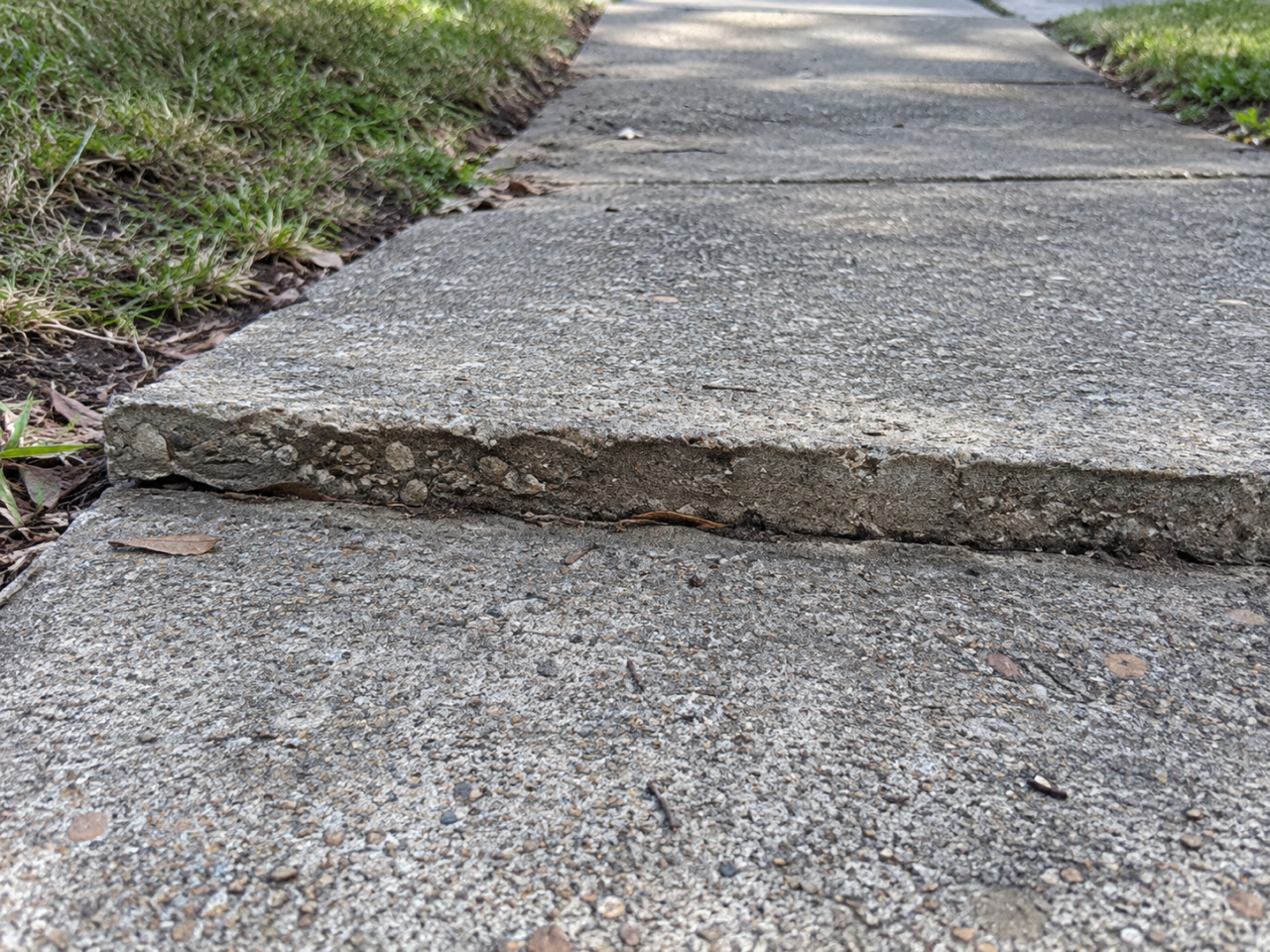
An uneven sidewalk commonly develops when adjacent slabs shift to different elevations. One slab may sit slightly higher than the next, creating an abrupt edge that catches shoes, wheels, or mobility devices. Beyond affecting appearance, the raised transition can create a pedestrian trip hazard that property owners may want to address promptly.
After Grinding
After grinding, the raised portion of concrete has been gradually reduced to create a smoother transition between the adjoining slabs. The abrupt lip is minimized, improving walkability while making the repaired area appear more uniform. Although the ground section may initially have a slightly different texture or appearance, it can provide a much smoother transition than the original raised edge.
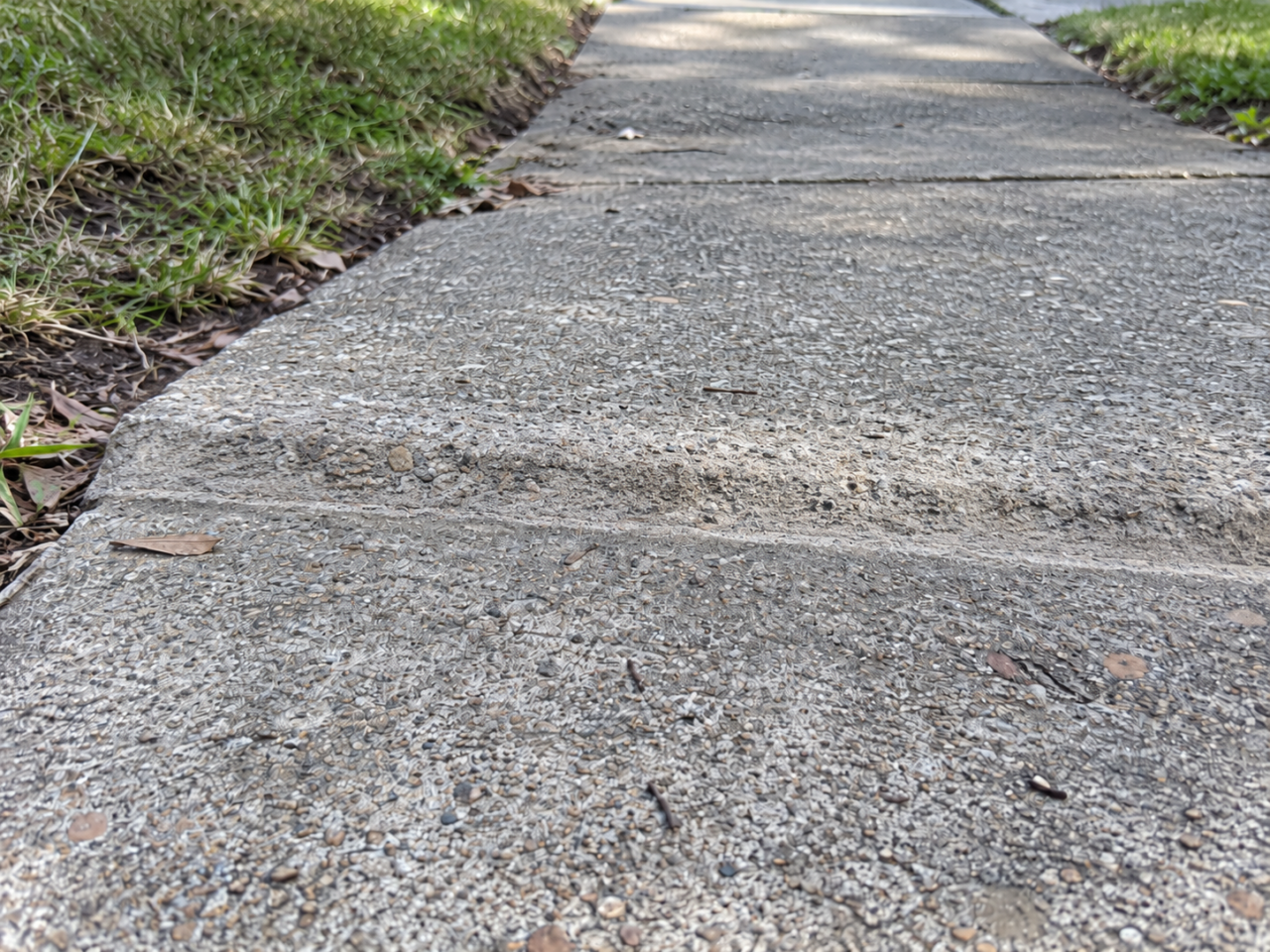
Key Change: A pronounced raised edge is reduced to create a safer, more gradual walking surface.
2. Raised Concrete Joint Before and After Grinding
Before Grinding
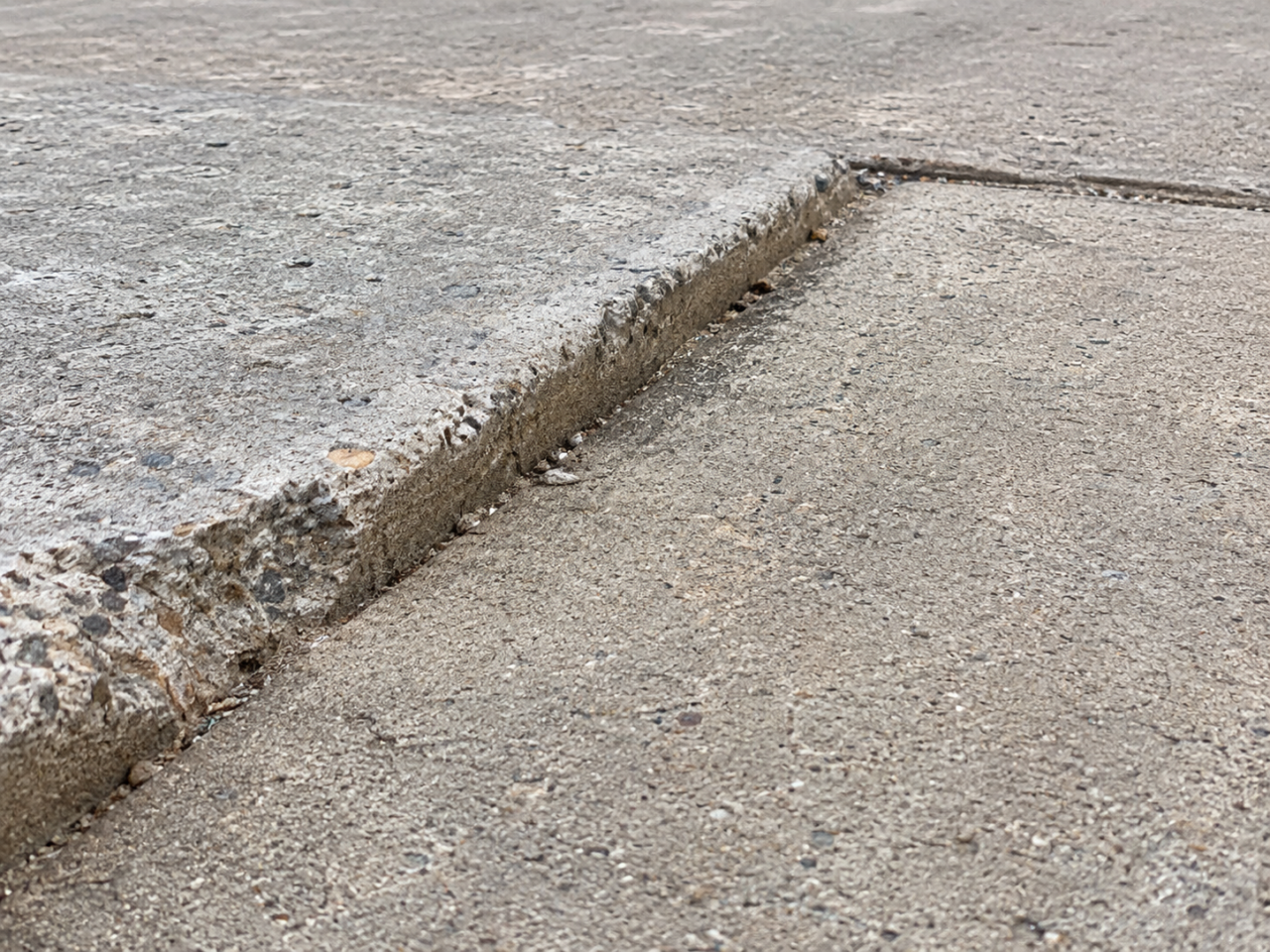
Concrete joints can become uneven when individual slabs experience different amounts of settlement, soil movement, or displacement. The result may be a noticeable height difference directly along the joint. Even a relatively localized raised section can interfere with normal foot traffic or create an uncomfortable transition for carts and other wheeled equipment.
After Grinding
Once the high side of the joint has been professionally ground, the difference in elevation becomes much less pronounced. The transition from one slab to the other is smoother, and the sharp raised edge that previously defined the problem area has been reduced. Grinding focuses specifically on the elevated section while retaining the surrounding concrete whenever conditions allow.
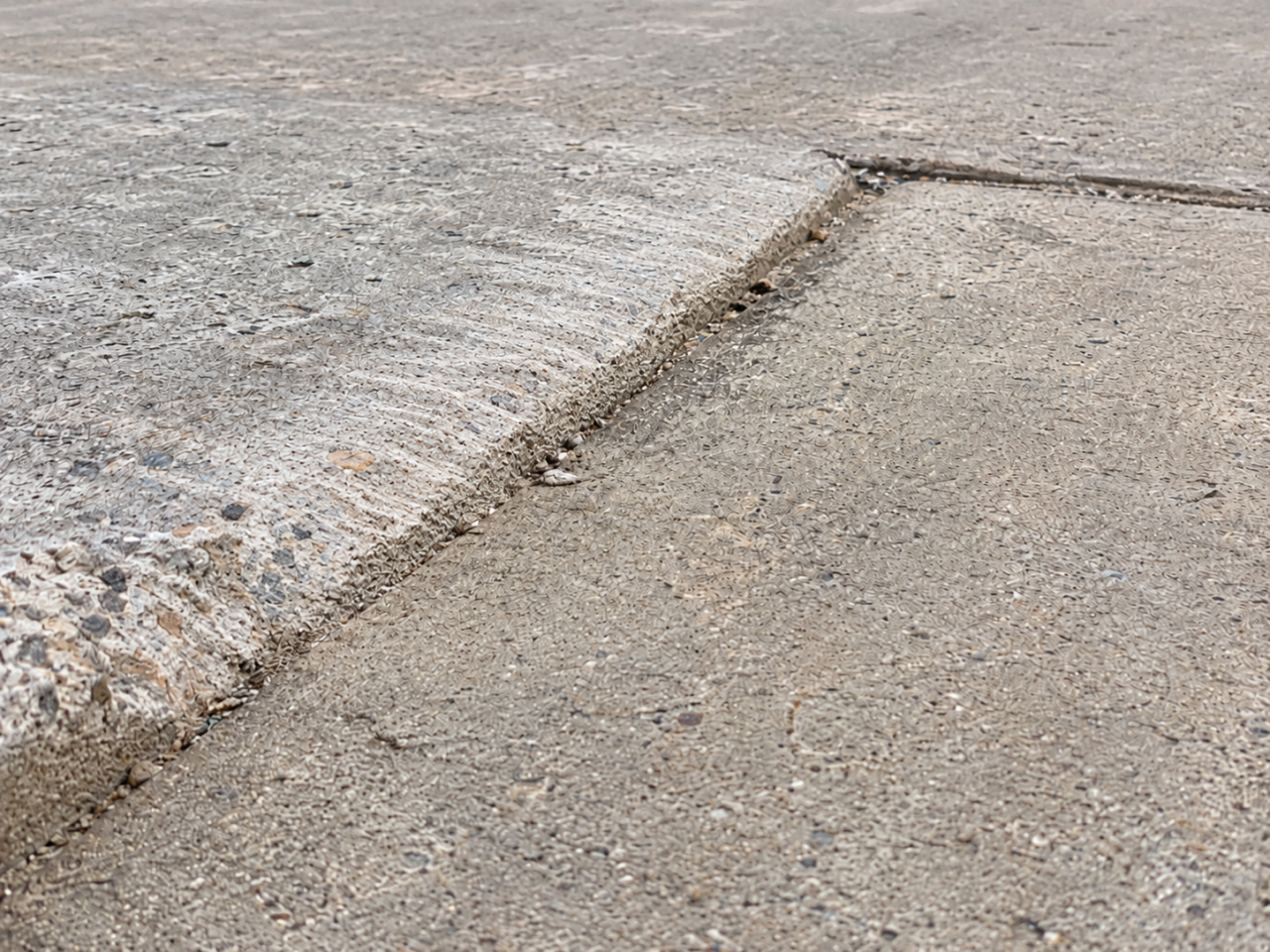
Key Change: The abrupt height difference at the joint is transformed into a smoother transition between concrete sections.
3. Concrete Trip Hazard Before and After Grinding
Before Grinding
Trip hazards can appear anywhere concrete slabs meet, including sidewalks, entrances, walkways, patios, and commercial pedestrian areas. Before repair, the elevated concrete may create a distinct lip that is easy to catch with a shoe. These problem areas can become particularly noticeable in locations that experience frequent pedestrian traffic.
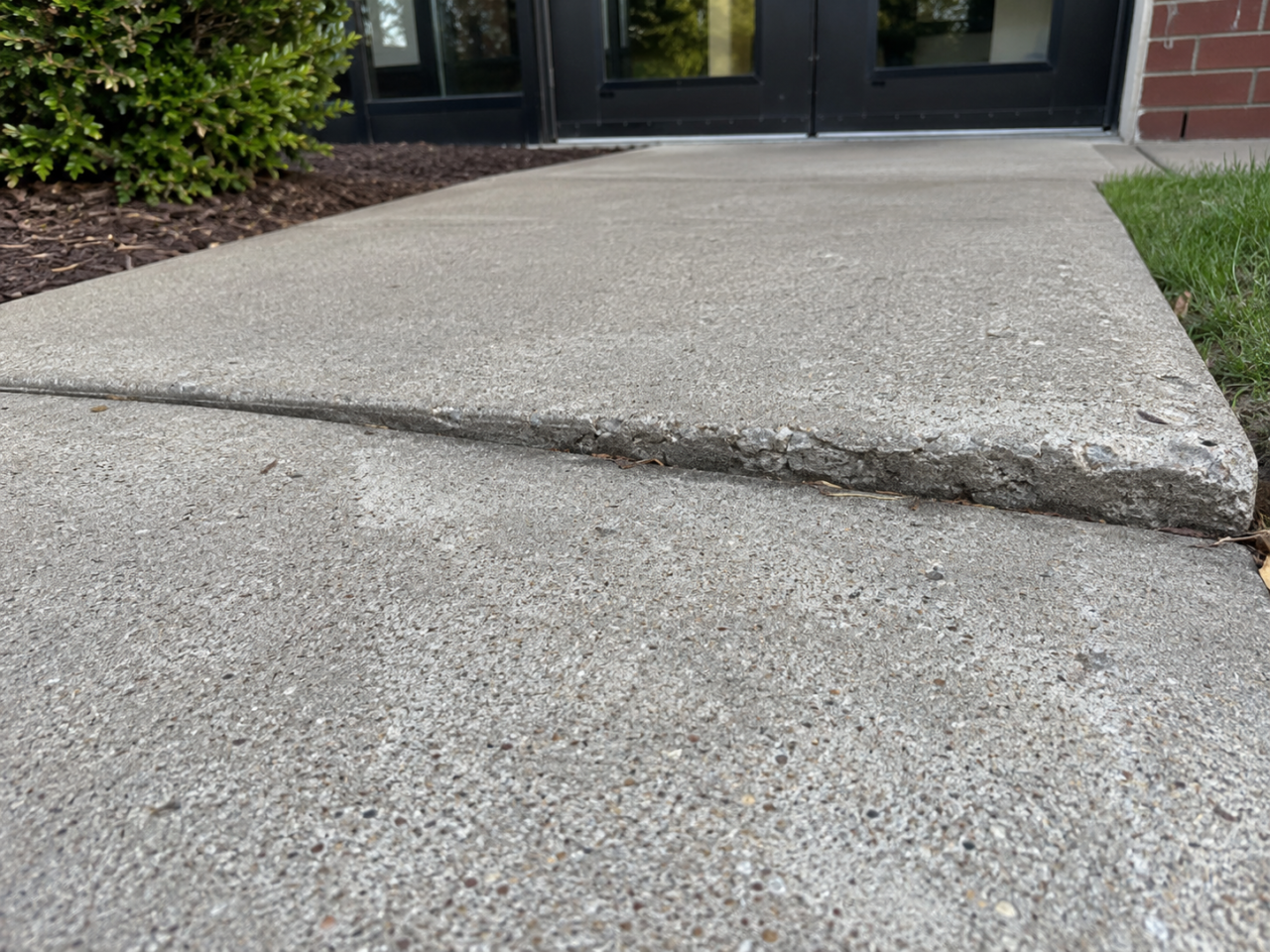
After Grinding
Professional grinding reduces the protruding concrete until the transition is more gradual. The finished area allows pedestrians to move across the joint more smoothly and removes much of the sharp vertical change that previously created the hazard. The existing slab remains in place, allowing the problem area to be addressed without automatically replacing the entire section.
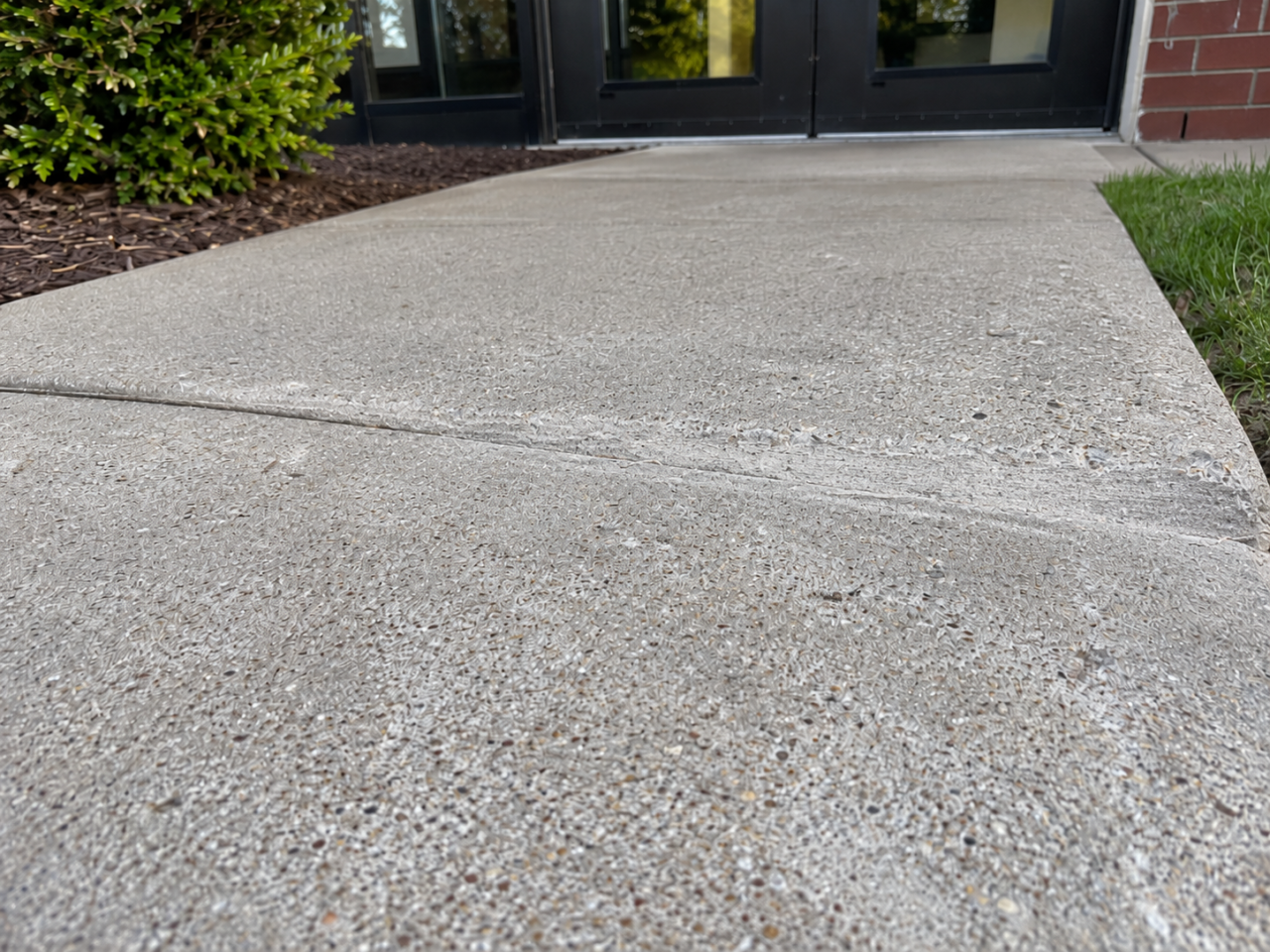
Key Change: A raised pedestrian hazard is reduced while the existing concrete slab remains largely intact.
4. Worn or Irregular Concrete Before and After Grinding
Before Grinding
Concrete does not always wear evenly. Repeated use, minor movement, previous repairs, or irregular surface conditions can create isolated high spots and rough transitions. Before grinding, these areas may look inconsistent with the surrounding surface and can make walking or moving equipment across the concrete less comfortable.
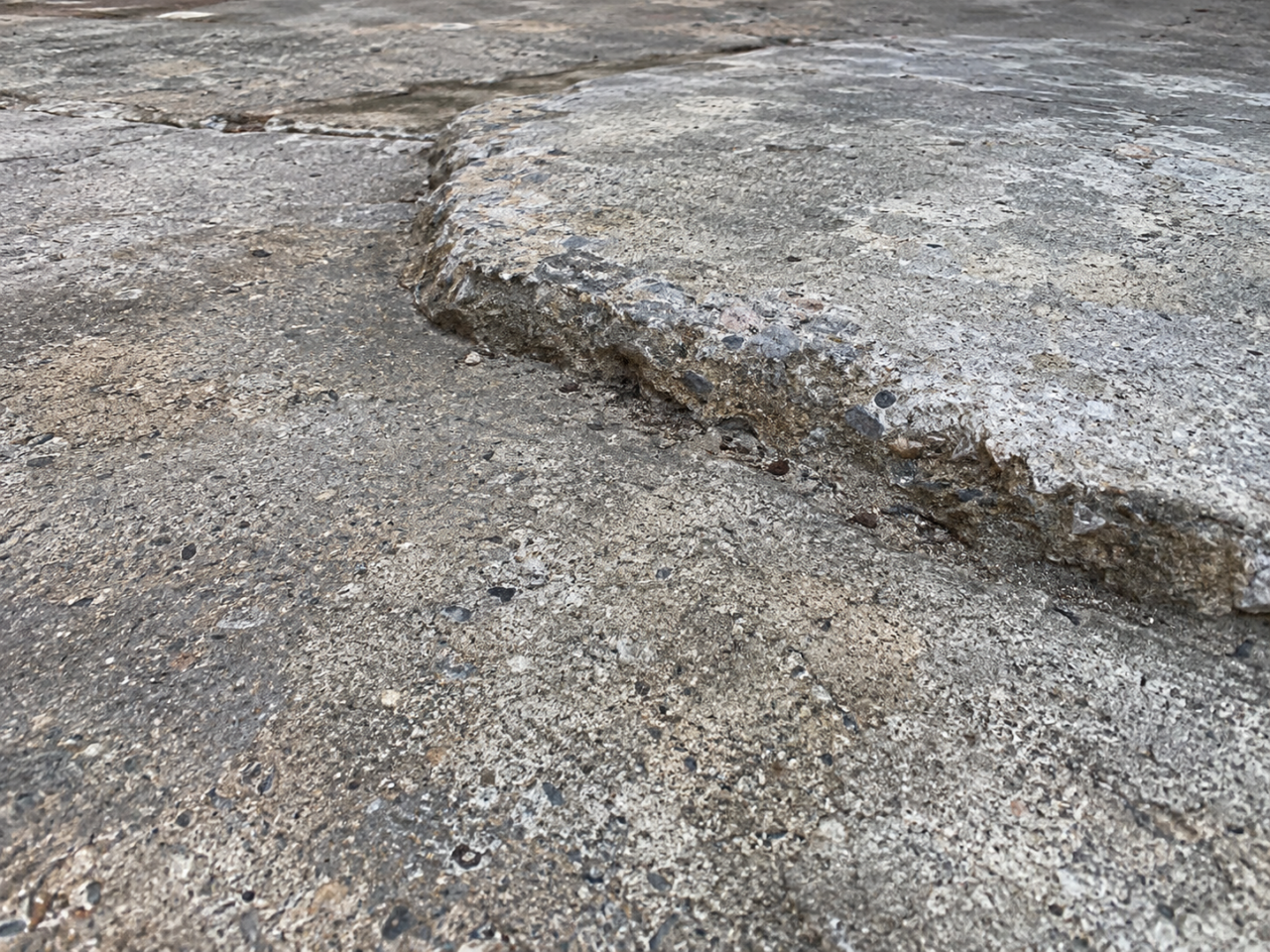
After Grinding
Grinding can selectively remove the elevated portion of the concrete to produce a more consistent surface transition. Following the repair, the affected area appears flatter and is easier to travel across. The grinding marks may remain visible, especially on older concrete, but the functional improvement can be substantial when the primary issue is a localized high point.
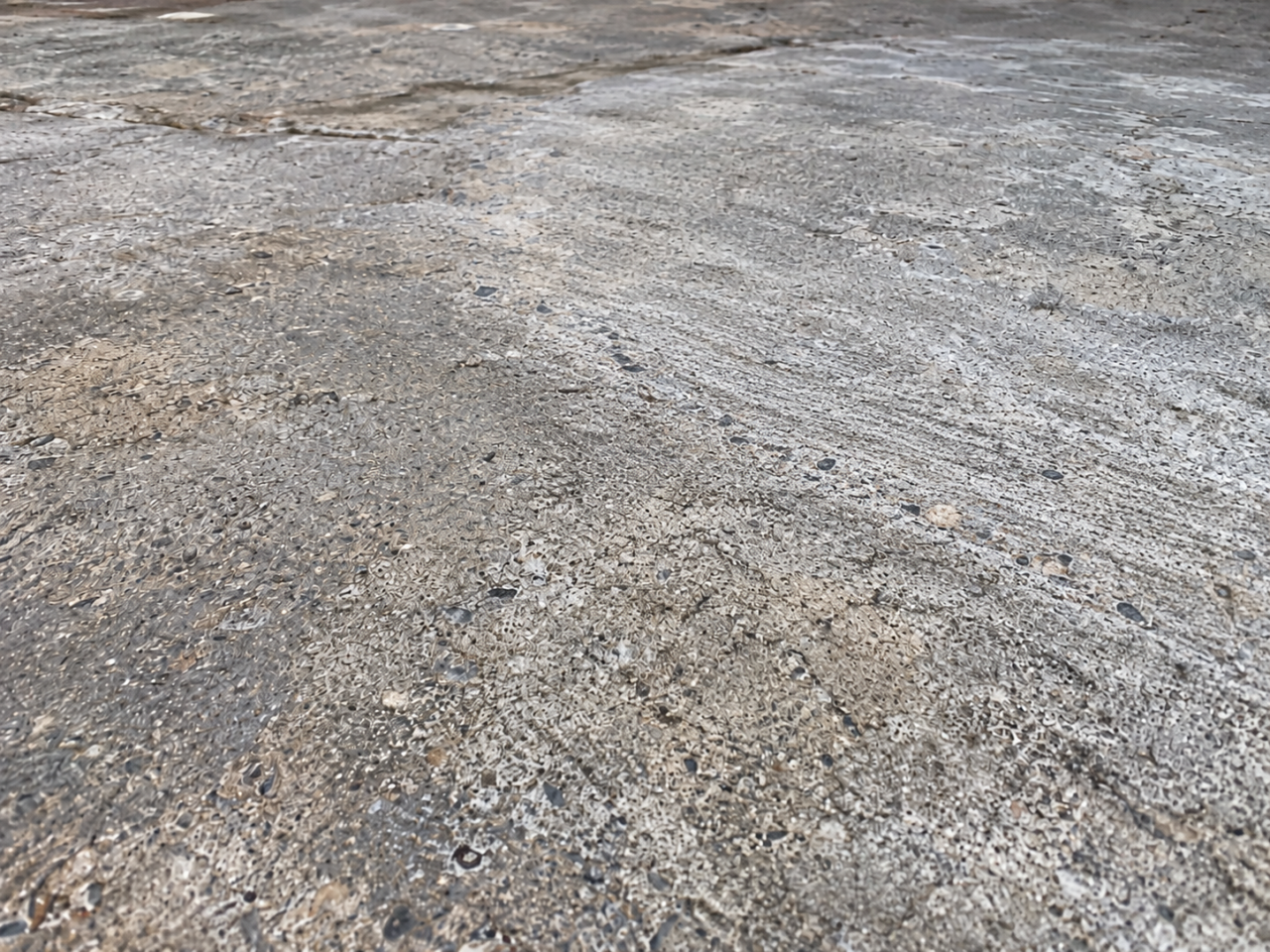
Key Change: Localized high spots and irregular transitions are reduced to improve the functionality of the existing surface.
When Is Concrete Grinding a Good Repair Option?
Concrete grinding is especially useful when the repair involves a relatively small height difference and the slab itself remains in serviceable condition. Instead of demolishing an entire slab because of one raised edge, a contractor may be able to remove the high point and preserve most of the existing concrete.
Grinding may be worth considering when:
- One slab edge is slightly higher than another
- A sidewalk joint presents a localized trip hazard
- A concrete surface contains an isolated high spot
- Replacement would be excessive for the size of the problem
- The underlying slabs remain structurally suitable for continued use
However, grinding is not the solution to every uneven concrete problem.
Why Professional Evaluation Matters Before Grinding Concrete
What appears to be a straightforward high spot can sometimes be evidence of a larger settlement or soil problem. Grinding the surface without understanding why the slabs are uneven may treat the symptom while overlooking the underlying cause.
A professional concrete repair contractor can evaluate factors such as:
- Amount of elevation difference
- Condition of the surrounding slabs
- Evidence of settlement
- Cracking or slab deterioration
- Soil or void conditions beneath the concrete
- Drainage around the repair area
- Whether concrete raising would be more appropriate
From there, the contractor can determine whether grinding is suitable or whether another concrete repair method would provide a better solution.
Concrete Grinding Services From Slabjack Geotechnical
At Slabjack Geotechnical, we are a family-owned and operated full-service concrete repair company serving customers throughout Washington and Northern Idaho. Founded in 2011, our company works with residential, commercial, municipal, and industrial properties to address uneven, settled, cracked, and inadequately supported concrete. Our broader concrete repair capabilities allow us to evaluate the overall condition of a slab rather than focusing solely on the visible symptom.
We provide a wide range of concrete repair solutions, including slabjacking and concrete raising, pressure grouting, compaction and permeation grouting, concrete grinding, crack and joint repair, and concrete void filling. This range of services gives our team multiple options when determining how to approach uneven or damaged concrete.
Our concrete grinding services are designed to address raised edges, uneven transitions, and surface irregularities efficiently and with minimal disruption. When grinding is appropriate for the condition of your concrete, our team can reduce problematic high spots and create a smoother, more usable surface without automatically resorting to full concrete replacement.
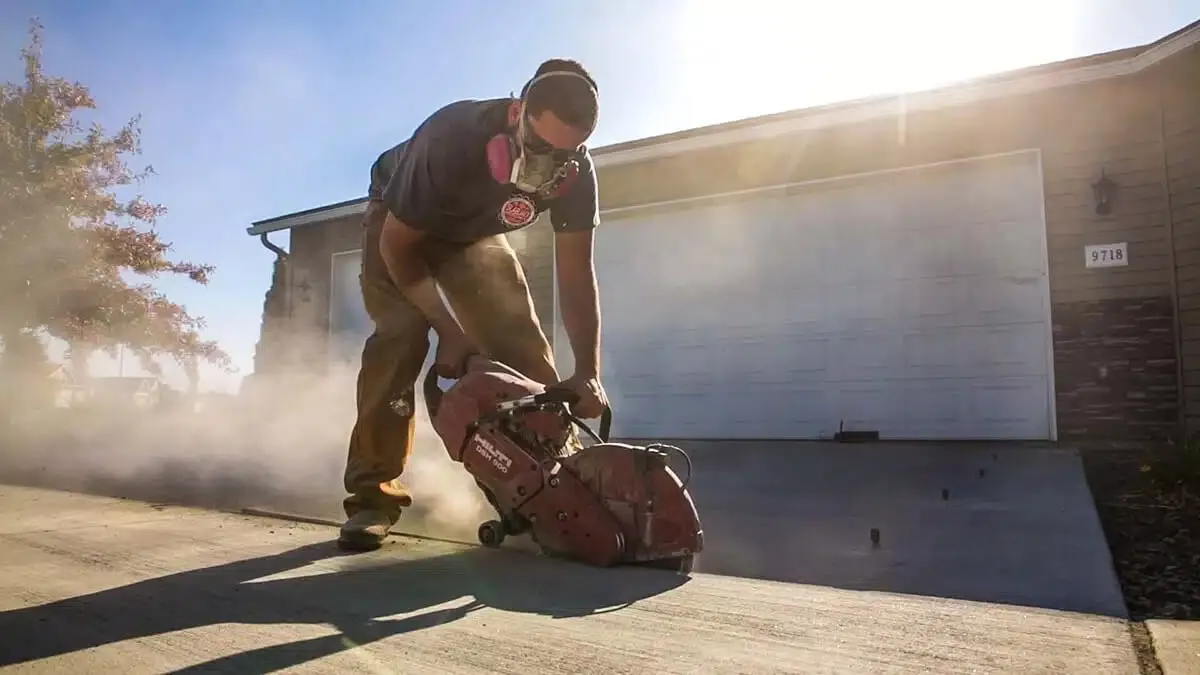
Restore Uneven Concrete With Slabjack Geotechnical
At Slabjack Geotechnical, we help property owners throughout Washington and Northern Idaho identify the right repair approach for their concrete. Whether your project calls for grinding, concrete raising, void filling, crack repair, or another solution, our team can evaluate the condition of the slab and recommend an appropriate path forward.
Contact Slabjack Geotechnical today to learn more about our concrete grinding services or request a concrete repair estimate. Let our experienced team help you create a smoother, safer, and more functional concrete surface.
FAQs
How long do before and after concrete grinding results last?
The results can last for years when the surrounding slabs remain stable and the underlying conditions do not continue to change. Ongoing soil movement, erosion, drainage problems, or settlement can cause new unevenness to develop over time.
Does concrete grinding make the surface look brand new?
Not necessarily. Grinding improves the functionality and smoothness of the surface, but the ground area may remain visually different from the surrounding concrete due to differences in texture, age, or coloration.
How much concrete can be removed by grinding?
The amount that can safely be removed depends on the slab thickness, condition, and severity of the height difference. Larger elevation changes may require concrete raising or another repair solution instead of excessive grinding.
How do I know if concrete grinding is the right repair?
A professional inspection is the best way to determine whether grinding is appropriate. The contractor can evaluate the elevation difference, slab condition, cracking, settlement, and underlying soil conditions before recommending a repair method.