
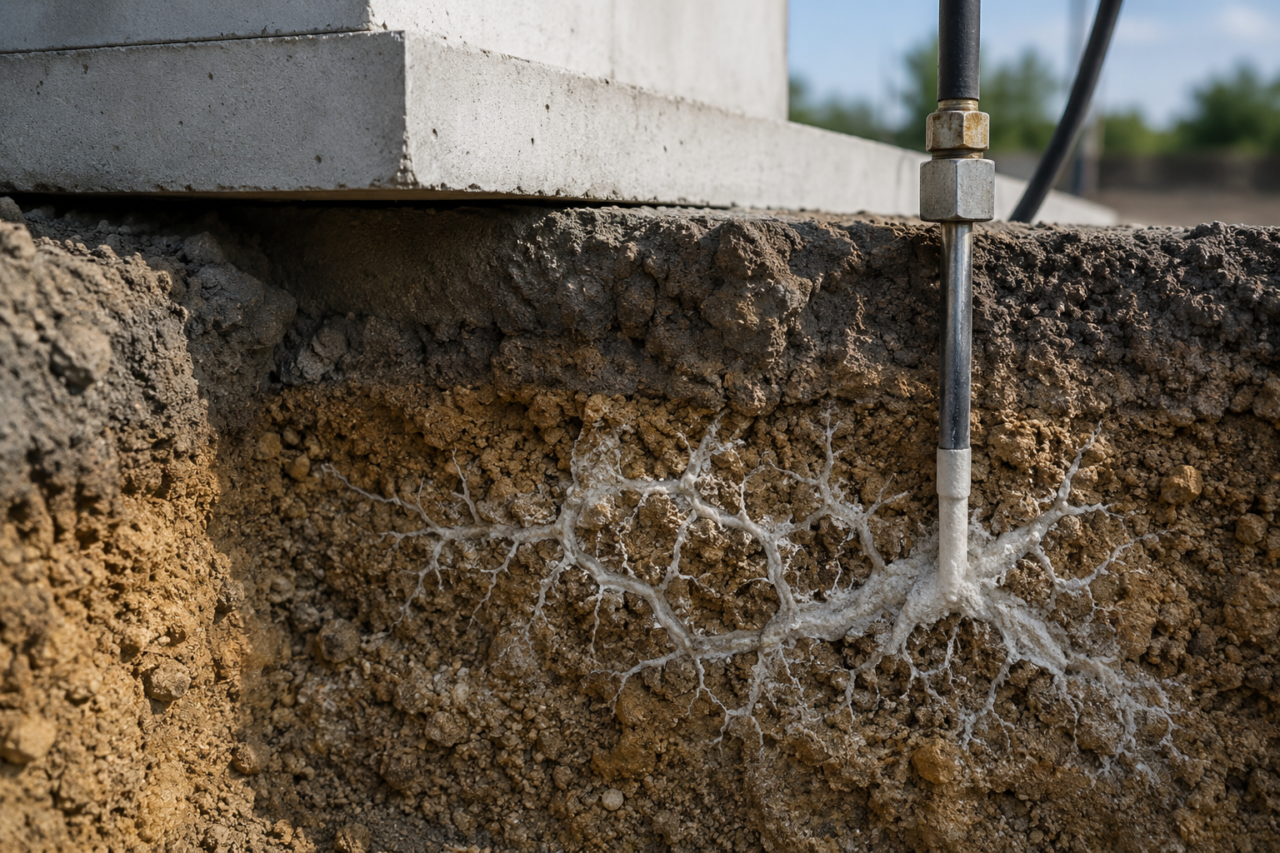
A structure is only as reliable as the ground supporting it. When soil beneath concrete slabs, foundations, roadways, or other structures becomes loose, poorly compacted, washed out, or otherwise unstable, it may no longer distribute weight effectively. The result can be settlement, uneven concrete, voids, cracking, and other problems that become progressively worse if the underlying soil is not addressed.
Improving the load bearing capacity of soil can therefore be an important part of restoring stability. One effective approach is geo-polymer injection, which introduces an expanding polymer into weak areas beneath concrete. As the material expands, it can fill voids and compress weak surrounding soils while creating additional support beneath the slab or structure. Slabjack Geotechnical uses a two-part expanding polymer for this purpose, including applications that involve lifting settled concrete back toward its proper elevation.
Understanding how this process works can help property owners, facility managers, municipalities, contractors, and engineers determine when soil stabilization may be preferable to extensive excavation or concrete replacement.
What Is Load Bearing Capacity of Soil?
The load bearing capacity of soil describes the soil’s ability to support loads placed on it without experiencing unacceptable shear failure or settlement. In practical terms, the ground underneath a structure needs enough strength and stability to distribute the weight above it.
Ground improvement methods are used to modify engineering properties of soil, including increasing shear strength and reducing compressibility. Those changes can improve the ground’s ability to support structures and resist future movement.
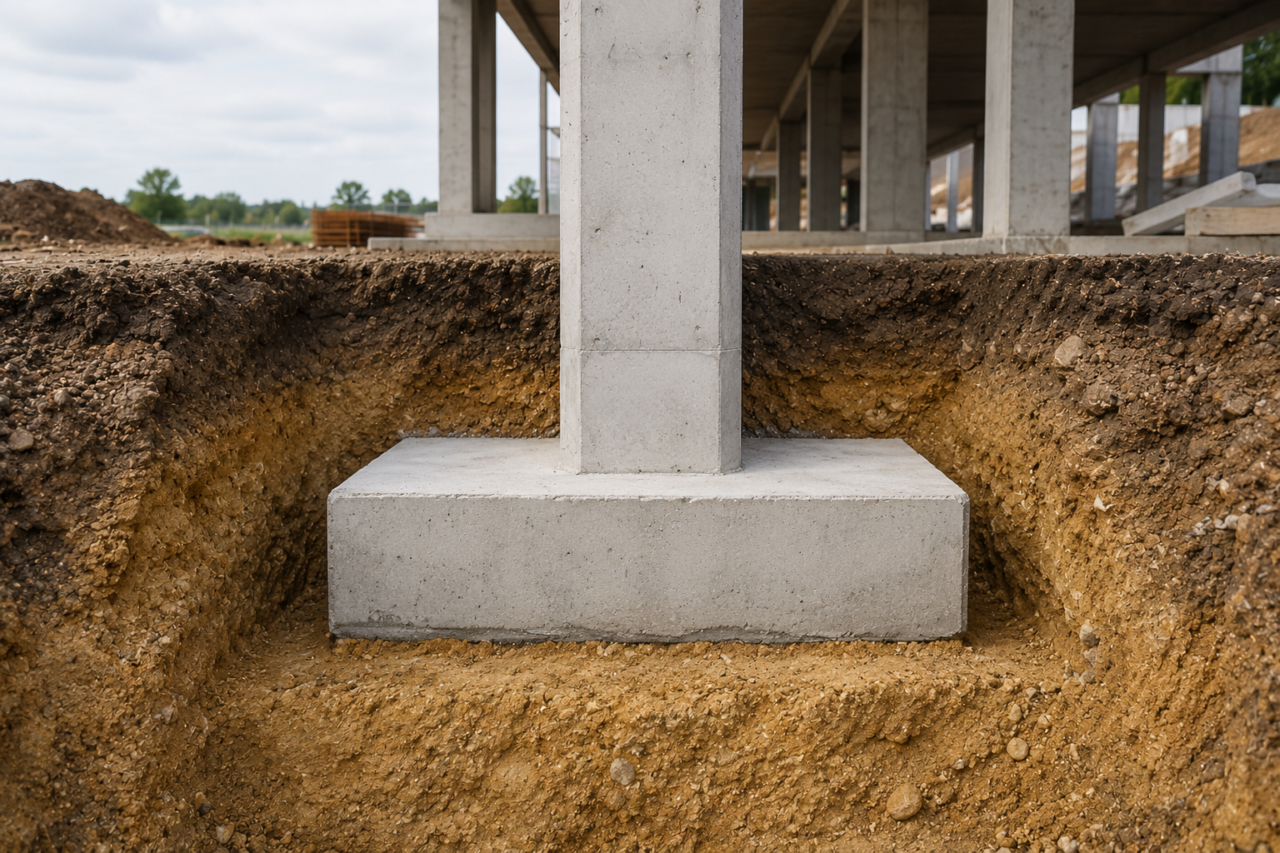
Low soil load bearing capacities can become a concern underneath:
- Concrete slabs and floors
- Driveways and sidewalks
- Patios and pool decks
- Warehouses and industrial floors
- Roadways and airport pavements
- Foundations
- Culverts and large pipes
- Seawalls and other infrastructure
When the supporting material loses strength or develops voids, the structure above may begin to settle because loads are no longer being distributed through a consistent, adequately supported base.
Why Does Soil Lose Load Bearing Capacity?
Soil conditions are rarely static. The material beneath a concrete slab can change significantly over years of exposure to moisture, drainage patterns, construction activity, and repeated loading.
Several conditions can reduce the load bearing capacity of soil.
Poor Initial Compaction
Fill material that was not adequately compacted during construction can gradually consolidate under the weight of the slab or structure above it. As the soil becomes denser, its volume decreases and unsupported spaces can develop underneath the concrete.
Water and Erosion
Water moving through or beneath soil can carry fine particles away, creating loose zones and voids. Slabjack Geotechnical notes that voids below concrete are commonly associated with erosion, leaks, and poor initial compaction.
Changing Moisture Conditions
Some soils change significantly as moisture levels rise and fall. Repeated changes can contribute to ground movement, settlement, and loss of support.
Underground Voids
A slab may appear relatively stable at the surface while an empty space develops underneath it. Without direct contact between the slab and a properly supported subgrade, loads can become concentrated in smaller areas.
Repeated or Increased Loads
The demands placed on soil can also change. Vehicle traffic, equipment, storage loads, building modifications, and other uses may introduce loads that weak or disturbed soils cannot adequately support.
How Geo-polymer Injection Improves Load Bearing Capacity
Geo-polymer injection addresses unstable conditions below the surface rather than focusing only on the visible concrete.
Slabjack Geotechnical’s process involves injecting a two-part expanding polymer beneath settled concrete. The material rapidly expands, filling available voids and compressing weak surrounding soil. Controlled expansion can also be used to gently raise settled concrete toward its original grade.
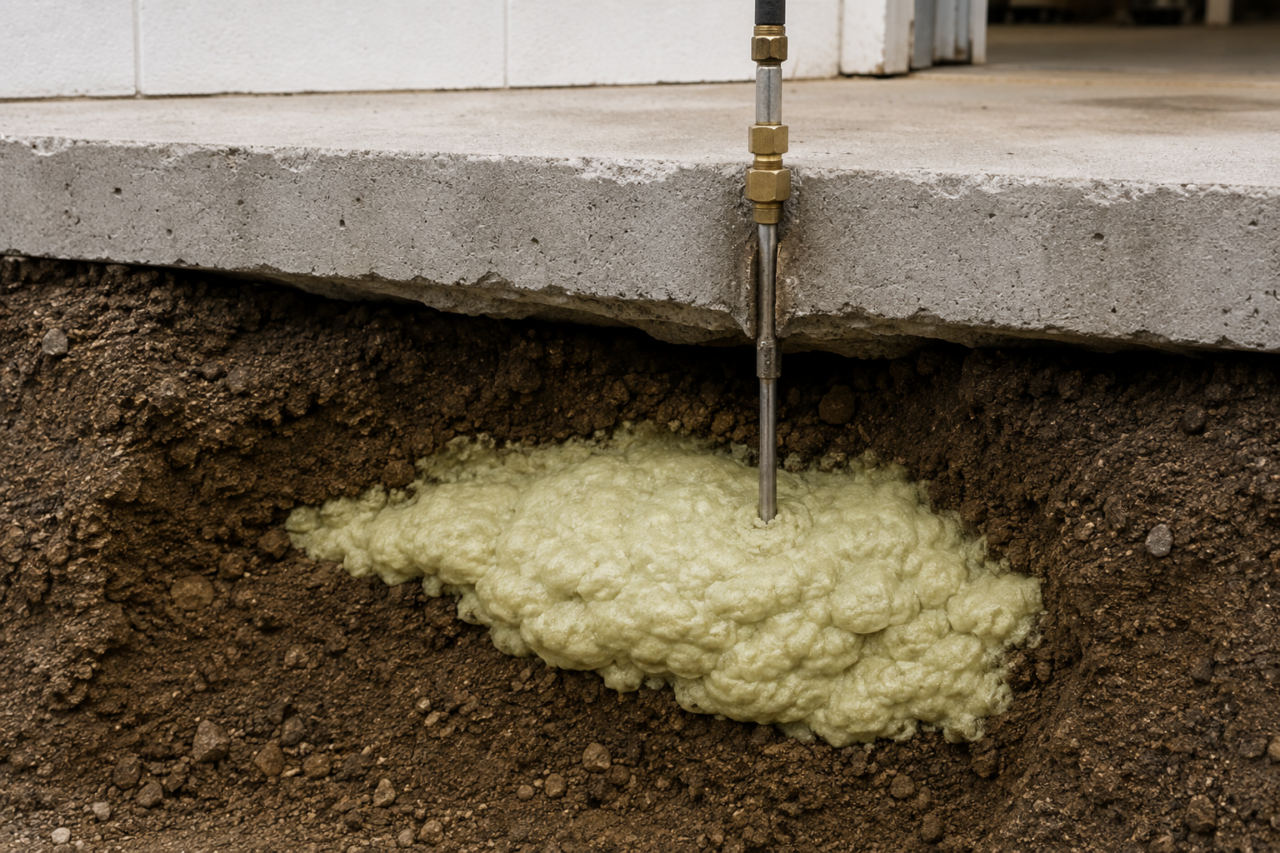
This approach can improve support in several interconnected ways.
1. Geo-polymer Fills Voids Beneath Concrete
A void creates a break in the load path between a concrete slab and the supporting ground. Instead of distributing weight evenly into the subgrade, sections of the slab may effectively bridge an empty space.
Geo-polymer can expand into these spaces and restore contact beneath the concrete. Slabjack Geotechnical uses foam injection for void filling to stabilize concrete and reduce the risk of continued sinking.
Restoring support across previously unsupported areas helps distribute loads more effectively.
2. Expansion Compresses Weak Soil
Filling a void is only part of the process. The expansion of the injected polymer can also exert pressure on loose or weak soil around the treatment area.
As poorly consolidated soil is compressed, it can become more resistant to additional movement. In general, soil stabilization techniques aim to increase strength and improve engineering performance; increasing soil strength is one of the recognized objectives of stabilization.
For a concrete repair project, that means the treatment is addressing not simply the position of the slab, but also conditions in the material supporting it.
3. Improved Support Helps Distribute Loads
A strong foundation system requires a reliable path for transferring structural loads into the ground.
If support beneath a slab is inconsistent, certain areas may experience greater stress than others. Filling voids and strengthening weak zones creates a more continuous support system, allowing loads to transfer into the underlying material more effectively.
This improvement can increase the practical load bearing capacity of treated areas and reduce the conditions contributing to differential settlement.
4. The Process Can Stabilize and Lift Concrete
When appropriate, the expanding polymer can accomplish both soil stabilization and concrete raising.
Slabjack Geotechnical injects the polymer through relatively small access points beneath settled slabs. Expansion is carefully controlled so the material fills spaces below the slab before exerting enough force to raise the concrete. The company uses polyurethane foam injection for concrete raising and leveling and geo-polymer injection as an alternative to traditional mudjacking.
This means an existing slab may be restored without demolishing and replacing otherwise serviceable concrete.
How Improved Soil Load Bearing Capacities Create a Stronger Foundation
Increasing load bearing capacities is important because foundation and slab problems often originate below the concrete rather than in the concrete itself.
Simply repairing a crack or replacing a section of settled concrete does not necessarily correct unstable soil. If weak or voided material remains underneath the repaired area, settlement may continue.
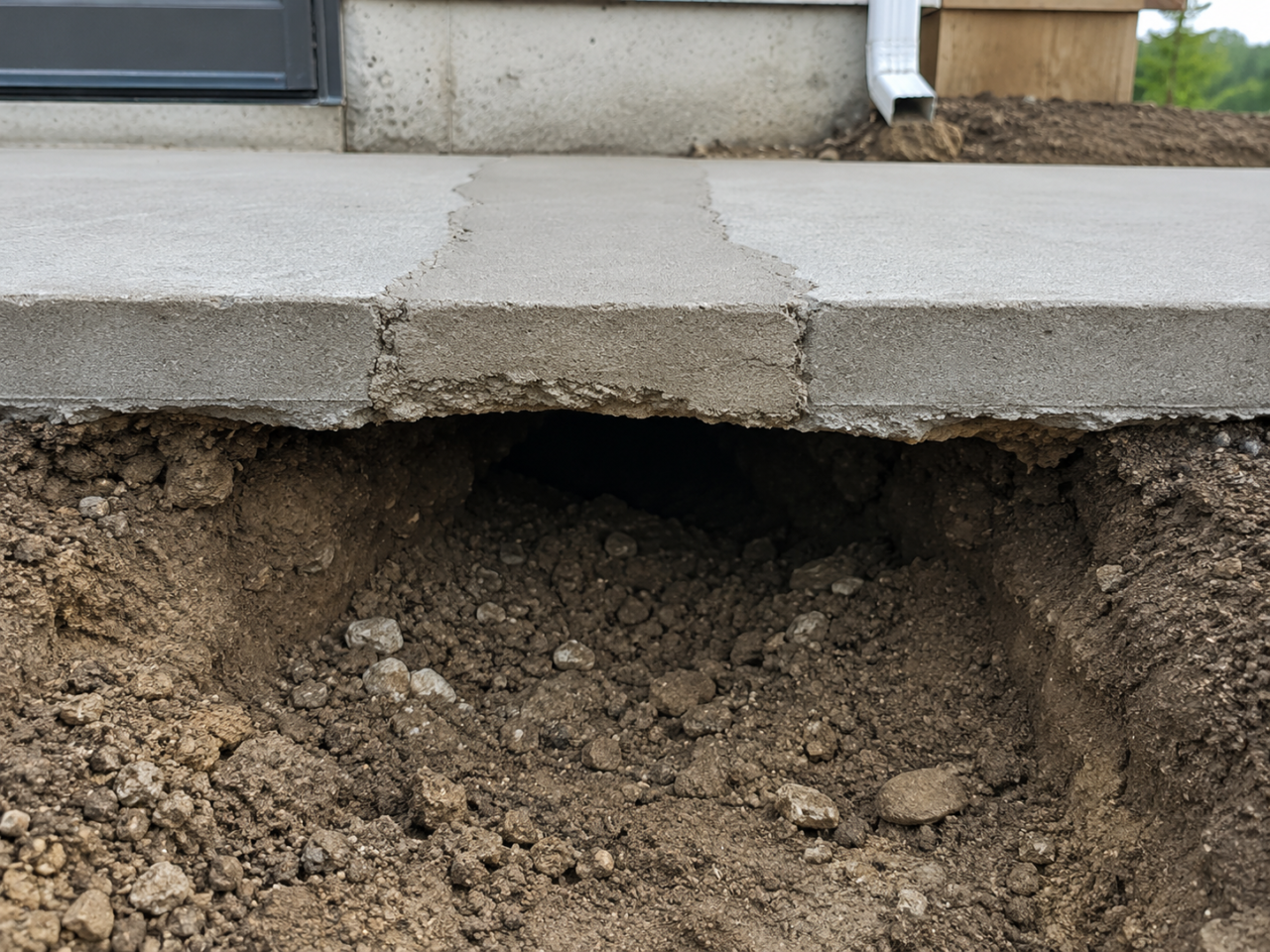
Improving the load bearing capacity of soil can help by:
- Providing more consistent support beneath concrete
- Filling spaces that leave slabs unsupported
- Compacting loose or weak soil in treatment areas
- Improving load transfer into the subgrade
- Reducing conditions that contribute to continued settlement
- Allowing settled slabs to be raised when conditions permit
- Limiting the need for widespread excavation in appropriate applications
The goal is to create a stronger relationship between the structure and the material supporting it.
Geo-polymer Injection vs. Traditional Concrete Replacement
Concrete replacement may be necessary when a slab is severely damaged or structurally deteriorated. However, replacing structurally sound concrete simply because it has settled can involve demolition, debris removal, preparation of a new base, pouring new concrete, and curing time.
Geo-polymer injection offers another option when the primary problem is below the slab.
Because the material can be introduced beneath existing concrete, crews can address subsurface voids and unstable areas without removing the entire slab. Slabjack Geotechnical describes its polymer lifting process as using lightweight material delivered through small injection points, allowing concrete to be stabilized and leveled with substantially less disruption than complete replacement.
The right repair method depends on the condition of the concrete, the cause and extent of settlement, soil conditions, loading requirements, and the objectives of the project.
Where Can Geo-polymer Injection Be Used?
Geo-polymer injection can be useful anywhere subsurface instability is contributing to settlement or inadequate concrete support.
Common applications include:
- Sidewalks
- Driveways
- Patios and porches
- Garage floors
- Basement and interior floors
- Pool decks
- Commercial slabs
- Industrial floors
- Municipal infrastructure
- Void-filling projects
- Selected geotechnical stabilization applications
Slabjack Geotechnical uses its geo-polymer process for projects ranging from common residential slabs to larger geotechnical and infrastructure applications.
Determining whether polymer injection is appropriate requires evaluating what caused the settlement and whether the existing concrete remains suitable for repair.
Geo-polymer Injection, Compaction Grouting, and Permeation Grouting
Not every soil stabilization problem requires the same solution.
Geo-polymer injection is particularly useful when expanding material can fill voids, stabilize weak zones, and potentially lift an existing slab. Other conditions may require different grouting methods.
Compaction and permeation grouting can also be used to strengthen unstable ground. Slabjack Geotechnical provides both methods for applications involving increased soil load bearing capacity and erosion control.
Selecting the appropriate treatment depends on factors such as soil composition, depth of the problem, location of voids, accessibility, the type of structure involved, and the amount of load the repaired ground needs to support.
Improve Load Bearing Capacity With Slabjack Geotechnical
At Slabjack Geotechnical, we are a family-owned and operated, full-service concrete repair company serving customers throughout Washington and Northern Idaho. Founded in 2011, we work on residential, commercial, municipal, and industrial projects and maintain locations serving Spokane, the Tri-Cities, Wenatchee, Puget Sound, and surrounding areas.
Our services extend well beyond raising settled concrete. We provide Slabjacking (concrete raising), pressure grouting, compaction and permeation grouting, concrete grinding, joint sealing repair, crack repair, and void filling. We also provide specialized geotechnical repair services for leaking culverts, large-diameter pipes, and concrete ditches. This range of capabilities allows us to evaluate both the visible concrete problem and the subsurface conditions contributing to it.
One of the technologies at the center of our work is our Geo-Polymer Injection method. We inject expanding polymer beneath settled concrete to fill voids, compress weak soils, stabilize the supporting material, and, when appropriate, raise the concrete back toward its intended position. Our experience with geo-polymer Slabjacking and pressure grouting allows us to address problems where improving subsurface support is just as important as correcting the concrete at the surface.

Build From the Ground Up With Better Soil Support
A settled slab is often the visible symptom of a problem that started underground. Loose soil, erosion, inadequate compaction, and hidden voids can reduce the load bearing capacity of soil and leave concrete without the support it needs.
Geo-polymer injection provides a way to address those subsurface conditions by filling voids, compressing weak soils, improving support, and restoring settled concrete when appropriate. Improving load bearing capacities below the surface can create a stronger, more stable foundation for the concrete and structures above it.
If you are dealing with sinking concrete, underground voids, weak soil, or another settlement problem in Washington or Northern Idaho, contact Slabjack Geotechnical today. Our team can evaluate your project, explain your repair options, and determine whether geo-polymer injection or another stabilization method is right for your property. Reach out to learn more about how we can help or request a repair estimate today.
FAQs
Why is load bearing capacity important for concrete repair?
Adequate load bearing capacity helps ensure that repaired concrete has stable support beneath it. If weak soil, erosion, or voids are left untreated, repaired or replaced concrete may continue to settle over time.
How can the load bearing capacity of soil be improved?
The load bearing capacity of soil can often be improved through methods such as compaction, grouting, geo-polymer injection, and other soil stabilization techniques. The best method depends on the soil type, depth of the weak area, structural loads, and site conditions.
What are common signs of weak soil beneath concrete?
Common signs include sinking slabs, uneven concrete, recurring cracks, gaps beneath slabs, trip hazards, and hollow areas beneath the concrete. These symptoms can indicate that the soil has settled, eroded, or developed voids that reduce its ability to support loads.
Can voids beneath concrete reduce load bearing capacity?
Yes. Voids interrupt the transfer of weight from the concrete into the supporting soil and can leave portions of a slab unsupported. Filling these voids can help restore more consistent support and reduce the risk of continued settlement.