
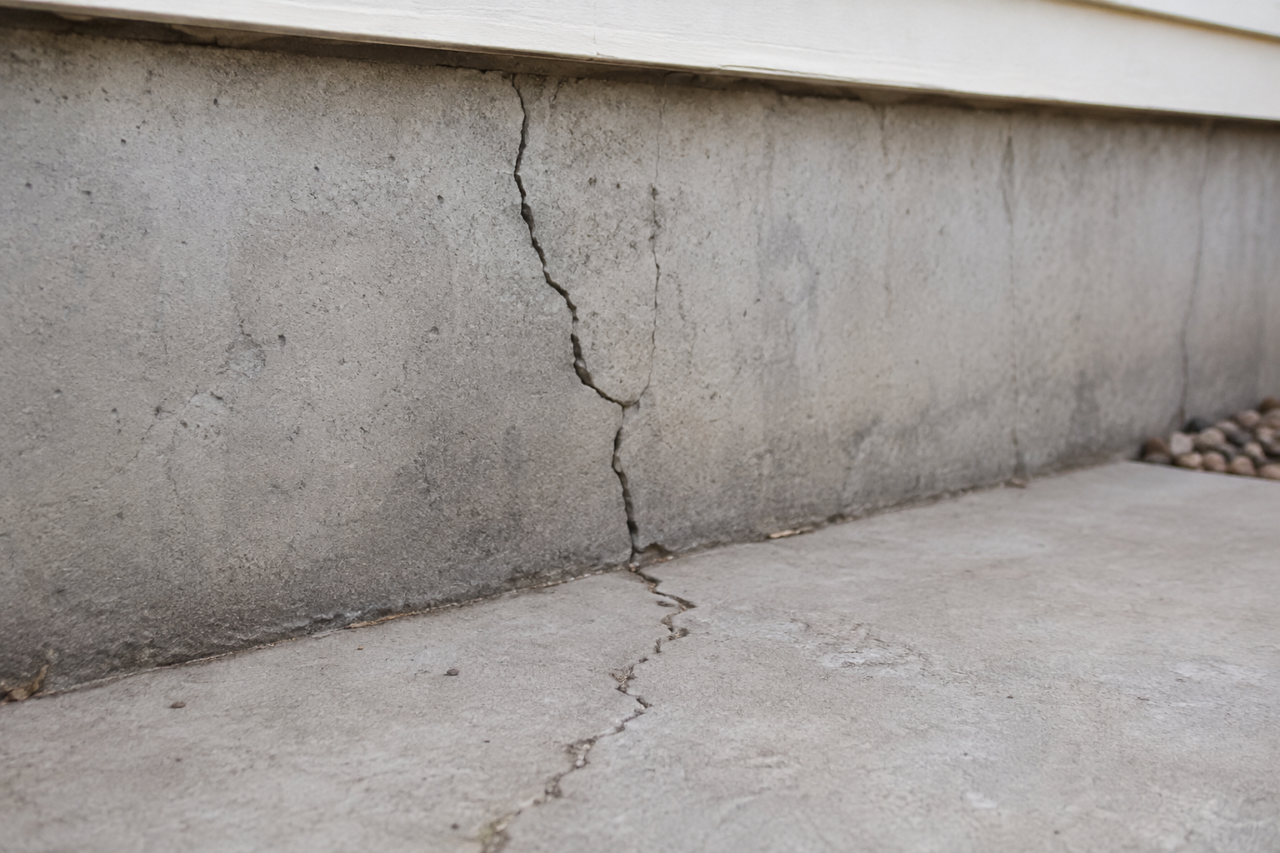
Concrete is known for its strength and durability, but it is not immune to cracking. In fact, some degree of cracking can occur as concrete cures, shrinks, ages, and responds to changing environmental conditions. The challenge for property owners is determining when cracks in concrete are relatively minor and when they are evidence of a more serious problem developing beneath the surface.
A crack may be the visible symptom of soil settlement, inadequate support, water intrusion, erosion, or movement beneath a slab. Some cracks affect appearance more than performance, while others can indicate significant structural distress or durability concerns.
That makes it important to look beyond the crack itself. A widening crack in concrete slab foundation, uneven sections of concrete, recurring repairs, or gaps accompanied by sinking may point to conditions that will continue to worsen if the underlying cause is not addressed.
Understanding what concrete cracks can reveal, and knowing when to have them evaluated, can help property owners address problems earlier and choose repairs that target more than the visible damage.
Why Do Cracks in Concrete Develop?
Concrete cracking can have many causes. Some cracks develop naturally as concrete cures and loses moisture. Others result from conditions around or underneath the slab.
Common causes of cracks in concrete include:
- Drying and shrinkage as newly placed concrete cures
- Settlement or movement of the supporting soil
- Poorly compacted fill beneath a slab
- Voids that leave sections of concrete inadequately supported
- Soil erosion caused by water movement or drainage problems
- Repeated freezing and thawing
- Changes in temperature and moisture
- Excessive or uneven loads
- Construction-related issues
- Movement between separate concrete sections
- Deterioration or corrosion affecting reinforced concrete
Concrete cracking can result from shrinkage, settlement, thermal stresses, weathering, reinforcement corrosion, construction practices, and externally applied loads, among other conditions.
The cause matters because simply filling a crack may not correct the problem responsible for creating it. If soil continues to settle or a void remains beneath the slab, movement can continue even after the surface has been repaired.
Are All Cracks in Concrete a Sign of Foundation Trouble?
No. A crack does not automatically mean a concrete slab is failing.
Very fine cracks can develop during the normal curing and shrinkage process. If a crack remains narrow, does not change over time, and is not accompanied by movement or other signs of distress, it may primarily be a surface or durability concern.
The situation becomes more important when the crack is associated with movement.
A crack in concrete slab foundation deserves closer attention when:
- One side of the crack sits noticeably higher or lower than the other.
- The crack continues to widen or lengthen.
- Multiple cracks appear in the same area.
- The slab is sinking, tilting, or becoming uneven.
- Previously repaired cracks reopen.
- Gaps develop between the slab and adjoining surfaces.
- Water repeatedly enters or collects around the crack.
- The concrete sounds hollow or appears unsupported in nearby areas.
- Cracking is accompanied by other evidence of settlement.
These symptoms can suggest that the crack is not simply a cosmetic defect. Instead, the concrete may be responding to changes below the slab.
What a Crack in Concrete Slab Foundation Can Reveal Below the Surface
One of the most important things to understand about concrete cracking is that the visible opening is only part of the story.
Concrete slabs depend on adequate, reasonably uniform support from the soil or base material beneath them. When that support changes, the slab may be forced to span an unsupported area or move unevenly.
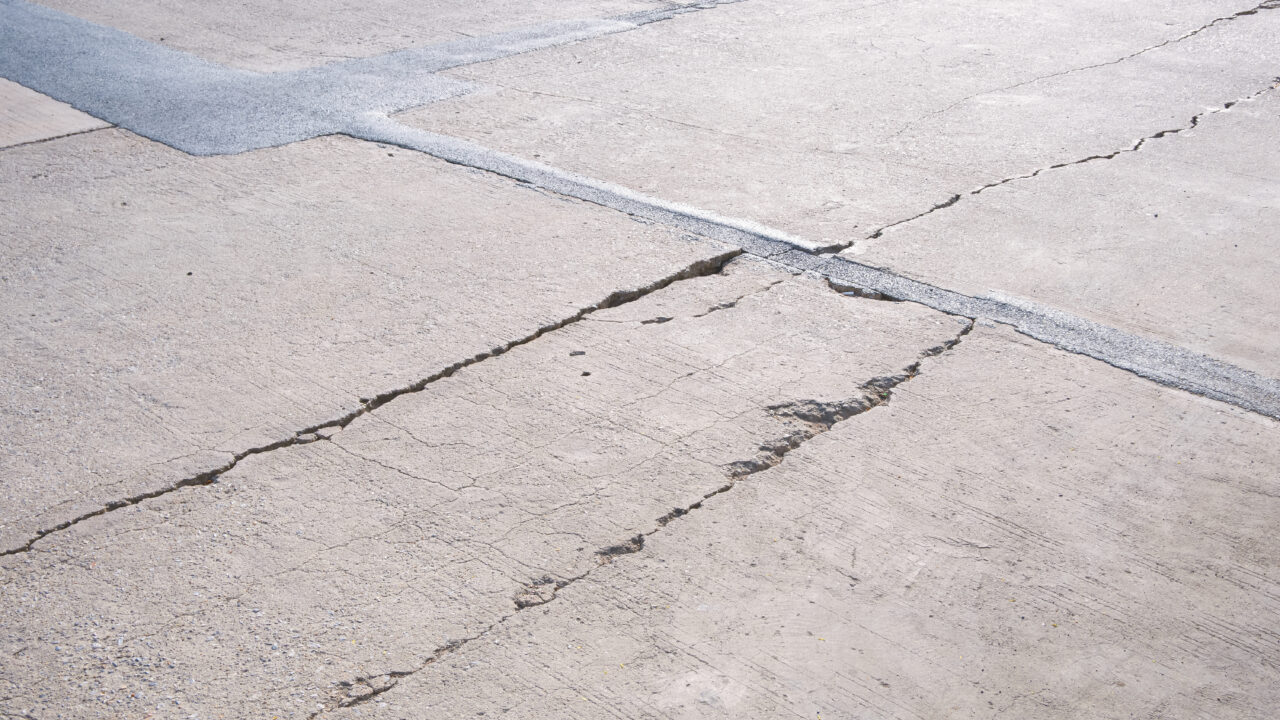
Several hidden conditions can contribute to this problem.
Soil Settlement
Soil can consolidate gradually under the weight of a structure or concrete slab. Fill material that was not compacted sufficiently during construction can be particularly susceptible to later settlement.
As the soil moves downward, portions of the slab may move with it. Uneven settlement can place stress on rigid concrete and eventually lead to cracks, slopes, or displaced sections.
Slabjack Geotechnical encounters settlement-related concrete problems throughout its service area and offers methods designed to restore slabs while addressing voids or unstable supporting material below them.
Voids Beneath the Concrete
Water movement, erosion, soil consolidation, and other site conditions can create open spaces below a concrete slab.
A slab with a void underneath it may have less support than intended. As loads are placed on the surface, the unsupported concrete can flex or settle, increasing the potential for cracking and displacement.
A crack accompanied by sinking or hollow areas can therefore indicate that the problem exists underneath the concrete rather than only within the slab itself.
Changing Soil Conditions
Soil does not remain completely static. Changes in moisture can alter its properties, while drainage problems may remove or weaken supporting material.
These changes can lead to different parts of a slab moving at different rates. When the concrete cannot accommodate that movement, cracking can occur.
Freeze-Thaw Deterioration
Cold-weather conditions can contribute to concrete deterioration when moisture is present. Water and other substances can enter through cracks, and repeated freeze-thaw exposure can contribute to additional cracking and reduced durability.
This is especially relevant in areas of Washington and Northern Idaho where concrete may experience seasonal moisture and freezing temperatures.
The Hidden Dangers of Ignoring Cracks in Concrete
A small crack may not require an emergency response, but ignoring changes in concrete can allow relatively manageable problems to become more extensive.
Here are several potential consequences.
1. Continued Settlement and Larger Cracks
If a crack developed because the soil or base beneath a slab is settling, the movement may continue.
As support becomes increasingly uneven, cracks can widen and additional sections may begin to move. A problem that initially appears limited to one line across the concrete can eventually affect a much larger area.
2. Water Infiltration
Open cracks provide pathways for water.
Moisture entering beneath a slab can contribute to erosion, changing soil conditions, and additional loss of support. Cracking can also provide pathways for water and other potentially harmful substances to enter concrete itself, affecting long-term durability.
Sealing appropriate cracks and joints can therefore play an important role in protecting repaired concrete from continued moisture intrusion.
3. Trip and Safety Hazards
Cracking becomes particularly concerning when one side of the slab moves vertically relative to the other.
Uneven sidewalks, patios, walkways, driveways, warehouse floors, and other surfaces can create trip hazards or interfere with normal use. As settlement continues, the difference in elevation may become more pronounced.
4. Drainage Problems
A settling slab can change the direction in which water flows.
Instead of directing water away from a building or toward an intended drainage area, sunken concrete may cause water to pool or move toward places where it is not wanted. That moisture can contribute to further erosion and soil instability, creating a cycle in which drainage and settlement problems reinforce one another.
5. Damage Can Become More Difficult to Repair
Concrete problems are often easier to manage when the underlying cause is identified before movement becomes severe.
If a slab continues to sink, crack, and separate, more extensive corrective work may eventually be required. Evaluating noticeable changes early provides an opportunity to determine whether concrete raising, grouting, void filling, crack sealing, grinding, or another repair method is appropriate.
Warning Signs That a Concrete Crack Needs Attention
There is no single visual rule that can diagnose every crack. The surrounding conditions matter just as much as the crack’s appearance.
Property owners should consider arranging a professional evaluation when they notice signs such as:
- A crack that is becoming noticeably wider
- Increasing vertical separation between two sides of a crack
- A slab that has begun to slope or sink
- Several new cracks appearing over a relatively short period
- Cracks repeatedly returning after previous surface repairs
- Water entering or collecting along cracked areas
- Visible gaps beneath the edge of a concrete slab
- Doors, thresholds, drainage features, or adjacent surfaces affected by slab movement
- Concrete sections that rock, shift, or appear unsupported
- Cracking combined with significant settlement elsewhere on the property
Keeping an eye on changes over time can also be useful. Photographs taken from the same location periodically can make widening, displacement, or continued movement easier to recognize.
Why Filling the Crack Alone May Not Solve the Problem
When property owners see cracks in concrete, the instinctive solution is often to seal or patch the visible opening.
Crack repair can be an important part of protecting concrete, particularly when it helps limit moisture infiltration. But when a crack was caused by settlement or loss of support, sealing the opening alone does not necessarily stabilize the slab.
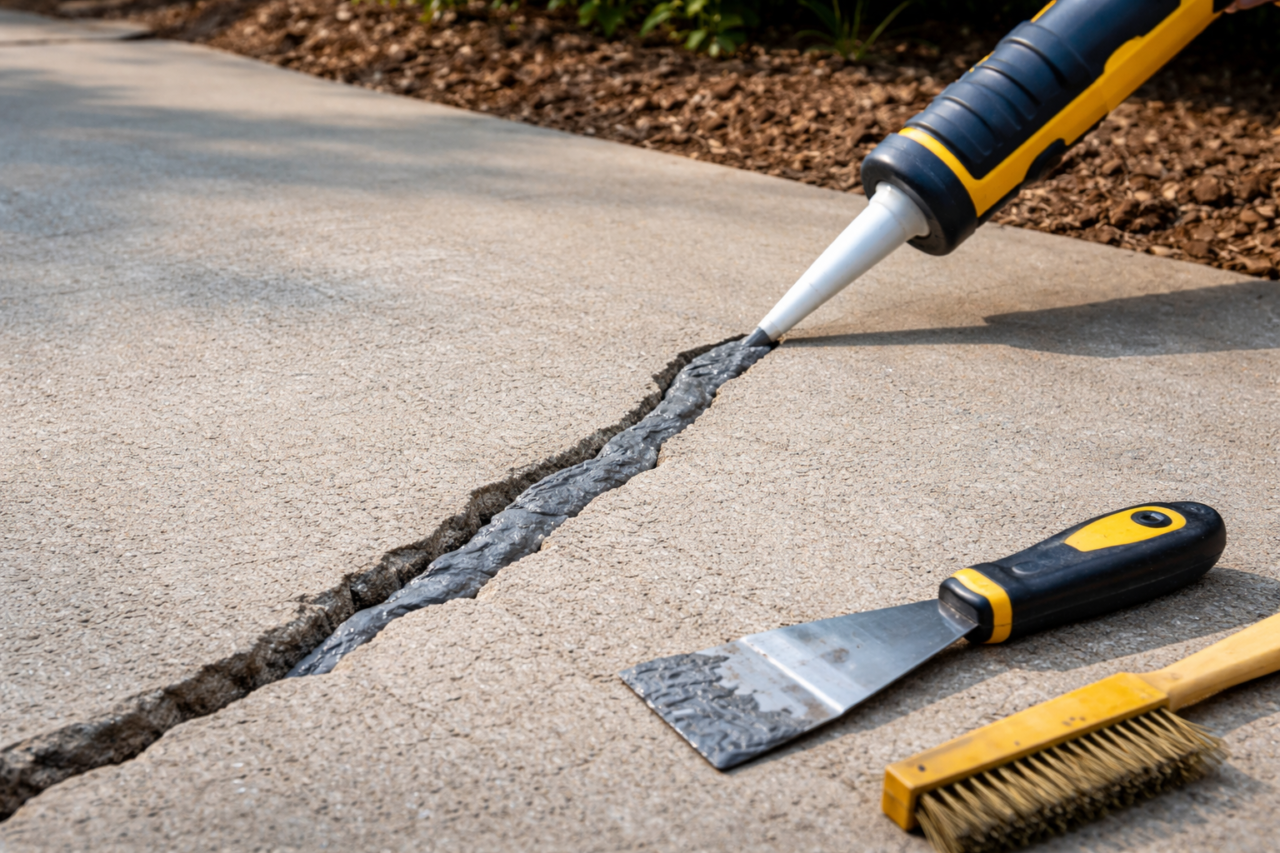
Imagine a concrete slab resting over a void. Filling the crack at the surface does not automatically fill the empty space below it. If the slab remains unsupported, additional movement may cause the repaired crack to reopen or new cracks to develop nearby.
An effective repair strategy therefore starts by determining why the concrete cracked.
Depending on the conditions, the solution may involve a combination of:
- Raising settled concrete
- Filling voids beneath the slab
- Stabilizing or improving supporting soils
- Sealing cracks and joints
- Grinding smaller elevation differences
- Correcting conditions that allow water to enter beneath the concrete
Addressing both the visible damage and its underlying cause can provide a more complete approach to concrete repair.
How Concrete Raising and Grouting Can Address Settlement
When concrete has settled but remains suitable for repair, raising the existing slab may offer an alternative to tearing it out and replacing it.
Slabjacking works by introducing material beneath the concrete to fill empty spaces and lift settled areas toward their intended position. Slabjack Geotechnical uses polyurethane-based methods for concrete raising and void filling, allowing many settled slabs to be restored without full demolition and replacement.
Other situations require attention to the soil itself. Compaction grouting can be used to densify and improve unstable supporting soils, while permeation grouting can introduce grout into soil to address voids and improve ground conditions.
The appropriate method depends on what is actually causing the movement, which is why evaluating the complete slab and surrounding conditions is more useful than looking at the crack in isolation.
Concrete Crack Repair and Slab Stabilization From Slabjack Geotechnical
Slabjack Geotechnical is a family-owned and operated, full-service concrete repair company serving residential, commercial, municipal, and industrial customers throughout Washington and Northern Idaho. Founded in 2011, we provide solutions for settled, uneven, cracked, and inadequately supported concrete. Our services include Slabjacking (concrete raising), pressure grouting, compaction and permeation grouting, concrete grinding, joint sealing repair, void filling, and professional concrete crack repair. We also seal leaking culverts, large-diameter pipes, and concrete ditches.
Our concrete crack repair services are especially valuable when cracking is allowing moisture into concrete or when cracks and joints need to be addressed as part of a larger restoration project. Rather than treating every damaged slab the same way, our team can evaluate the conditions surrounding the concrete and identify an appropriate repair approach. If settlement, unstable soil, or underground voids are contributing to the problem, we can pair crack repair with concrete raising, grouting, or void-filling solutions designed to address the underlying conditions as well as the visible damage.
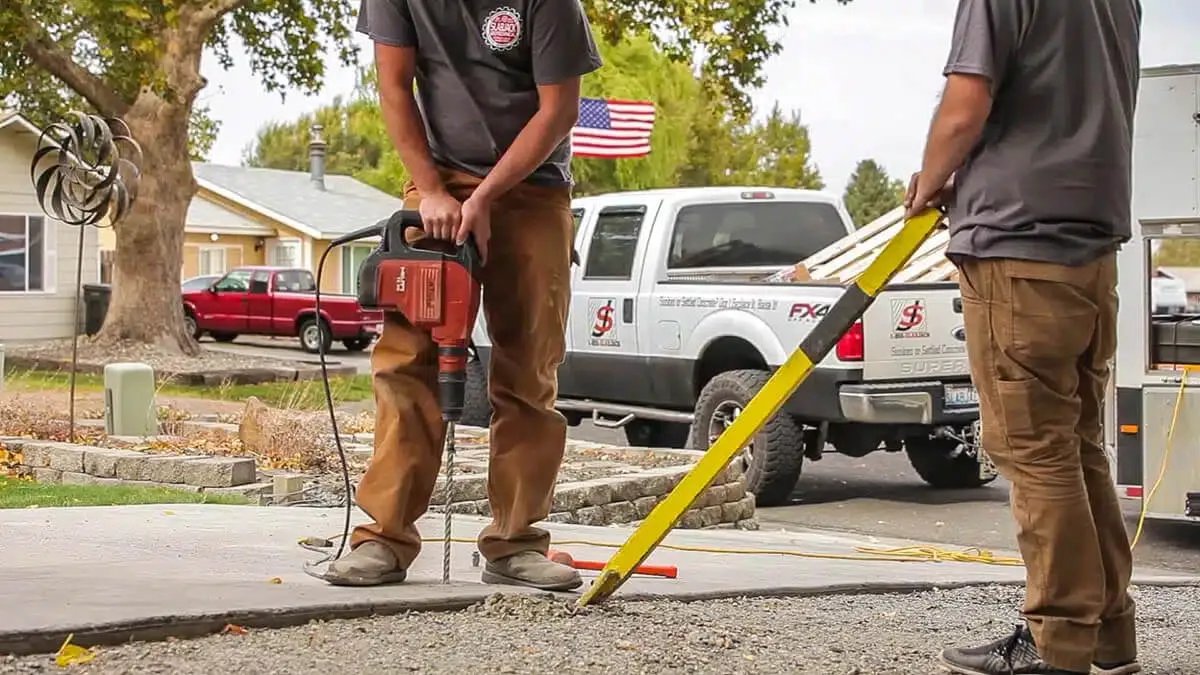
Do Not Let a Small Crack Become a Bigger Concrete Problem. Contact Slabjack Geotechnical For a Concrete Repair Quote
A crack may look minor from the surface, but it can sometimes be the first visible evidence of settlement, erosion, soil instability, voids, moisture intrusion, or loss of support beneath a concrete slab.
The safest approach is not to assume that every crack is serious—or that every crack is harmless. Instead, pay attention to movement, widening, uneven elevations, drainage changes, and other signs that indicate the concrete may be responding to a deeper problem.
If you have noticed cracks in concrete, sinking slabs, uneven surfaces, or a concerning crack in concrete slab foundation, contact Slabjack Geotechnical. Our experienced team can help identify the source of the problem and recommend the right concrete repair solution for your property.
FAQs
What causes cracks in concrete?
Cracks in concrete can develop from shrinkage, soil settlement, erosion, temperature changes, moisture, excessive loads, or loss of support beneath the slab. The cause of the crack often determines which concrete repair technique will be most effective.
What is the best way to repair cracks in concrete?
The best repair method depends on the crack’s cause, location, width, and whether the concrete is still moving. Common techniques include crack sealing, joint repair, concrete raising, grouting, void filling, and surface grinding.
Can water cause cracks in concrete to become worse?
Yes, water can enter cracks, contribute to erosion beneath slabs, change soil conditions, and accelerate certain forms of concrete deterioration. Managing drainage and properly repairing cracks and joints can help reduce moisture-related problems.
How do I know if cracks in concrete need professional repair?
Professional evaluation is a good idea when cracks are widening, repeatedly reopening, showing vertical displacement, or occurring alongside sinking or uneven concrete. A concerning crack in concrete slab foundation may require more than a surface patch if movement is occurring below the slab.