
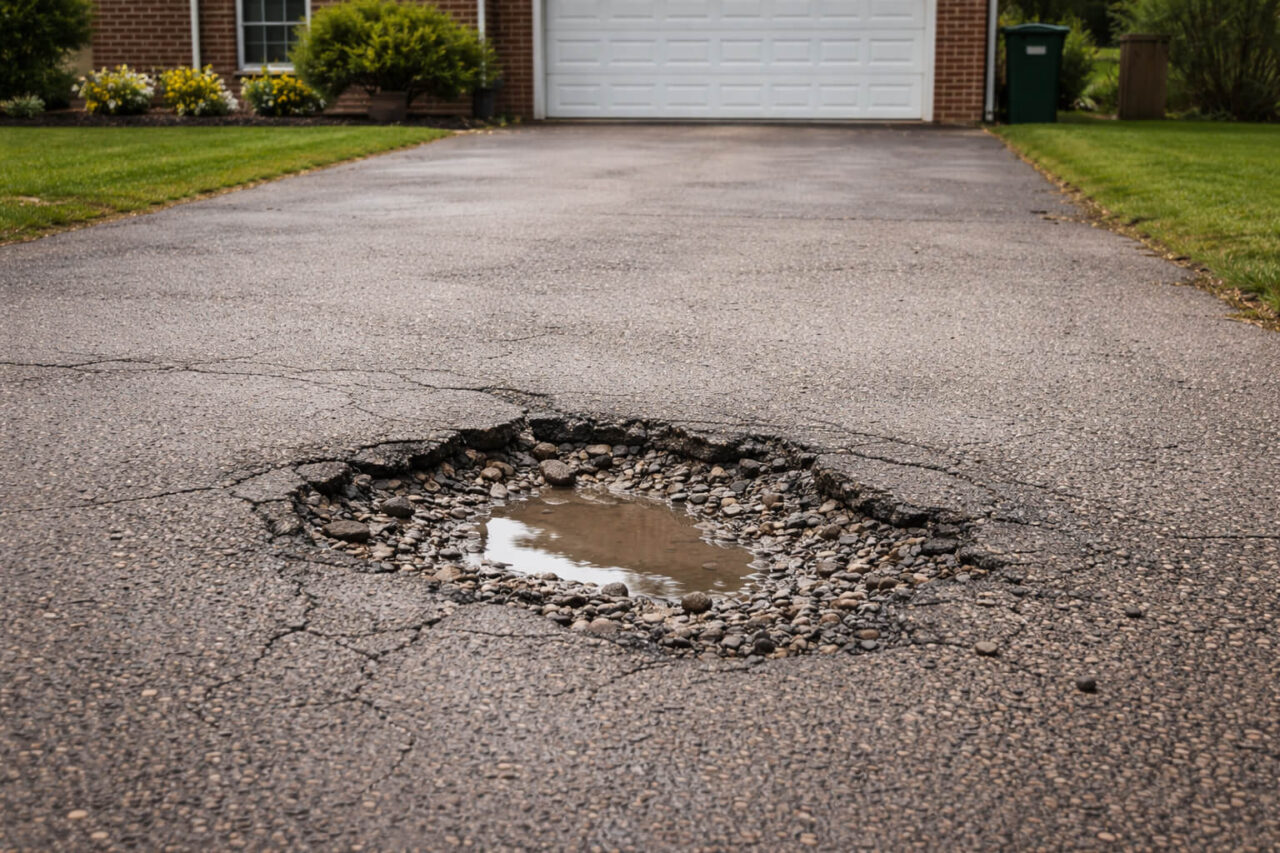
Driveway potholes rarely stay small for long. What starts as a shallow surface defect can quickly turn into a larger structural problem as water seeps in, the base erodes, and repeated vehicle traffic breaks the surrounding concrete apart. Knowing how to fix potholes in driveway surfaces early can help property owners avoid more expensive repairs, improve safety, and extend the life of their concrete.
This concrete repair guide explains the best methods to fix driveway potholes, what causes them, when a simple patch may work, and when professional repair is the better long-term solution. If you are dealing with surface deterioration, voids beneath the slab, or worsening settlement, taking action now is the best way to prevent further damage.
What Causes Driveway Potholes to Form?
Before deciding how to fix potholes in driveway concrete, it is important to identify why they formed. Potholes do not usually appear without an underlying issue.
Common causes include:
- Water intrusion: Water enters cracks or joints, weakens the base, and contributes to concrete breakdown.
- Freeze-thaw damage: In colder climates, trapped water expands when it freezes and creates pressure inside the concrete.
- Poor drainage: Standing water around the driveway speeds up erosion and surface deterioration.
- Soil settlement: When the supporting soil shifts or washes out, the slab can crack, sink, and deteriorate.
- Heavy traffic loads: Repeated vehicle weight, especially from heavier trucks or equipment, can worsen weak spots.
- Aging concrete: Older driveways are more vulnerable to spalling, cracking, and pothole formation.
Understanding these causes makes fixing driveway potholes more effective because the best repair method depends on the condition of both the concrete and the base below it.
Why It Is Important to Fix Driveway Potholes Early
Many property owners put off repairs because a pothole may seem minor at first. However, delaying repairs usually allows the damage to spread. Water continues to seep into the affected area, the surrounding concrete weakens, and the base beneath the driveway can become unstable.
Choosing to fix driveway potholes early can help:
- Prevent further concrete deterioration
- Reduce the risk of trip hazards and vehicle damage
- Minimize water intrusion and subgrade erosion
- Extend the life of the driveway
- Lower the cost of future repairs
If you are wondering how to fix potholes in driveway surfaces before they get worse, the answer depends on the size of the pothole, the condition of the surrounding concrete, and whether the damage is purely surface-level or tied to a deeper soil or void problem.
Best Methods to Fix Driveway Potholes
There is no one-size-fits-all solution for fixing driveway potholes. The best method depends on the severity of the damage and what caused it. Below are some of the most effective repair methods used to restore driveway concrete.
1. Concrete Patching for Small, Shallow Potholes
For minor surface potholes, patching can be a practical short-term repair. This method typically involves removing loose debris, cleaning the damaged area, applying a bonding agent if needed, and placing a concrete repair material designed for patching.
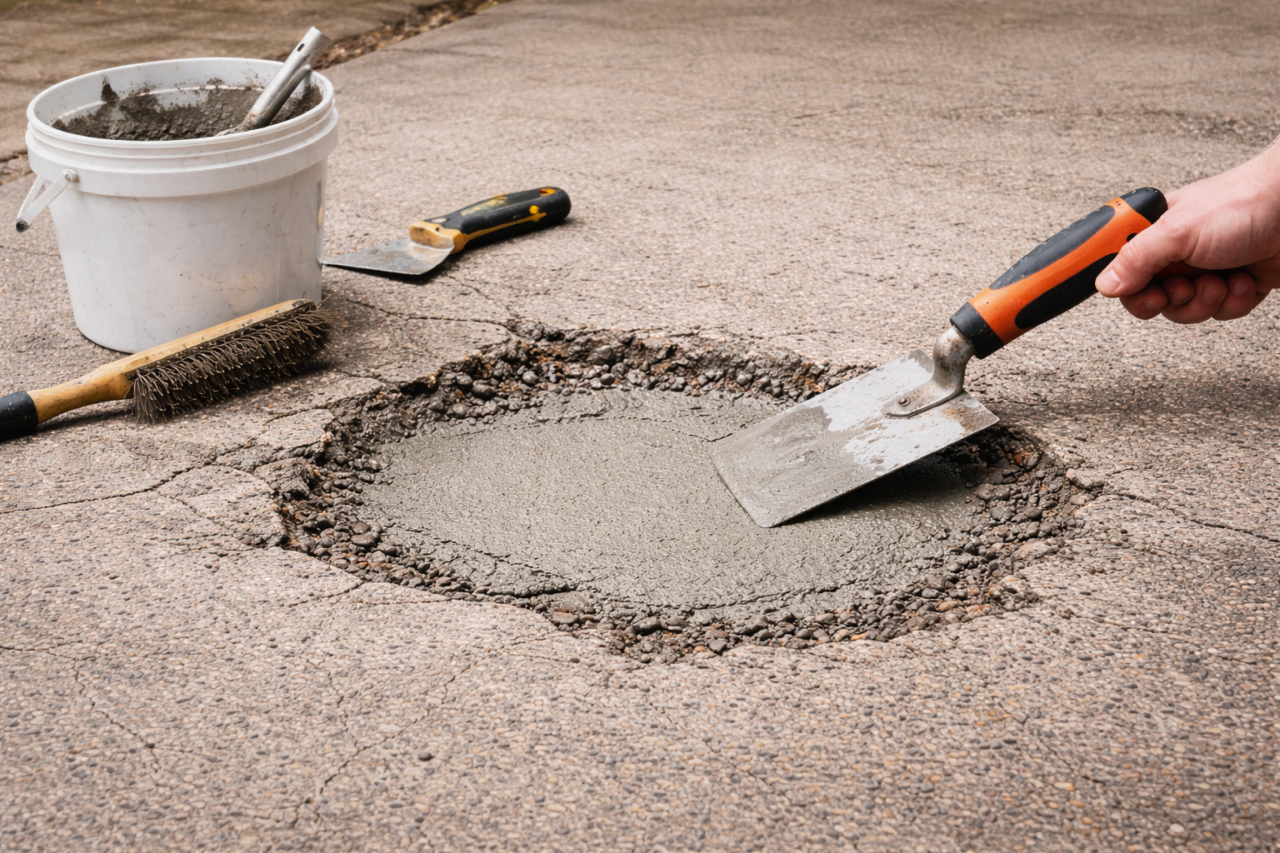
This option works best when:
- The pothole is small and not too deep
- The surrounding slab is still structurally sound
- There is no major settlement underneath
- The damage is limited to the surface layer
To improve results when fixing driveway potholes with a patch, the area should be properly cleaned and prepared. Any weak or crumbling concrete should be removed before the patch material is applied.
However, surface patching has limitations. If the pothole formed because of hidden voids or slab movement, patching alone may only provide a temporary cosmetic improvement.
2. Full-Depth Concrete Repair for Severe Surface Breakout
When potholes are deeper or the concrete around them has significantly deteriorated, a full-depth repair may be the better solution. This method involves removing the damaged concrete section completely and replacing it with new material.
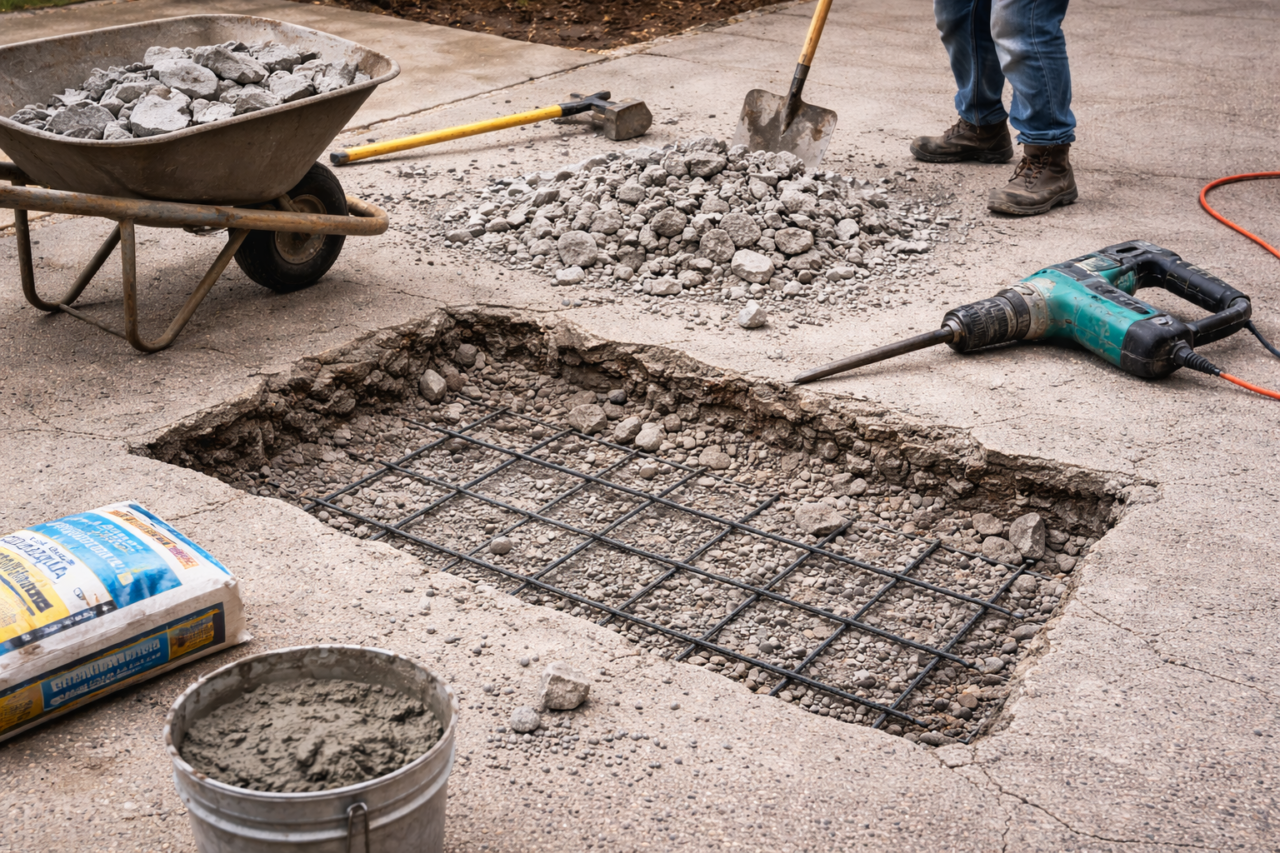
Full-depth repair is often recommended when:
- The pothole extends deep into the slab
- The surrounding concrete is cracked or unstable
- Previous patches have failed
- The damage has spread beyond a small isolated area
This is one of the more reliable ways to fix driveway potholes when the upper portion of the slab can no longer be trusted. Even so, the repair will only last if the support beneath the driveway is still stable.
3. Slabjacking or Concrete Raising for Sunken Driveway Areas
Sometimes the pothole is only part of the problem. If the driveway slab has settled, dropped, or become unsupported, the damaged area may need lifting as well as surface repair. In these cases, slabjacking, also called concrete raising, can be an excellent option.
This process lifts sunken concrete by pumping material beneath the slab to fill voids and restore support. It is especially useful when fixing driveway potholes caused by settling soil or washout below the concrete.
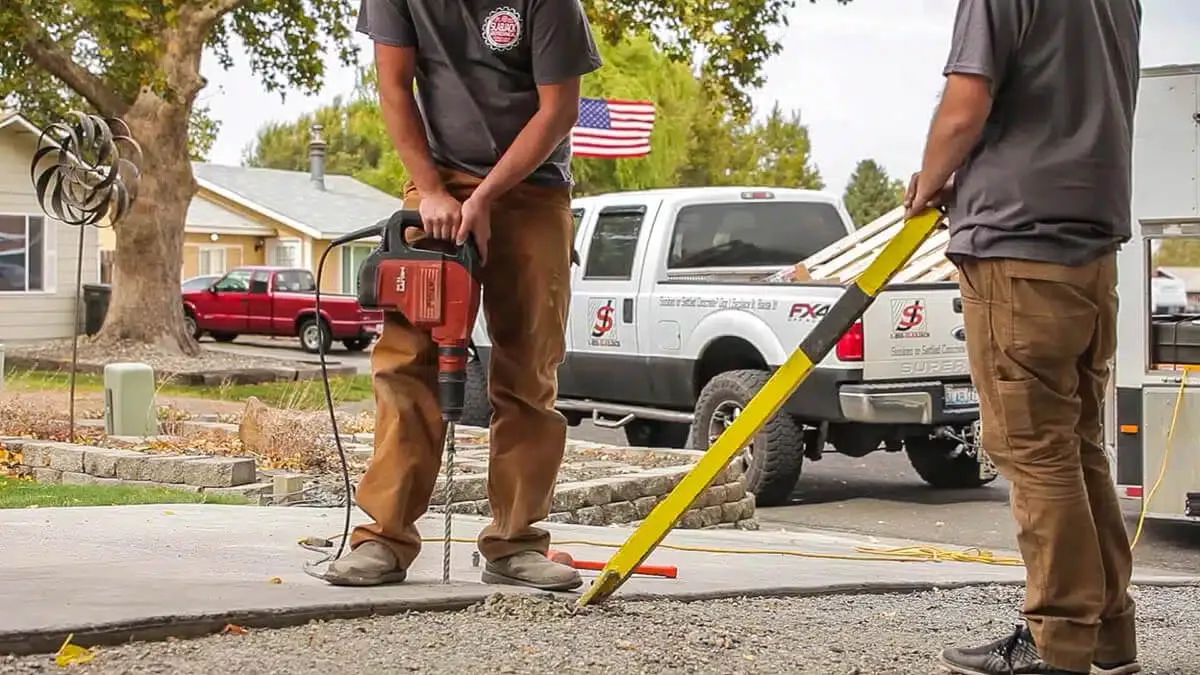
Benefits of slabjacking include:
- Restores support under the slab
- Raises settled concrete back toward proper grade
- Helps reduce further cracking and breakage
- Can be more cost-effective than full replacement
- Addresses the cause, not just the symptom
For many property owners, this is one of the smartest answers to how to fix potholes in driveway areas where uneven slabs and underlying voids are part of the issue.
4. Geo-Polymer Injection for Advanced Concrete Stabilization
One of the most effective modern methods for fixing driveway potholes and stabilizing failing concrete is geo-polymer injection. This approach uses expanding polyurethane-based materials to fill voids, improve support, and in many cases lift settled slabs with precision.
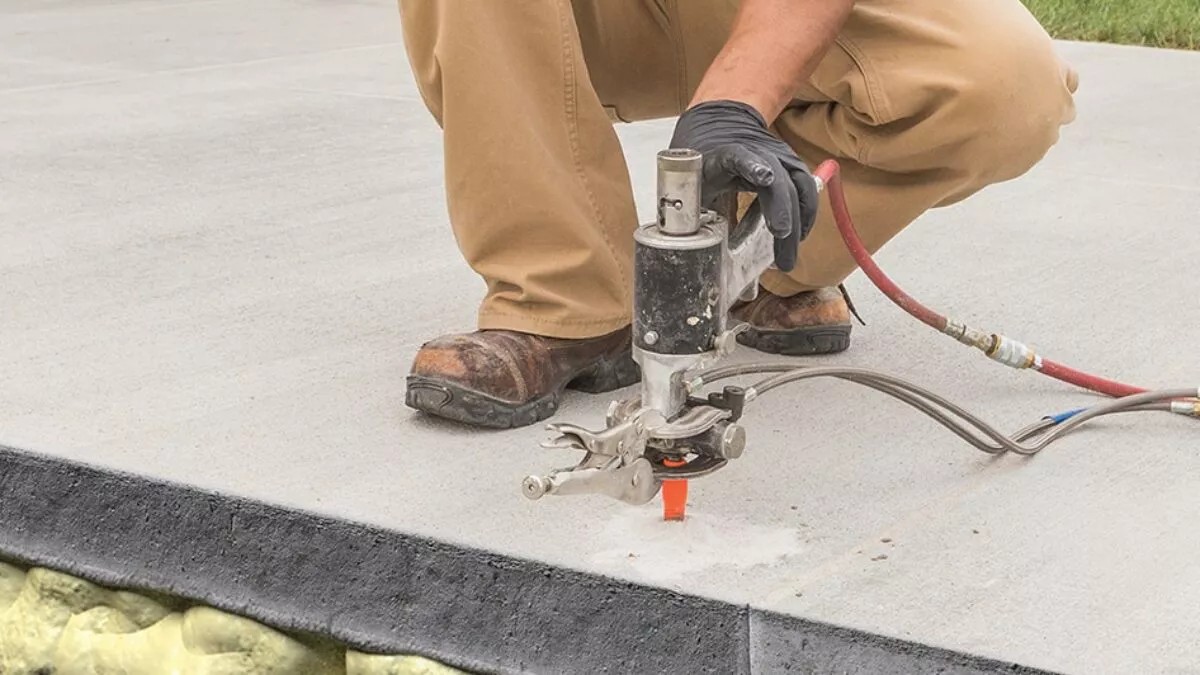
Geo-polymer injection is a strong choice when:
- The concrete is experiencing settlement
- There are voids beneath the slab
- Water has washed out supporting soils
- Fast, targeted stabilization is needed
- Minimal disruption is preferred
Advantages of geo-polymer injection include:
- Lightweight material that adds support without excessive load
- Expands to fill voids and weak areas
- Fast curing and quick return to service
- Less invasive than replacement
- Helps address the underlying instability contributing to potholes
When property owners ask how to fix potholes in driveway concrete for long-term performance, geo-polymer injection often stands out because it goes beyond surface repair and targets subsurface problems directly.
5. Crack Repair and Joint Sealing to Prevent Future Potholes
Even after you fix driveway potholes, preventing water from getting back into the slab system is critical. Cracks and open joints allow moisture to reach the base and can restart the cycle of erosion and deterioration.
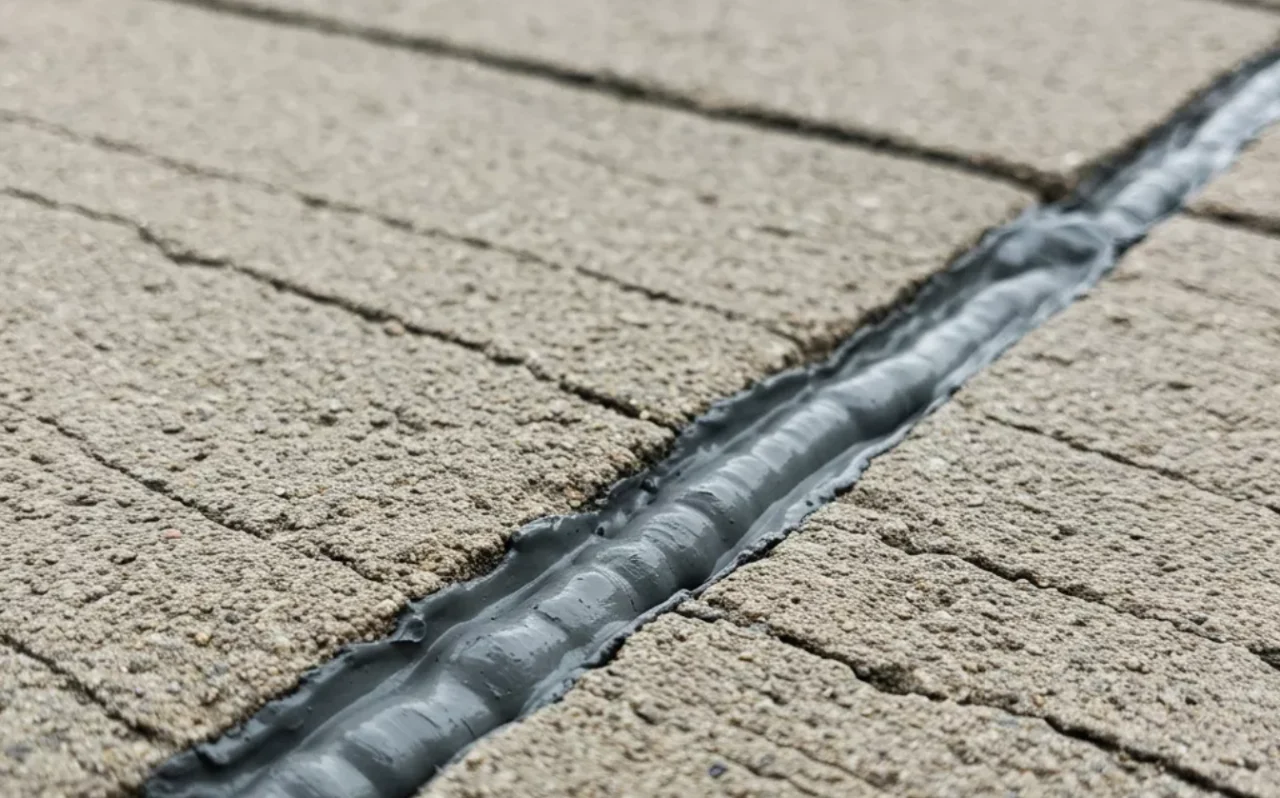
Concrete crack repair and joint sealing help by:
- Reducing water infiltration
- Protecting the subgrade from washout
- Limiting freeze-thaw damage
- Helping preserve nearby repaired sections
- Extending the life of the driveway
In many cases, the best strategy for fixing driveway potholes is a combination of pothole repair, stabilization, and moisture protection.
Choosing the Best Method for Fixing Driveway Potholes
The best repair solution depends on the condition of the concrete and the cause of the pothole. A simple patch may work for a shallow, isolated defect, but deeper or recurring potholes often point to larger structural or subgrade concerns.
When deciding how to fix potholes in driveway concrete, consider:
- The depth and size of the pothole
- Whether the slab is settling or uneven
- Signs of water drainage problems
- Nearby cracks, joint damage, or surface deterioration
- Whether the damage appears to be recurring
A professional evaluation can help determine whether patching, slabjacking, geo-polymer injection, or replacement is the most effective repair strategy.
Why Choose Slabjack Geotechnical for Concrete Repair?
At Slabjack Geotechnical, we are a family-owned and operated full-service concrete repair company proudly serving Washington and Northern Idaho. We help residential, commercial, and industrial customers address concrete deterioration, settlement, and soil-related support problems with proven repair solutions tailored to the condition of the slab and the underlying ground.
Our wide range of services includes Slabjacking (concrete raising), pressure grouting, concrete grinding, void filling, concrete crack repair, and joint sealing repair. We also seal leaking culverts, large-diameter pipes, and concrete ditches.
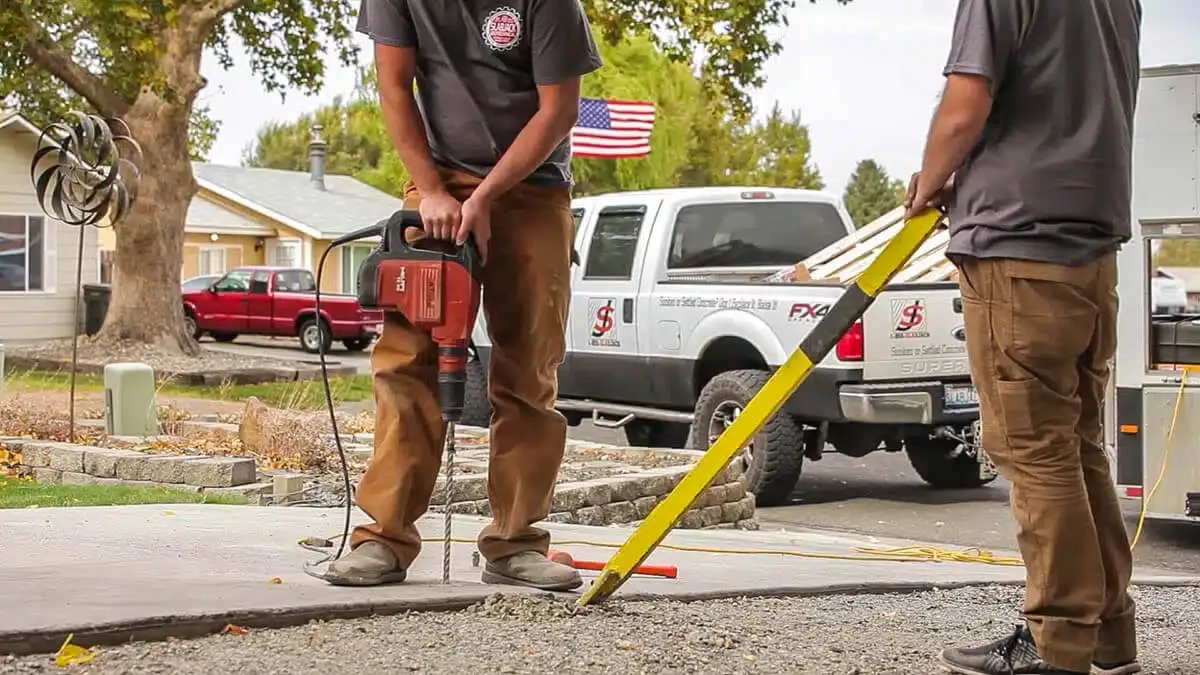
When it comes to fixing driveway potholes, our team focuses on more than surface appearance. We work to identify the underlying cause and recommend durable repair options, including our advanced geo-polymer injection method, which is an efficient and effective way to fill voids, stabilize weak support zones, and restore concrete performance with minimal disruption.
Contact Slabjack Geotechnical for Help Fixing Driveway Potholes
If you are looking for the best way to fix driveway potholes before they become a bigger and more expensive problem, Slabjack Geotechnical is here to help. Whether you need concrete raising, void filling, crack repair, joint sealing, or advanced geo-polymer injection, our team can provide the right solution for your property.
Contact Slabjack Geotechnical today to learn more about our concrete repair services or request a quote and find out how we can help restore and protect your concrete driveway.
FAQs
What is the best way to fix driveway potholes?
The best way to fix driveway potholes depends on how deep the damage is and what caused it. Small surface potholes may only need a concrete patch, while deeper or recurring potholes often require slab stabilization, void filling, or geo-polymer injection.
When should a driveway pothole be professionally repaired?
A driveway pothole should be professionally repaired if it is growing, recurring, or causing uneven concrete around it. It is also smart to call a professional if the damage creates a safety hazard or points to a foundation or drainage-related issue.
Why do driveway potholes keep coming back?
Driveway potholes often return when only the surface is repaired and the real cause is left untreated. Water infiltration, settling soil, hidden voids, and poor drainage can all cause repeated pothole problems.
Who should I call for help fixing driveway potholes in Washington or Northern Idaho?
If you need expert help fixing driveway potholes in Washington or Northern Idaho, Slabjack Geotechnical offers professional concrete repair solutions tailored to the source of the damage. Their services include slabjacking, pressure grouting, void filling, crack repair, joint sealing, and geo-polymer injection for long-term results.