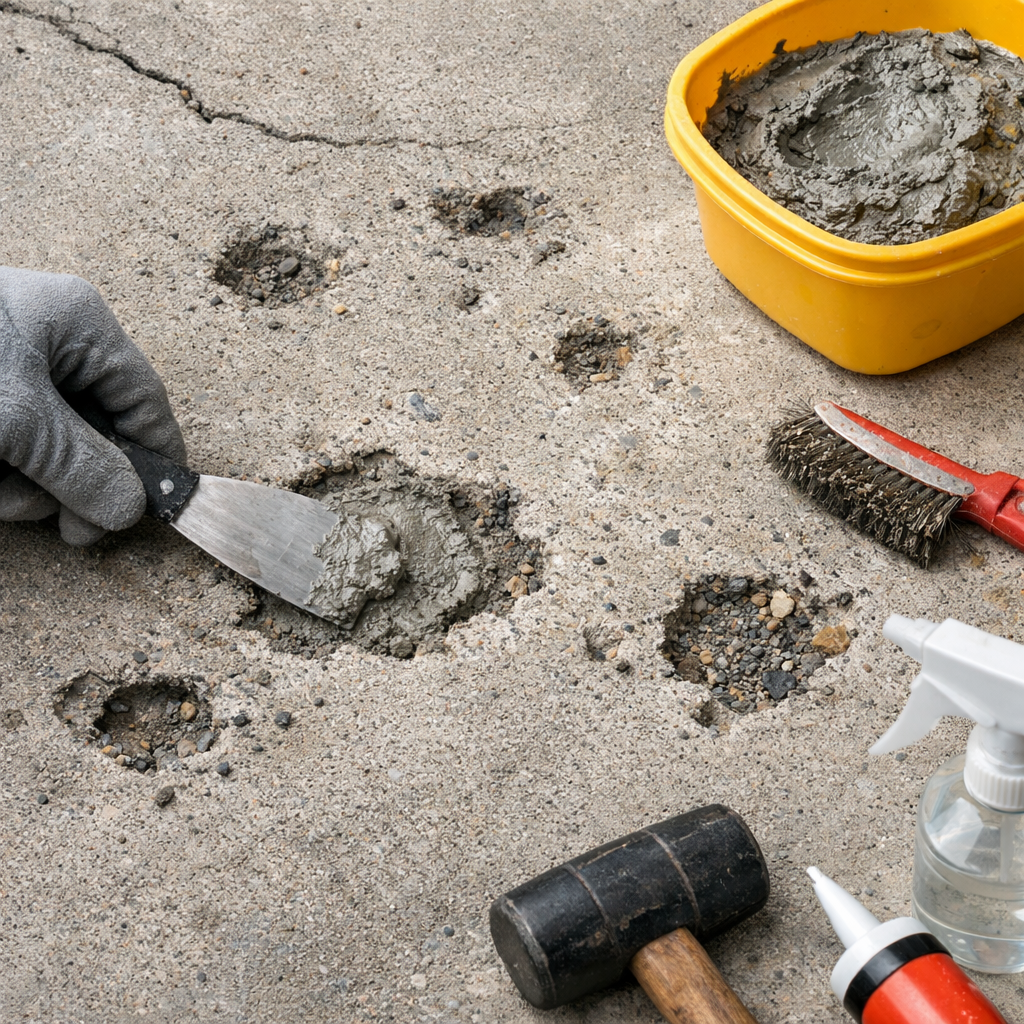
Concrete is known for its strength and durability, but even well-installed slabs can develop surface damage over time. One of the most common issues property owners face—especially in the Pacific Northwest—is concrete pitting. These small, crater-like holes may seem cosmetic at first, but they can signal deeper problems that require professional attention.
In this guide, we’ll explain what concrete pitting is, what causes it, how to prevent it, and the most effective concrete pitting repair options available for homeowners and commercial property managers in Washington and Northern Idaho. Recognizing the signs of concrete pitting early can help determine whether a DIY fix is sufficient or if professional assessment is needed.
As a note, property owners should assess the severity of pitting and look for signs that may indicate underlying structural issues before deciding on a repair approach.
What Is Concrete Pitting?
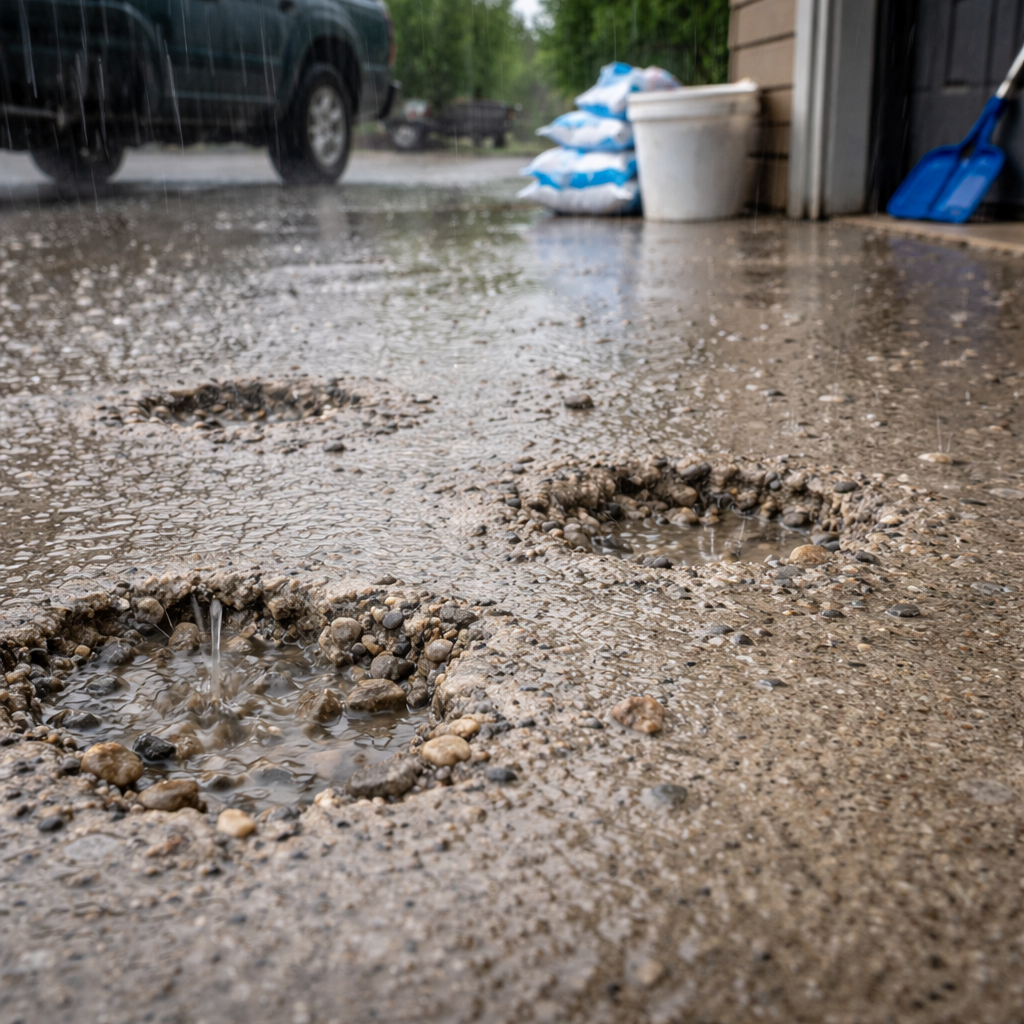
Concrete pitting refers to the formation of small, shallow holes or craters on the concrete surface of cured concrete. These pits often appear on driveways, sidewalks, patios, garage floors, and pool decks. While they may begin as minor blemishes, they can expand over time, weakening the surface and reducing the lifespan of the slab.
Certain areas, such as driveways and pool decks, are more prone to pitting due to frequent exposure to weather conditions and heavy traffic.
In climates like Washington’s—where moisture and temperature swings are common—concrete pitting is often weather-related and tends to worsen if left untreated.
What Causes Concrete Pitting?
Understanding the root cause of concrete pitting is essential for choosing the right repair solution. The choice of material and its quality, including the use of proper components in the concrete mix or repair products, can greatly influence the likelihood of pitting.
Several factors contribute to surface deterioration:
- Poor installation or finishing techniques
- Use of low-quality or inappropriate materials
- Exposure to freeze-thaw cycles
- Deicing chemicals and salts
- Heavy traffic or impact
- Water damage, which is a significant contributor to surface deterioration and pitting
1. Freeze-Thaw Cycles
One of the leading causes of concrete pitting in Washington and Northern Idaho is the freeze-thaw cycle. Water seeps into the porous surface of unsealed concrete. When temperatures drop, the water freezes and expands. This expansion creates internal pressure that causes the top layer of concrete to pop off, resulting in pitting and surface flaking.
Over time, repeated freeze-thaw cycles can significantly compromise the slab’s surface integrity. Using sand instead of de-icing salts during winter can help protect the concrete surface from damage.
2. De-Icing Chemicals and Salt
The use of de-icing salts and harsh chemical treatments during winter can accelerate surface breakdown. These products penetrate the concrete and react with moisture, increasing the risk of scaling, flaking, and pitting. While they may improve safety in icy conditions, they can shorten the life of your concrete if not managed properly.
To help prevent concrete pitting, minimize the use of de-icing chemicals and consider alternative methods for ice removal.
3. Improper Concrete Installation
Concrete that is improperly mixed, poured, or cured is more vulnerable to pitting. Common installation issues include:
- Using too much water in the concrete mix
- Using an incorrect proportion of cement in the concrete mix, which can reduce surface durability
- Over-troweling the surface
- Insufficient curing time
- Poor finishing techniques
These mistakes weaken the surface layer, making it more susceptible to moisture infiltration and surface damage.
4. Soil Movement and Subgrade Issues
Shifting or unstable soil beneath a slab can create stress within the concrete. In the Pacific Northwest, heavy rainfall and erosion can lead to voids under slabs. This movement may contribute not only to cracking and settling, but also to surface damage like concrete pitting.
If soil instability is the root cause, surface repairs alone may not provide a long-term solution.
Where Does Concrete Pitting Commonly Occur?
Concrete pitting is frequently seen in high-traffic and high-exposure areas, including:
- Residential driveways
- Sidewalks and walkways
- Patios and pool decks
- Garage floors
- Commercial entryways
Beyond aesthetics, pitting can create rough and uneven surfaces, increasing the risk of trip hazards. If moisture continues to penetrate the slab, the damage can extend deeper, leading to cracks, spalling, or structural weakening.
Concrete Pitting Repair Options
The right concrete pitting repair method depends on the severity of the damage and the underlying cause. To effectively fix concrete pitting and restore both appearance and durability, it is important to choose the right repair material for the job. Below are the most effective solutions:
1. Cleaning and Surface Preparation
Before any repair can begin, the damaged area must be thoroughly cleaned. This typically involves:
- Using a hammer to remove loose or damaged concrete
- Removing loose debris with a stiff brush
- Using a pressure washer to eliminate dirt and contaminants
- Allowing the surface to fully dry
Proper preparation ensures repair materials bond effectively.
2. Patching and Filling
For minor to moderate surface damage, a concrete patching compound or epoxy fillers can be used to fill small pits and restore a smooth surface. For deeper pits, using a concrete patching compound is especially effective, as it is designed to bond tightly with existing concrete and resist moisture infiltration.
When repairing pitting in decorative stamped or colored concrete, it is important to select a patch that matches the color and texture of the existing surface to ensure a seamless appearance.
Professional expertise is crucial when repairing pitting, as it ensures proper adhesion, long-lasting performance, and a repair that blends seamlessly with the original concrete.
3. Grinding
In some cases, surface grinding can remove shallow pitted areas and create a uniform finish. This method works best when damage is minimal and has not penetrated deeply into the slab.
4. Resurfacing
If concrete pitting is widespread but the slab remains structurally sound, resurfacing with a concrete resurfacing product may be the best option. Proper surface preparation is essential before applying a concrete resurfacing product to ensure a strong bond and lasting repair. A concrete overlay can restore both appearance and functionality, providing a fresh, durable surface without full slab replacement.
5. Slabjacking and Void Filling
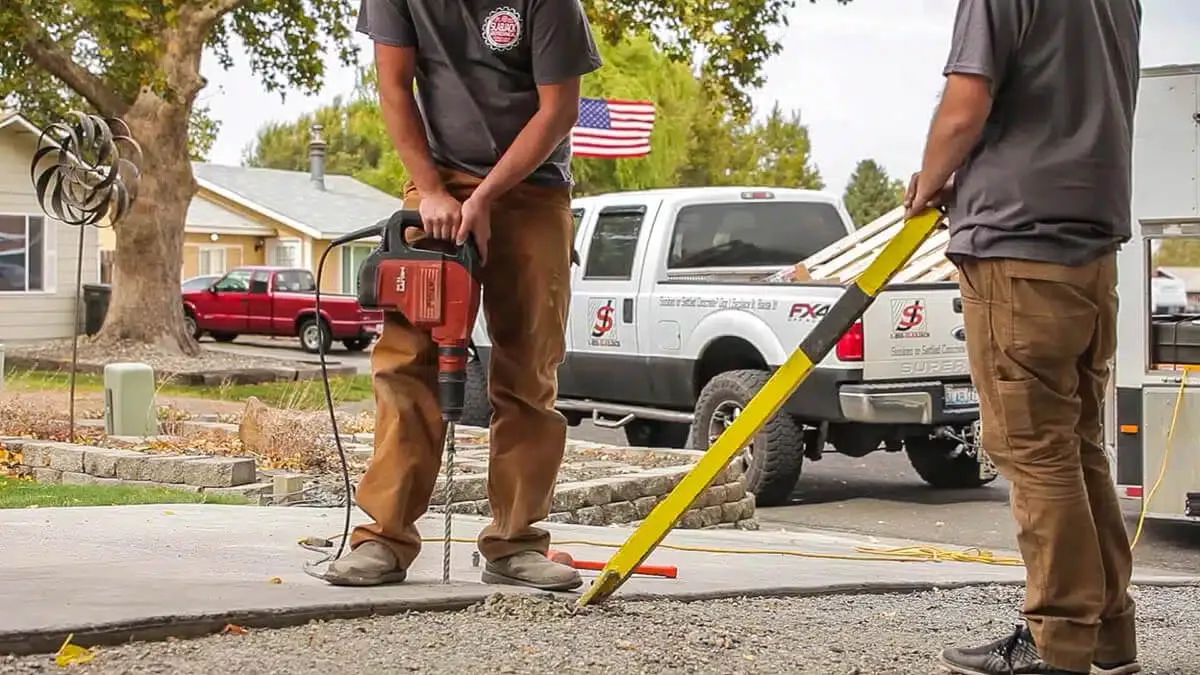
When soil movement or voids beneath the slab contribute to surface deterioration, structural stabilization is critical. Slabjacking (also known as concrete raising) involves injecting specialized materials beneath the slab to lift and stabilize it.
Addressing subgrade issues prevents continued stress that could worsen pitting and cracking.
6. Sealing for Long-Term Protection
After completing concrete pitting repair, applying a high-quality sealant is one of the most effective preventive measures. Sealing protects against:
- Water penetration
- Freeze-thaw damage
- Chemical exposure
- Surface wear
A professional-grade sealant helps extend the life of your concrete and reduces the likelihood of future pitting. For best results, reapply the sealant every few years to maintain optimal protection.
Preventing Concrete Pitting in Washington and Northern Idaho
While some environmental factors can’t be controlled, property owners can reduce the risk of concrete pitting by:
- Sealing concrete regularly
- Avoiding excessive use of de-icing chemicals
- Ensuring proper drainage around slabs
- Addressing minor cracks and damage early
- Consulting professionals for structural concerns
- Consulting a qualified concrete contractor for large-scale repairs or preventive maintenance
Proactive maintenance is far more cost-effective than major repairs or slab replacement.
Professional Concrete Pitting Repair by Slabjack Geotechnical
At Slabjack Geotechnical, we provide expert concrete repair services throughout Washington and Northern Idaho. As a full-service concrete company, we specialize in:
- Slabjacking (concrete raising)
- Pressure grouting
- Concrete crack repair
- Joint sealing repair
- Void Filling
- Sealing leaking culverts, large-diameter pipes, and concrete ditches
Our team uses custom-formulated polymers that meet demanding performance specifications. We are industry leaders in technological advancement, having pioneered dual-hose and multi-polymer slab lifting methods. This innovative approach results in faster lifts, reduced slab fracturing, superior void filling, and fewer callbacks.
When it comes to concrete pitting repair, we don’t just treat the surface—we identify and correct the underlying causes. Whether your property needs surface restoration, structural stabilization, or professional sealing, our experienced technicians deliver long-lasting solutions tailored to the Pacific Northwest climate.
Don’t Let Concrete Pitting Get Worse. Contact Slabjack Geotechnical Today
Concrete pitting may start small, but it can quickly lead to larger structural and safety issues if left unaddressed. The sooner you act, the more cost-effective and straightforward the repair process can be.
If you’re noticing surface damage on your driveway, sidewalk, patio, or commercial concrete, trust the experts at Slabjack Geotechnical for professional concrete pitting repair in Washington and Northern Idaho.
Contact Slabjack Geotechnical today to schedule an inspection and learn how our advanced concrete repair solutions can restore and protect your property for years to come.
FAQs
Can concrete pitting spread or get worse?
Yes, concrete pitting can expand if left untreated. Water infiltration, temperature changes, and chemical exposure can cause existing pits to grow larger and deeper. Prompt concrete pitting repair helps stop the progression of damage.
How is concrete pitting repair performed?
Concrete pitting repair typically involves cleaning the surface, filling pits with patching compounds or epoxy, and sometimes resurfacing the slab. In cases where soil instability is involved, slabjacking or pressure grouting may be necessary. A professional evaluation ensures the correct repair method is used.
How much does concrete pitting repair cost?
The cost of concrete pitting repair depends on the severity of damage, surface area, and whether structural stabilization is required. Minor repairs are generally more affordable than full slab replacement. A professional inspection provides the most accurate estimate.
Is it better to repair or replace pitted concrete?
In many cases, concrete pitting repair is more cost-effective than full replacement. If the slab is structurally stable, patching, resurfacing, or slabjacking can restore functionality and appearance. Replacement is typically only necessary when damage is extensive or structural integrity is compromised.
Who should I contact for professional concrete pitting repair in Washington and Northern Idaho?
For reliable concrete pitting repair in Washington and Northern Idaho, Slabjack Geotechnical provides expert slabjacking, pressure grouting, crack repair, and joint sealing services. Their advanced polymer injection methods stabilize slabs while minimizing fracturing. A professional assessment ensures long-lasting protection and structural performance.