Concrete is widely trusted for its strength, durability, and long service life, but it is not immune to internal chemical damage. One of the most important and often misunderstood forms of deterioration is alkali silica reaction. Alkali silica reaction is a specific type of alkali aggregate reaction (AAR), which is a deleterious internal swelling reaction that occurs in concrete between highly alkaline cement paste and reactive amorphous silica found in many common aggregates.
When this condition develops, it can slowly weaken concrete from the inside out, causing expansion, cracking, and long-term structural concerns. Understanding alkali silica reaction in concrete is important for property owners, contractors, facility managers, and municipalities that want to protect both residential and commercial structures.
This guide explains what alkali silica reaction is, what causes it, the symptoms to watch for, the structural risks involved, and the repair options available when damage begins to appear.
What Is Alkali Silica Reaction in Concrete?
Alkali silica reaction in concrete is a chemical reaction that occurs when alkalis in cement, specifically alkali cations such as sodium (Na+) and potassium (K+), react with certain reactive forms of silica found in aggregates—most notably amorphous silica, which is highly reactive in the presence of these alkali cations—when moisture is present.
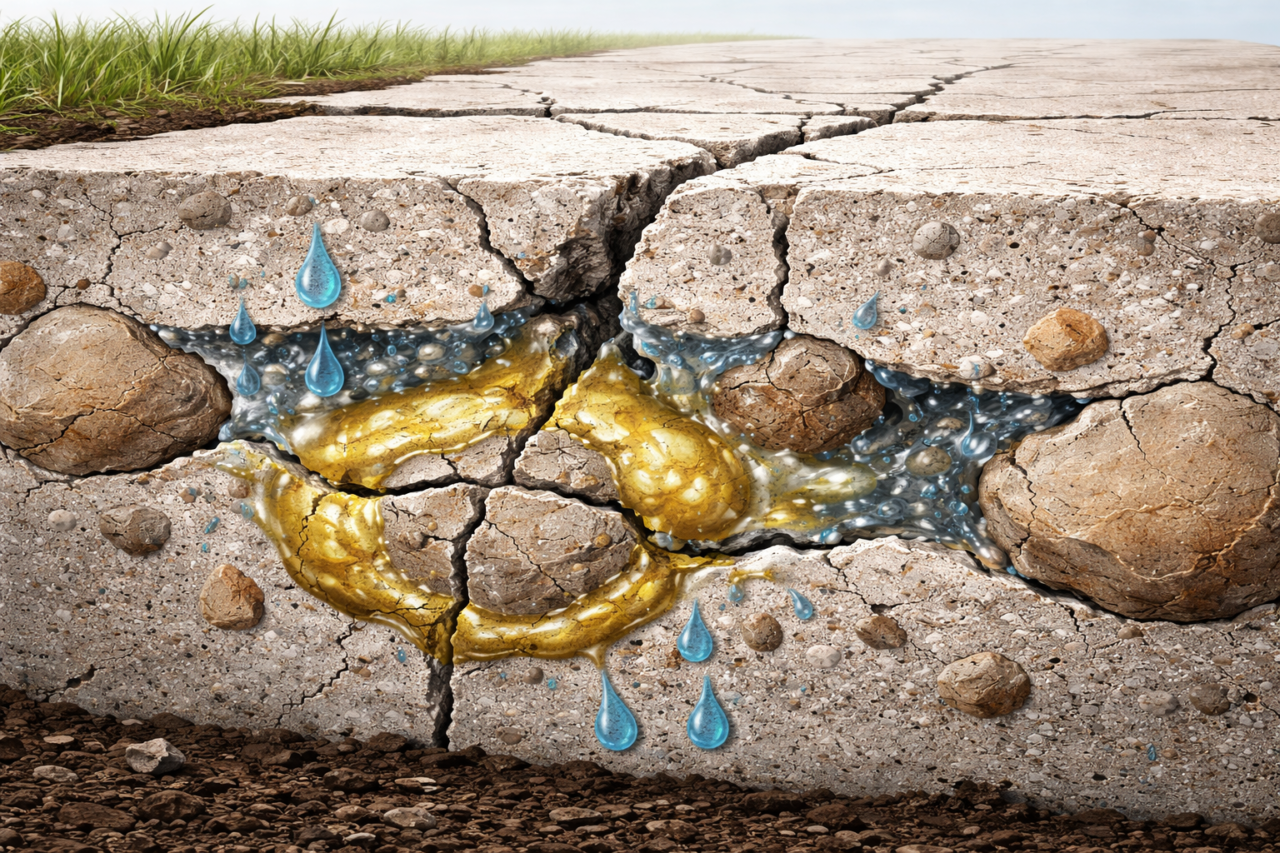
This reaction creates a gel-like substance inside the concrete. As that ASR gel (a sodium silicate gel) absorbs water, it expands, causing ASR induced expansion. The expansion of altered aggregate is due to the formation of this soluble and viscous gel, which swells when absorbing water and exerts expansive pressure inside the aggregate. Over time, the internal pressure caused by this expansion can lead to cracking, map-pattern distress, joint movement, and progressive deterioration.
In simple terms, alkali silica reaction is an internal expansion problem. Unlike surface wear or impact damage, this type of concrete distress starts within the material itself. That is what makes it especially concerning. The damage may begin subtly, but as expansion continues, it can affect both the appearance and performance of the concrete.
Because this process depends on the combination of alkalis, reactive silica, and moisture, not every concrete slab will develop the problem. However, when the right conditions are present, alkali silica reaction in concrete can become a major durability issue over time. ASR is a slow process that typically takes several years before visible symptoms appear.
What Causes Alkali Silica Reaction? The Role of Reactive Aggregates
There are three primary ingredients required for an alkali silica reaction to occur:
- Reactive Silica in the Aggregate: Some aggregates contain forms of silica that are chemically unstable when exposed to alkalis. Not all aggregates are reactive, but certain sand, gravel, crushed stone, chert, opal, volcanic glass, and other siliceous materials can contribute to the reaction. Aggregate reactivity and alkali aggregate reactivity are critical factors in determining the risk of alkali-silica reaction (ASR) and alkali-aggregate reaction (AAR) in concrete, making proper testing and selection of aggregates essential for durability.
- Alkalis in the Cement Paste: Cement naturally contains alkali compounds, primarily sodium and potassium. These alkalis dissolve in the pore solution of concrete and create the chemical environment needed for the reaction to occur. The dissolved alkalis result in a highly alkaline pore solution, which is necessary for the dissolution of reactive silica in the aggregate.
- Moisture: Water is a critical part of the process. Without sufficient moisture, the expansive gel cannot absorb water and swell. This is why alkali silica reaction in concrete is often more severe in damp environments, exposed slabs, exterior flatwork, and structures subjected to groundwater, rainfall, or repeated wetting cycles.
Deicing salts and other external sources, such as seawater, can increase the total alkali content in concrete mixtures, raising the risk of ASR by introducing additional sodium and potassium ions.
Additional contributing factors can include high humidity, poor drainage, inadequate material selection, and long-term exposure to wet service conditions. In some cases, the reaction develops slowly over many years, making early detection difficult.
The mechanism of ASR involves the dissolution of reactive silica in alkaline conditions, forming an alkali-silica sol, which subsequently precipitates ASR products that generate pressure and cause cracking.
Why Alkali Silica Reaction in Concrete Is a Serious Concern
The danger of alkali silica reaction lies in how gradually it can develop. Concrete may appear sound at first, while internal expansion is already taking place. By the time visible damage appears, the reaction may have progressed substantially.
This issue matters because it can affect both appearance and structural performance. ASR can cause significant expansion within the concrete, leading to severe reductions in the mechanical properties of the material, including tensile strength and stiffness, and modest reductions in compressive strength.
It can also increase maintenance costs, reduce service life, and create safety concerns in high-use environments. Residential and commercial property owners who ignore the warning signs may face more extensive and expensive repairs later.
In extreme cases, ASR-induced damage can be so severe that it forces the demolition of affected structures.
Common Symptoms of Alkali Silica Reaction in Concrete
Recognizing the signs of alkali silica reaction in concrete early can help limit further damage and guide the right repair strategy. Some of the most common symptoms include:
Map Cracking or Pattern Cracking
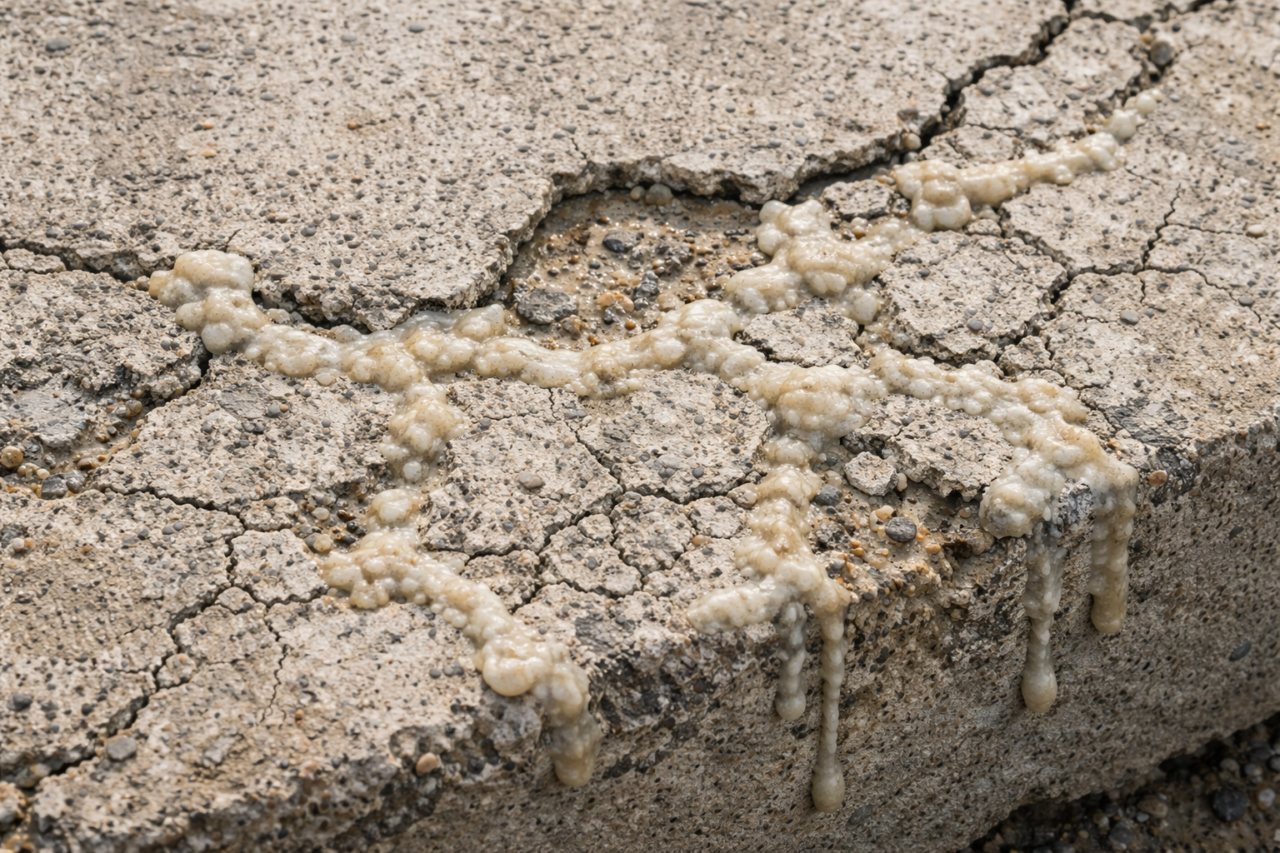
One of the classic visual signs of alkali silica reaction is a network of irregular cracks that resemble a map or spiderweb pattern. These cracks may be wide or fine depending on the severity of the expansion.
Surface Expansion and Displacement
As the gel expands inside the concrete, it can force the slab or structural element to move. This may show up as heaving, warping, joint misalignment, or uneven surfaces.
Closed Joints or Compressed Expansion Joints
Concrete affected by internal expansion may push against adjacent sections. This can close designed control joints or place unusual stress on nearby structural elements.
Pop-Outs and Surface Distress
Localized pressure within the concrete can create pop-outs, roughened areas, and surface deterioration. In more advanced cases, pieces of concrete may begin to break free.
Moist or Alkali Silica Gel-Like Deposits
In some situations, a clear or whitish gel may appear in or around cracks. This material is associated with the reaction products formed inside the concrete.
Reduced Serviceability
Even when the concrete has not fully failed, alkali silica reaction in concrete can make surfaces less functional. Floors, pavements, sidewalks, and slabs may become rough, unstable, or more vulnerable to additional deterioration.
How Alkali Silica Reaction in Concrete Leads to Cracking and Expansion
The structural risk of alkali silica reaction in concrete comes from internal expansion. When the alkali-silica gel forms and absorbs moisture, it swells and creates stress within the hardened concrete. The swelling of the ASR gel generates hydraulic pressure within the aggregate particles and surrounding cement paste.
This process leads to micro-cracking of the aggregate particles and surrounding cement paste, resulting in bulk volumetric expansion and surface macro-cracking of the structure. The deterioration mechanism involves the formation of a hydrophilic gel that swells with moisture, generating pressure and causing cracking. Since concrete has limited tensile strength, it cannot accommodate that internal pressure for long. The result is progressive cracking, expansion, and loss of stability.
In residential structures, alkali silica reaction can contribute to cracked driveways, patios, walkways, garage slabs, basement floors, retaining walls, and foundation-related concrete elements. While some early damage may seem cosmetic, continued expansion can worsen movement, allow water infiltration, and accelerate freeze-thaw damage or reinforcement corrosion.
In commercial and industrial settings, the consequences can be more severe. Warehouses, loading docks, parking structures, manufacturing floors, roadways, and structural slabs may experience reduced load performance, trip hazards, misaligned joints, and costly downtime. As cracking spreads, the concrete may no longer perform as intended, particularly in areas subject to traffic, vibration, moisture, or heavy equipment.
In large-scale infrastructure, alkali silica reaction in concrete can affect bridges, pavements, utility structures, and transportation surfaces. When concrete expands unpredictably, it may create operational issues, compromise drainage, and increase maintenance demands. The longer the reaction continues, the more difficult it becomes to preserve the structure without significant corrective work.
Residential Risks of Alkali Silica Reaction
For homeowners, alkali silica reaction can create more than just visible cracks. It can affect the long-term safety, function, and value of concrete around the home. Common residential risks include:
- Cracked and uneven driveways
- Patio or walkway movement
- Garage slab deterioration
- Retaining wall cracking
- Basement or crawl space concrete distress
- Water intrusion through cracked slabs or joints
Because many residential concrete surfaces are exposed to moisture year-round, the conditions that support alkali silica reaction in concrete can remain active for long periods. Once water enters the cracks, deterioration may continue to accelerate.
Commercial and Industrial Risks of Alkali Silica Reaction in Concrete
Commercial properties often face greater consequences when alkali silica reaction in concrete is present because their concrete surfaces and structures are heavily used. Problems can affect operations, safety, and maintenance budgets.
Common commercial risks include:
- Floor slab cracking and movement
- Forklift and equipment vibration issues
- Damaged loading docks
- Misaligned joints and trip hazards
- Parking lot or pavement deterioration
- Water entry into concrete systems
- Increased repair and liability exposure
For property managers and facility owners, identifying alkali silica reaction early is critical. Minor cracking can quickly evolve into larger structural and operational concerns when expansion continues unchecked.
Alkali Silica Reaction on Airport Runways
Alkali silica reaction in concrete can be especially problematic on airport runways, taxiways, and apron areas because these surfaces must remain stable, level, and dependable under heavy repeated loads. Expansion and cracking caused by alkali silica reaction can create joint distress, surface irregularities, and foreign object debris concerns, all of which are serious issues in aviation environments.
Runway concrete affected by internal expansion may also become more vulnerable to moisture intrusion and additional deterioration over time. Because airports depend on strict performance and safety standards, early detection and specialized repair strategies are essential when this type of reaction is suspected.
How Alkali Silica Reaction Is Diagnosed
A proper diagnosis is important because not all concrete cracking is caused by alkali silica reaction in concrete. Similar symptoms may also result from settlement, shrinkage, freeze-thaw damage, corrosion, overloading, or subgrade issues.
Diagnosis often includes visual inspection, crack pattern analysis, moisture evaluation, core sampling, petrographic examination, and laboratory testing. In many cases, a professional concrete repair and geotechnical team can help determine whether alkali silica reaction is the likely cause and whether other site conditions are contributing to the damage.
Repair Options for Alkali Silica Reaction in Concrete
Repairing alkali silica reaction in concrete depends on the severity of the damage, the type of structure involved, and whether the reaction is still active. While it may not always be possible to reverse the chemical process entirely, the right repair methods can restore function, limit further damage, and extend service life.
Crack Repair
Crack repair can help restore continuity, reduce water intrusion, and improve the appearance and performance of damaged concrete. Sealing active cracks is often an important part of controlling moisture exposure.
Joint Sealing and Moisture Management
Because moisture fuels alkali silica reaction, controlling water infiltration is essential. Joint sealing, drainage improvements, waterproofing measures, and surface sealing may help limit continued swelling.
Concrete Grinding
Where expansion has created uneven surfaces or trip hazards, concrete grinding can restore safer, smoother transitions. This is especially valuable in commercial, industrial, and pedestrian-use environments.
Void Filling and Pressure Grouting
If concrete distress is accompanied by loss of support beneath slabs or surrounding structures, void filling and pressure grouting can help stabilize the affected area. Support conditions must be addressed along with surface damage to improve long-term performance.
Slabjacking or Concrete Raising
In cases where settled or displaced slabs need correction, slabjacking can restore elevation and improve serviceability. This is often useful for sidewalks, driveways, warehouse floors, and other slab-on-grade applications.
Targeted Replacement
When damage is advanced or widespread, partial or full replacement may be the most practical option. Severely deteriorated concrete that has lost structural integrity may need removal and reconstruction using more appropriate materials and design practices.
Geo-Polymer Injection
Geo-polymer injection can be an effective modern repair method for stabilizing concrete, filling voids, improving support, and lifting settled slabs with minimal disruption. It is often chosen for its precision, speed, and reduced impact compared to more invasive repair approaches.
Why Professional Concrete Repair Matters
Concrete affected by alkali silica reaction should not be evaluated through guesswork alone. Surface cracks may only reveal part of the problem, while moisture, voids, support loss, and internal expansion continue underneath. A repair plan should consider not just visible symptoms, but also structural movement, water exposure, and long-term stabilization.
Professional repair teams can help determine whether the concrete can be restored, whether moisture control measures are needed, and which repair methods are most appropriate for the site. In many cases, combining crack repair, joint sealing, lifting, stabilization, and moisture management provides the best results.
About Slabjack Geotechnical
At Slabjack Geotechnical, we are a family-owned and operated full-service concrete repair company serving Washington and Northern Idaho. We provide reliable solutions for residential, commercial, industrial, and municipal concrete problems, with a strong focus on restoring performance, stability, and long-term value.
Our wide range of concrete services includes Slabjacking (concrete raising), pressure grouting, concrete grinding, void filling, concrete crack repair, and joint sealing repair. We also seal leaking culverts, large-diameter pipes, and concrete ditches, helping property owners and facility managers address both surface and subsurface concrete issues. One of the advanced solutions we proudly promote is our geo-polymer injection method, which offers an efficient, minimally invasive way to stabilize soil, fill voids, and lift or support concrete with precision.
Whether the issue involves cracking, settlement, expansion, voids, leaking infrastructure, or deteriorating flatwork, our team is equipped to evaluate the problem and recommend the right repair strategy.

Contact Slabjack Geotechnical Today and Restore Stability to Concrete Damaged by Alkali Silica Reaction
Alkali silica reaction in concrete is a serious internal chemical process that can lead to expansion, cracking, displacement, and long-term structural concerns in residential, commercial, industrial, and infrastructure settings. Because alkali silica reaction is driven by reactive aggregate, alkalis, and moisture, the damage often worsens over time if it is not properly identified and managed.
If you are seeing signs of cracking, expansion, slab movement, or concrete deterioration, now is the time to act. Contact Slabjack Geotechnical to learn more about our concrete repair services and how we can inspect the problem, recommend the right repair approach, and help restore the safety, stability, and performance of your concrete.
FAQs
What is an alkali silica reaction in concrete?
Alkali silica reaction in concrete is a chemical reaction between alkalis in cement and certain reactive silica minerals in aggregate when moisture is present. This reaction forms an expansive gel that absorbs water, swells, and can cause internal pressure, cracking, and long-term concrete damage.
What are the signs of alkali silica reaction in concrete?
Common signs of alkali silica reaction in concrete include map cracking, expansion, joint displacement, surface pop-outs, and uneven slab movement. In some cases, a gel-like substance may also appear in cracks or on the concrete surface.
Can alkali silica reaction damage a foundation or slab?
Yes, alkali silica reaction can damage foundations, slabs, patios, driveways, and other concrete surfaces by causing internal expansion and cracking. As the reaction progresses, it may contribute to uneven surfaces, moisture intrusion, and loss of long-term stability.
Does water make alkali silica reaction worse?
Yes, moisture is one of the key ingredients that allows alkali silica reaction to continue and worsen. The gel produced by the reaction absorbs water and expands, which increases internal stress and leads to more cracking over time.