
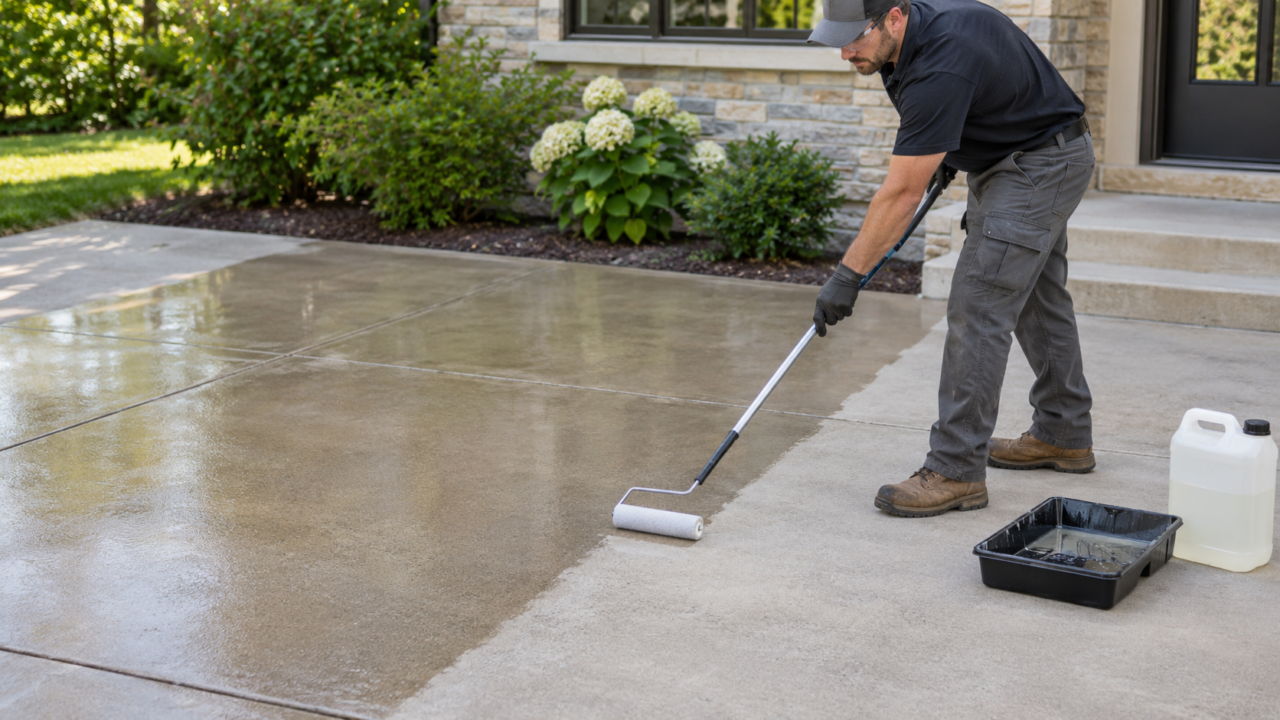
Concrete is one of the most durable building materials available, but continuous exposure to moisture, temperature changes, chemicals, and everyday wear can gradually compromise its appearance and structural integrity. Applying the right concrete sealer can help protect surfaces against these damaging conditions while extending their usable lifespan. However, with several different types of concrete sealer available, choosing the most appropriate product requires understanding how each one works and what level of protection it provides.
From penetrating sealers that protect concrete internally to surface coatings that improve durability and appearance, each formulation offers distinct advantages. Understanding the different types of concrete sealers, their benefits, and their ideal applications can help homeowners, property managers, and commercial property owners make informed decisions about protecting their concrete investments.
Understanding the Two Main Categories of Concrete Sealers
Before comparing individual products, it is helpful to understand the two primary categories of concrete sealers: penetrating sealers and film-forming sealers.
Penetrating Concrete Sealers
Penetrating sealers absorb into the concrete’s pores and chemically interact with the material to provide protection beneath the surface. Rather than creating a visible coating, these products generally preserve the concrete’s natural appearance and texture.
They are particularly beneficial for exterior surfaces exposed to rain, snow, deicing salts, and fluctuating temperatures. Many penetrating sealers also allow moisture vapor to escape, reducing the potential for trapped moisture.
Common penetrating formulations include silane, siloxane, silicate, and siliconate sealers.
Film-Forming Concrete Sealers
Film-forming sealers create a protective layer on the concrete surface. Depending on their formulation, these coatings can improve resistance to abrasion, stains, chemicals, and moisture while producing different levels of gloss.
These products are frequently used for decorative concrete, interior floors, garages, warehouses, and other areas where surface appearance or resistance to physical wear is especially important.
Common film-forming formulations include acrylic, epoxy, polyurethane, and polyaspartic sealers.
Different Types of Concrete Sealer and Their Benefits
Understanding the characteristics of individual concrete sealers is essential for selecting an effective treatment. The following sections compare eight common types of concrete sealer, including how they work, their primary advantages, limitations, and recommended applications.
1. Silane Concrete Sealers
Silane sealers are penetrating treatments that absorb into concrete and chemically bond with mineral surfaces to create water-repellent protection. Their relatively small molecular structure allows many formulations to penetrate dense concrete, making them particularly effective for protecting exterior structures against moisture and chloride exposure.
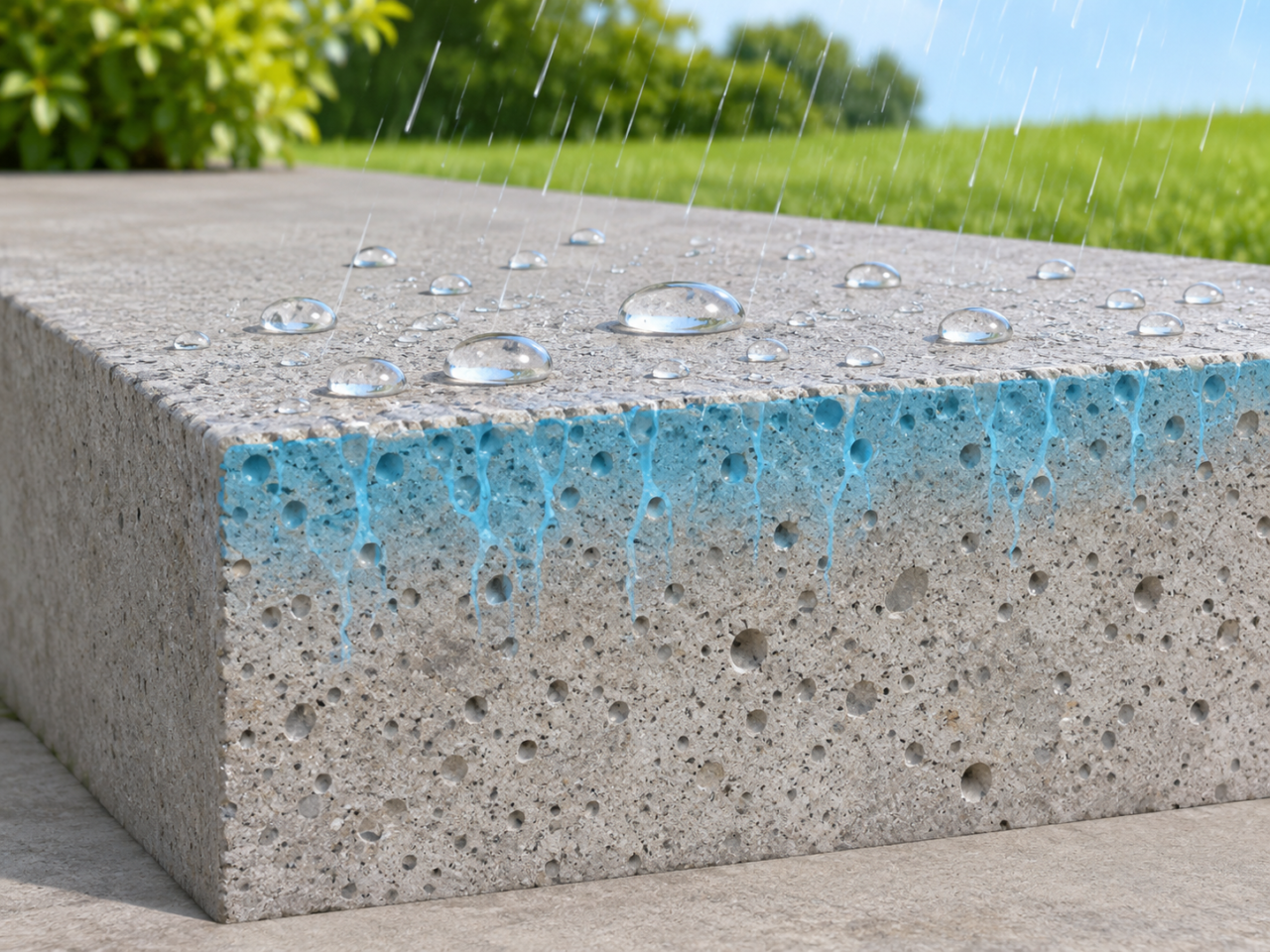
Key Benefits:
- Provides excellent water and chloride repellency.
- Helps protect against freeze-thaw deterioration.
- Maintains the concrete’s natural appearance.
- Allows moisture vapor to escape.
Best Applications: Silane sealers are particularly well suited for driveways, sidewalks, bridge decks, parking structures, and other exterior concrete surfaces exposed to moisture and deicing salts.
Potential Limitations: Silane sealers generally provide limited protection against oil stains and surface abrasion. They also do not fill cracks or correct existing structural damage, so damaged concrete may require repairs before sealing.
2. Siloxane Concrete Sealers
Siloxane sealers penetrate porous concrete and create a water-repellent barrier within the surface. Compared with silane formulations, siloxane molecules are typically larger, making these products particularly suitable for porous concrete and masonry materials.
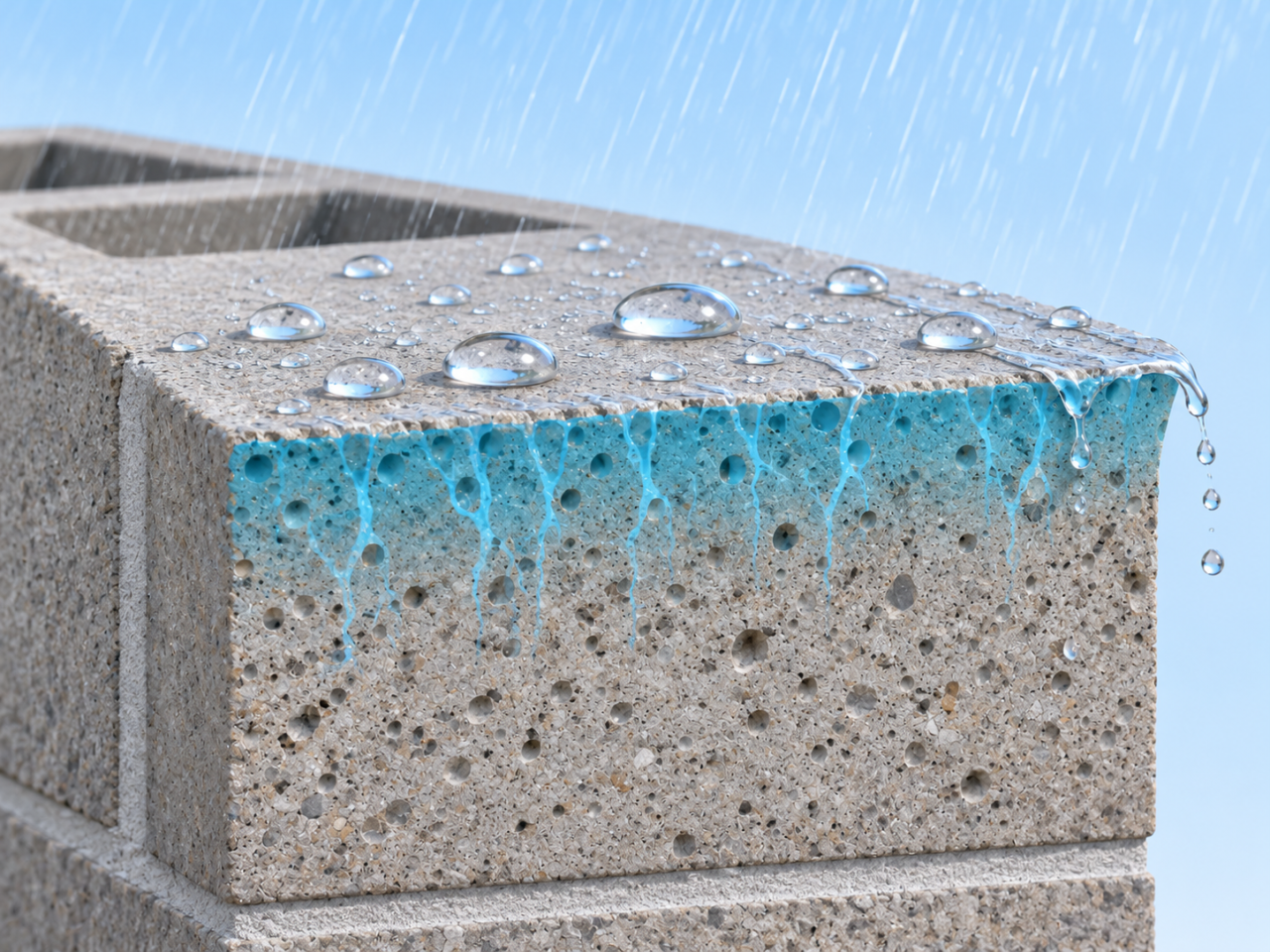
Key Benefits:
- Reduces water absorption and moisture intrusion.
- Helps limit weather-related surface deterioration.
- Preserves the natural texture and color of concrete.
- Provides breathable protection without a thick coating.
Best Applications: Siloxane sealers are commonly used on concrete patios, walkways, retaining walls, masonry surfaces, and other exterior structures with relatively porous surfaces.
Potential Limitations: Siloxane sealers may not penetrate dense concrete as deeply as suitable silane formulations. They also provide limited resistance to abrasion and certain chemical stains compared with specialized film-forming coatings.
3. Silicate Concrete Sealers
Silicate sealers are reactive penetrating treatments that chemically interact with calcium compounds in concrete to produce additional calcium silicate hydrate. This reaction helps densify and harden the concrete surface, reducing dusting and improving resistance to certain forms of surface wear.
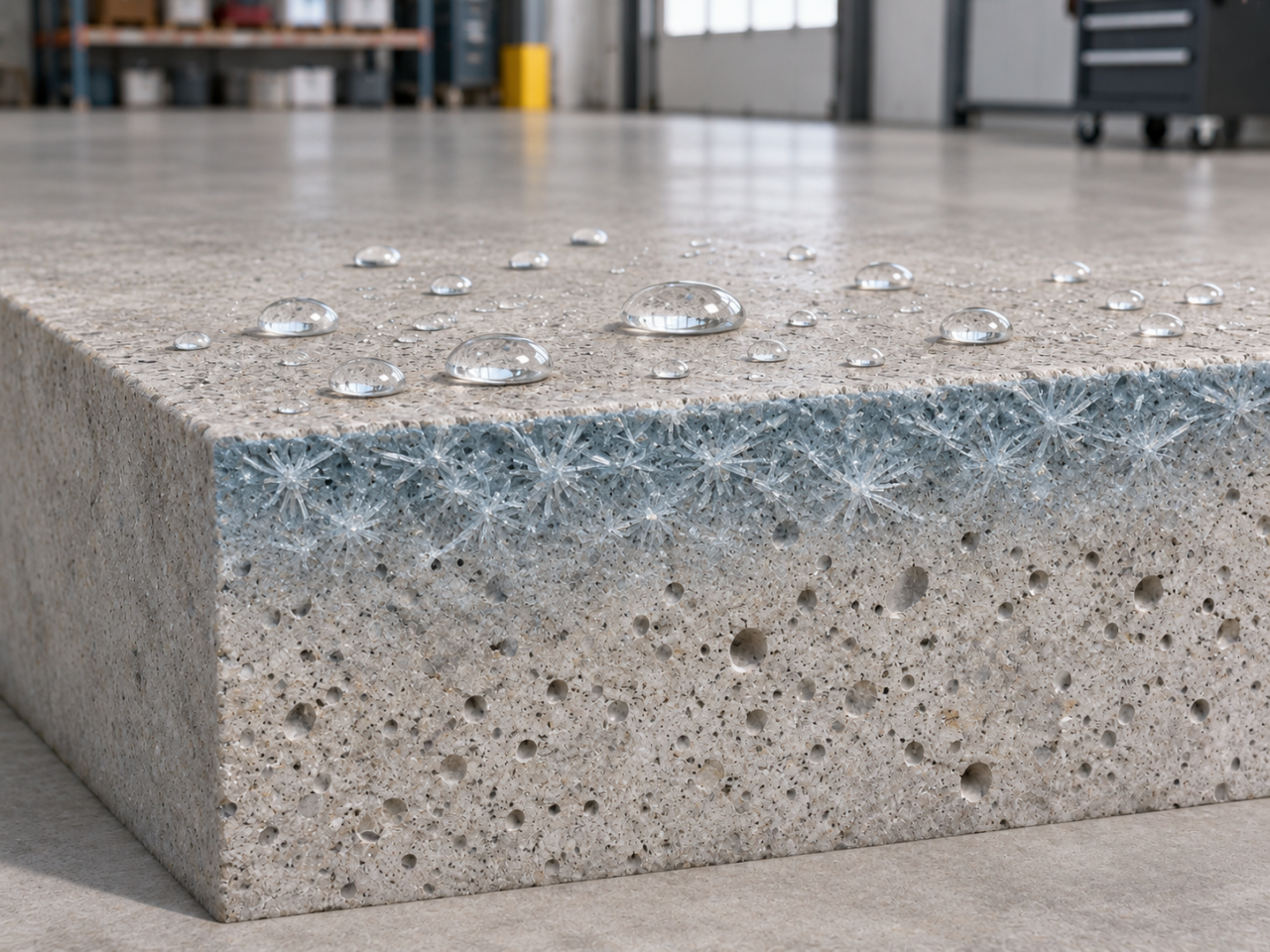
Key Benefits:
- Improves surface hardness and density.
- Reduces concrete dusting and surface wear.
- Helps prepare floors for polishing.
- Maintains a natural appearance without forming a conventional coating.
Best Applications: Silicate sealers, often marketed as concrete densifiers, are especially useful for warehouses, industrial floors, manufacturing facilities, polished concrete floors, and interior concrete slabs.
Potential Limitations: Unlike hydrophobic penetrating sealers, standard silicate densifiers do not provide substantial water repellency on their own. Exterior surfaces requiring protection against rain and deicing salts may need an additional compatible water-repellent treatment.
4. Siliconate Concrete Sealers
Siliconate sealers are water-repellent penetrating treatments that react with concrete to reduce moisture absorption. Many formulations use potassium or sodium methyl siliconates and are designed to provide economical protection for compatible mineral surfaces.
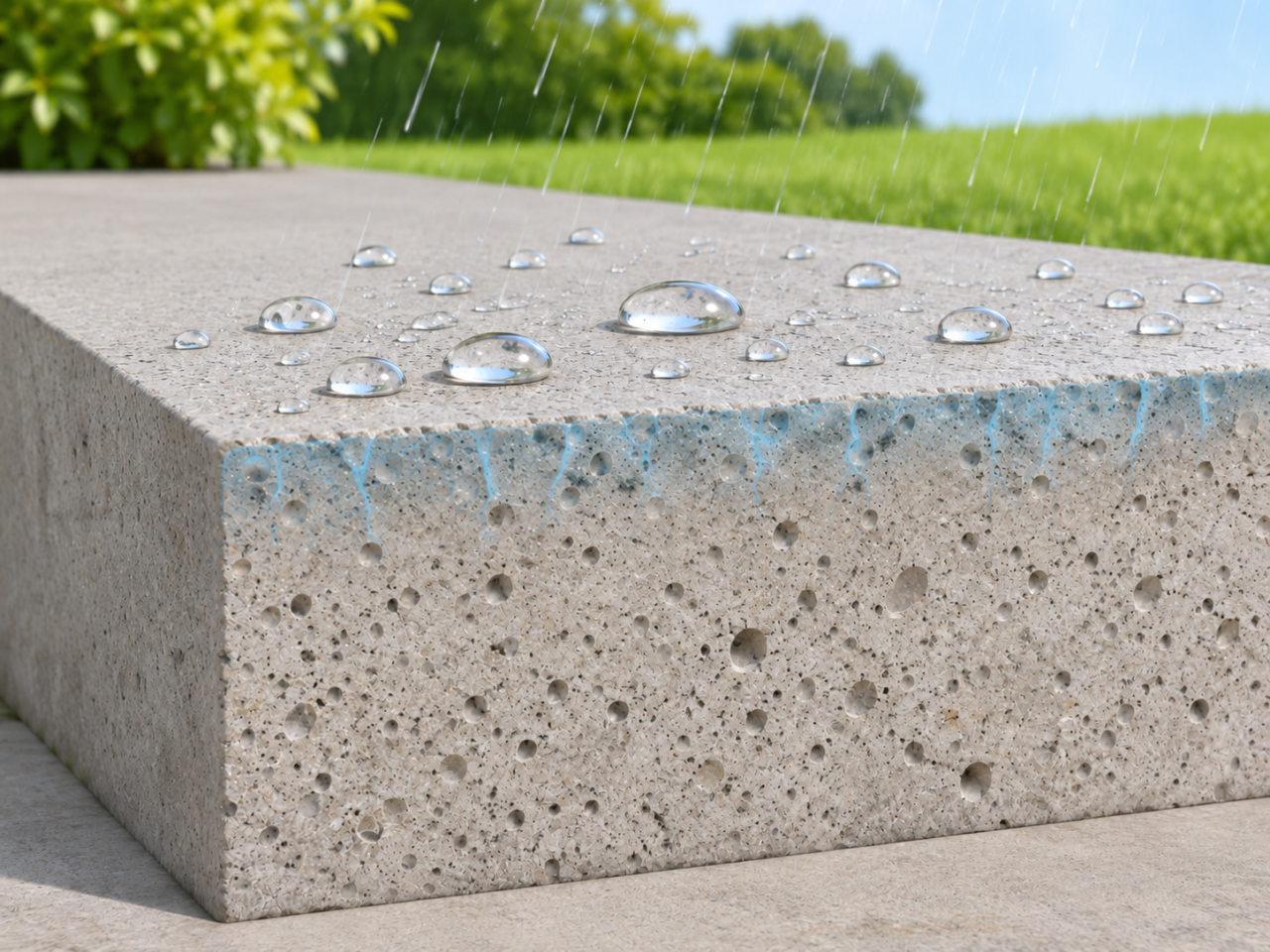
Key Benefits:
- Helps prevent moisture penetration.
- Reduces water-related staining and deterioration.
- Maintains the natural appearance of concrete.
- Offers a relatively economical sealing option.
Best Applications: Siliconate sealers are commonly considered for concrete driveways, sidewalks, patios, masonry surfaces, and other exterior areas that require basic water-repellent protection.
Potential Limitations: Performance can vary significantly depending on surface porosity, concrete chemistry, and application conditions. Some formulations are unsuitable for dense surfaces or may leave visible residue if applied incorrectly.
5. Acrylic Concrete Sealers
Acrylic sealers are film-forming products that create a relatively thin protective coating across the concrete surface. Available in water-based and solvent-based formulations, they are popular for decorative concrete because they can enhance color and provide finishes ranging from matte to high gloss.
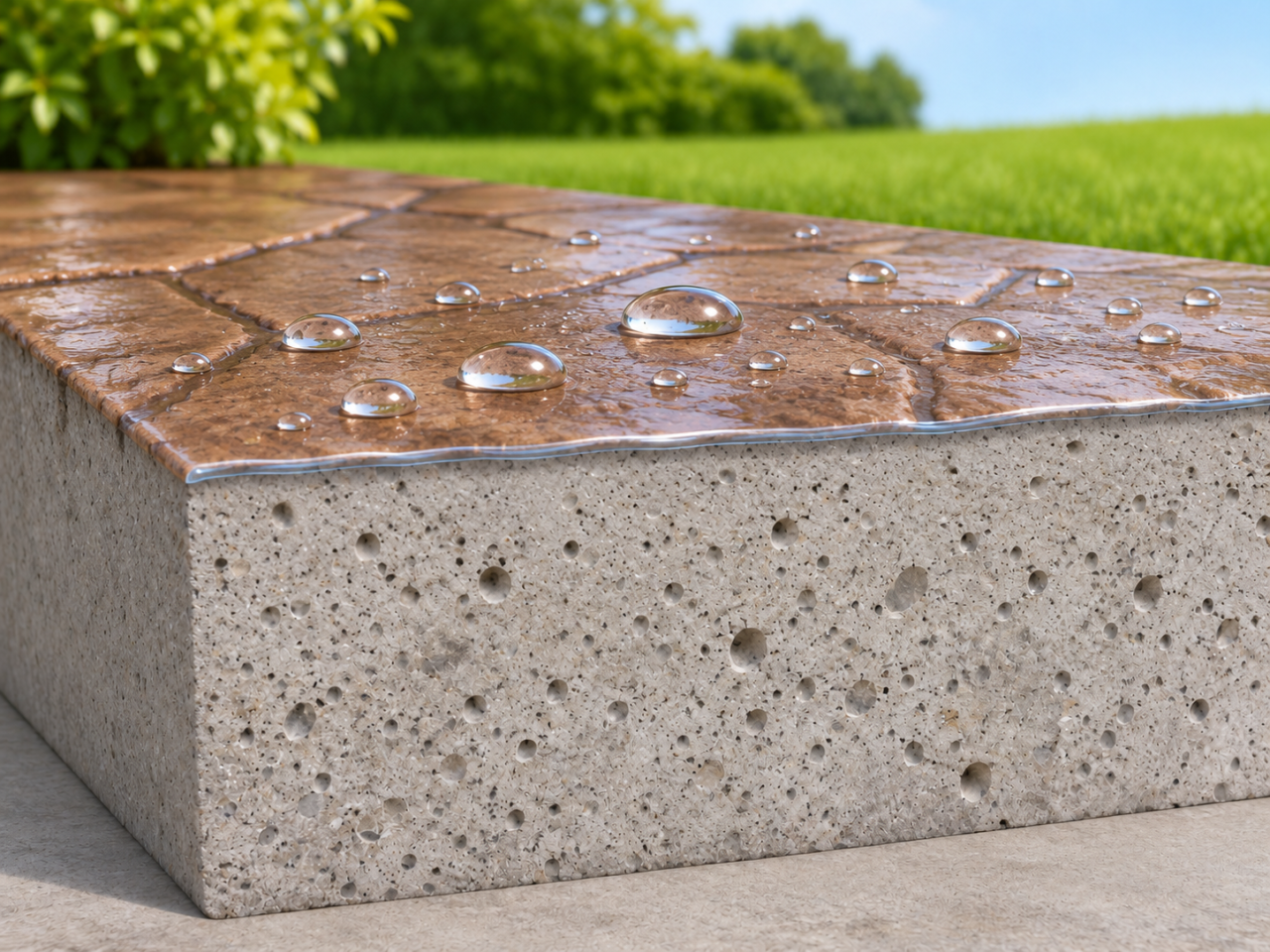
Key Benefits:
- Enhances the appearance of decorative concrete.
- Provides protection against water and certain stains.
- Offers relatively simple application and maintenance.
- Available in multiple sheen levels and formulations.
Best Applications: Acrylic sealers are frequently used on stamped concrete, colored patios, exposed-aggregate driveways, decorative walkways, and other surfaces where visual appearance is an important consideration.
Potential Limitations: Acrylic coatings generally wear faster than heavier-duty epoxy or polyurethane systems and may require more frequent reapplication. Glossy formulations can also become slippery when wet unless appropriate slip-resistant additives are incorporated.
6. Epoxy Concrete Sealers
Epoxy sealers are high-performance surface coatings that typically consist of two components mixed before application. Once cured, they create a hard protective layer that offers substantial resistance to abrasion, staining, and many chemicals.
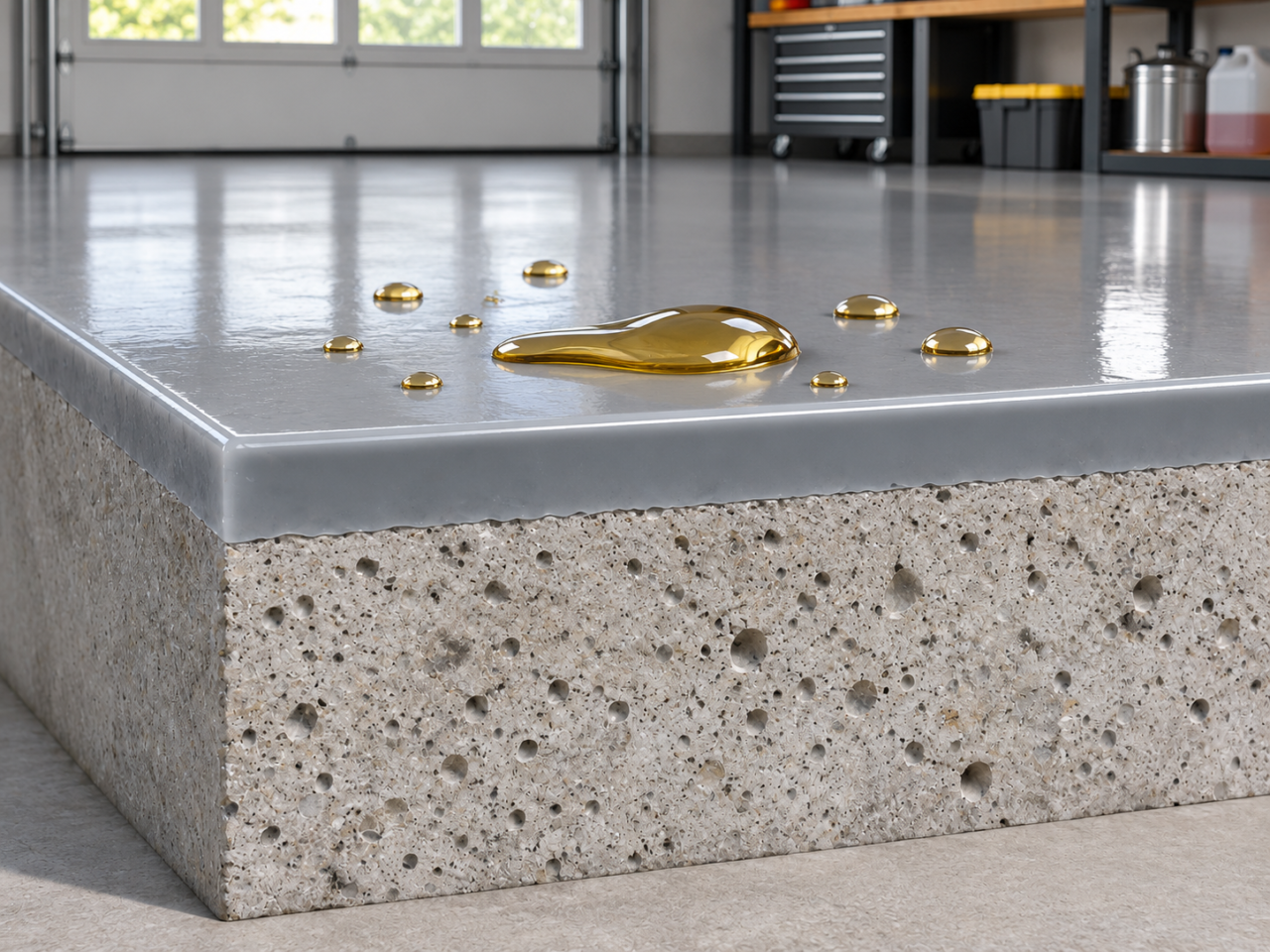
Key Benefits:
- Provides excellent abrasion and wear resistance.
- Resists many oils, chemicals, and stains.
- Creates a durable, easy-to-clean surface.
- Available in clear, colored, and decorative finishes.
Best Applications: Epoxy coatings are commonly used on interior garage floors, workshops, warehouses, manufacturing facilities, and commercial floors that experience substantial traffic or chemical exposure.
Potential Limitations: Many epoxy formulations are vulnerable to ultraviolet exposure and may yellow or discolor outdoors. They also require careful surface preparation and moisture evaluation because excessive moisture beneath the coating can cause adhesion problems.
7. Polyurethane Concrete Sealers
Polyurethane sealers create a durable protective film that offers excellent resistance to surface abrasion, scuffing, and many chemicals. They are often used as topcoats over decorative concrete systems or other compatible coatings to improve durability.
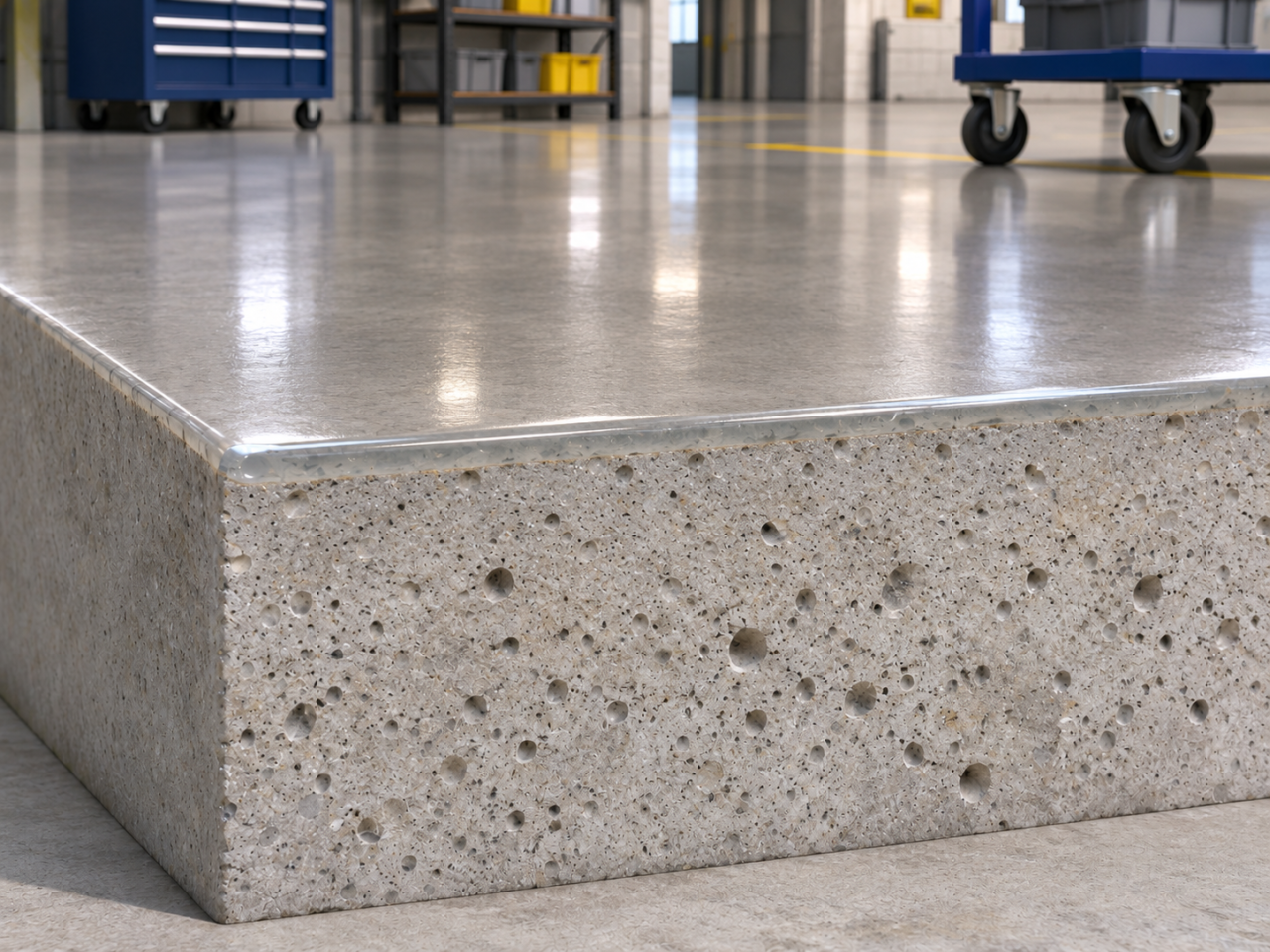
Key Benefits:
- Provides excellent abrasion and scratch resistance.
- Offers strong resistance to many stains and chemicals.
- Available in different gloss levels.
- Certain formulations provide excellent UV stability.
Best Applications: Polyurethane sealers are suitable for commercial floors, retail spaces, garage floors, concrete countertops, and high-traffic interior surfaces. UV-stable formulations may also be appropriate for selected exterior applications.
Potential Limitations: Polyurethane coatings typically require thorough surface preparation and controlled application conditions. Some formulations are sensitive to moisture during curing, and products must be selected carefully for exterior exposure.
8. Polyaspartic Concrete Sealers
Polyaspartic sealers are advanced film-forming coatings, generally based on polyaspartic polyurea chemistry, that provide durable protection with relatively rapid curing times. They are increasingly used for residential and commercial flooring systems where quick turnaround and resistance to daily wear are priorities.
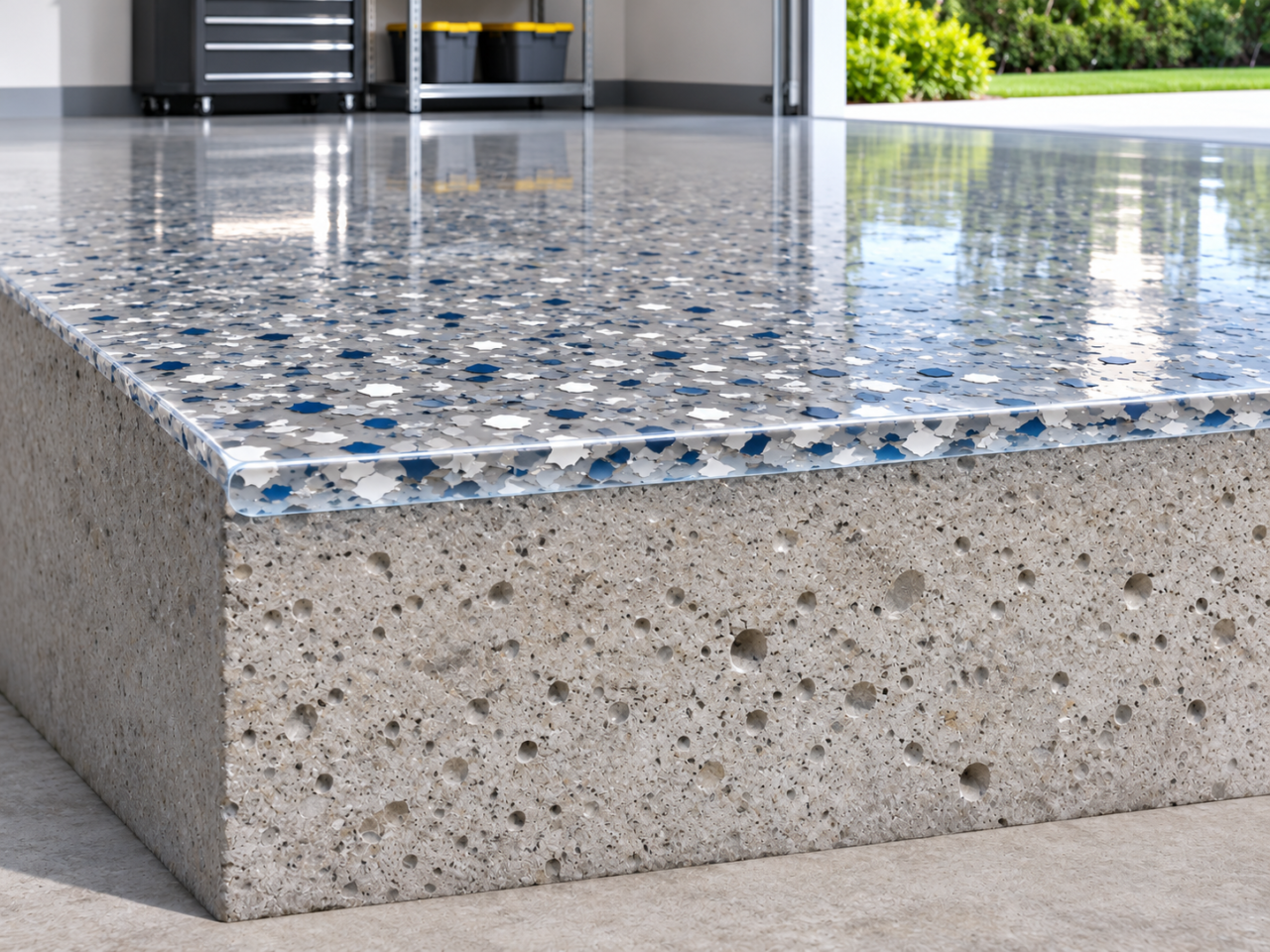
Key Benefits:
- Offers excellent abrasion and chemical resistance.
- Cures faster than many conventional epoxy systems.
- Provides strong color and gloss retention in UV-stable formulations.
- Creates a durable surface suitable for demanding environments.
Best Applications: Polyaspartic coatings are commonly used for garage floors, commercial flooring, workshops, and certain exterior concrete applications where the product is specifically rated for outdoor use.
Potential Limitations: Polyaspartic coatings generally cost more than basic acrylic or penetrating sealers. Their rapid curing characteristics can also make professional installation preferable, especially when precise surface preparation and application timing are required.
Comparison Table: Types of Concrete Sealers at a Glance
The following table summarizes the main differences between the eight types of concrete sealers to help identify which formulations are best suited for different surfaces and performance requirements.
| Concrete Sealer Type | Protection Method | Main Benefits | Appearance | Ideal Applications |
| Silane | Penetrating | Water and chloride resistance | Natural, invisible | Driveways, bridges, parking structures |
| Siloxane | Penetrating | Water repellency and weather protection | Natural, invisible | Patios, retaining walls, porous concrete |
| Silicate | Penetrating/densifying | Surface hardening and dust reduction | Natural, matte | Warehouses, polished floors, industrial slabs |
| Siliconate | Penetrating | Economical water repellency | Natural, invisible | Sidewalks, patios, exterior concrete |
| Acrylic | Film-forming | Decorative enhancement and basic protection | Matte to glossy | Stamped concrete, decorative patios |
| Epoxy | Film-forming | Chemical, stain, and abrasion resistance | Usually glossy | Garages, workshops, industrial floors |
| Polyurethane | Film-forming | Abrasion resistance and durable protection | Satin to glossy | Commercial floors, countertops |
| Polyaspartic | Film-forming | Fast curing and strong wear resistance | Satin to glossy | Garages, commercial flooring |
The best choice ultimately depends on the concrete’s condition, exposure to moisture, expected traffic, desired appearance, and maintenance requirements. Product specifications should always be reviewed because performance can vary even among sealers within the same chemical category.
How to Choose the Right Type of Concrete Sealer
Selecting the right sealer involves more than comparing chemical formulations. Several practical factors should influence the decision, especially when concrete is exposed to the challenging weather conditions experienced throughout Washington and Northern Idaho.
Consider the Concrete Surface and Its Intended Use
Different surfaces experience different forms of wear. Residential driveways must withstand vehicle traffic, weather exposure, and occasional oil drips, while industrial floors may experience constant forklift traffic and chemical spills.
Penetrating water repellents are often appropriate for exterior concrete, while epoxy, polyurethane, and polyaspartic coating systems may be better suited for high-traffic interior environments. Decorative surfaces may benefit from acrylic products that enhance their existing color and texture.
Evaluate Moisture and Climate Exposure
Concrete exposed to heavy rainfall, snow, freezing temperatures, and deicing chemicals requires effective moisture protection. Water that enters concrete pores can expand during freezing conditions, potentially contributing to scaling and surface damage.
For these environments, silane and siloxane sealers are often effective choices because they reduce water penetration while allowing moisture vapor to escape.
Determine the Desired Appearance
Some property owners prefer to preserve their concrete’s natural appearance, while others want a darker, glossier, or more decorative finish.
Penetrating sealers generally provide invisible protection, making them well suited for natural-looking surfaces. Acrylic and other film-forming coatings can enhance colors and create varying levels of sheen.
However, glossy coatings may require slip-resistant additives, particularly on walkways, pool decks, and exterior areas exposed to rain.
Compare Durability and Maintenance Requirements
Different types of concrete sealers have different maintenance needs. Acrylic coatings often require more frequent reapplication because their relatively thin films can wear under traffic and environmental exposure.
Penetrating water repellents may provide several years of protection, while properly installed epoxy, polyurethane, and polyaspartic systems can deliver substantial durability in suitable environments.
Actual longevity depends on product quality, surface preparation, traffic, climate, and maintenance practices rather than sealer chemistry alone.
Account for Installation and Surface Preparation
Proper application is critical to sealer performance. Concrete should be adequately cleaned, and existing coatings, contaminants, and incompatible treatments may need to be removed before applying a new product.
Certain sealers require completely dry surfaces, specific temperature ranges, moisture testing, or mechanical surface preparation. Professional installation is especially valuable for high-performance coating systems that require specialized equipment and application techniques.
Which Concrete Sealer Is Best for Different Applications?
Although understanding individual formulations is helpful, the intended application often provides the clearest direction when selecting a sealer.
| Concrete Surface | Recommended Sealer Types | Primary Consideration |
| Residential driveways | Silane, siloxane, siliconate | Water and freeze-thaw protection |
| Exterior patios | Silane, siloxane, acrylic | Weather resistance and appearance |
| Sidewalks and walkways | Silane, siloxane | Moisture resistance and traction |
| Stamped concrete | Acrylic, compatible polyurethane systems | Color enhancement and surface protection |
| Interior garage floors | Epoxy, polyurethane, polyaspartic | Chemical and abrasion resistance |
| Warehouses | Silicate, epoxy, polyurethane | Surface hardness and heavy traffic |
| Commercial retail floors | Polyurethane, polyaspartic | Durability and appearance |
| Parking structures | Silane, specialized protective coating systems | Water and chloride exposure |
These recommendations are general guidelines rather than universal solutions. The concrete’s condition, previous treatments, moisture movement, and installation environment should always be evaluated before selecting a specific product.
Professional Concrete Sealing and Repair Services from Slabjack Geotechnical
At Slabjack Geotechnical, we are a family-owned and operated, full-service concrete repair company proudly serving residential, commercial, municipal, and industrial clients throughout Washington and Northern Idaho. Our team provides a comprehensive range of concrete repair services designed to restore damaged concrete, improve structural stability, and protect surfaces against long-term deterioration. Our capabilities include concrete crack repair, joint sealing, pressure grouting, concrete grinding, void filling, and specialized solutions for concrete and infrastructure-related problems.
We specialize in professional concrete leveling and lifting services, helping property owners address sunken, uneven, and settled concrete without unnecessary replacement. Using advanced techniques such as geopolymer injection and slabjacking, we can raise and stabilize concrete surfaces affected by soil settlement, erosion, and insufficient underlying support. Our services help restore functionality and improve safety across driveways, sidewalks, patios, commercial slabs, and other concrete structures.
In addition to lifting and repairing damaged slabs, we provide professional concrete sealing services throughout Washington and Northern Idaho. We understand the challenges that regional weather conditions present, including prolonged moisture exposure, seasonal temperature fluctuations, and freeze-thaw cycles. By combining effective repair techniques with appropriate concrete protection solutions, we help property owners maintain stronger, safer, and longer-lasting concrete surfaces.

Protect Your Concrete with Professional Services from Slabjack Geotechnical
Understanding the different types of concrete sealer is an important step toward protecting concrete surfaces against moisture, staining, weathering, and everyday deterioration. Whether your property would benefit from penetrating water repellents, decorative acrylic coatings, or heavy-duty protective flooring systems, choosing the right treatment can help preserve your concrete’s appearance and long-term performance.
However, successful concrete maintenance often requires addressing underlying damage before applying a protective sealer. At Slabjack Geotechnical, we offer comprehensive concrete repair, lifting, leveling, and sealing solutions tailored to the needs of property owners throughout Washington and Northern Idaho.
Contact Slabjack Geotechnical today to learn more about our concrete repair and protection services or to request a free repair estimate. Our experienced team can help evaluate your concrete’s condition and recommend an effective solution for restoring and protecting your surfaces.
FAQs
What are the main types of concrete sealers?
The main types of concrete sealers include silane, siloxane, silicate, siliconate, acrylic, epoxy, polyurethane, and polyaspartic sealers. These products are generally classified as either penetrating sealers, which protect concrete internally, or film-forming sealers, which create a protective surface coating.
What is the best type of concrete sealer for outdoor use?
Silane and siloxane sealers are among the best options for outdoor concrete because they help prevent water penetration while allowing moisture vapor to escape. They are particularly beneficial for driveways, sidewalks, and patios exposed to rain, snow, and freeze-thaw cycles.
Which type of concrete sealer lasts the longest?
The longevity of concrete sealer depends on its formulation, surface preparation, environmental exposure, and maintenance. High-quality penetrating sealers and professionally installed epoxy, polyurethane, or polyaspartic coatings can provide long-lasting protection when used in appropriate applications.
How often should concrete sealer be reapplied?
Many acrylic sealers require reapplication approximately every one to three years, while certain penetrating sealers can remain effective for several years or longer. The appropriate maintenance schedule depends on the product, surface traffic, climate, and manufacturer recommendations.