
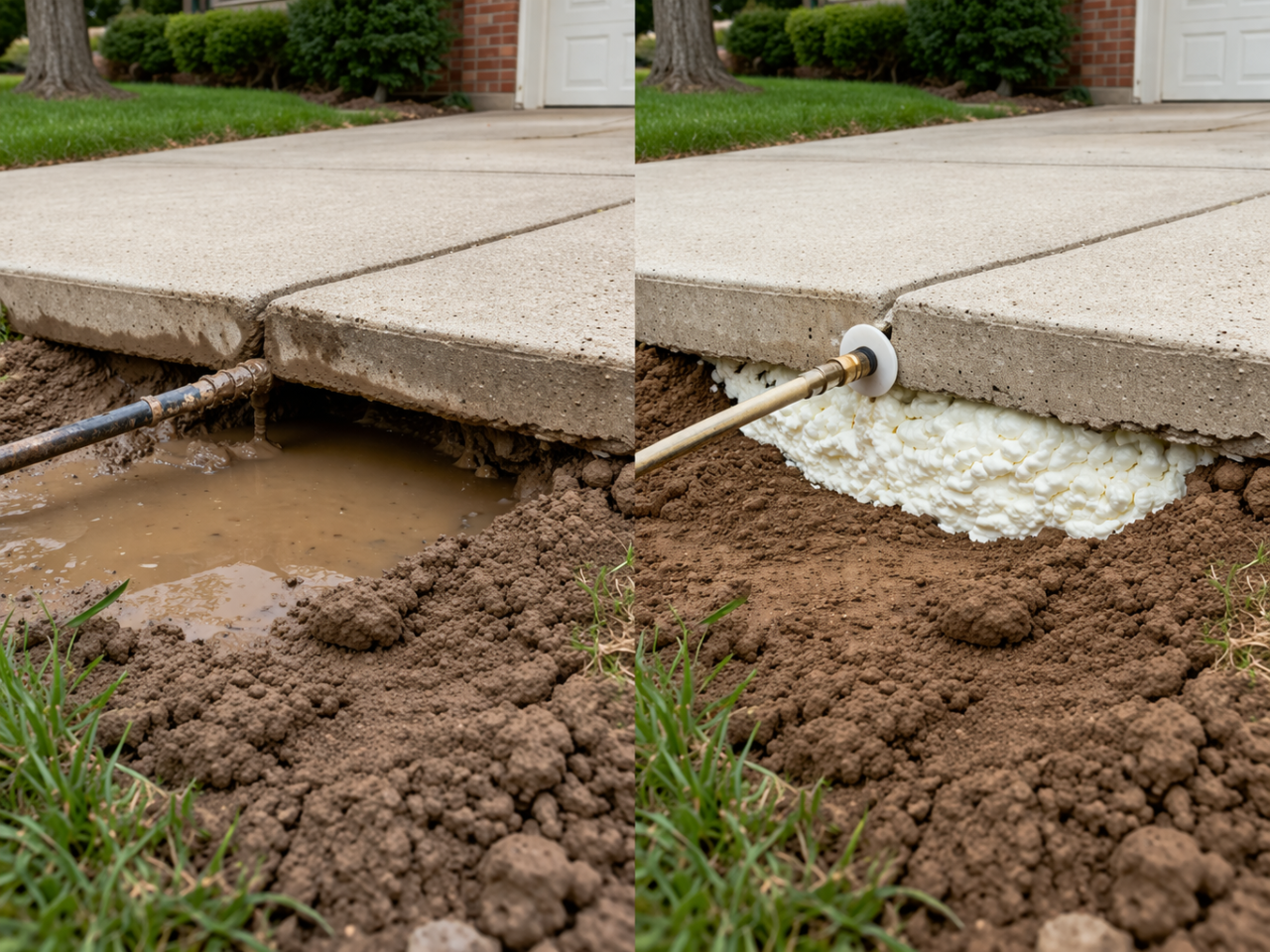
Sinking concrete is more than a cosmetic problem. Uneven sidewalks, driveways, patios, warehouse floors, and approach slabs can create trip hazards, drainage issues, structural stress, and long-term property damage if left untreated. When homeowners, property managers, and commercial property owners start researching concrete lifting solutions, two of the most common solutions that are compared are mudjacking vs polyjacking.
Both methods are designed to raise and stabilize settled concrete, but they work in different ways and offer different long-term results. In this guide, we will break down mudjacking vs polyjacking, explain how each process works, and review the most important mudjacking and polyjacking pros and cons so you can make the best decision for your property.
What Causes Concrete to Sink?
Before comparing polyjacking vs mudjacking, it helps to understand why concrete settles in the first place. Concrete slabs often sink because the soil beneath them is no longer providing consistent support. This can happen for several reasons, including:
- Soil erosion from water intrusion
- Poor soil compaction during original construction
- Expansive or shifting soils
- Repeated freeze-thaw cycles
- Voids forming under the slab
- Heavy traffic loads over time
Even after concrete is lifted, maintaining stable soil conditions is crucial to prevent future settlement. Without stable soil conditions, lifted concrete may settle again over time, regardless of the repair method used.
What Is Mudjacking?
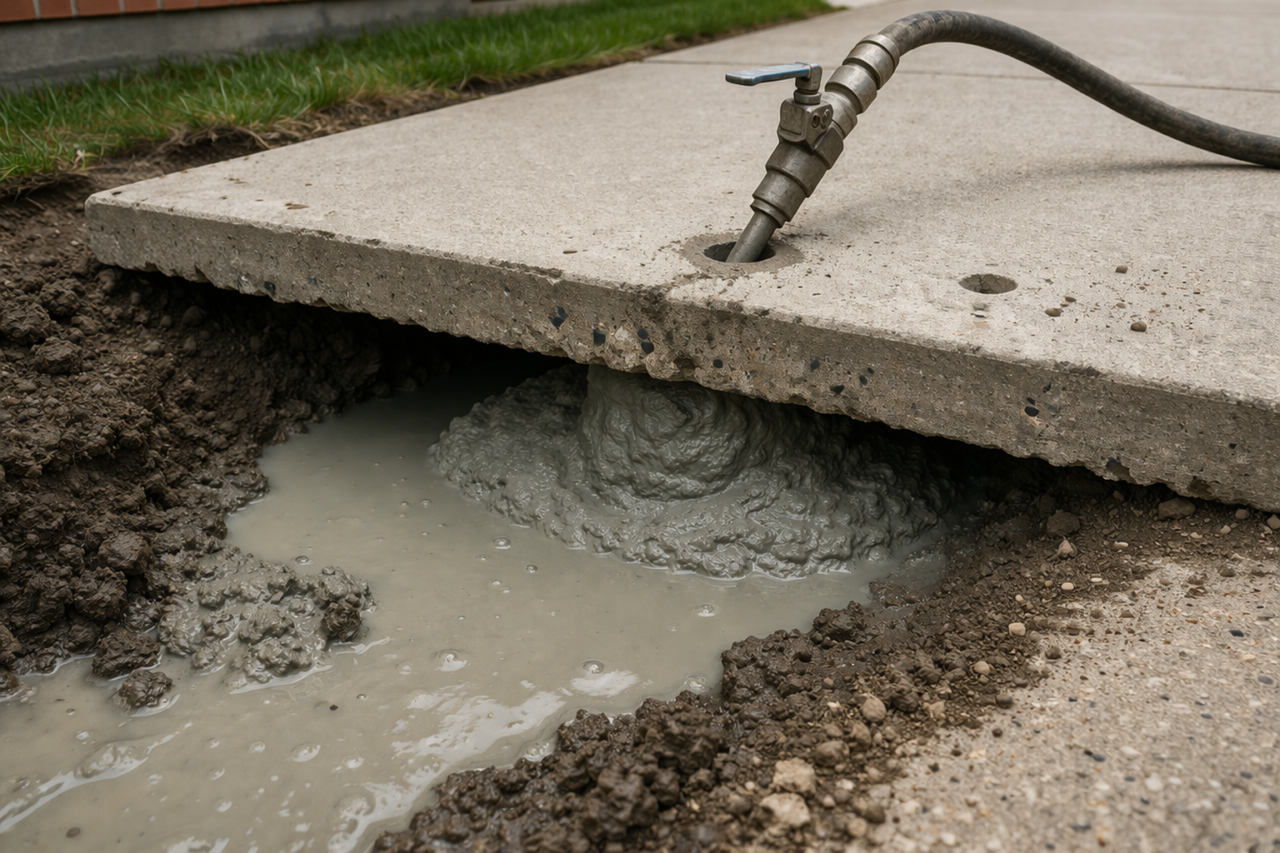
Mudjacking is a traditional concrete lifting method that has been used for decades. In this process, technicians drill holes through the sunken slab and pump in a slurry mixture, usually made from water, soil, sand, and cement. The mudjacking process involves pumping the slurry under high pressure through holes of a specific drill hole size, typically around 2 inches in diameter, to lift and stabilize the slab. The slurry is typically composed of portland cement, water, sand, and native soil. Mudjacking equipment is portable and often housed on a mobile cart, making it suitable for repairs in hard-to-reach areas. As the slurry fills empty spaces beneath the concrete, it creates pressure that gradually lifts the slab. Mudjacking is often considered a cost effective option for larger areas or budget-conscious repairs.
Mudjacking is often chosen because it has been around for a long time and can be effective in certain situations. However, the material used is relatively heavy, and that can be a disadvantage in soils that are already unstable or prone to settlement.
How Mudjacking Works
- Small holes are drilled into the concrete slab.
- A cement-based slurry is pumped underneath the slab.
- The material fills voids and pushes the slab upward, applying enough pressure to lift the slab to the desired level.
- The holes are patched after the lift is complete.
Mudjacking can restore the height of concrete in many residential and light commercial settings, but its long-term performance depends heavily on soil conditions and the weight-bearing capacity of the underlying ground.
What Is Polyjacking?
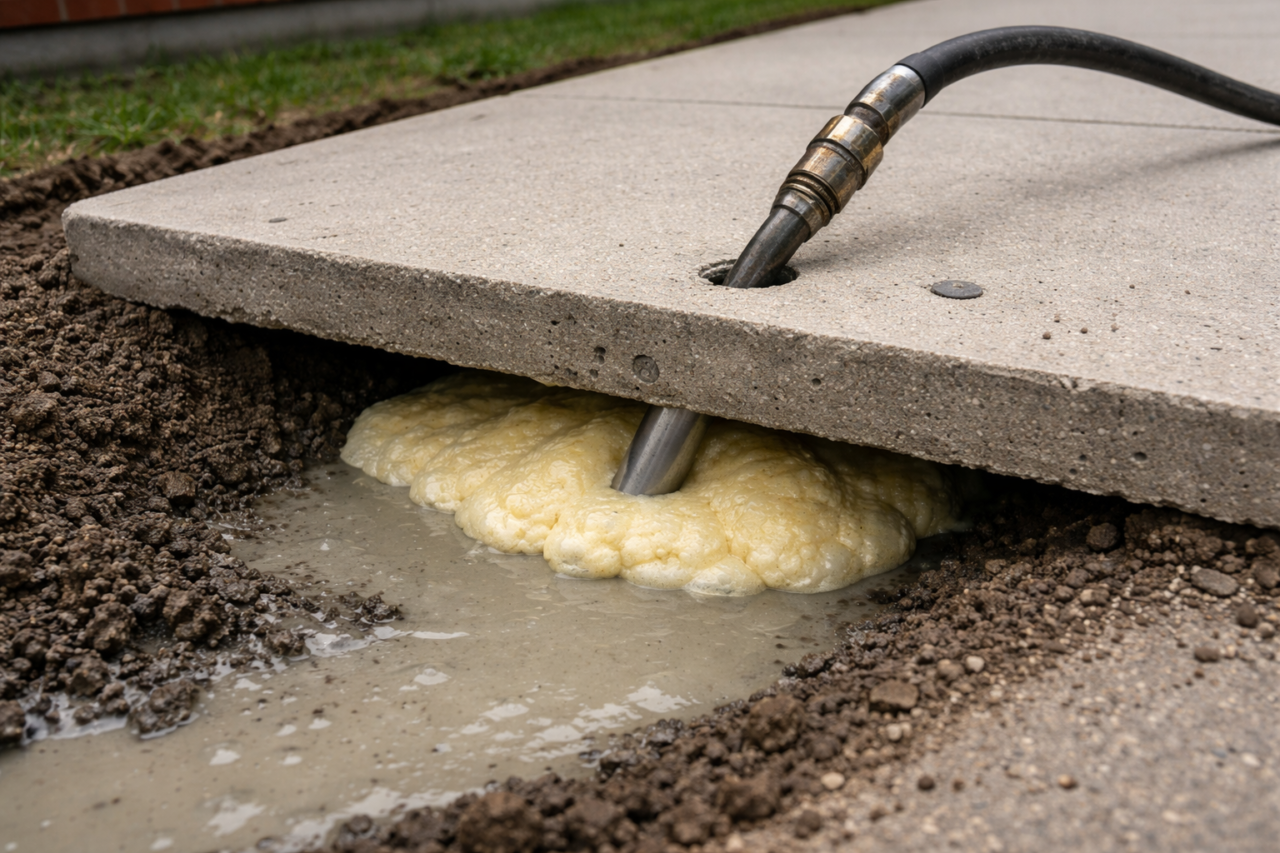
Polyjacking, also called polyurethane foam concrete lifting, is also known as foam leveling or polyurethane concrete leveling. This method involves injecting liquid foam through small holes drilled into the slab. The liquid foam undergoes a chemical reaction, expanding rapidly to fill voids, compact loose soils, and lift the slab with precision. Unlike mudjacking, polyjacking uses a lightweight material and smaller holes, resulting in less disruption and a cleaner finish. Polyurethane concrete raising is considered a modern, efficient alternative to traditional methods.
When comparing mudjacking vs polyjacking, polyjacking is often viewed as the more advanced solution because it is lightweight, fast-curing, and highly controllable. In many cases, it also provides better long-term stabilization.
How Polyjacking Works
- Small injection holes are drilled into the concrete (these are small holes drilled for minimal invasion).
- Expanding polyurethane foam is injected below the slab.
- The foam expands to fill voids and lift the concrete.
- The holes are sealed, and the area is often ready for use quickly.
Because the material is lightweight and highly responsive, polyjacking is especially useful when precision and minimal disruption matter.
Mudjacking vs Polyjacking: Key Differences
The main difference in mudjacking vs polyjacking is the material being injected beneath the slab. Mudjacking uses a heavy cement-based slurry, while polyjacking uses a lightweight expanding polyurethane foam. That one difference affects nearly every other part of the repair process, including cure time, precision, durability, and performance in weak soil conditions.
Here is a side-by-side look at polyjacking vs mudjacking:
| Feature | Mudjacking | Polyjacking |
| Material Used | Cement, soil, sand, and water slurry | Expanding polyurethane foam |
| Weight of Material | Heavy | Lightweight |
| Hole Size | Larger drill holes | Smaller drill holes |
| Cure Time | Longer | Fast curing |
| Precision of Lift | Moderate | High |
| Added Load on Soil | Higher | Minimal |
| Resistance to Water | Lower | Stronger moisture resistance |
| Best for Weak Soils | Less ideal | Often better suited |
| Typical Appearance After Repair | More visible patching | Smaller, less noticeable patching |
| Long-Term Performance | Can vary depending on soil and moisture | Often stronger long-term stability |
Mudjacking is often considered a cost effective solution for larger projects, making it a good choice when budget is a primary concern. In contrast, polyjacking is viewed as a long term solution due to its durability and stability, often lasting for many years when properly installed.
Mudjacking vs Polyjacking Pros and Cons
When evaluating mudjacking vs polyjacking pros and cons, it is important to look beyond upfront cost alone. The best repair is the one that solves the problem effectively and delivers lasting value. However, improper application of either method can result in a weaker repair that may not last as long or fully stabilize the slab.
Mudjacking Pros
Mudjacking still offers several benefits in the right application:
- It is a long-established repair method
- It can be effective for lifting certain slabs
- It may have a lower initial price in some situations
- It can work well in basic settling conditions where long-term soil instability is not severe
Mudjacking Cons
Despite its history, mudjacking also has limitations:
- The slurry is heavy and adds more weight to already weak soils
- Larger holes are typically required
- Cure time is longer
- Precision can be more limited
- The material can be more vulnerable to erosion and moisture over time
- In some cases, settlement can return if underlying soil issues remain
Polyjacking Pros
Polyjacking offers several advantages that make it a preferred option for many concrete repair projects:
- The foam is lightweight and does not overload underlying soils
- Smaller injection holes create a cleaner finished look
- The lifting process is highly precise
- The material cures quickly, reducing downtime
- Foam can fill small voids effectively
- It is well suited for many residential, commercial, and municipal applications
- It often delivers longer-lasting stabilization
Polyjacking Cons
Like any repair method, polyjacking also has considerations:
- The upfront investment may be higher than mudjacking in some cases
- Proper installation requires specialized expertise and equipment
- Quality can vary depending on the contractor and the material being used
Polyjacking vs Mudjacking: Which Lasts Longer?
For many property owners, the real question is not just mudjacking vs polyjacking, but which method offers the best long-term result. When considering life expectancy, mudjacking repairs typically last between 5 to 10 years, depending on factors like soil conditions, structural load, and ongoing maintenance. Polyjacking, on the other hand, often provides a longer lifespan due to the foam’s resistance to moisture and its ability to maintain stability in a wider range of soil conditions.
In general, polyjacking is often considered the more durable solution because the foam is lightweight, resistant to moisture, and less likely to contribute to further soil compression.
Mudjacking can still be effective, but because it uses a heavier material, it may not perform as well where soils are loose, saturated, or already unstable. If the original cause of settlement is weak support below the slab, adding a heavy slurry can sometimes create additional challenges over time.
Which Is Better for Residential and Commercial Concrete Repair?
The answer depends on the site conditions, the concrete structure, and the long-term goals of the repair.
Mudjacking May Be Suitable When:
- The slab is in a relatively stable environment
- Budget is the main deciding factor
- A traditional slurry-based repair is appropriate for the project
Polyjacking May Be Better When:
- Precision lifting is important
- Faster return to service is needed
- Soil conditions are weak or moisture-prone
- Reducing additional load on the subgrade matters
- A cleaner, more advanced repair option is preferred
- Long-term performance is the priority
For many modern repair projects, especially where lasting stabilization is the main objective, polyjacking stands out as the stronger option in the mudjacking vs polyjacking comparison.
Why Geo-Polymer Injection Is Often the Best Fix for Sinking Concrete
When weighing mudjacking vs polyjacking pros and cons, geo-polymer injection often emerges as the superior solution for many sinking concrete issues. This method uses advanced expanding polymer materials to lift slabs, fill voids, and improve support beneath the concrete without adding the excessive weight associated with traditional slurry-based methods.
A high-quality geo-polymer injection process can deliver:
- Accurate slab lifting
- Lightweight structural support
- Fast cure times
- Reduced downtime
- Better performance in difficult soil conditions
- Long-term value for residential, commercial, and infrastructure repairs
For property owners who want an efficient and durable repair, geo-polymer technology is often the best answer in the polyjacking vs mudjacking debate.
Mudjacking vs Polyjacking: Final Verdict
So, when it comes to mudjacking vs polyjacking, which is best to repair sinking concrete?
Mudjacking remains a familiar and sometimes useful method, but it comes with limitations tied to material weight, cure time, and long-term soil performance. Polyjacking, especially with advanced geo-polymer injection, offers a more modern solution that is lightweight, precise, fast, and often better suited for lasting results.
If your goal is not just to lift the slab temporarily, but to achieve a more reliable and durable repair, polyjacking is often the better investment.
About Slabjack Geotechnical
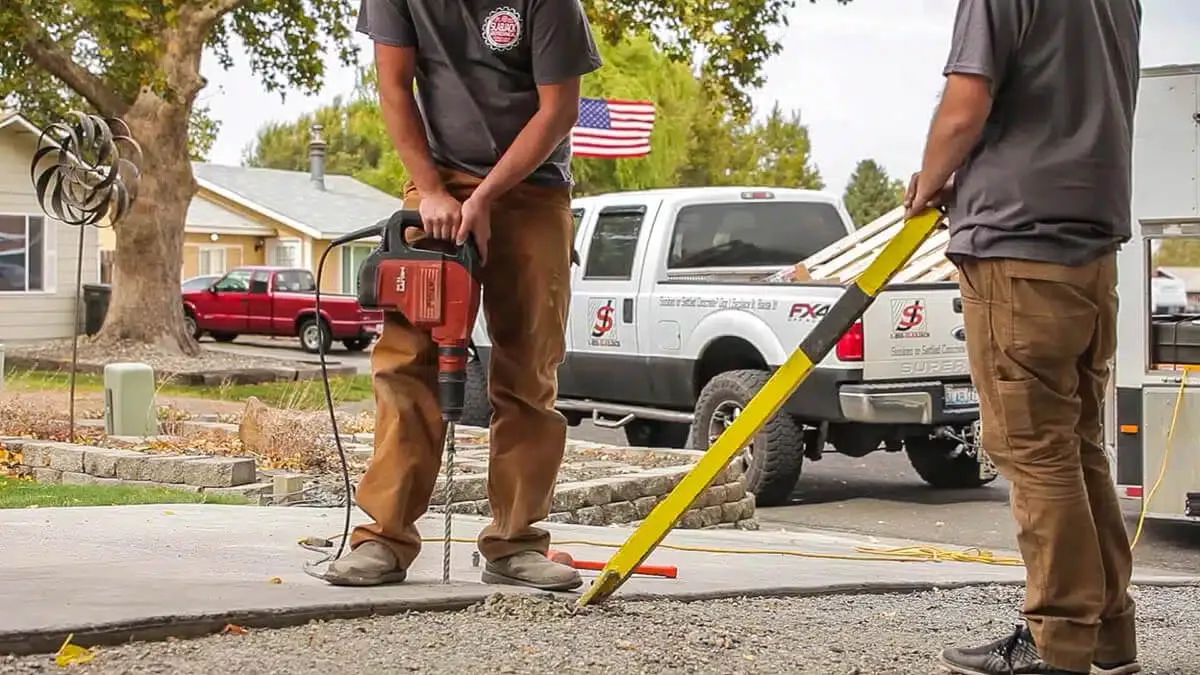
At Slabjack Geotechnical, we are proud to be a family-owned and operated full-service concrete repair company serving customers across Spokane, Tri-Cities, Wenatchee, and Puget Sound. We provide a wide range of specialized concrete services designed to restore, stabilize, and protect concrete surfaces and supporting soils. Our services include slabjacking (concrete raising), pressure grouting, concrete grinding, void filling, concrete crack repair, and joint sealing repair.
We also seal leaking culverts, large-diameter pipes, and concrete ditches. For many sinking concrete problems, we proudly promote our advanced geo-polymer injection method, which offers a lightweight, precise, and long-lasting solution for lifting and stabilizing settled slabs.
Contact Slabjack Geotechnical Today
If you are comparing mudjacking vs polyjacking and want the best solution for sinking concrete, the team at Slabjack Geotechnical is here to help. We can evaluate your concrete issues, explain your repair options, and recommend the right fix for long-term stability and performance.
Contact Slabjack Geotechnical today to learn more about our geo-polymer injection method and how our experienced team can help restore your concrete with lasting results.
FAQs
What is the difference between mudjacking vs polyjacking?
Mudjacking uses a heavy slurry made from cement, soil, sand, and water to lift sunken concrete, while polyjacking uses a lightweight expanding polyurethane foam. When comparing mudjacking vs polyjacking, polyjacking is often favored for its precision, faster cure time, and lighter impact on underlying soils.
Does mudjacking last as long as polyjacking?
Mudjacking can be effective, but it may not last as long in areas with weak, shifting, or moisture-prone soils. Polyjacking often delivers longer-lasting results because the foam is lightweight, durable, and less likely to contribute to additional settlement.
Can polyjacking fix sinking driveways, sidewalks, and patios?
Yes, polyjacking is commonly used to lift and stabilize sinking driveways, sidewalks, patios, garage floors, and other concrete slabs. It is a versatile repair method that works well in both residential and commercial settings.
Who should I call for concrete lifting and repair in Washington?
If you are dealing with sinking concrete in Spokane, Tri-Cities, Wenatchee, or Puget Sound, Slabjack Geotechnical can help. As a family-owned and operated full-service concrete repair company, we offer slabjacking, pressure grouting, concrete grinding, void filling, crack repair, joint sealing, and advanced geo-polymer injection solutions.