
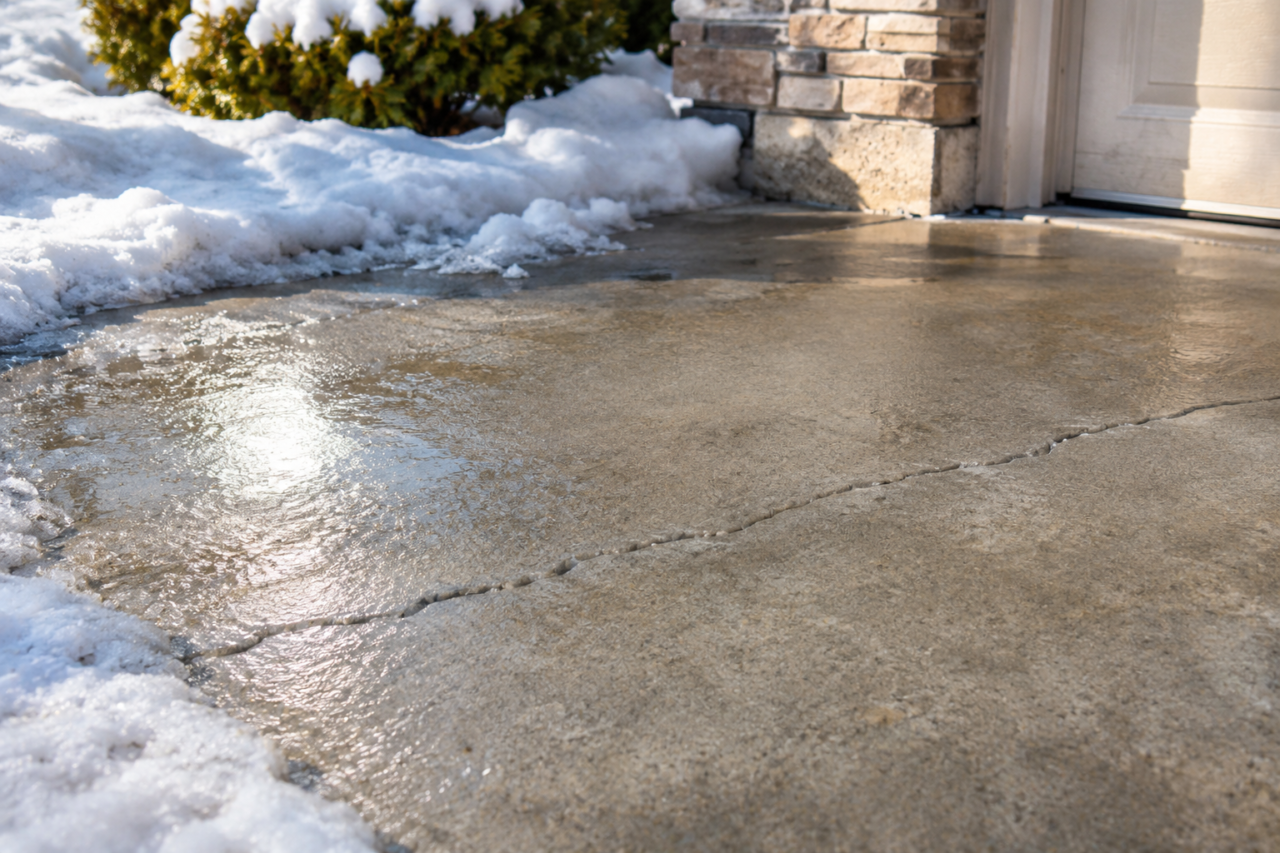
Concrete is known for its strength and durability, but repeated exposure to freezing temperatures and moisture can gradually weaken even well-maintained surfaces. In regions like Washington and Northern Idaho, fluctuating winter temperatures create conditions where freeze thaw cycles can cause cracking, scaling, and other forms of deterioration.
Understanding how to prevent freeze thaw damage of concrete is essential for protecting driveways, sidewalks, patios, and other exposed surfaces. Fortunately, professional concrete sealing provides an effective way to reduce moisture penetration, minimize weather-related damage, and extend the lifespan of concrete installations.
What Are Freeze Thaw Cycles?
A freeze thaw cycle occurs when moisture inside concrete freezes and subsequently thaws as temperatures fluctuate. Although concrete appears solid, it contains tiny pores and capillaries that can absorb water from rain, melting snow, groundwater, and other sources.
When temperatures drop below freezing, water trapped within these pores turns into ice. As ice forms, it can generate internal pressure within the concrete. Once temperatures rise, the ice melts, allowing moisture to redistribute throughout the material.
This process becomes particularly damaging when it happens repeatedly. Over time, the pressure generated during freeze thaw cycles can weaken the concrete’s internal structure, resulting in surface deterioration and cracks that allow even more moisture to enter.
Concrete that remains highly saturated is especially vulnerable. Without proper moisture protection, repeated freezing and thawing can significantly reduce the durability and performance of exposed concrete surfaces.
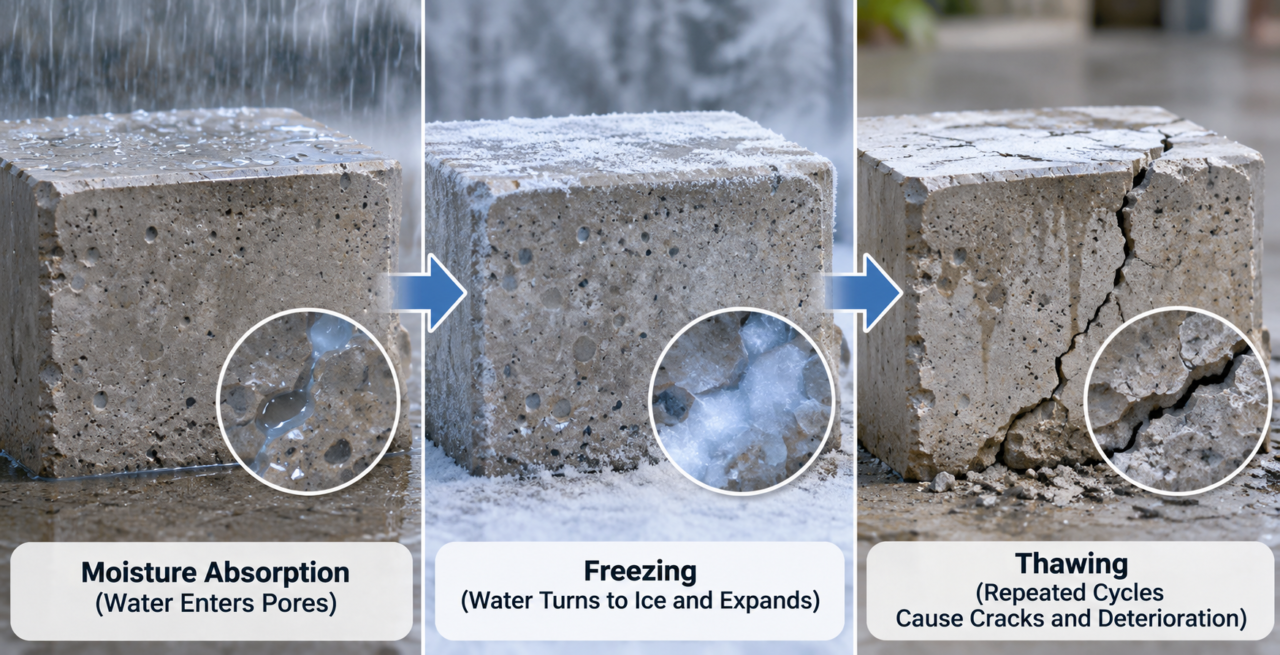
How Freeze Thaw Cycles Cause Concrete Damage
The freeze thaw damage of concrete typically develops gradually as repeated temperature fluctuations place stress on the material. While the extent of deterioration depends on concrete quality, moisture exposure, and environmental conditions, several types of damage are particularly common.
Surface Scaling and Flaking
Surface scaling occurs when the outer layer of concrete begins to peel, flake, or deteriorate. Repeated freezing and thawing can weaken the surface paste, eventually exposing the aggregates underneath.
This damage is particularly common on driveways, sidewalks, and other surfaces exposed to moisture and deicing chemicals. Without intervention, scaling can become progressively more severe.
Cracking and Fracturing
As moisture freezes inside concrete, the resulting internal pressure can contribute to microscopic cracks. Repeated freeze thaw cycles may cause these cracks to expand and connect, eventually creating visible fractures.
Once larger cracks develop, additional water can enter the concrete, increasing the potential for further deterioration during subsequent freezing conditions.
Spalling and Surface Deterioration
Spalling occurs when pieces of concrete break away from the surface or edges of a slab. It can develop when freeze-thaw stresses cause cracking and separation within the material.
Spalling not only affects appearance but can also compromise the functionality of concrete surfaces. Severe deterioration may require professional repairs to restore the affected areas.
Joint and Edge Deterioration
Concrete joints and slab edges are particularly vulnerable because they can provide entry points for water. When moisture accumulates in these areas and freezes, it can contribute to cracking, chipping, and progressive deterioration.
Damaged joints can also allow additional moisture to reach the soil beneath a slab, potentially contributing to erosion, settlement, and uneven concrete.
What Factors Increase the Risk of Freeze Thaw Damage of Concrete?
Although freezing temperatures are necessary for freeze-thaw deterioration, several additional conditions influence how quickly and severely concrete becomes damaged.
Common contributing factors include:
- Excessive moisture exposure: Concrete exposed to standing water, frequent precipitation, or melting snow is more likely to become saturated.
- Poor drainage: Improper grading and inadequate drainage allow water to collect on or around concrete surfaces.
- Existing cracks and damaged joints: Openings in concrete provide pathways for moisture infiltration.
- Deicing chemicals: Certain salts and chemical deicers can contribute to surface scaling and increase deterioration under freeze-thaw conditions.
- Poor concrete quality: Improperly proportioned, finished, or cured concrete may have reduced resistance to environmental damage.
- Inadequate air entrainment: Concrete without an appropriate air-void system may be more susceptible to internal pressure generated during freezing.
These factors are especially important in areas experiencing significant seasonal temperature changes. Addressing moisture exposure and existing deterioration can help reduce the likelihood of extensive concrete damage.
How Concrete Sealer Protects Against Freeze Thaw Cycles
One of the most effective ways to protect existing concrete from winter-related deterioration is to reduce the amount of water it absorbs. Professional concrete sealing accomplishes this by creating a protective barrier or water-repellent treatment that limits moisture penetration.
Depending on the type of sealer used, this protection may work at the surface or within the concrete’s pores.
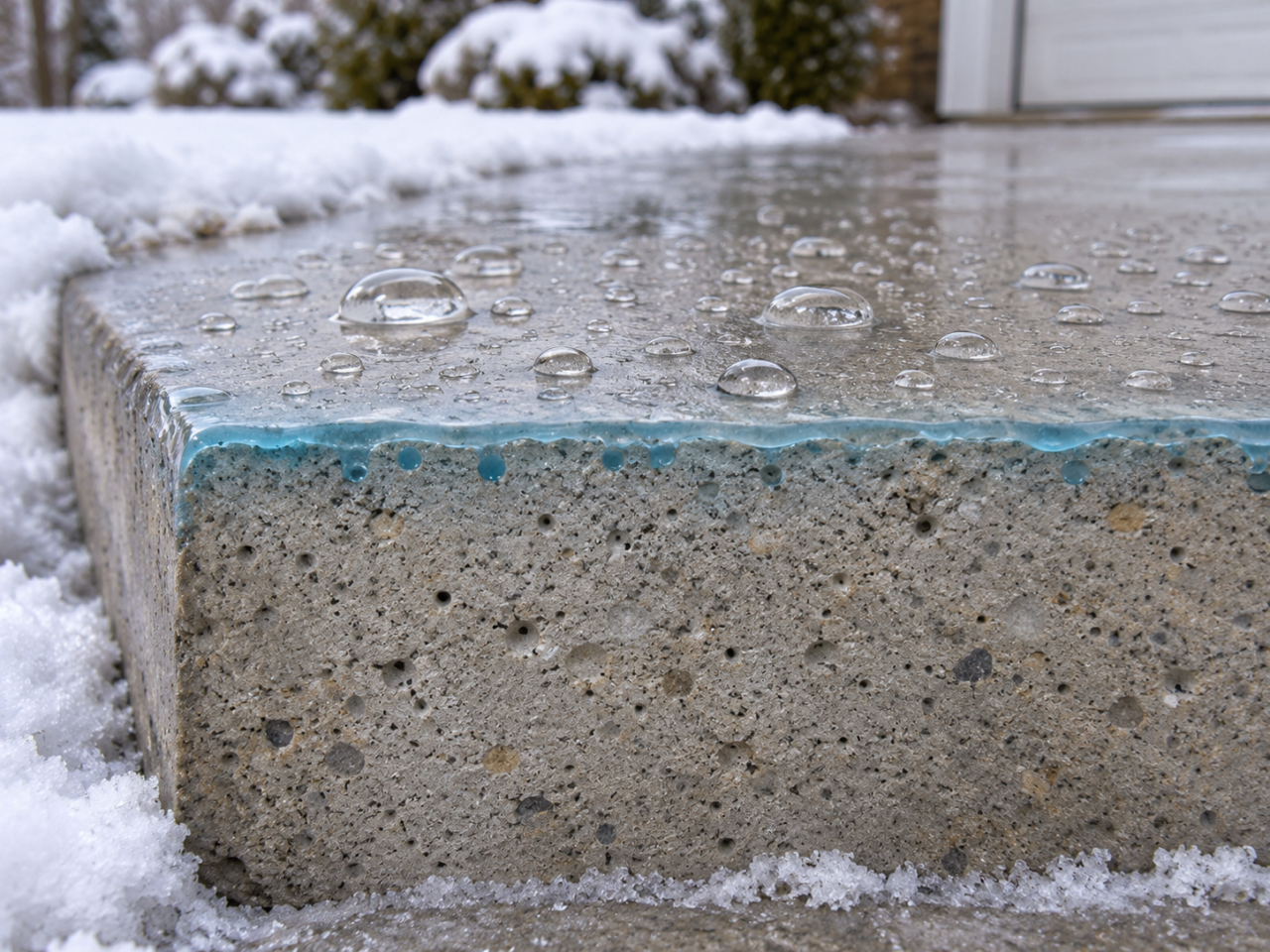
Reduces Water Absorption
Moisture is a primary contributor to freeze thaw damage of concrete. When concrete absorbs excessive water, freezing conditions can generate internal stresses that gradually damage the material.
A properly selected concrete sealer reduces liquid water penetration, helping keep the concrete from reaching the high moisture levels associated with freeze-thaw deterioration.
Minimizes Cracking and Surface Damage
By limiting water absorption, concrete sealing helps reduce the conditions that contribute to cracking, scaling, and spalling.
Although sealers cannot eliminate every source of concrete deterioration, they provide valuable preventive protection against repeated exposure to moisture and freezing temperatures.
Provides Protection Against Deicing Salts
During winter, deicing salts are frequently applied to driveways, walkways, parking lots, and other exterior concrete surfaces. These substances can contribute to surface scaling and introduce chlorides that may affect reinforced concrete.
Certain penetrating concrete sealers help limit the absorption of salt-laden water, reducing exposure to these potentially damaging substances.
Helps Extend the Lifespan of Concrete
Repeated freeze thaw cycles can gradually shorten the service life of unprotected concrete. Professional sealing helps preserve the material by limiting moisture penetration and reducing weather-related deterioration.
When combined with appropriate maintenance and timely repairs, concrete sealing can help property owners avoid unnecessary damage and extend the usable lifespan of existing installations.
What Types of Concrete Sealer Work Best for Freeze-Thaw Protection?
Different concrete sealers provide different levels and types of protection. Selecting the appropriate product is essential for protecting concrete against moisture infiltration and repeated freezing conditions.
Penetrating Concrete Sealers
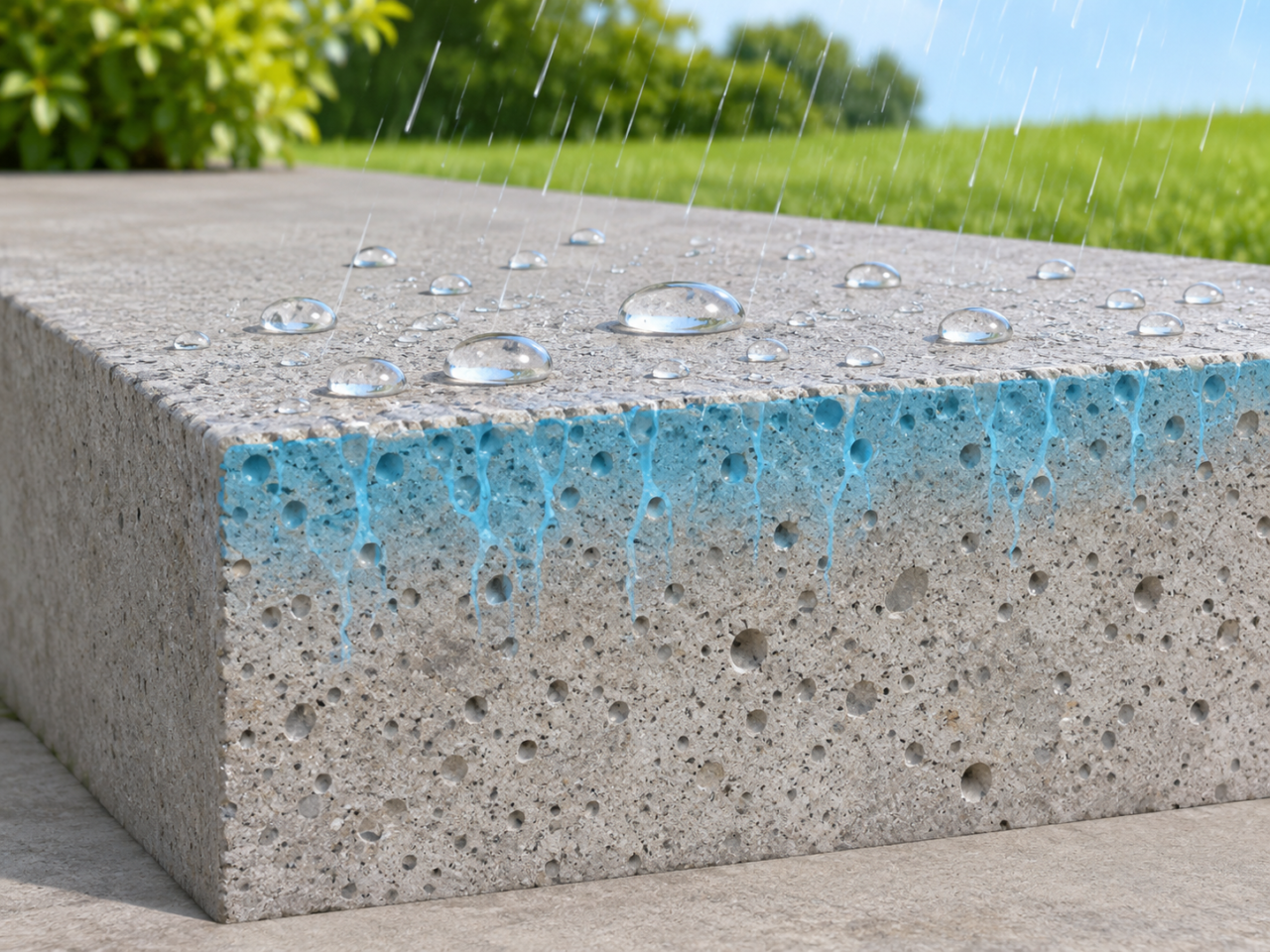
Penetrating sealers absorb into the concrete and form a water-repellent treatment within its pores. Silane- and siloxane-based products are commonly used on exterior concrete because they reduce liquid water absorption while generally allowing water vapor to escape.
These characteristics make suitable penetrating sealers a strong option for driveways, sidewalks, patios, and other surfaces exposed to freeze thaw cycles.
Unlike many film-forming coatings, penetrating sealers typically preserve the concrete’s natural appearance and surface texture.
Acrylic Concrete Sealers
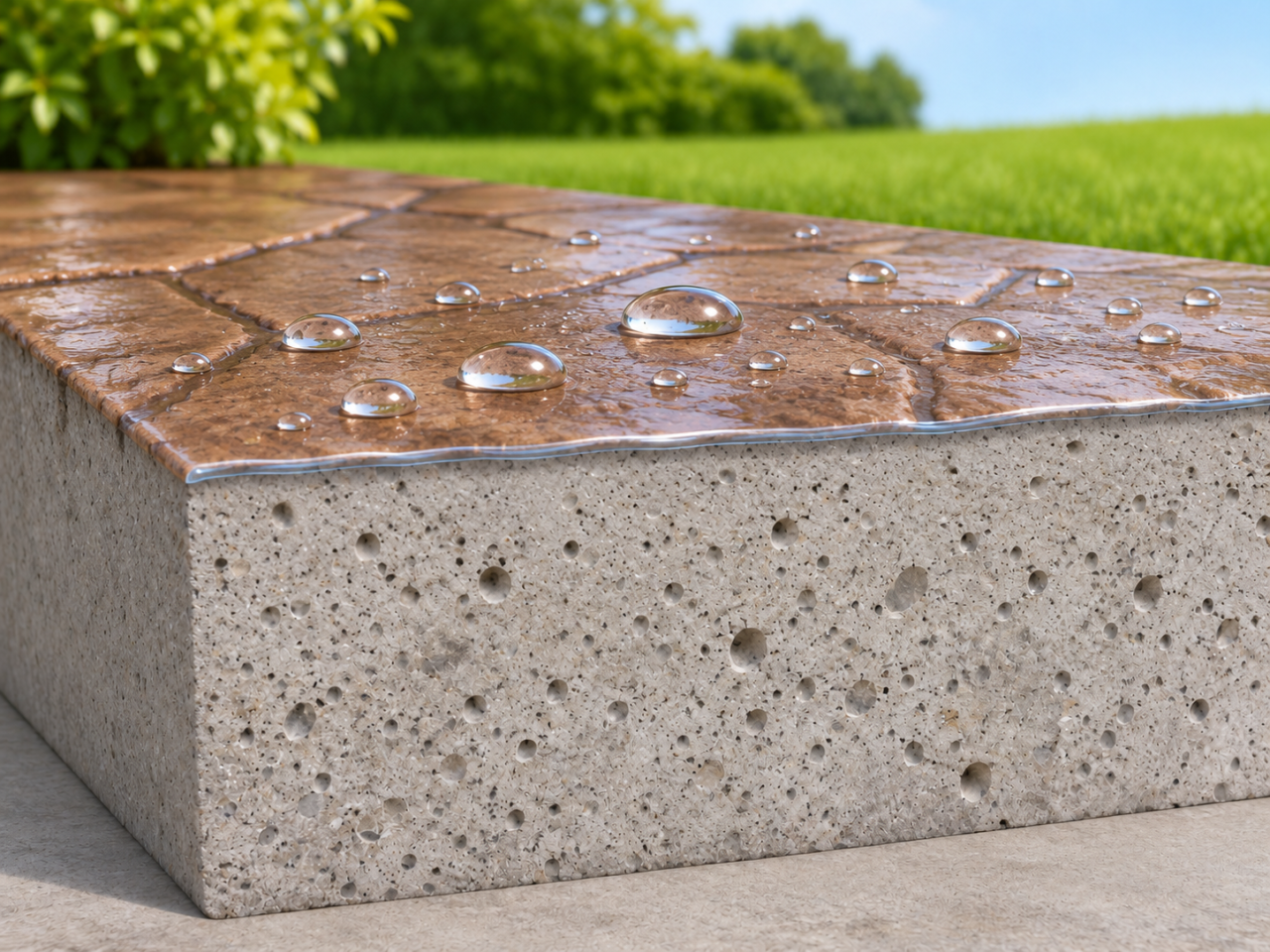
Acrylic sealers form a protective film over the concrete surface, helping reduce moisture penetration while enhancing appearance. They are commonly used on decorative concrete, stamped patios, and other areas where aesthetics are important.
Acrylic products are available in different finishes and can provide useful protection when properly selected and maintained.
However, some acrylic coatings can experience wear, whitening, or adhesion problems under persistent moisture exposure. Product selection and maintenance are especially important in freezing climates.
Epoxy and Polyurethane Sealers
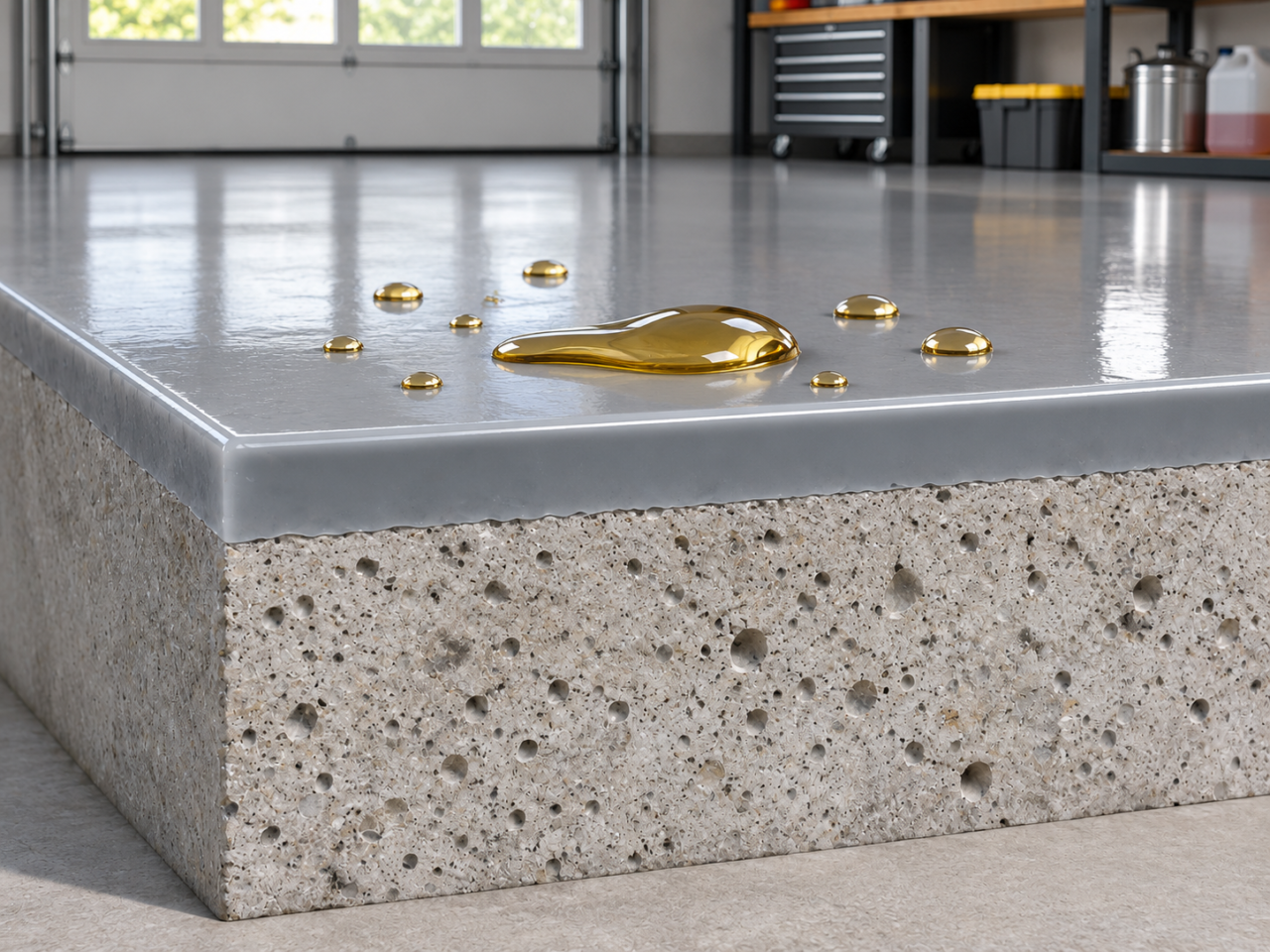
Epoxy and polyurethane coatings create durable protective surfaces that can resist moisture, chemicals, staining, and abrasion. They are frequently used in garages, industrial facilities, and other environments requiring additional surface protection.
However, not every epoxy or polyurethane product is appropriate for exterior concrete exposed to freezing temperatures, sunlight, or moisture vapor.
Professional evaluation helps determine whether a coating is suitable for the intended application or whether a penetrating treatment would provide better long-term performance.
When Is the Best Time to Seal Concrete Before Winter?
The best time to apply concrete sealer is generally during a period of favorable weather before freezing temperatures become frequent.
In Washington and Northern Idaho, late spring, summer, and early fall can provide suitable opportunities, depending on local conditions and the specific product being applied.
When scheduling concrete sealing, consider the following:
- Temperature requirements: Most sealers have specific minimum and maximum application temperatures that must be followed.
- Surface moisture: Concrete generally needs to be sufficiently dry for the selected product to penetrate or bond properly.
- Weather conditions: Avoid applying sealer immediately before rain, snow, or freezing weather unless the product specifically permits those conditions.
- Existing deterioration: Address cracks, scaling, and other damage before applying protective treatments.
- Product curing time: Allow sufficient time for the sealer to develop its intended protective properties before exposing the surface to winter conditions.
Although sealing before winter is ideal, properly maintained concrete can benefit from preventive treatment whenever environmental conditions are suitable.
Additional Ways to Protect Concrete From Freeze Thaw Cycles
While professional sealing is an important preventive measure, comprehensive concrete maintenance offers additional protection against freeze-thaw deterioration.
Property owners can further reduce the risk of damage by implementing several practical strategies.
Maintain Proper Drainage
Ensure that water drains away from concrete surfaces rather than accumulating in low areas. Proper grading, functioning drainage systems, and timely removal of standing water can help reduce prolonged moisture exposure.
Address Cracks and Joints Promptly
Inspect concrete periodically for cracks and deteriorated joint materials. Repairing these openings helps limit moisture infiltration and prevents small problems from contributing to more extensive damage.
Use Deicing Products Carefully
Minimize unnecessary use of chemical deicers, especially on newer or already deteriorating concrete. Sand can provide traction without introducing additional deicing salts, although it does not melt ice.
When deicers are necessary, select products appropriate for the concrete and follow applicable recommendations.
Remove Snow and Ice Regularly
Promptly removing accumulated snow and ice can help limit prolonged moisture exposure. Use equipment and removal methods that minimize scraping, gouging, or otherwise damaging the concrete surface.
Schedule Periodic Resealing
Concrete sealers gradually lose effectiveness due to environmental exposure, traffic, and natural wear.
The appropriate resealing interval depends on the product and conditions. Periodic inspections and professional recommendations can help determine when another application is necessary.
Signs Your Concrete May Need Professional Sealing or Repair
Recognizing early signs of deterioration can help property owners take action before freeze thaw cycles cause more extensive damage.
Some common warning signs include:
- Water quickly soaking into the concrete rather than beading on the surface.
- Fine cracks beginning to develop or existing cracks becoming wider.
- Flaking, peeling, or rough patches appearing on exposed surfaces.
- Small pieces of concrete breaking away near edges or joints.
- Persistent moisture accumulation in specific areas.
- Visible surface deterioration after repeated winter weather.
- Uneven or sunken concrete that allows water to collect.
If these conditions are present, professional evaluation can help determine whether sealing alone is appropriate or if repairs are necessary first.
It is also important to understand that concrete sealer is a preventive treatment rather than a structural repair solution. Severely deteriorated, unstable, or extensively cracked concrete may require additional restoration before protective sealing can be effective.
Professional Concrete Sealing and Repair Services From Slabjack Geotechnical
At Slabjack Geotechnical, we are a family-owned and operated full-service concrete repair company proudly serving residential, commercial, municipal, and industrial customers throughout Washington and Northern Idaho. Our team provides a wide range of professional concrete services, including concrete lifting and leveling (slabjacking), pressure grouting, crack repair, joint sealing, concrete grinding, and void filling. We focus on helping property owners address existing concrete problems while identifying practical ways to improve the durability, stability, and longevity of their surfaces.
Our professional concrete sealer services help protect concrete surfaces against moisture penetration, weather-related wear, and the damaging effects of repeated freeze thaw cycles. Whether you’re looking to protect a residential driveway, maintain commercial walkways, or extend the lifespan of other exterior concrete installations, we can evaluate your surfaces and recommend appropriate sealing solutions. We understand the challenges created by the Pacific Northwest’s changing weather conditions and work to provide solutions suited to each property’s needs.
In addition to preventive concrete sealing, we offer comprehensive repair solutions for surfaces already affected by cracking, settlement, or deterioration. By combining professional concrete repair with appropriate protective treatments, we help customers address existing problems and reduce the risk of further damage. Our goal is to provide dependable, cost-effective solutions that help preserve concrete investments and improve long-term performance.

Protect Your Concrete From Freeze-Thaw Damage With Slabjack Geotechnical
Repeated freeze thaw cycles can gradually compromise the strength, appearance, and durability of concrete surfaces. Moisture infiltration, fluctuating temperatures, and winter deicing chemicals can contribute to cracking, scaling, spalling, and other forms of deterioration. Fortunately, professional concrete sealing helps reduce water absorption, improve resistance to weather-related damage, and extend the lifespan of properly maintained concrete.
At Slabjack Geotechnical, we provide professional concrete sealing and repair solutions designed to help property owners throughout Washington and Northern Idaho protect their concrete investments. Whether you want to prevent freeze thaw damage of concrete before winter or address deterioration that has already developed, our experienced team can help determine the right approach.
Contact Slabjack Geotechnical today to learn more about our concrete sealing services or request a free repair estimate. Let us help you protect your concrete surfaces from moisture, freezing temperatures, and long-term deterioration.
FAQs
How do freeze thaw cycles damage concrete?
Freeze thaw cycles damage concrete when absorbed moisture freezes, creating internal pressure that can weaken the material. Repeated freezing and thawing can eventually cause cracking, scaling, spalling, and other forms of surface deterioration.
Can concrete sealer prevent freeze thaw damage?
Yes, concrete sealer can significantly reduce the risk of freeze thaw damage by limiting the amount of moisture that penetrates the surface. While sealing cannot completely eliminate all forms of deterioration, it provides valuable protection against water-related damage during freezing temperatures.
What is the best concrete sealer for freeze thaw cycles?
Penetrating concrete sealers, particularly those containing silane or siloxane, are often recommended for protecting exterior concrete against freeze thaw cycles. These products repel liquid water while allowing water vapor to escape, helping reduce moisture-related deterioration.
How often should concrete be sealed to prevent freeze thaw damage?
The appropriate resealing frequency depends on the type of sealer, surface conditions, traffic exposure, and local climate. Many concrete surfaces benefit from periodic resealing every few years, although some penetrating sealers can provide longer-lasting protection.