
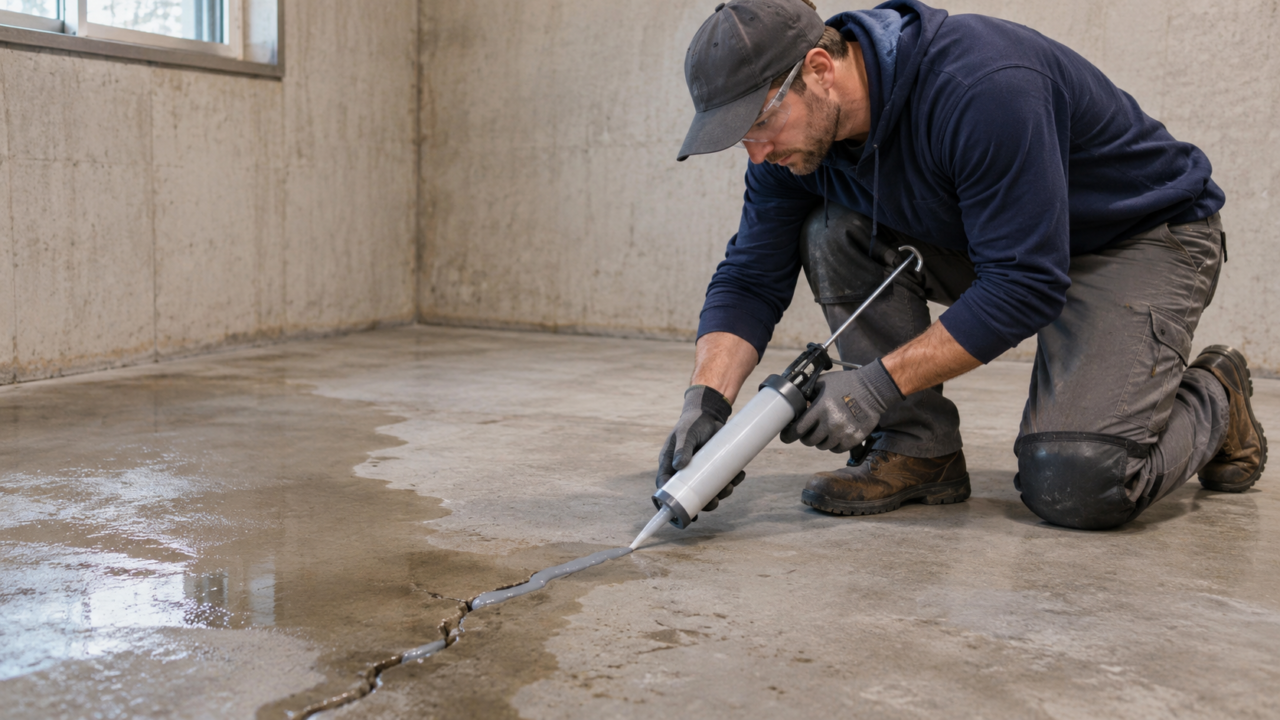
Water leaking through concrete floor cracks can cause significant problems for residential and commercial properties, including moisture damage, mold growth, and deterioration of the concrete itself. Although concrete is a durable building material, cracks and gaps can develop over time, creating pathways for water to enter. Without proper repairs, even small cracks can become larger structural concerns. Fortunately, professional concrete crack sealing offers an effective way to address water intrusion, protect concrete slabs, and help prevent costly damage.
Understanding why water is entering your concrete floor and how to address the underlying issue is essential for achieving lasting results. This guide explains the common causes of water seeping through concrete floors, the warning signs to watch for, and how professional crack sealing can help restore and protect your concrete surfaces.
Why Is Water Leaking Through My Concrete Floor?
Concrete is naturally porous, meaning moisture can move through the material under certain conditions. However, visible cracks, deteriorating joints, and structural gaps create more direct pathways for water intrusion. Understanding what causes these openings is the first step toward determining the appropriate repair method.
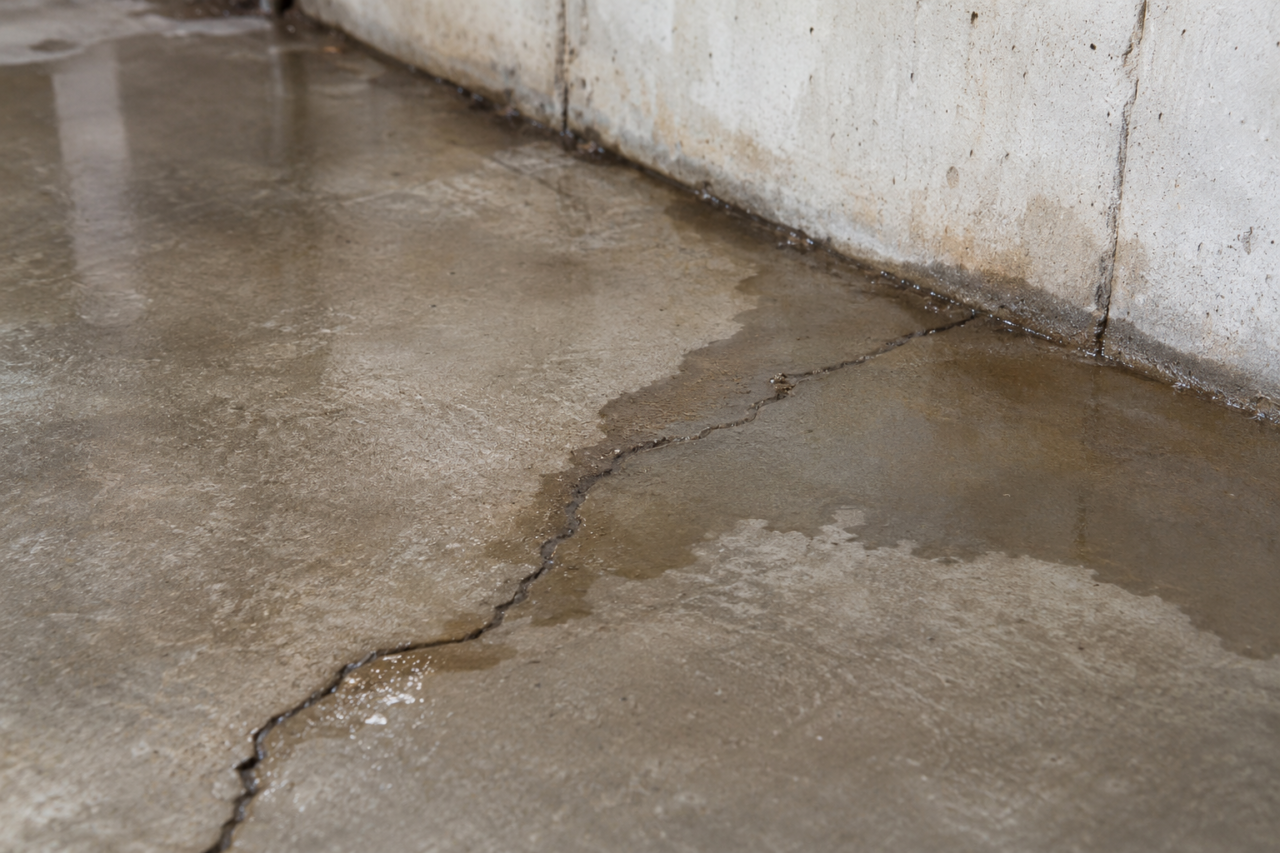
Hydrostatic Pressure Beneath the Concrete
Hydrostatic pressure occurs when groundwater accumulates beneath or around a concrete slab and exerts pressure against it. During periods of heavy rainfall, snowmelt, or poor drainage, this pressure can force water upward through existing cracks and joints.
Basements and below-grade concrete floors are particularly vulnerable because they are surrounded by soil that can become saturated. If the pressure becomes excessive, simply applying a surface sealant may not provide a permanent solution without addressing the underlying drainage problem.
Soil Settlement and Ground Movement
Concrete slabs depend on stable soil for support. When the soil underneath begins to settle, erode, or shift, the concrete may develop cracks or separate at existing joints.
Water infiltration can make this situation worse by washing away supporting soil and creating additional voids beneath the slab. Over time, this cycle of settlement and water intrusion can compromise the concrete’s stability and lead to increasingly extensive damage.
Freeze-Thaw Cycles and Temperature Changes
Properties throughout Washington and Northern Idaho experience seasonal temperature fluctuations that can contribute to concrete deterioration. When water enters small cracks and freezes, it expands, placing additional stress on the surrounding concrete.
Repeated freezing and thawing can gradually widen existing cracks and create new openings. Temperature-related expansion and contraction can also cause joints to separate, making it easier for moisture to penetrate the slab.
Poor Drainage Around the Property
Improper drainage is another common reason for water seeping through concrete floor cracks. When rainwater and runoff accumulate around a building’s foundation, moisture can saturate the surrounding soil and increase pressure against below-grade concrete.
Common contributing factors include:
- Clogged or improperly positioned gutters and downspouts
- Ground surfaces that slope toward the foundation
- Inadequate exterior drainage systems
- Standing water near concrete slabs
- Leaking underground plumbing or irrigation lines
Correcting these conditions is often necessary to prevent water intrusion from returning after repairs.
Concrete Shrinkage and Aging
As concrete cures, it naturally shrinks, potentially creating small cracks. Additional cracking can develop as the concrete ages and experiences changes in moisture, temperature, and loading conditions.
Although some shrinkage cracks are primarily cosmetic, others can allow water to enter the slab. If they remain untreated, prolonged moisture exposure may accelerate deterioration or contribute to damage beneath the concrete.
Signs of Water Seeping Through Concrete Floor Cracks
Water intrusion is not always immediately obvious. Some concrete floors develop visible puddles, while others experience subtle moisture problems that gradually worsen.
Recognizing the early warning signs can help property owners arrange repairs before extensive damage occurs.
Common signs include:
- Damp or wet cracks: Moisture consistently appears along cracks or joints, particularly after rainfall.
- Standing water: Small puddles accumulate on the concrete floor without an obvious surface source.
- White mineral deposits: Efflorescence develops as moisture carries dissolved salts to the concrete surface.
- Discoloration: Dark patches or persistent damp spots appear around cracks.
- Musty odors: Excessive moisture creates conditions that encourage mold and mildew growth.
- Damaged flooring: Adhesives, coatings, or flooring materials begin peeling, bubbling, or separating.
- Widening cracks: Existing cracks gradually become larger as moisture intrusion and slab movement continue.
If you notice several of these symptoms, professional inspection can help identify whether the problem involves surface moisture, groundwater infiltration, drainage deficiencies, or underlying structural movement.
How to Stop Water Leaking Through Concrete Floor Cracks
Stopping water intrusion requires more than simply covering visible cracks. The most effective approach involves identifying the source of moisture, evaluating the concrete’s condition, and selecting a repair method suited to the severity and location of the damage.
Step 1: Identify the Source of Water Intrusion
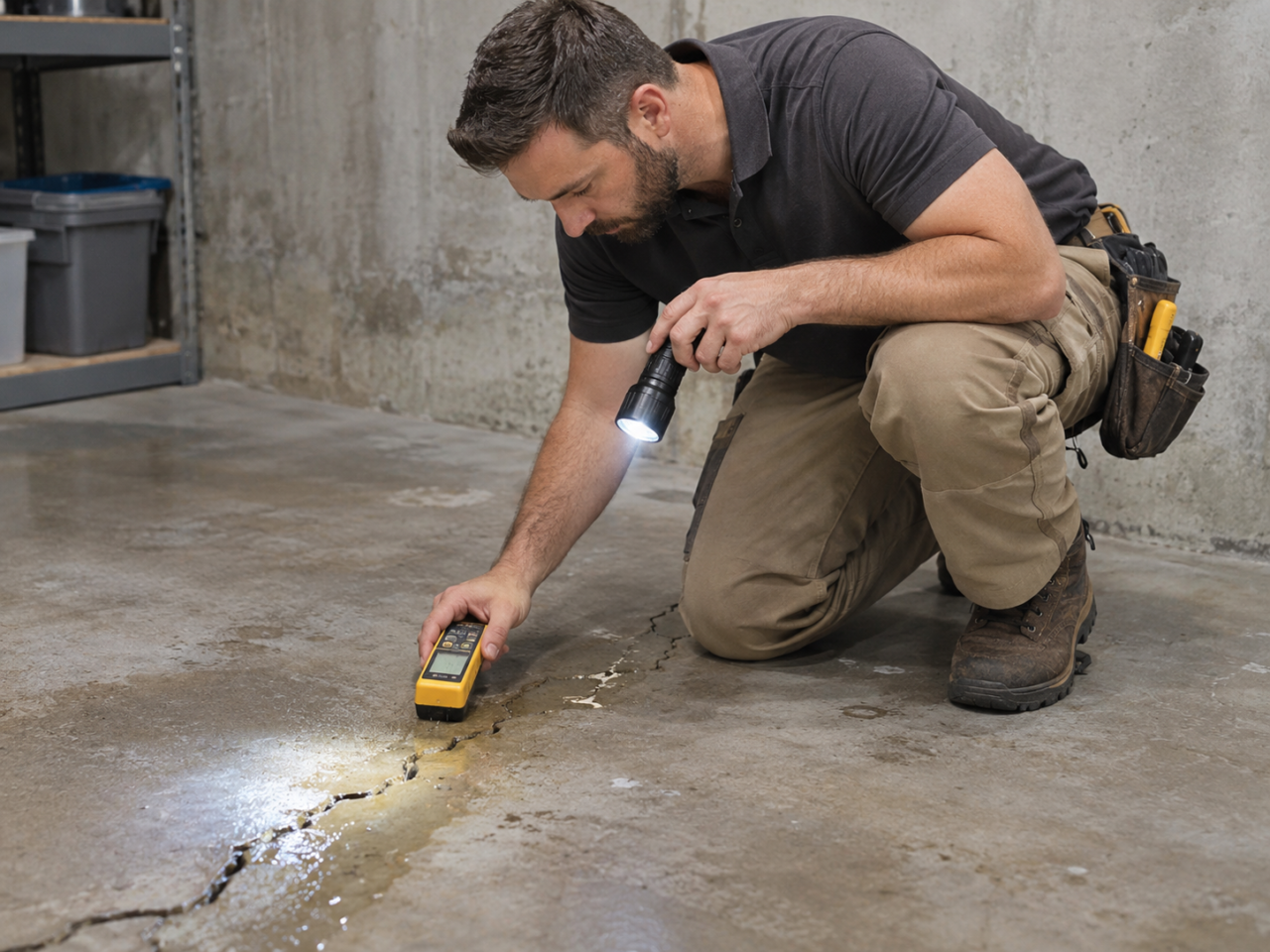
Before repairs begin, it is important to determine where the water is coming from and how it is entering the concrete.
A professional assessment may involve inspecting the location and pattern of cracks, evaluating nearby drainage conditions, checking for evidence of settlement, and determining whether groundwater pressure contributes to the problem.
This evaluation helps distinguish between isolated cracks that can be sealed and more extensive problems that require additional corrective measures.
Step 2: Clean and Prepare the Concrete Cracks
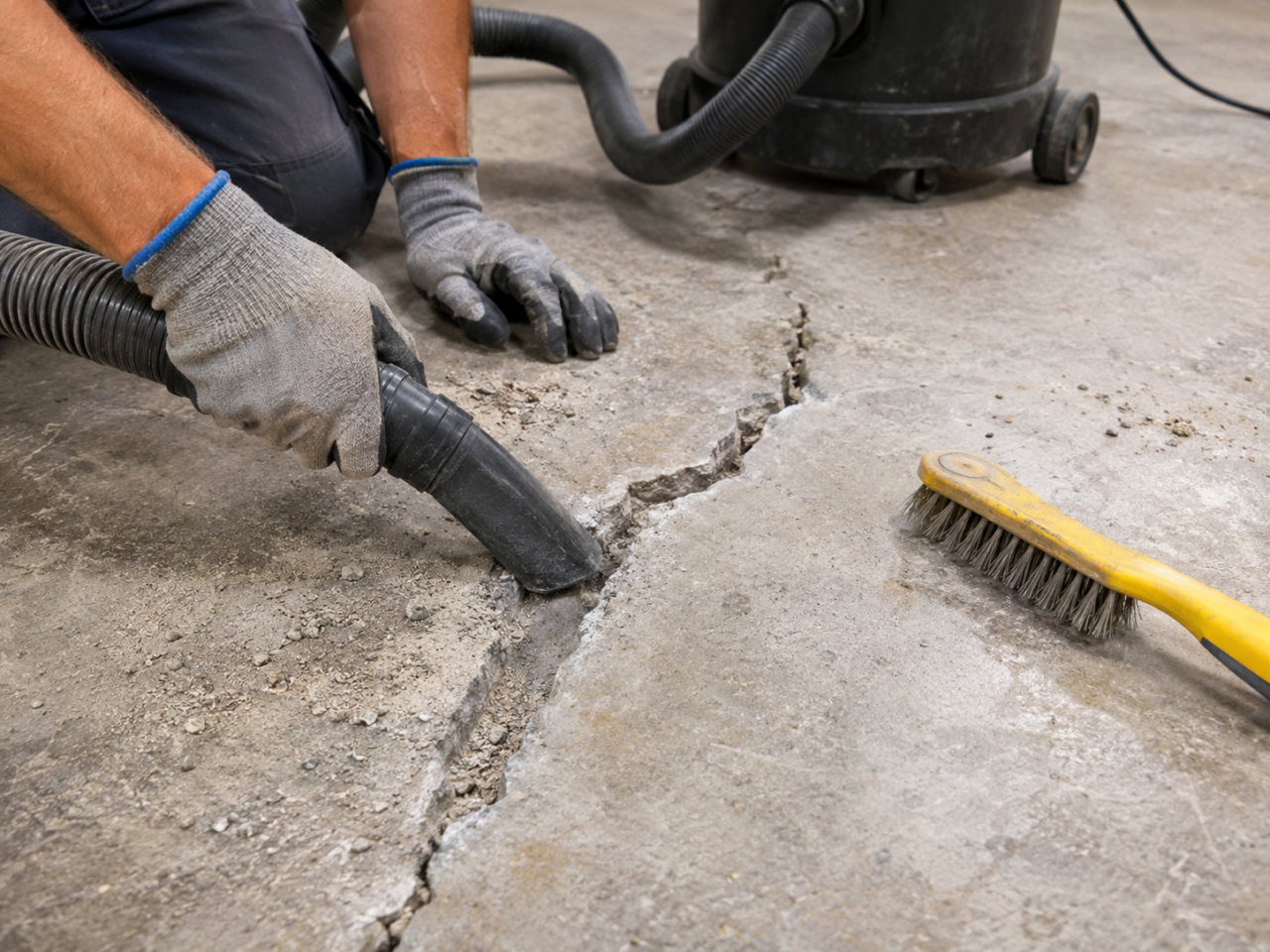
Proper preparation is essential for ensuring that repair materials bond effectively to the concrete.
Depending on the repair method, professionals may remove dirt, loose concrete, previous sealants, and other contaminants from the affected areas. Cracks may also be routed or widened in a controlled manner to create an appropriate profile for the repair material.
Preparing the concrete correctly allows the sealant to achieve better adhesion and helps minimize premature repair failure.
Step 3: Select the Appropriate Concrete Crack Sealing Material
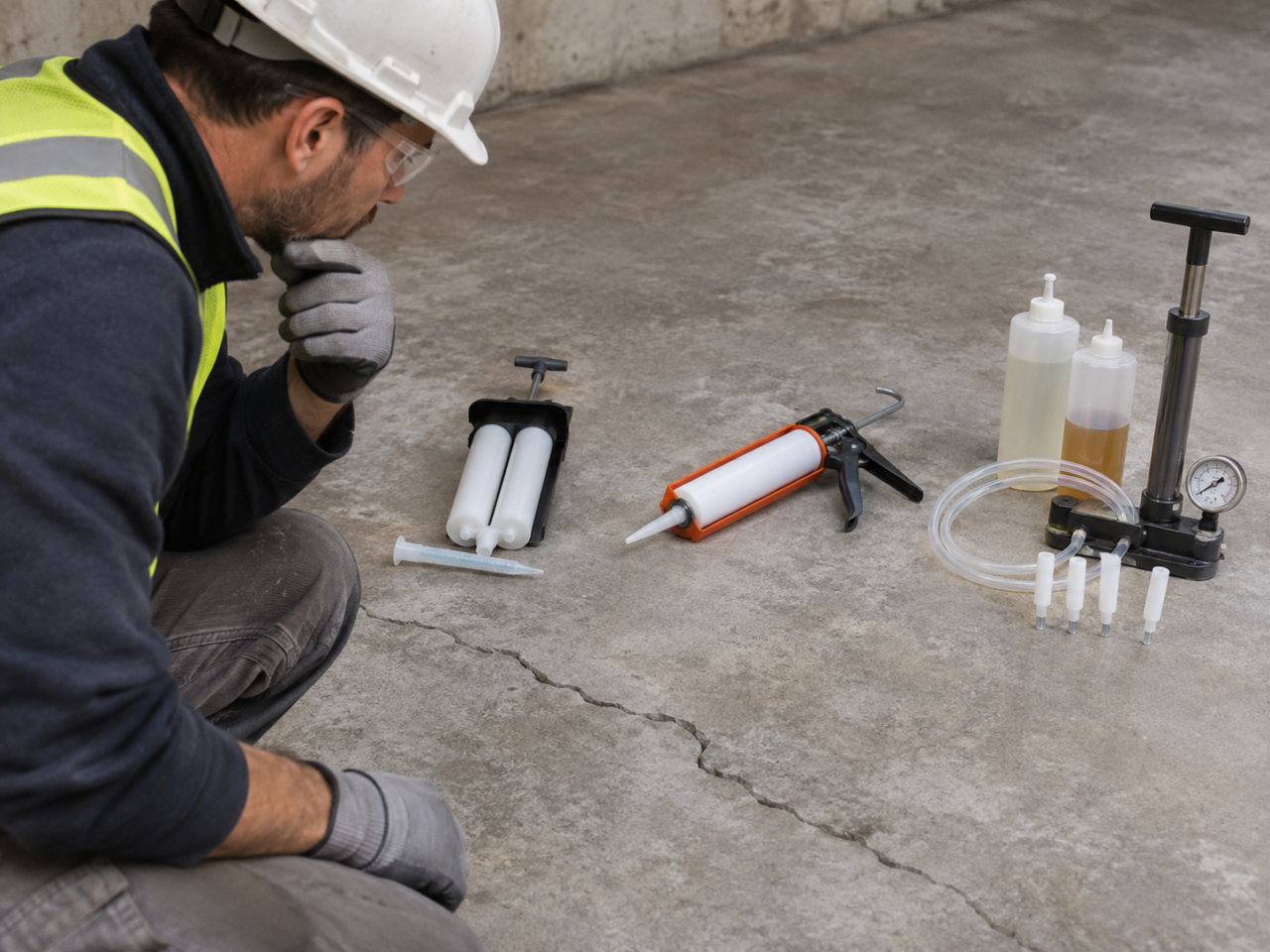
Different cracks require different repair materials based on their width, location, movement, and exposure to moisture.
Common professional materials include:
- Polyurea: A flexible, fast-curing material suitable for many interior floor cracks and joints that experience movement or vibration.
- Epoxy: A rigid bonding material commonly used for certain structural crack repairs where restoring concrete continuity is necessary.
- Silicone sealants: Flexible products that accommodate movement in suitable concrete joints and help limit moisture penetration.
- Polyurethane injection resins: Specialized water-reactive or water-resistant materials used in appropriate applications to seal active water pathways within concrete.
A qualified contractor will determine which system is suitable for the specific conditions. Active groundwater leaks may require specialized injection techniques rather than conventional surface caulking.
Step 4: Apply Professional Crack Sealing or Injection
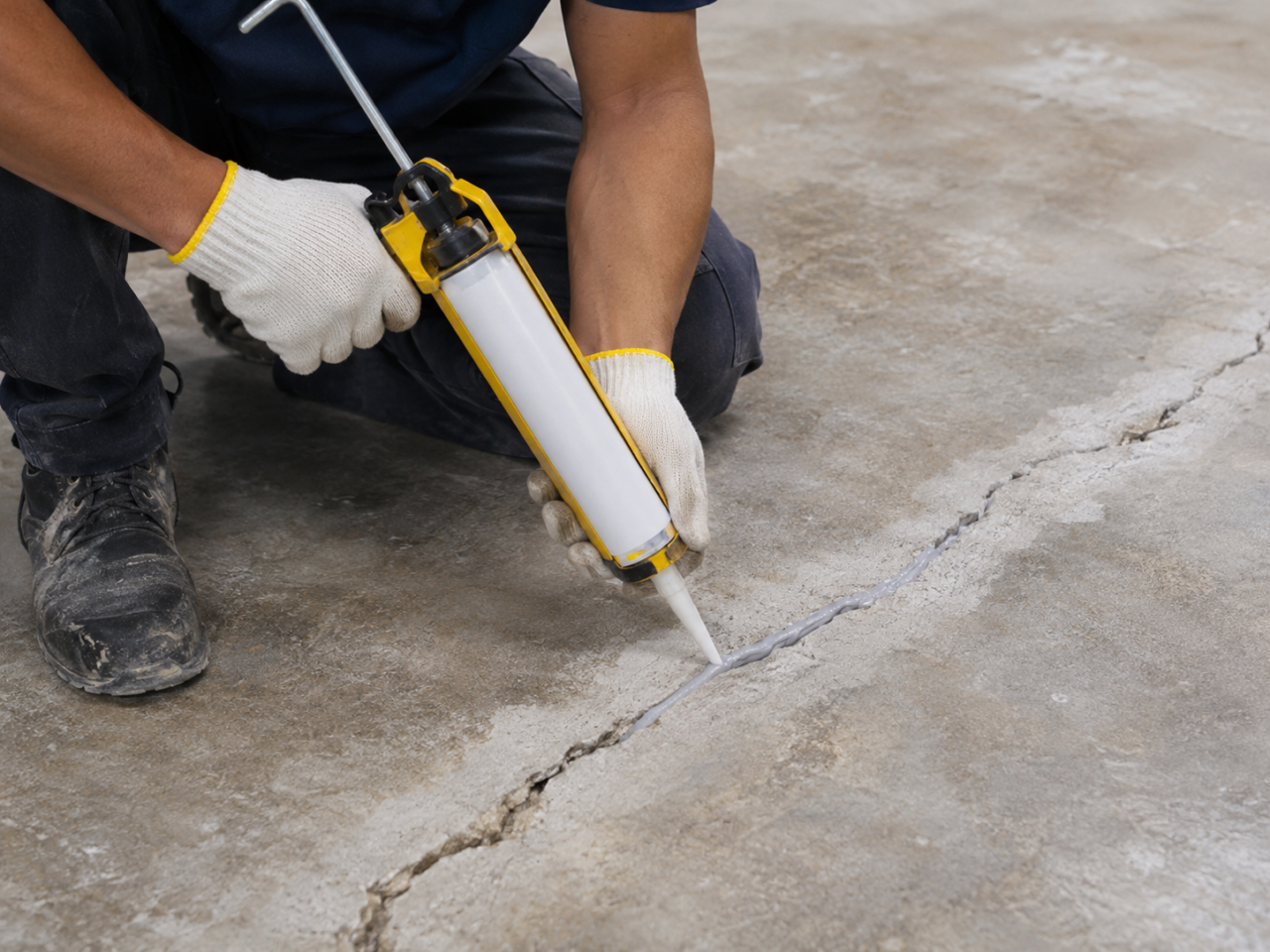
Once the concrete has been prepared, the selected repair material is installed using methods appropriate for the crack.
Surface crack sealing typically involves placing the material into a prepared opening and tooling it to create a consistent seal. Injection repairs use specialized equipment to deliver resin deeper into the crack, helping block water pathways that surface treatments may not reach.
Proper material placement, application depth, and curing are important for creating a reliable repair.
Step 5: Address Underlying Slab Instability
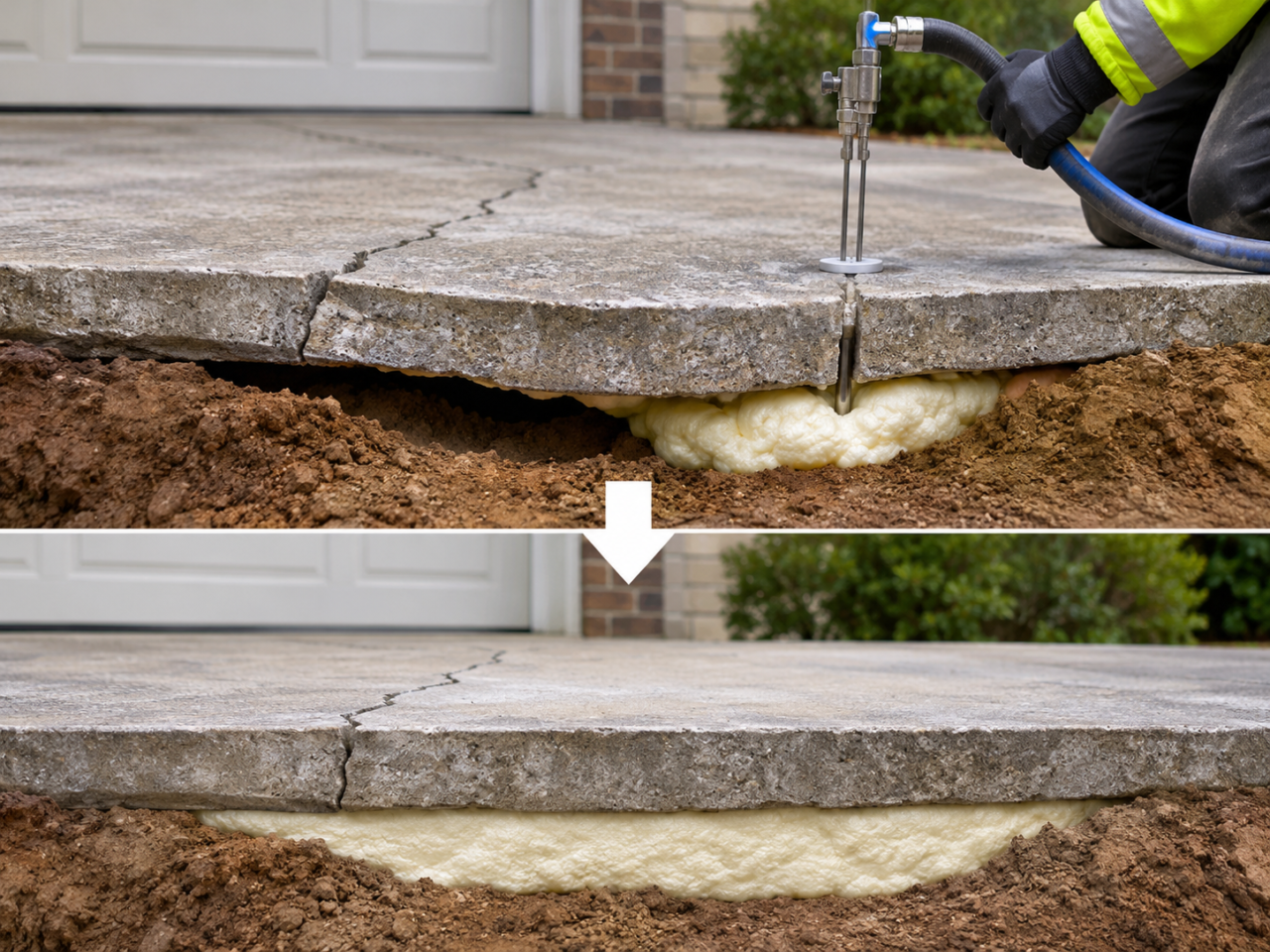
In some cases, water leaking through concrete floor cracks is associated with soil settlement or voids beneath the slab.
If the concrete has shifted or lost support, sealing the crack alone may not prevent it from reopening. Professional slab stabilization may be necessary to restore support before the cracks are repaired.
Methods such as geopolymer injection can fill voids and stabilize affected concrete slabs, helping reduce the risk of continued movement.
Step 6: Inspect the Repairs and Address Remaining Moisture Problems
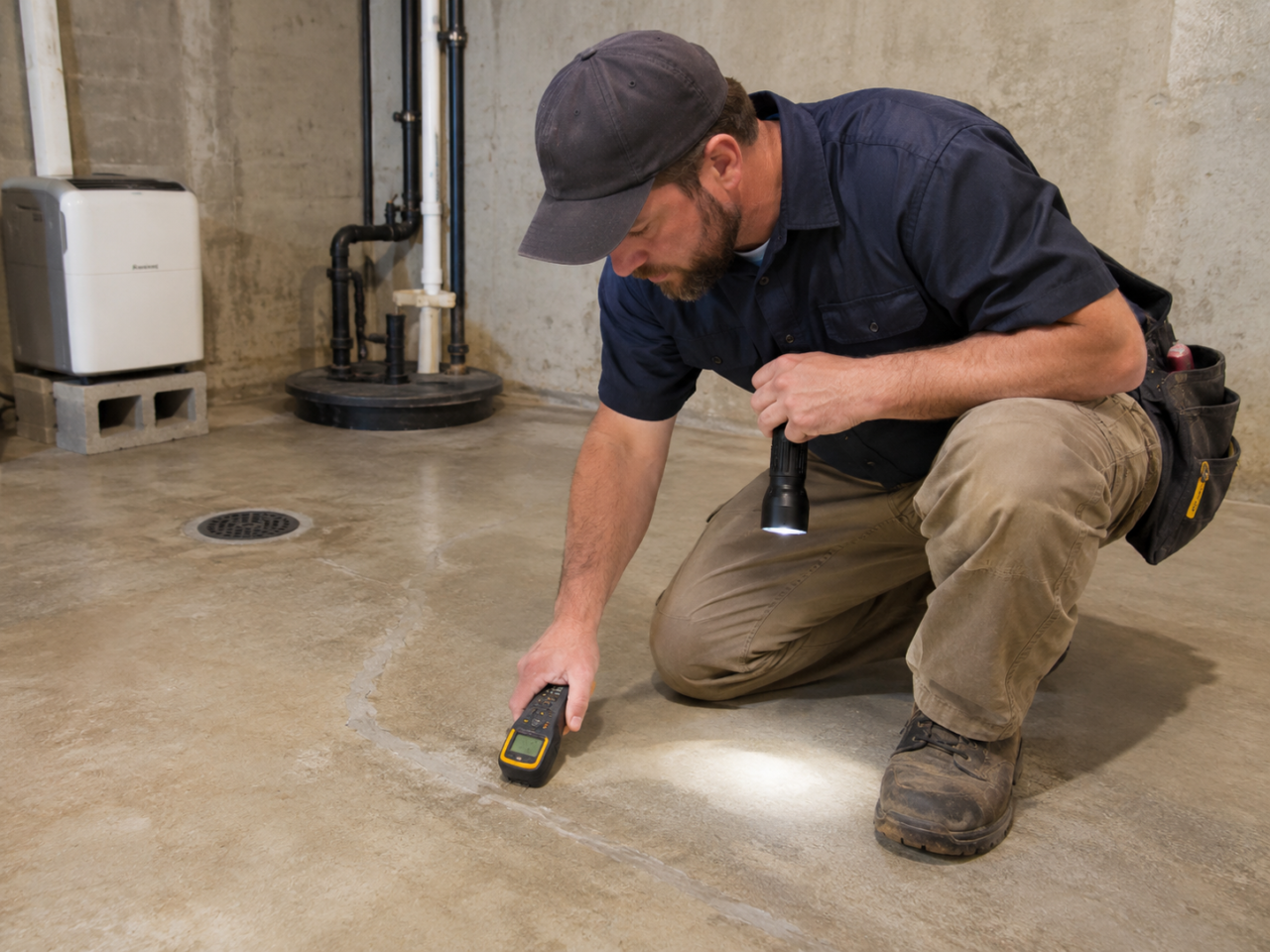
After the repair material has cured, the affected areas should be inspected to confirm that the application is complete and the seal is functioning as intended.
Additional measures may be recommended if moisture continues to enter through other pathways. For instance, properties with significant groundwater pressure may require drainage improvements, waterproofing systems, or sump pump installation.
Combining crack repair with appropriate moisture management offers better long-term protection than relying on surface sealing alone.
How to Prevent Future Water Leaks Through Concrete Floor Cracks
Even after successful crack repairs, ongoing maintenance is important for protecting concrete against future moisture intrusion.
Several preventive measures can help reduce the likelihood of recurring problems.
Maintain Proper Drainage
Ensure gutters, downspouts, and drainage systems direct water away from the building. Correct grading problems that allow rainwater to accumulate around foundations and concrete slabs.
Repair Cracks and Joints Promptly
Small openings can become larger as water enters and temperature changes place stress on the concrete. Inspect floors periodically and arrange repairs before minor cracks develop into more serious problems.
Protect Concrete With Appropriate Sealers
Applying a suitable concrete sealer can reduce surface water absorption and provide additional protection against environmental exposure. Reapplication should follow the product manufacturer’s recommendations and account for surface use and wear.
Address Soil Settlement and Concrete Movement
If concrete slabs begin sinking, shifting, or separating, have the underlying support evaluated. Stabilizing the slab may help prevent repaired cracks from reopening.
Monitor Indoor Moisture Conditions
For basements and other enclosed spaces, maintain proper ventilation and humidity control. Dehumidifiers can help manage indoor humidity, although they do not eliminate groundwater leaks or other sources of active water intrusion.
Professional Concrete Crack Repair and Sealing With Slabjack Geotechnical
At Slabjack Geotechnical, we are a family-owned and operated, full-service concrete repair company proudly serving residential, commercial, municipal, and industrial customers throughout Washington and Northern Idaho. We provide a comprehensive range of concrete repair services designed to restore stability, improve safety, and extend the lifespan of existing concrete surfaces. From repairing damaged slabs to addressing settlement-related problems, our experienced team uses proven repair methods and specialized materials to help property owners protect their concrete investments.
Our professional concrete crack repair and joint sealing services are designed to address cracks, deteriorating joints, and other openings that can allow moisture to penetrate concrete surfaces. We use commercial-grade materials, including epoxy, silicone, and polyurea, selected according to the concrete’s condition and repair requirements. When underlying soil instability contributes to the damage, we can also evaluate whether geopolymer injection and slab stabilization are appropriate before completing the crack repairs.
In addition to crack repair, we offer professional concrete sealer services to help protect concrete from moisture absorption, weather exposure, staining, and surface deterioration. Our sealing solutions are suitable for a variety of surfaces, including driveways, garage floors, patios, walkways, and commercial concrete areas. By combining targeted repairs with preventive concrete protection, we help our customers maintain safer, more durable, and longer-lasting concrete surfaces.

Stop Water Leaking Through Your Concrete Floor With Slabjack Geotechnical
Water leaking through concrete floor cracks should never be ignored. Even minor moisture intrusion can contribute to concrete deterioration, soil erosion, and costly property damage when left untreated. Professional crack sealing can help protect vulnerable areas, limit further water penetration, and preserve the integrity of concrete slabs when the underlying moisture source is properly addressed.
If you are dealing with water seeping through concrete floor cracks, deteriorating joints, or other concrete damage, our team at Slabjack Geotechnical is here to help. We provide professional concrete crack repair, joint sealing, slab stabilization, and protective concrete sealing services throughout Washington and Northern Idaho.
Contact Slabjack Geotechnical today to learn more about our concrete repair solutions or request a free repair estimate. Our experienced team can help assess your concrete’s condition and recommend an appropriate approach to protecting your property from further damage.
FAQs
How do I stop water from seeping through my concrete floor?
Professional concrete crack sealing can help stop water from entering through cracks and joints by closing the openings with specialized repair materials. However, recurring leaks may also require drainage improvements, waterproofing, or slab stabilization to address the underlying cause.
What happens if water seeping through concrete floor cracks is left untreated?
Persistent water intrusion can contribute to concrete deterioration, mold growth, damaged flooring, and erosion of supporting soil beneath the slab. Over time, these problems may lead to more extensive repairs and increased property maintenance costs.
How often should concrete floors be inspected for cracks and water damage?
Concrete floors should generally be inspected at least once a year and after significant flooding, ground movement, or other events that could cause damage. Regular inspections can help identify developing cracks, moisture problems, and signs of settlement before extensive repairs become necessary.
What is the best sealant for leaking concrete floor cracks?
The best sealant depends on the crack’s size, movement, location, and exposure to water. Professional contractors may use polyurea, polyurethane injection resins, epoxy, or silicone-based materials depending on the repair requirements.