
Airport Runway Concrete Repair Services in Washington & Northern Idaho
Airports demand a higher standard of performance than any other concrete environment. Slabjack Geotechnical provides professional airport runway concrete repair services designed to meet the extreme structural, safety, and operational requirements of aviation facilities. From runways and taxiways to aprons and terminal-adjacent concrete, our team delivers precision lifting, stabilization, and structural support that protects aircraft, passengers, and airport operations.
High-performance airport concrete must withstand enormous aircraft loads, constant traffic cycles, and harsh environmental exposure without failure. Slabjack Geotechnical specializes in restoring and reinforcing airport runway concrete so facilities can remain safe, compliant, and operational with minimal disruption.
Why Airport Runway Concrete Requires Specialized Repair
Concrete for airports is subjected to conditions that far exceed those found in commercial or industrial environments. Runways and taxiways support the weight of commercial jets, cargo aircraft, and military vehicles that apply concentrated loads far greater than typical roadways or parking areas.
These surfaces are also exposed to continuous vibration, braking forces, and turning movements that place stress on joints and slab edges. In addition, airport concrete must endure moisture intrusion, freeze-thaw cycles, fuel exposure, and temperature swings that accelerate deterioration beneath the slab.
Because of these factors, standard concrete repair methods are not suitable for aviation environments. Airport runway slabs require precise stabilization, controlled lifting, and engineered structural performance to prevent differential settlement, joint failure, and foreign object debris (FOD) risks that can compromise safety.
Load Capacity and Structural Performance of Concrete for Airports
The structural performance of concrete for airports is critical to maintaining safe operations. Even small variations in slab elevation can create drainage problems, uneven braking surfaces, or joint separation that leads to long-term failure.
Slabjack Geotechnical uses engineered polymer injection systems designed to restore and enhance the load-bearing capacity of airport concrete. Our guaranteed on-ratio polymer produces extremely hard, durable grout that fills voids, stabilizes the subgrade, and supports slabs with consistent structural strength.
By correcting differential settlement and reinforcing weak soils, we restore the runway’s ability to safely handle repeated aircraft loading while maintaining FAA- and DOT-compliant surface performance.
Durability Under Constant Aircraft and Ground Traffic
Airfield surfaces must withstand continuous use without degrading. Taxiing aircraft, ground support vehicles, refueling trucks, and baggage equipment apply vibration and repetitive loading that can cause unreinforced slabs to rock, crack, or separate.
Our stabilization and lifting systems create a uniform support layer beneath airport concrete, eliminating voids and preventing slab movement. This dramatically reduces fatigue damage, joint breakdown, and surface deterioration.
Compared to full slab replacement, our method extends the life of airport concrete while minimizing downtime and preserving structural continuity across large paved areas.
Minimizing Shutdown Time for Runway and Airfield Repairs
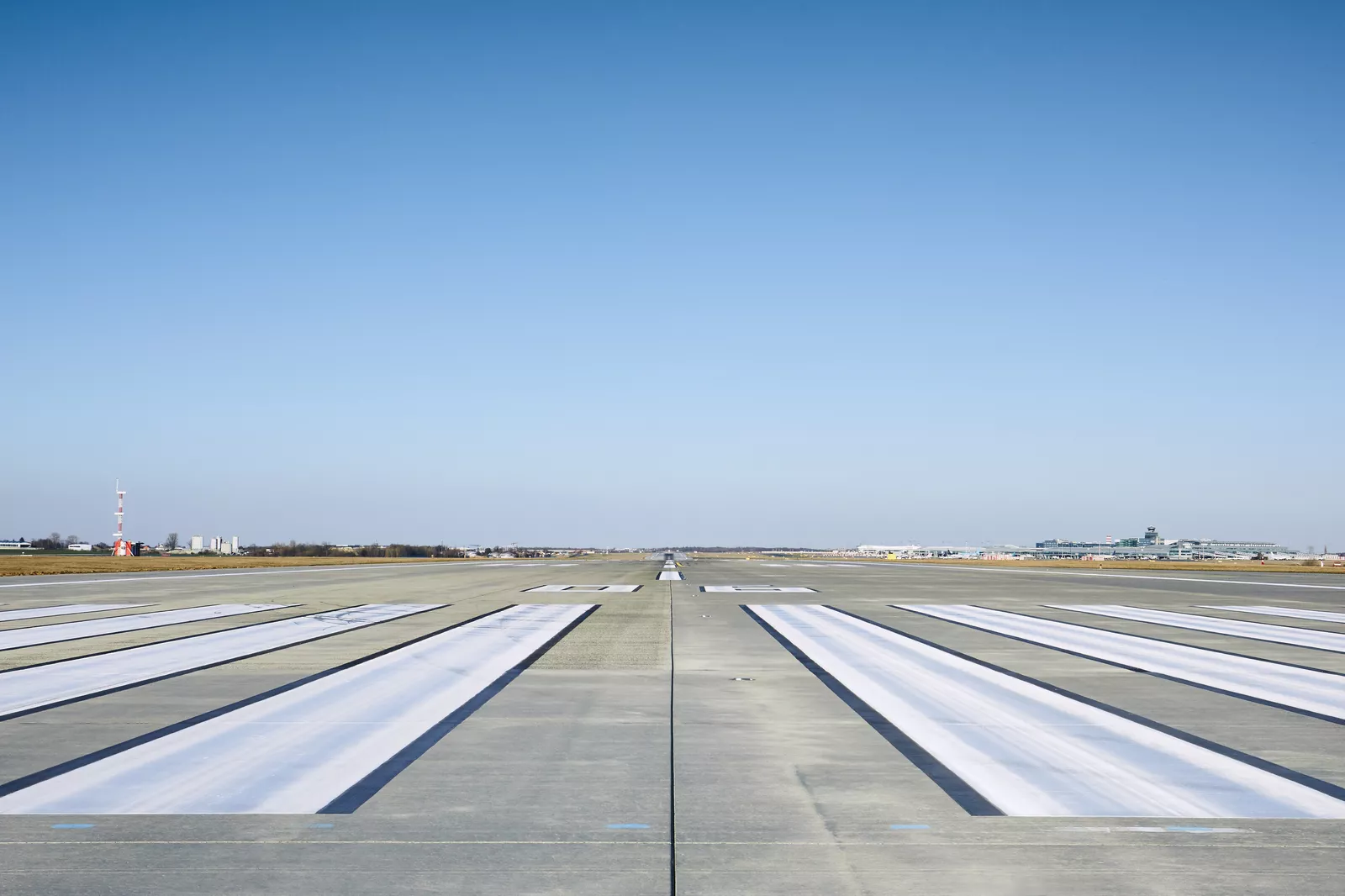
Operational continuity is one of the most important considerations in airport runway concrete repair. Slabjack Geotechnical uses rapid-curing polymer systems that allow repaired slabs to return to service within hours instead of days.
Our crews are equipped to deploy multiple rigs on large-scale runway and taxiway realignment projects, making us ideal for overnight, phased, or limited-access repair windows. This approach allows airports to maintain flight schedules, avoid long closures, and complete critical repairs without disrupting operations.
Comprehensive Airport Concrete Repair Services
Runway and Landing Slab Realignment
We correct settled or misaligned runway and taxiway slabs to restore proper elevation, improve drainage, and maintain smooth braking and taxiing surfaces. Realignment reduces stress on joints and improves long-term pavement performance.
Stabilize Rocking Slabs
Rocking slabs create accelerated joint deterioration and generate foreign object debris that threatens aircraft safety. Our stabilization process locks slabs into place, eliminating movement and extending the life of runway and apron concrete.
Sidewalk Trip Hazard Mitigation
Pedestrian areas around terminals, hangars, and airside walkways require the same level of precision as runways. We eliminate trip hazards and ensure compliance with accessibility and safety standards in all airport pedestrian zones.
Experience with State and Federal Aviation Projects
Slabjack Geotechnical has extensive experience working on state, municipal, and federal aviation projects. Our team understands FAA, DOT, and federal compliance requirements, safety protocols, and documentation standards.
We provide streamlined coordination with engineers, inspectors, and airport authorities to ensure every project meets regulatory expectations while staying on schedule. This experience allows us to deliver airport concrete repairs that are both structurally sound and fully compliant.
Service Area Coverage: Washington & Northern Idaho
Slabjack Geotechnical serves airports throughout Washington and Northern Idaho, with the ability to mobilize quickly for emergency or scheduled runway work. We have experience supporting urban international airports, regional airfields, and rural aviation facilities.
Keep Your Runways Safe, Stable, and Fully Operational
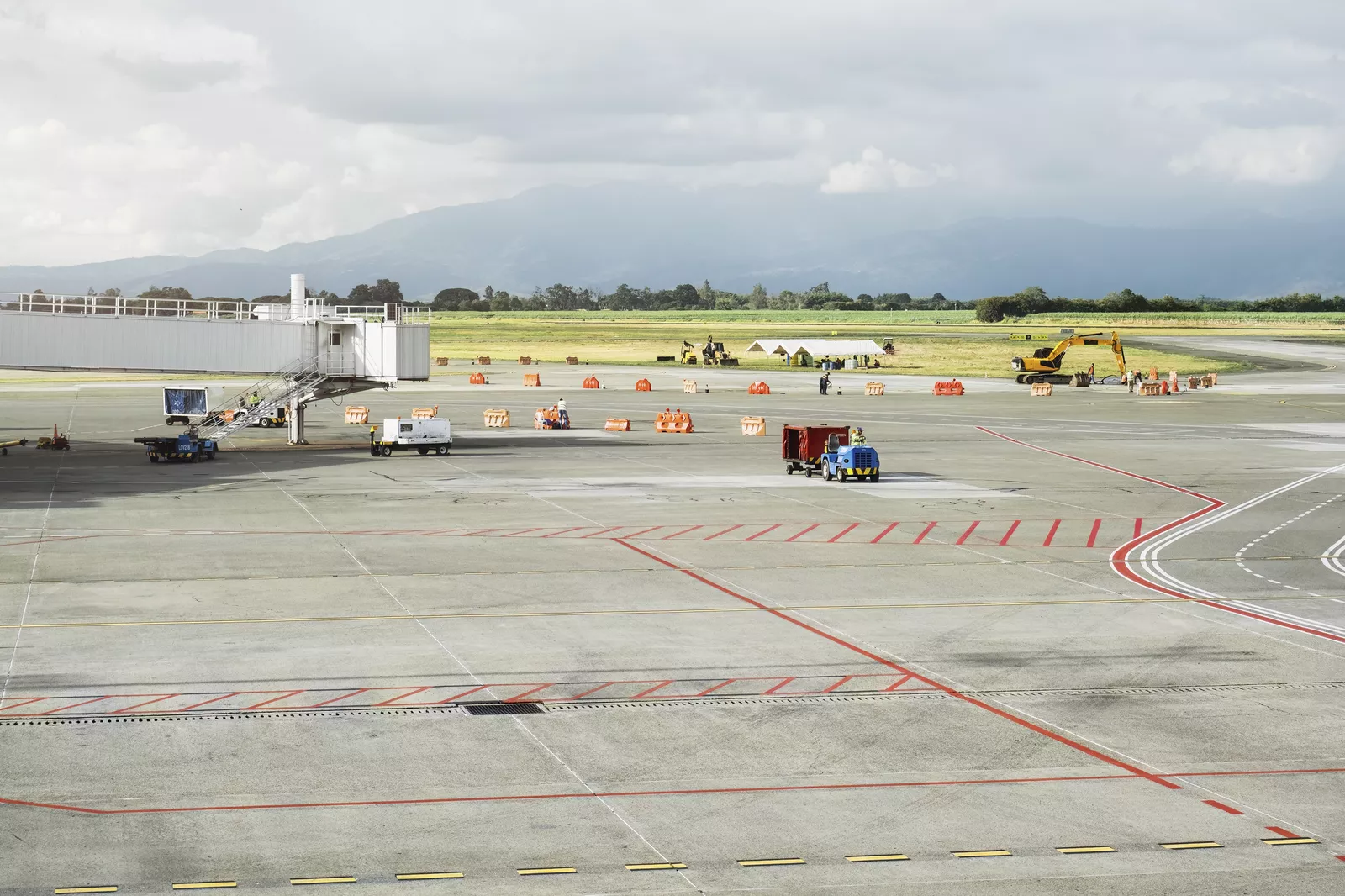
Professional airport runway concrete repair is essential for maintaining aircraft safety, structural performance, and uninterrupted airport operations. Slabjack Geotechnical provides engineered solutions that stabilize airport concrete, restore load-bearing capacity, and extend pavement life—without the delays and costs associated with full slab replacement.
If your facility needs dependable, compliant, and long-lasting concrete solutions for runways, taxiways, aprons, or terminal areas, contact us today to request a consultation. Our team is ready to help keep your airfield safe, stable, and operational.
Frequently Asked Questions About Airport Concrete Repair
Can airport runway concrete be repaired without shutting down the entire runway?
Yes. Our rapid-curing polymer systems allow many runway and taxiway repairs to be completed overnight or in phased sections, minimizing or eliminating full runway closures.
Is geopolymer injection strong enough to support commercial and military aircraft?
It is. We guarantee on-ratio polymer creates extremely hard, load-bearing support capable of handling the extreme weight and stress applied by aircraft and ground equipment.
How does stabilizing rocking slabs improve runway safety?
Rocking slabs accelerate joint failure and generate foreign object debris (FOD), which can damage aircraft. Stabilization locks slabs in place, reducing both structural wear and safety hazards.
How long do airport concrete repairs last?
When properly installed, polymer-stabilized slabs can remain structurally sound for decades, even under constant aircraft and service vehicle traffic.
Can Slabjack work with FAA and DOT project requirements?
Yes. Slabjack Geotechnical has experience with FAA, state DOT, and federal aviation projects, including documentation, compliance, and coordination with engineers and inspectors.


Contact Us
Leave Us A Review Below:





Proud Member of:


CORPORATE OFFICE:
Hours of Operation:
Monday – Friday: 8am-5pm
Saturday & Sunday: Closed
We have local branches serving Idaho and Washington.
Contractor License #SLABJG*833K2
Slabjack Geotechnical, 2024 © All Rights Reserved